Properly cleaning, maintaining, and storing your garden tools is one of the simplest ways to save money, extend tool life, and make gardening safer and more enjoyable. Whether you use hand pruners, shovels, hoes, hedge trimmers, lawn mowers, or garden hoses, regular upkeep prevents rust, keeps blades sharp, stops handles from deteriorating, and ensures your garden tools will be ready to tackle any chore.

Garden Tool Maintenance Guide: Cleaning, Sharpening & Winter Storage Tips
This guide covers non-powered garden tools, powered lawn and garden equipment, and watering tools, with practical tips designed for the average homeowner—no professional workshop required.
Why Garden Tool Maintenance Matters
Well-maintained garden tools:
- Cut more cleanly and efficiently
- Reduce strain on hands and arms
- Prevent plant damage and disease spread
- Last longer and cost less over time
- Are safer to use and store
Rust, dull blades, cracked handles, and clogged motors are almost always preventable with simple care.
Basic Cleaning for All Garden Tools
After every gardening session:
- Remove soil and debris using a stiff brush or old putty knife
- Rinse with water, avoiding prolonged soaking
- Dry thoroughly with a towel or allow to air dry completely
Moisture is the #1 cause of rust and wood rot.
Caring for Non-Powered Cutting Tools
Keep Blades Clean and Rust-Free:
- Alkaline electrolyzed water, such as our GT Blade Cleaner, will easily remove sticky sap from pruner and lopper blades, and can also be used for sanitizing between cuts
- Wipe blades with a cloth lightly coated in mineral oil or camellia oil: apply, let sit for 15 minutes and wipe off oil.
- For existing rust, scrub gently with a rust eraser, steel wool, or fine sandpaper
- Avoid storing tools while damp
Sharpen Blades:
Sharp blades make easier, cleaner cuts and reduce plant stress.
- Use a hand file or sharpening (whet) stone
- Always follow the original factory blade angle and use a smooth, even motion in one direction
- Sharpen pruners and scissors every few months during heavy use
- Hedge shears benefit from annual sharpening
Lubricate Pivot Points:
Lubricate periodically to promote smooth operation and extend tool life
- Do not disassemble pruners to lubricate--use a small brush or dental floss to remove dirt under the pivot
- Apply a general machine oil (Liquid Wrench, 3-in-1) to friction points such as blade pivot bolts
- On long reach pruners, also lubricate the pruner rod drums (where the rod
connects to the handle). A heavier oil is recommended for these, such as Liquid Wrench white petroleum grease.
Disinfect Cutting Tools:
To prevent spreading plant diseases:
- Wipe blades with GT Blade Cleaner to disinfect, or use 70% isopropyl alcohol, or a diluted bleach solution in a 1:9 ratio
- If working on a plant showing signs of disease, clean between cuts as well as before storing
- Rinse and dry
Maintaining Shovels, Hoes, Rakes, and Digging Tools
Metal Care
- Clean soil off immediately
- Dry completely
- Coat metal surfaces lightly with oil before storage
- Petroleum based oils are not recommended for digging tools to avoid soil contamination
- Sharpening Digging Tools
Digging and weeding tools work better when sharp, reducing effort and strain. For safety, new shovels and hoes are usually fairly dull when purchased, and will benefit from sharpening before use.
- Remove all surface dirt with steel wool or a wire brush.
- Secure the tool in a vise for safety
- Use a mill file and work in one direction using smooth, even strokes while maintaining the desired angle. Repeat on the other side of the blade.
- Sharpen the inside edge of shovels only, as that is the only side with a bevel.
- Aim for a 45 degree angle for shovels, 30 to 35 degrees for hoes, and 20 to 30 degrees for fine weeding tools. Smaller angles are sharper, but less durable and require more frequent upkeep.
- After sharpening, remove any burrs on the reverse side of the blade with 300 grit sandpaper.
- Sharpen edges once or twice per season
- Protecting Wooden and Composite Handles
Handles often fail before the tool head does. Oiling wooden handles will help prevent deterioration.
- Sand splinters lightly with fine sandpaper
- Apply boiled linseed oil or tung oil once or twice a year
- Wipe off excess oil and allow to cure fully
- Storage Tip
Caring for Powered Cutting Tools
- Cleaning Powered Equipment
- Disconnect power or remove batteries
- Brush off grass clippings and debris
- Wipe exterior with a damp cloth
- Keep air vents clear
- Blade and Cutting Head Care
- Clean blades after each use
- Lightly oil metal parts to prevent corrosion
- Replace worn trimmer line promptly
- Engine & Battery Maintenance
For gas tools:
- Drain fuel before long storage
- Replace spark plugs annually
- Clean or replace air filters
For battery tools:
- Store batteries indoors
- Avoid extreme heat or cold
- Recharge every few months during storage

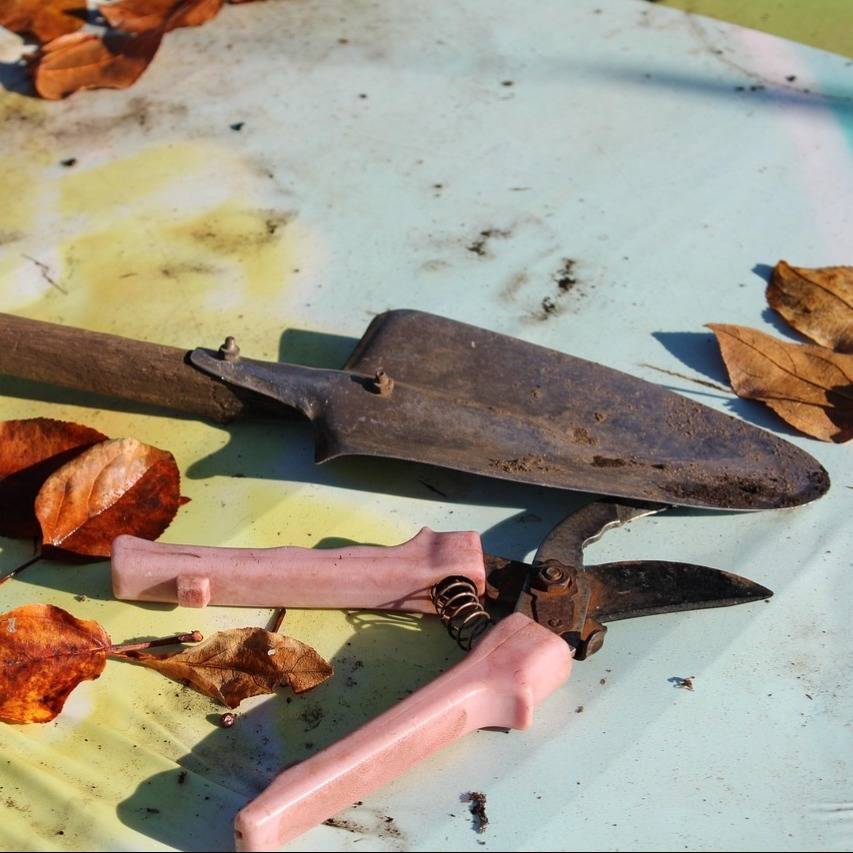
Below: If your tools become too damaged to be used, you can always use them as garden decor...

Proper Storage of Garden Tools
- Ideal Storage Conditions
- Dry, cool, and well-ventilated
- Away from direct sunlight and moisture
- Hanging tools reduces damage and saves space
- Storage Ideas
- Pegboards or wall hooks
- Tool racks or vertical storage systems
- Buckets with sand and oil for metal tool heads
- Tall, narrow storage sheds made of high-density polyethylene resin are a practical solution that can fit in almost any yard and will protect tools from the elements
- Sturdy, long deck storage boxes of steel or HDPE resin are waterproof and can house lots of tools, doubling as outdoor seating with an added cushion
- Winter Storage for Garden Hoses and Watering Equipment
Freezing water can crack hoses and fittings.
- Disconnect hoses completely
- Drain all water
- Coil loosely to prevent kinks
- Store indoors—garage or basement preferred
- Remove and store spray nozzles separately
Winterizing Irrigation Systems
- Drain or blow out drip lines
- Store timers indoors
- Inspect washers and seals before spring
Seasonal Garden Tool Maintenance Checklist
Spring
- Inspect tools for rust or damage
- Sharpen blades
- Oil handles and metal surfaces
Summer
- Clean tools regularly
- Monitor powered equipment performance
Fall
- Deep clean all tools
- Sharpen and oil
- Prepare for storage
Winter
- Store tools indoors
- Maintain batteries
- Protect hoses and watering systems
Extra Tips for Tool Longevity
- Never leave tools outside overnight
- Label and organize tools to prevent damage
- Replace worn parts early
- Invest in quality tools—they’re easier to maintain
- Keep a small maintenance kit (oil, rag, file) handy
Taking the time to clean, sharpen, and properly store your garden tools pays off in better performance, longer lifespan, and a more enjoyable gardening experience. From hand pruners and shovels to hedge trimmers, lawn mowers, and garden hoses, simple maintenance habits can add years to your equipment and save you money.
A little care now means less frustration—and more productive gardening—for seasons to come.
You may also like