

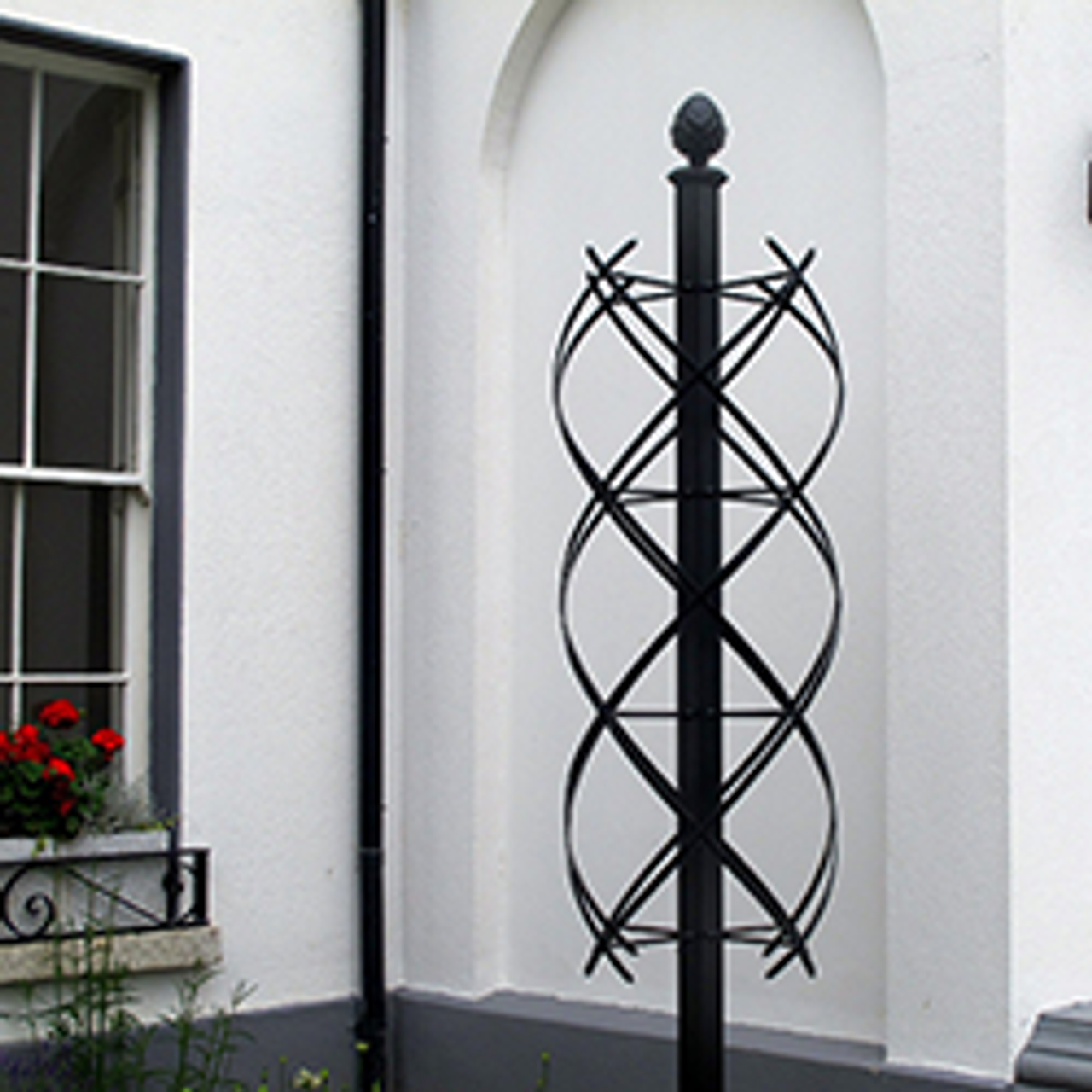
Garden Obelisks & Rose Pillars
Garden Obelisks, Rose Pillars, Rose Trellises & Tuteurs
Add height, elegance, and practical plant support to your landscape with our collection of garden obelisks, rose pillars, rose trellises, and tuteurs. These decorative garden structures support climbing roses, flowering vines, and twining vegetables while bringing foliage and blooms into view. Whether placed in a flower border, garden bed, or large container, vertical plant supports combine ornamental appeal with functionality.
Often used interchangeably, garden obelisks and rose pillars provide upright frameworks for climbing plants while creating attractive focal points in the landscape. Rose trellises offer additional options for training climbing roses and other vines, while cone-shaped and pyramid-style tuteurs add distinctive architectural interest to garden beds and container plantings.
Explore designs in galvanized steel and rust-free aluminum, with styles ranging from traditional ornamental forms to clean, contemporary silhouettes. Whether you're showcasing a favorite climbing rose, adding height to a perennial border, or growing flowering vines in a compact garden, discover garden plant supports that complement your landscape and help your plants grow vertically.
Garden Obelisks, Rose Pillars, Rose Trellises & Tuteurs: Beautiful Support for Climbing Plants
Vertical plant supports bring two important elements to garden design: a framework for climbing plants and an attractive architectural feature that adds height and structure to the landscape. From a rose-covered pillar in a perennial border to a decorative tuteur in a patio container, these versatile garden accents help make the most of your planting space.
Garden obelisks, rose pillars, rose trellises, and tuteurs come in a variety of shapes, materials, and designs. Choosing the right support depends on the plant you want to grow, the available space, and the style you want to achieve.
Understanding Garden Obelisks, Rose Pillars, Rose Trellises & Tuteurs
Although these terms can overlap, the different designs offer useful options for supporting plants and creating vertical interest.
Garden obelisks and rose pillars are essentially two names for an upright garden structure designed to support climbing plants. Often tall and tapered, they can showcase climbing roses, clematis, honeysuckle, and other suitable vines. Their sculptural shape also makes them attractive focal points when plants are young or out of bloom.
Rose trellises provide a framework for training climbing roses and other vines. Depending on their design, they can support plants growing vertically or help guide stems across a decorative structure. Choose a trellis suited to the growth habit of your plant and the location where it will be installed.
Tuteurs typically feature a cone-shaped or pyramid-like form. They offer a decorative way to guide climbing or twining plants upward and can be especially appealing in flower beds, vegetable gardens, and large containers.
When comparing products, look beyond the name to consider the structure's shape, dimensions, material, and intended use. These details will help you choose a support that suits both your plant and your garden.
How to Choose the Right Garden Plant Support
The best garden support should complement your landscape while providing suitable space and structure for your chosen plant. Consider these factors when selecting an obelisk, rose pillar, trellis, or tuteur.
1. Choose a support for your plant's growth habit.
Climbing roses, clematis, wisteria, honeysuckle, trumpet vine, passionflower vines, and twining vegetables all grow differently. Some plants twine naturally around a support, while climbing roses generally need their canes guided and tied into place. Select a structure that accommodates the plant's mature size, growth habit, and weight.
2. Consider the size and shape of the structure.
A tall obelisk can create a dramatic focal point in a flower border, while a smaller tuteur may be more suitable for a compact planting area or large container. Check the product dimensions and allow enough room for the plant to grow without overwhelming nearby flowers, shrubs, or pathways.
3. Match the design to your garden.
Ornamental supports can complement traditional rose gardens, cottage-style borders, and formal landscapes. Simpler, streamlined designs may suit contemporary gardens and modern outdoor spaces. Consider how the structure will look alongside your existing planters, fencing, garden furniture, and other decorative features.
4. Select the right material.
Material influences appearance, weight, and care requirements. This collection includes supports made from galvanized steel tube and solid-rod aluminum. Galvanized steel has a protective zinc coating to help resist corrosion, while aluminum offers a rust-free alternative. Review individual product specifications for construction, finish, assembly, and maintenance details.
5. Plan the placement and installation.
Position your support where the plant will receive appropriate growing conditions and where you can easily reach it for training, pruning, and maintenance. Follow the manufacturer's installation instructions, paying particular attention to securing the structure and accounting for the mature plant's size and weight.
Best Plants for Garden Obelisks and Rose Pillars
A well-chosen climbing plant can transform a simple metal support into a beautiful living feature. Consider your climate, sunlight, available space, and the mature growth habit of the plant before choosing a variety.
Climbing roses are a natural choice for rose pillars and garden obelisks. Their flowers and foliage can create a romantic vertical display in a rose garden, along a pathway, or within a mixed planting border. Most climbing roses benefit from having their canes guided and secured to the support as they grow.
Clematis offers a wide range of flower colors, shapes, and flowering seasons. Many varieties grow well on suitable obelisks and trellises, providing an opportunity to combine their blooms with roses or other garden plants.
Honeysuckle can add fragrant flowers and a relaxed, natural appearance. Select a variety suited to your climate and ensure its mature size is appropriate for the support.
Wisteria, trumpet vine, and passionflower vines can produce impressive foliage and flowers, but their growth habits and mature weights vary considerably. Vigorous vines may require a particularly sturdy structure and regular pruning. Check the plant's requirements and the manufacturer's recommendations before pairing these climbers with a decorative support.
Twining vegetables can also benefit from vertical support. Depending on the structure and plant, suitable climbing vegetables can be trained upward in ornamental vegetable beds or kitchen gardens, combining productive planting with attractive garden design.
For more ideas, explore our gardening articles on Native Vines, Flowering Vines to Grow from Seed, and Best Vines for Trellises.
Creative Ways to Use Garden Obelisks, Rose Pillars & Tuteurs
These plant supports can be incorporated into gardens of almost any size. Their vertical form adds dimension while helping organize planting areas and highlight favorite plants.
-
Create a focal point in a flower bed: Place an obelisk among perennials and shrubs to add height and draw attention to the planting.
-
Showcase a climbing rose: Use a rose pillar to display a favorite rose in an upright, sculptural form.
-
Add structure to a cottage garden: Combine decorative supports with flowering perennials and informal plantings for a layered, romantic look.
-
Introduce height to a small garden: Grow a suitable vine upward rather than allowing it to spread extensively across the ground.
-
Enhance container plantings: Use a suitably sized tuteur or obelisk in a large planter to add vertical interest to a patio or terrace.
-
Create repetition along a border: Place complementary structures at intervals to establish a sense of rhythm and continuity.
-
Bring interest to the winter garden: An attractive support can maintain architectural presence even after deciduous plants lose their leaves.
Why Shop Garden Plant Supports at Garden Artisans?
The right garden support can do more than guide a plant's growth. It can highlight a favorite rose, bring flowering vines into view, and introduce an architectural detail that complements the surrounding landscape.
Garden Artisans offers distinctive garden structures and decorative plant supports to suit a variety of gardening styles and growing needs. Whether you're creating a traditional rose garden, adding height to a perennial border, or making the most of a smaller outdoor space, our collection offers options for combining beauty and function.
Explore our garden arches and arbors for additional ways to support climbing plants and create welcoming garden entrances, or browse our wall trellises and garden trellises for more vertical planting possibilities.
Frequently Asked Questions About Garden Obelisks, Rose Pillars & Tuteurs
Are garden obelisks and rose pillars the same thing?
The terms are often used interchangeably. Both generally describe upright garden structures that support climbing plants and add vertical interest to the landscape. Designs vary, so compare the individual product's shape, dimensions, and construction when choosing a support.
What is the difference between a rose trellis and a garden obelisk?
A garden obelisk is typically a freestanding, upright structure, often with a tapered shape. A rose trellis is a broader term for a framework used to train and support climbing roses and other vines. The terms can overlap, so the best choice depends on the particular design, your available space, and how you plan to grow your plants.
Which plants grow well on garden obelisks and rose pillars?
Suitable plants include climbing roses, clematis, honeysuckle, and other climbing or twining vines. Some supports can also be used for twining vegetables. Consider the plant's mature size, growth habit, and weight to ensure the structure is appropriate.
Can I use an obelisk or tuteur in a container?
Yes, provided the support and container are appropriately sized and the structure can be secured safely. Consider the combined weight and stability of the planter, growing medium, support, and mature plant. Check the individual product dimensions and installation guidance before planting.
What is the difference between galvanized steel and aluminum garden supports?
Galvanized steel is coated with zinc to help protect the underlying steel from corrosion. Aluminum is naturally rust-free and is often valued for its lighter weight. The best material depends on the product's design, intended use, appearance, and installation requirements.
Do climbing roses need to be tied to a rose pillar?
Climbing roses generally benefit from having their canes guided and secured to the support as they grow. Use suitable plant ties and avoid fastening stems too tightly. The precise training method depends on the rose variety and the design of the structure.
How do I maintain a garden obelisk or rose trellis?
Inspect the structure periodically for loose connections, movement at the base, or damage to its finish. Follow the manufacturer's cleaning and maintenance recommendations, and prune or guide the plants as needed. Vigorous vines may require more frequent attention to manage growth and weight.
Bring Vertical Beauty to Your Garden
Garden obelisks, rose pillars, rose trellises, and tuteurs make it possible to combine plant support with distinctive garden design. Whether you want to showcase a climbing rose, guide flowering vines upward, or introduce a sculptural accent to a flower bed, the right support can add height, character, and seasonal interest to your landscape.
Explore our collection to find a garden structure that complements your plants and helps you create an outdoor space with beauty, dimension, and personality.