Choosing the right planter is about more than finding a container that looks good. Planter size, material, drainage, shape, style, placement, and growing conditions all influence how well a plant performs and how the finished planting looks.
How to Choose the Right Planter: Size, Material & Style
The best planter depends first on what you're planting and where it will live.
A small houseplant has very different needs from a shrub spending several years outdoors. A seasonal container garden has different requirements from a tropical plant that will spend summer outside and winter indoors. And a planter intended to remain outdoors through freezing temperatures needs to be selected with durability and drainage in mind.
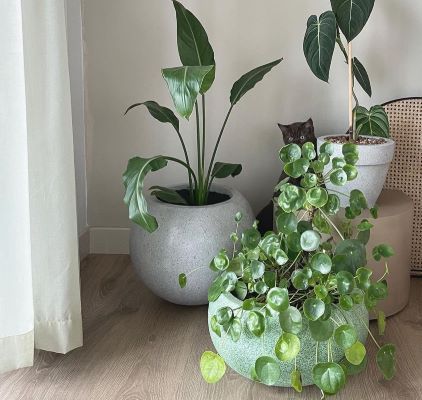
There is another consideration, too: the relationship between the plant and the planter as visual forms. A planter is part of the overall composition. Its height, width, proportions, shape, color, and style can reinforce the character of a plant or provide intentional contrast.
This guide explains how to choose the right planter for indoor plants, seasonal outdoor containers, permanent plantings, balconies, rooftops, and plants that move indoors for winter.
Start With the Plant — Not the Planter
Before choosing a planter, consider the plant's requirements.
Ask yourself:
- How large will the plant eventually become?
- What size is the plant's current root system?
- Does it prefer consistently moist soil, or does it need to dry between waterings?
- Will it live indoors, outdoors, or move between the two?
- Is the planting temporary or permanent?
- How much sunlight will it receive?
- Will the planter need to survive winter outdoors?
- How often will you need to move it?
- Will you be able to access the plant for future repotting or root pruning?
- Is the plant tall and narrow, broad and spreading, architectural, or formally pruned?
- Does the planter need to complement a traditional, contemporary, formal, or minimalist setting?
These questions help determine the appropriate planter size, material, drainage system, shape, style, and location.
How to Choose a Planter for an Indoor Plant
- Choose the right planter size and shape
When repotting any plant, resist the temptation to move it into an enormous container. A large area of soil that is devoid of moisture-absorbing roots around a rootball will stay wet when watered, encouraging root rot.
A new pot generally only needs to be 1–2 inches larger in diameter than the pot the plant is currently growing in for smaller plants. For larger plants, moving up 2–4 inches in diameter may be appropriate, depending on the plant and its root system.
The goal is to provide additional room for healthy root growth without surrounding the existing root ball with a large volume of unused, wet soil. For example, a plant currently growing in a 10-inch pot might be moved into a 12-inch pot rather than jumping immediately to a 16-inch container.
The exact size should ultimately be determined by the plant's root system, growth rate, and species. Some plants tolerate or even prefer being somewhat root-bound, while others benefit from more frequent increases in container size.
The shape matters, too. A tall, narrow planter can work well for plants with upright growth, while a wider container may be better suited to plants with spreading roots or a broad canopy.
- Prioritize drainage for indoor planters
For most indoor plants, drainage is essential. Excess water needs a way to escape rather than remaining around the roots.
A planter with a drainage hole paired with a saucer is often the simplest solution. The saucer catches excess water and protects floors, furniture, and windowsills.
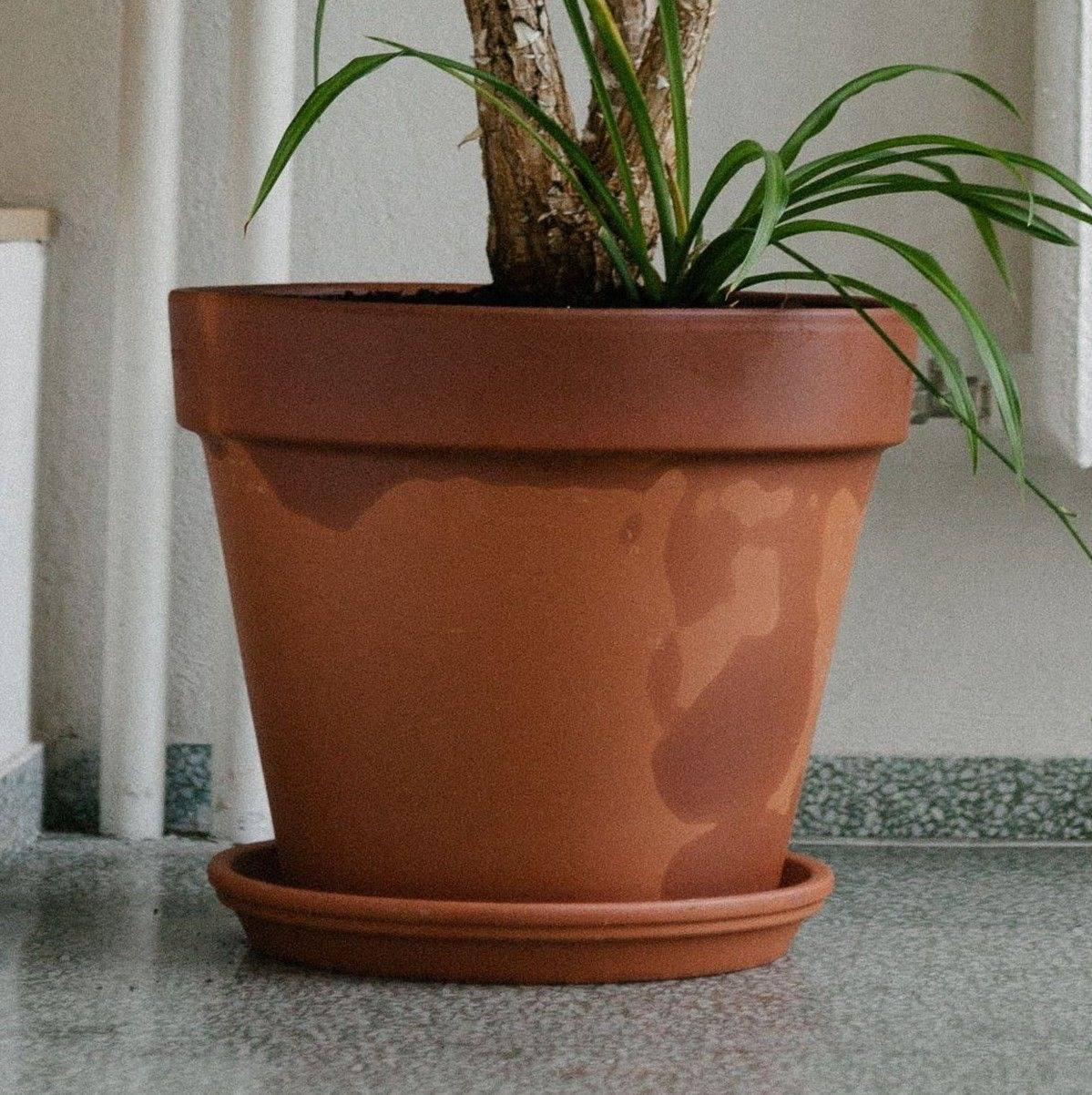
Be careful with terracotta saucers, however. Unless they are sealed or glazed on the inside, they can absorb water left in the saucer and transfer it to surfaces underneath.
If you love a decorative planter without a drainage hole, you don't necessarily have to give it up. Use it as a cachepot: keep the plant in a properly draining nursery pot and place that pot inside the decorative container.
This is one of the major advantages of a cachepot system: the decorative outer container doesn't have to have a drainage hole because the actual growing container handles drainage.
- How large should a planter saucer be?
A saucer should be large enough to catch water draining from the planter without allowing the pot to sit in a deep pool of water.
As a general guideline, choose a saucer with a diameter at least as large as the base of the planter, and preferably slightly wider. For planters with a particularly broad drainage footprint or where significant overflow is expected, a saucer a few inches wider than the pot may be preferable.
The saucer should remain stable beneath the planter and should not interfere with the drainage hole.
The purpose of a saucer is to protect the surface underneath and catch excess water, not to keep the plant's roots permanently submerged. Empty standing water when necessary. In general, allow plants 10 to 15 minutes to drain, then empty the saucer.
For large indoor containers, consider the finished weight of the planter and the strength of the surface beneath it. A saucer that is technically large enough but difficult to remove or clean may not be practical.
We offer round, square, and rectangular saucers made of either a concrete/resin mix or heavy-duty commercial grade plastic--both strong enough to hold the weight of a large concrete planter.
- Use a cachepot as a long-term design solution
A beautiful decorative planter doesn't necessarily need to be the container in which the plant actually grows.
One of the most practical approaches for indoor plants is to use a plastic nursery pot inside a decorative cachepot. The plant remains in a relatively inexpensive plastic growing pot while the larger, more decorative outer container provides the finished appearance.
As the plant grows, move it into a larger nursery pot and then place that pot into the existing cachepot — provided the cachepot is large enough to accommodate it.
This approach can be particularly useful when investing in an expensive decorative planter. Instead of replacing the outer planter every time the plant needs more root space, the inner nursery pot can be "up-canned" to progressively larger sizes.
For example: 8-inch nursery pot → 10-inch nursery pot → 12-inch nursery pot. The decorative cachepot can remain the same throughout those stages if it is appropriately sized.
Make sure excess water doesn't accumulate inside the cachepot around the nursery pot. If the pot is too large or heavy to turn over, use a simple turkey baster to remove the water.
If you would like your plant to sit higher in the cache pot, you can place it on an inverted pot or plastic bucket, styrofoam blocks, bricks, or specially made plant risers. Just make sure that whatever you use does not make it more difficult to empty any water that accumulates.
Sphagnum moss can be applied on top to disguise the nursery pot if desired.
This system also makes indoor plant maintenance easier because the growing pot can be removed from the cachepot for watering, inspection, and repotting.
- Choosing Planters for Outdoor Temporary Planting
Seasonal containers are an easy way to add color to a porch, patio, balcony, entryway, or garden.
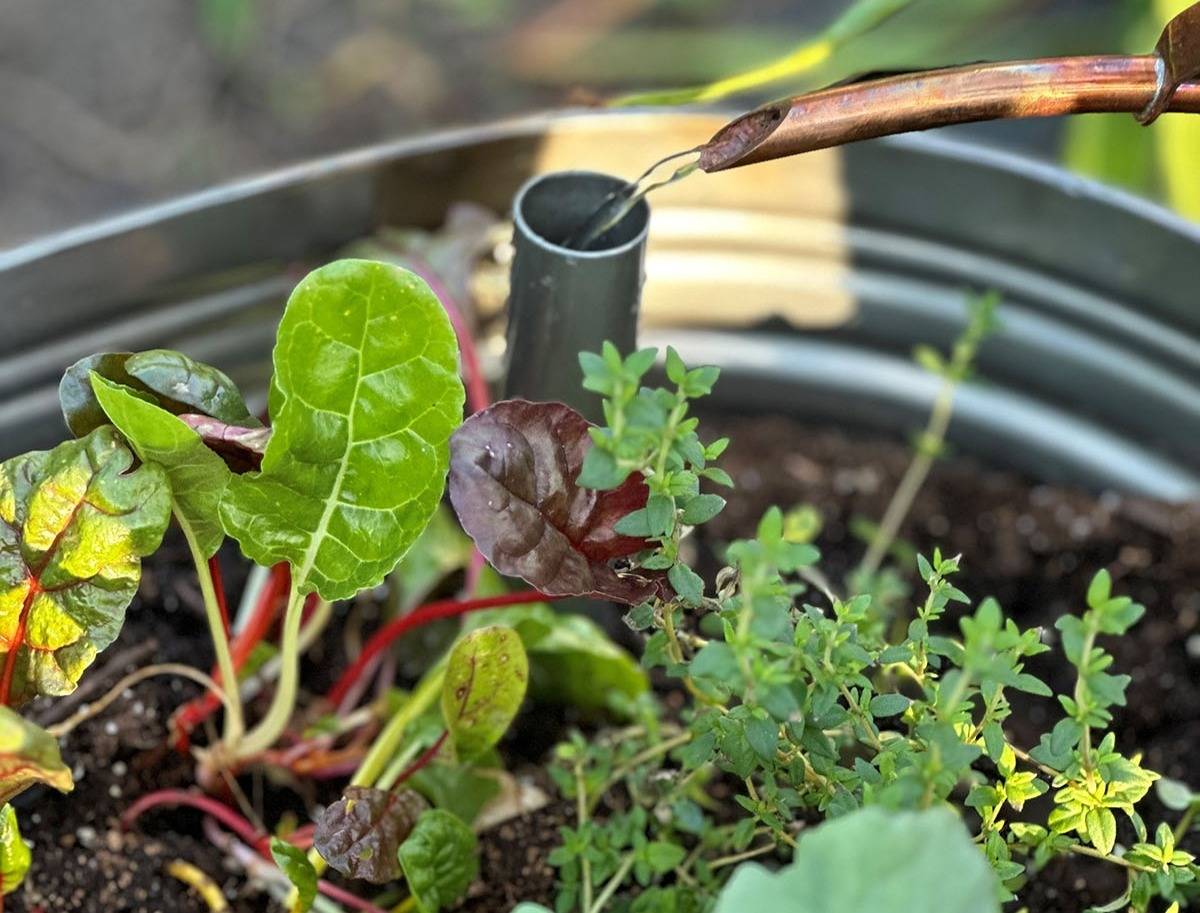
Think annual flowers, seasonal herbs, tropical plants, vegetables, and decorative combinations that will live in the planter for one growing season.
For most annuals, a planter with a depth of 8 to 12 inches is sufficient. Lower profile planters may only be suitable for drought tolerant species such as some herbs and succulents, depending on how often you are able to water.
The planter should have a drainage hole to prevent water accumulation that will damage the roots.
- Size for the finished arrangement
Don't size the planter only for the plants as they look on planting day. Consider their mature size.
A container that looks slightly sparse at first may be exactly right a few weeks later as plants fill out. Overcrowding can lead to competition for water, nutrients, light, and root space.
For mixed containers, combine plants with similar growing requirements. A sun-loving plant that prefers relatively dry soil isn't a good companion for a plant that requires consistently moist soil.
- Think about weight
If your seasonal planter will need to be moved, material matters.
Lightweight aluminum, fiberglass, fiberstone, resin, or plastic planters can be easier to reposition than solid cast stone or heavy concrete.
Heavy cast stone and similar materials provide excellent stability in windy locations but can become extremely difficult to move once planted.
A useful rule is:
If you may need to move it, choose the planter before filling it — and consider how heavy it will be when wet.
- Choose color strategically
Outdoor planters are an opportunity to complement both your home and your plants.
A neutral planter can let colorful flowers take center stage. A bold-colored planter can become part of the composition itself.
For foliage-heavy arrangements, consider how the planter's color contrasts with or complements the leaves.
Also consider the planter's location. Dark-colored containers exposed to intense sun can become warmer than light-colored ones, potentially increasing root-zone temperatures and moisture loss.
- Choosing a Planter for Permanent Outdoor Planting
A planter intended to remain outdoors for years requires a different approach.
This is where the distinction between temporary container gardening and long-term container growing becomes especially important.
Permanent outdoor plantings might include shrubs, ornamental trees, hardy perennials, evergreens, or other plants intended to remain in the same container for multiple seasons.
The planter should have adequate drainage to prevent damage to the planter in freezing temperatures, and to avoid root rot.
- Go bigger — but choose carefully
Long-lived plants need sufficient root space. A container that is appropriate for a small perennial today may become restrictive as the plant matures. For shrubs and trees especially, think about the plant's eventual size rather than simply the size of the nursery container.
Unlike a houseplant that can easily be moved into progressively larger pots, a large permanent outdoor planting may eventually be impractical to repot. The initial container therefore deserves more careful consideration. When selecting a permanent container, think about both the plant's current root ball and its anticipated mature size.
In general, allow 12-18 inches depth and width for perennials (minimum 5 gallon capacity), 16-24" depth and width for shrubs (a 10 to 20 gallon capacity), and a minimum of 22 inches for larger shrubs and small trees. If planting into what will be a final container much larger than the permanent plant's current rootball, plant annuals or other temporary plants around the perimeter. Their roots will help absorb the water so that the permanent plant does not "drown" in a large volume of empty soil.
A large planter also provides greater stability for top-heavy plants and reduces how quickly the growing medium can dry out. However, bigger isn't automatically better. The container still needs to be proportionate to the plant, and the growing medium must be capable of draining properly.
- Plan for root growth and future maintenance
Some shrubs, perennials, and smaller trees can remain healthy in containers for many years, but long-term container growing requires attention to the root system.
If the plant eventually fills the container, options may include moving it into a larger container, carefully root pruning it and replacing some of the growing medium, or eventually planting it in the ground. Root pruning can help maintain a mature plant in a particular container size, but it should not be treated as a universal solution. Large woody plants and plants with sensitive root systems may respond differently to root disturbance.
For permanent container plantings, choose plants that are naturally suited to container culture and research their mature size and cold hardiness before planting.
- Choose durable outdoor planter materials
For a permanent outdoor installation, durability becomes one of the most important considerations.
Materials such as cast stone, fiberstone, fiberglass, resin, aluminum, steel, brass, and copper can all have applications in long-term outdoor planting, depending on the product, climate, finish, and installation.
The material also contributes to the overall character of the landscape. Cast stone provides substantial visual and physical weight. Fiberstone can provide a stone-inspired appearance with less mass. Aluminum and steel can reinforce contemporary architecture. Brass and copper can introduce warm metallic tones and may develop changing surface character over time.
The choice should balance appearance, weight, durability, climate, maintenance, and mobility.
- Don't overlook winter
If the planter will remain outdoors year-round, consider what happens when temperatures drop below freezing. Water that freezes inside a planter can expand and put stress on the container. Good drainage is therefore particularly important for outdoor planters exposed to winter weather.
In cold climates, choose containers specifically suited to year-round outdoor use and follow the manufacturer's recommendations.
In addition, root systems are more susceptible to cold damage than top growth in a container, as they lack the protection they would normally have from the surrounding soil. Growing zones only apply to the top growth, not the roots. For example, in a zone 7, you may actually need a plant recommended for two to three zones colder for it to safely overwinter in a container.
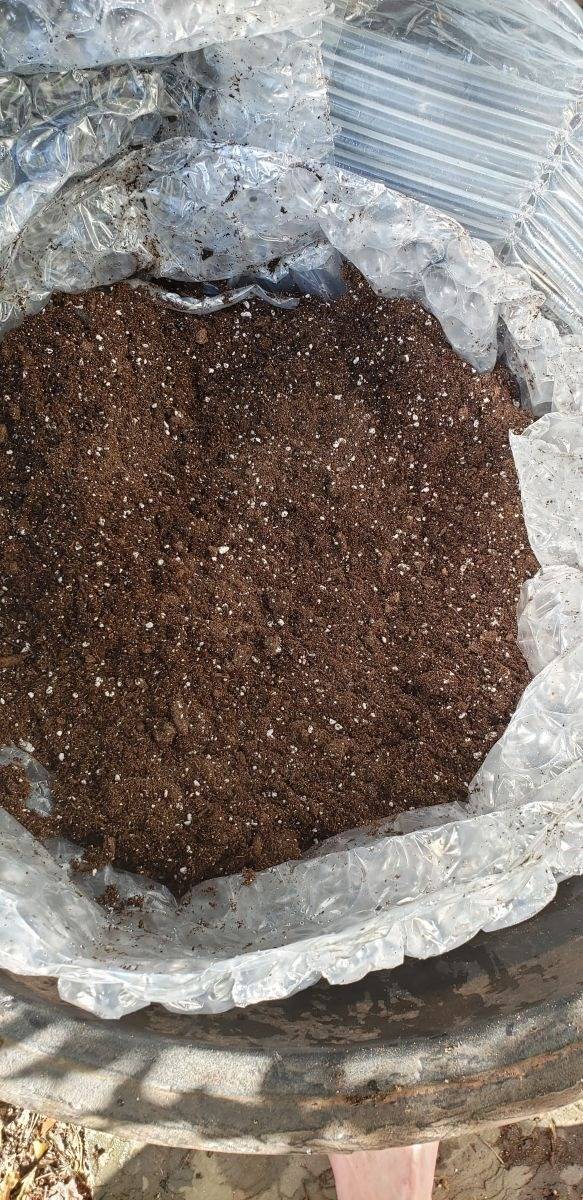
In zones where freezing is a concern, several layers of "big-bubble" bubble wrap or other insulating material can be added inside the base and sides. Big bubbles are better than small as they contain more air, which provides the insulation. Be sure to cut a hole in the bottom layers so that drainage is not impeded. Double-walled pots will also be more insulating than those with single walls.
- Single-wall vs. double-wall
The construction of the planter itself can influence how the root zone responds to outdoor conditions.
Single-wall planters
A single-wall planter has one primary wall between the growing medium and the surrounding environment. These planters can work beautifully in many applications and may offer a straightforward, lightweight design.
Double-wall planters
Double-wall construction creates an additional layer between the growing medium and the outside of the planter. Depending on the design, this can provide advantages related to insulation, durability, weight, or water management. Double-wall construction can be particularly worth considering for large outdoor planters exposed to temperature fluctuations or for installations where maintaining a more stable root environment is desirable.
However, construction varies considerably between manufacturers, so don't choose based on "double wall" alone. Look at the actual design, materials, drainage system, and manufacturer's recommendations.
Choosing a Planter for a Plant That Will Overwinter Indoors
Tropical plants, tender perennials, citrus, rosemary, and many other plants may spend the warm months outdoors and then move inside when temperatures fall. For these plants, mobility should be part of your planter selection from the beginning.
- Don't underestimate the finished weight
A large planter filled with wet growing medium can become extremely heavy. If you know you'll be moving a plant twice a year, consider a lightweight planter material such as aluminum, fiberglass, fiberstone, resin, or plastic, depending on the desired appearance and growing conditions.
A cachepot and nursery-pot system can also be useful. The plant can grow in a lightweight plastic nursery pot that is easy to remove and transport, while a decorative outer planter provides the finished look when the plant is on display.
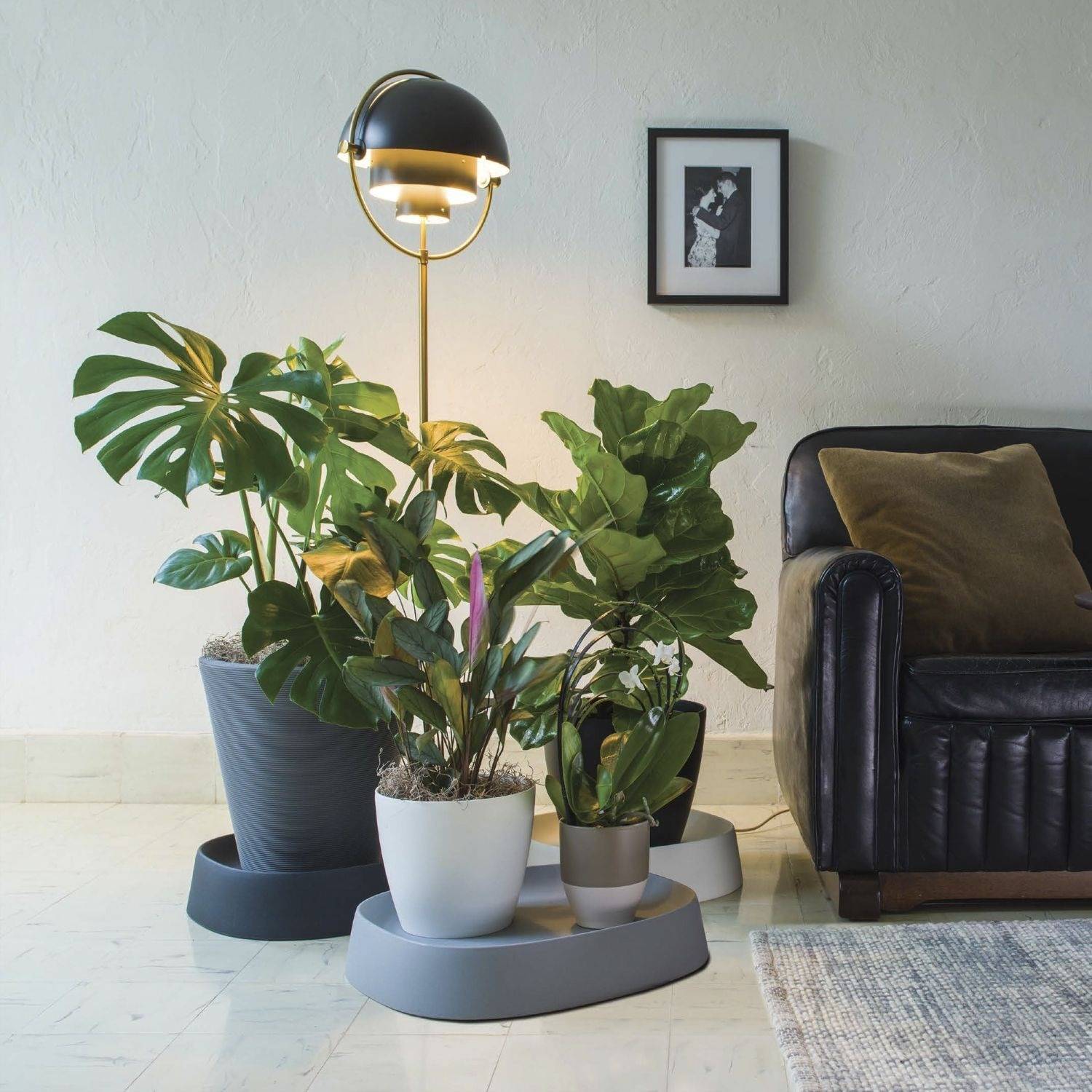
An attractive heavy duty caddy with casters can be invaluable, serving both as a saucer and a transport aid.
- Think about the transition indoors
Before planting, decide where the plant will spend winter. Will it fit through the doorway? Will it fit beneath the ceiling? Can you maneuver it around furniture, stairs, and narrow hallways?
A planter that looks perfect on the patio may become a logistical headache in October that will be experienced again the following spring. Plan the route in both directions before planting.
Balcony planters
Balconies introduce a different set of design and practical constraints. Space is limited, wind can be significant, and the total weight of planters, growing medium, water, and mature plants may matter considerably.
For balconies, look for planters that make efficient use of limited floor space. Tall, narrow, rectangular, or railing-compatible forms can provide planting volume without consuming as much usable floor area as a broad container.
Lightweight materials such as aluminum, fiberstone, fiberglass, resin, or plastic can make installation and rearrangement easier, although structural weight limits should always be considered for elevated locations.
Visually, repeated planter shapes can make a small balcony feel more cohesive. A series of matching rectangular planters can create a clean architectural line, while one substantial planter can serve as a focal point.
Consider wind exposure carefully. Tall plants in lightweight containers may require additional stability, while lower-growing plants and broader containers can create a more secure composition.
Rooftop planters
Rooftops combine many of the challenges of balcony gardening with even greater exposure to sun and wind. Planters may be exposed to intense sunlight, drying winds, temperature fluctuations, and limited access to water.
Lightweight materials can be particularly useful on rooftops, but the structural capacity of the roof must always be evaluated before installing substantial containers. The relevant load is not simply the empty planter: it includes the growing medium, retained water, mature plants, and any accumulated snow or precipitation where applicable.
If you're considering larger planters, don't forget they they must be maneuvered up any stairs or through elevator doors. Measure entranceways, turning clearances, and diagonal overhead clearances to be sure your planter can get where it's going.
Though this may seem daunting, the aesthetic opportunity is considerable. Large planters can help define outdoor rooms, frame views, create privacy, and introduce architectural structure to an otherwise open space.
Tall planters can provide screening and vertical emphasis, while long rectangular planters can establish boundaries between seating, dining, and circulation areas.
For exposed rooftops, broader footprints, stable forms, appropriate plant selection, and thoughtful placement can help address wind concerns.
Choosing the right material
Once you've determined the appropriate size and drainage requirements, consider what the planter is made from. Planter material affects weight, durability, temperature, appearance, maintenance, mobility, and suitability for indoor or outdoor use.
There is no single best planter material for every situation. Cast stone, fiberstone, aluminum, steel, brass, copper, fiberglass, resin, and other materials each have different characteristics.
- Cast Stone
Cast stone is a traditional choice when the goal is a substantial, architectural planter with a natural stone appearance.
Its greatest advantages are durability, stability, and visual weight. A large cast stone planter is unlikely to be moved by wind, making it particularly appropriate for large shrubs, trees, entryways, courtyards, and permanent outdoor installations.
The trade-off is weight. A large cast stone planter can be extremely difficult to move once it has been filled with growing medium and planted.
Because cast stone is generally intended for substantial, long-term installations, think carefully about placement before planting. On a deck, balcony, or rooftop, the combined weight of the planter, growing medium, water, and mature plant should also be considered.
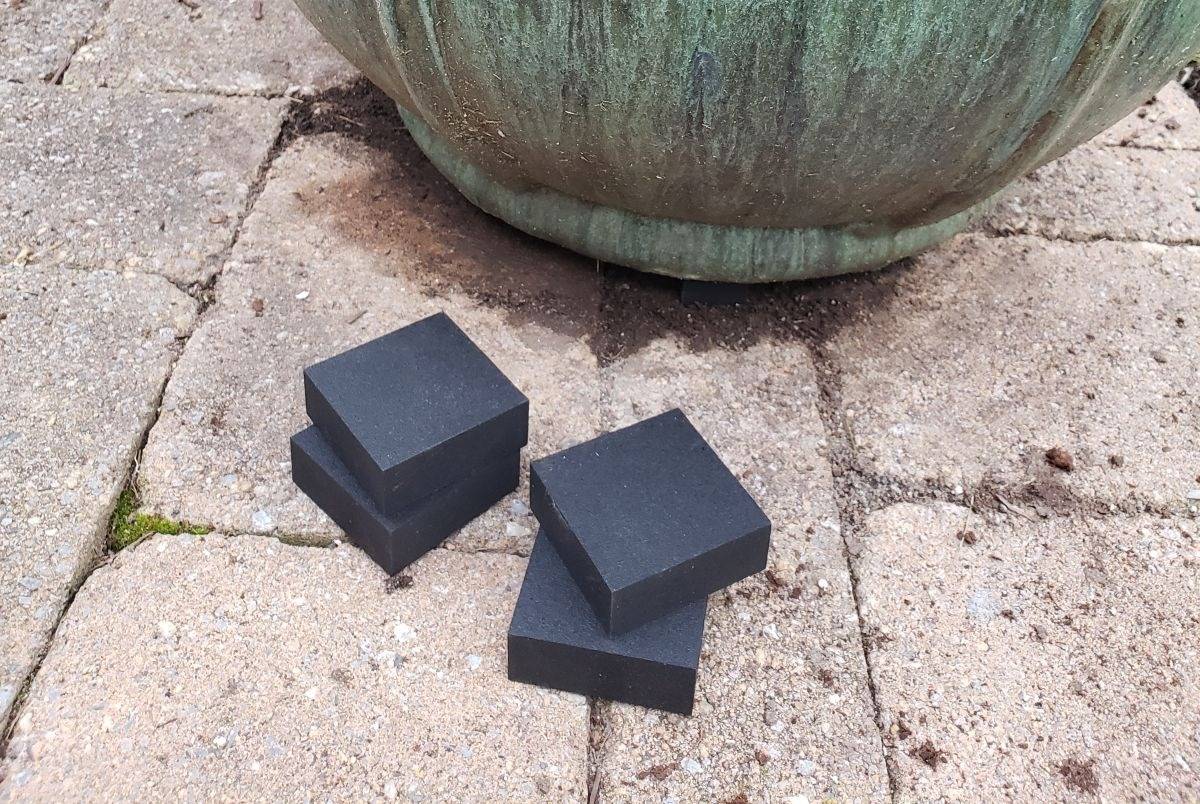
In climates with freezing temperatures, drainage and winter installation details are important. Water retained in the planter can freeze and expand, so proper drainage is just as essential in winter.The use of pot feet is also recommended, as it prevents direct contact between the pot and frozen ground. Our Nichols Brothers cast stone pots are supplied with rubber pot feet for installation.
Best suited to: permanent outdoor plantings, large shrubs and trees, courtyards, entryways, and locations where stability and traditional stone appearance are priorities.
- Fiberstone
Fiberstone offers a stone-like appearance with substantially less weight than a comparable solid stone or cast stone container. This makes fiberstone particularly appealing when you want the visual character of stone but still need some ability to move or install the planter.
Fiberstone can work well indoors and outdoors, but the exact formulation varies considerably. Our fiberstone planters are made from crushed stone and fiberglass, and are suitable for outdoor use in cold-winter areas as long as proper drainage is assured.
Best suited to: stone-look installations where lower weight is desirable, patios, terraces, entryways, indoor spaces, and substantial outdoor containers that may occasionally need to be repositioned.
- Fiberglass
Lightweight, strong, and versatile, fiberglass planters are useful when substantial planting volume is needed without the weight of stone or concrete. They are available in a range of shapes, colors, and finishes and work well indoors and outdoors.
Best suited for: Large planters, balconies, rooftops, patios, and spaces where lower weight and mobility are important.
- Metal
Metal planters offer a very different aesthetic from stone and composite materials. They can provide a crisp, architectural appearance ranging from highly contemporary to traditional, depending on the metal, finish, shape, and fabrication.
Common choices include aluminum, steel, brass, and copper.
One consideration with metal is heat. Metal can conduct solar heat readily, so a metal container in intense afternoon sun can create a warmer root environment. Placement, finish, insulation, and the planter's construction can all affect how significant this is.
Steel provides strength and a substantial architectural presence. Depending on the finish, steel can have a sleek painted or powder-coated appearance or develop a deliberately weathered patina. Zinc coated steel planters develop a distinctly old-world ambience that works well with rustic, farmhouse, and traditional surroundings.
The finish matters. Painted or powder-coated steel provides a different maintenance profile from weathering steel (Cor-ten) or untreated steel, so understand how the particular product is designed to age before choosing it. High quality powder-coating and zinc coating help to prevent rust. Cor-ten steel does not corrode, but develops a self-healing, stable, rust-like finish that requires little maintenance. Untreated steel will eventually rust, which can be attractive depending on the situation, but may not be suitable for permanent applications.
Best suited to: contemporary landscapes, large architectural containers, commercial settings, courtyards, and installations where strength and a strong visual presence are desired.
Aluminum is relatively lightweight and does not rust like ungalvanized steel. It can be finished in a wide range of colors and is often a practical choice when a large planter needs to be moved or when weight is a consideration.
Best suited to: rooftops, balconies, contemporary landscapes, large lightweight architectural planters, and locations where rust resistance is important.
Brass brings a warm, refined metallic appearance and can work particularly well where the planter is intended to be a decorative architectural element. Depending on the finish and exposure, brass can change appearance over time. This natural aging can be part of its appeal, but anyone wanting the original finish should understand the maintenance requirements.
Best suited to: entryways, formal gardens, interiors, hospitality settings, and decorative installations where the planter itself is intended to be a focal point.
Copper has a distinctive warm color when new and can develop a characteristic patina as it weathers outdoors. That changing surface is one of copper's major aesthetic attractions. Like brass, however, copper should be selected with an understanding that its appearance may evolve over time.
Copper also conducts heat readily, so placement in extremely hot, sunny locations deserves consideration.
Best suited for: indoor plants, formal gardens, traditional and contemporary landscapes, entryways, patios, and installations where a naturally evolving metal finish is desirable.
- Metal Hayrack Planters & Baskets
Hayrack planters are so called as they derived from traditional metal racks with widely spaced bars used to provide hay to farm animals. As old barns were torn down, the vintage appeal of the racks encouraged repurposing as plant containers, and they became a popular style for planters and hanging baskets.
The addition of a close-fitting brown coconut fiber liner makes an attactive combination with the black metal. Our 10mm thick liners are molded with latex for strength and shaping, with the added effect of helping to preserve more moisture than those without latex.
Sturdy metal chains on the hanging baskets allow for easy installation on hooks or brackets. Our window hayrack wall brackets are made to offset the planter from the surface behind, and make it easy to remove the planter when necessary. Railing brackets and adjustable brackets are available to hang window hayracks or half-baskets along a deck, for a convenient supply of fresh herbs or small vegetables, or a colorful summer display of flowers.
Best suited for: a classic old-world look for colorful annual displays under windows or along fences; kitchen gardens on deck railings; hanging baskets of flowers or foliage decorating porch overhangs or hung from shepherd hooks.
- Resin/Polyethylene
Lightweight, durable, and versatile, these synthetic materials are useful when mobility and lower weight are priorities. They are available in a wide range of shapes, colors, and finishes and can work well for patios, balconies, rooftops, and seasonal planting.
For outdoor use, check the product’s UV resistance, freeze-thaw suitability, drainage, and overall stability, particularly in windy locations. Our resin and polyethylene planters meet the standards for both residential and commercial applications.
Best suited for: Balconies, patios, rooftops, seasonal planting, and large planters where lightweight construction and easy mobility are important.
- Terracotta
Popular for their rustic good looks and traditional styling.
As the material is quite porous, it will pull water away from the roots, which can be an advantage for plants that like drier conditions and gardeners who tend to overwater. Most plants will require more frequent watering in a terracotta pot vs. other less porous materials.
The majority of mass-manufactured terracotta planters will not withstand repeated freeze-thaw cycles and are easily damaged if left out in cold winter conditions. Look for specially manufactured high-fired pieces for better weather resistance.
Best suited for: Indoor plants, plants that don't like "wet feet," locales that do not experience winter freezing.
- Ceramic
A wide range of colors and finishes make ceramic planters an attractive option.
Most are unsealed on the inside, so the porosity is an issue in winter. Water will be absorbed and then expand with freezing, at best causing the finish to flake off little by little, at worst cracking or breaking the entire planter. Even with pieces glazed inside and out, such as Mexican Talavera pottery, the bottoms will usually remain unglazed for the planter to breathe. With time, most ceramic planters will develop microscopic hairline cracks that will allow water to enter under the glaze, which will cause damage in freezing temperatures.
Weight can be an issue with larger planters.
Best suited for: Indoor plants and freeze-free zones.
Drainage
If there is one feature that should never be overlooked, it's drainage.
Most container plants do not want their roots sitting in saturated growing medium. Excess water needs somewhere to go. A planter should have an appropriate drainage system for the plant and its location.
Outdoor planter drainage
For outdoor planters, drainage holes allow rainwater to escape -- especially important when containers are exposed to frequent rainfall. Place outdoor planters where excess water can drain away freely rather than collecting against a building, deck, or other structure.
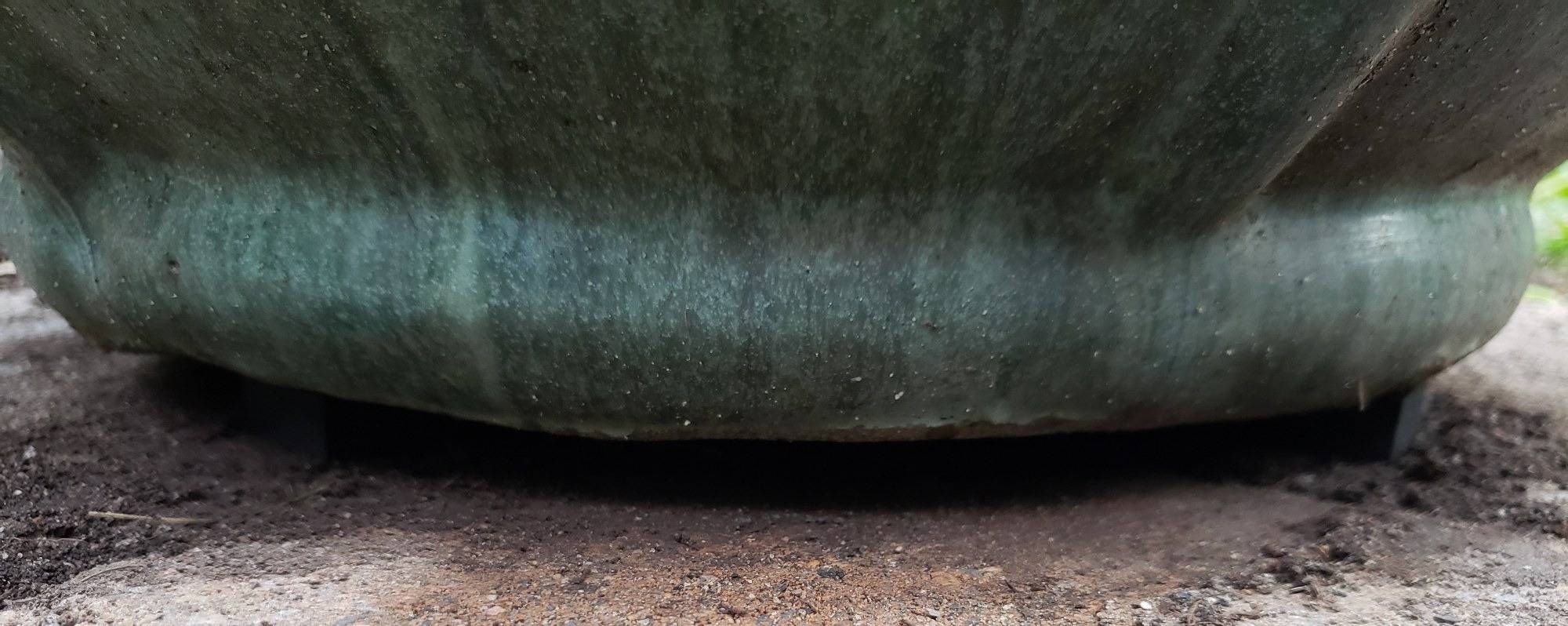
When using a planter on a hard surface, consider whether the drainage hole sits directly against the surface. Containers can benefit from feet, risers, or another method of creating space beneath the planter so water can escape freely.
Planters left outside in cold climates must have adequate drainage, even in winter, to prevent freeze damage.
Indoor planter drainage
For indoor plants, drainage holes should generally be paired with a saucer or another method of protecting the surface underneath.
When a decorative planter doesn't have a drainage hole, use a properly draining nursery pot inside it instead.
Remember to empty the saucer or cachepot after watering when necessary. Standing water should not be allowed to remain around the plant's roots.
Don't add a layer of gravel, pot shards, or any material coarser than the potting mix to "improve drainage." A common gardening tip is to put gravel or stones in the bottom of a container. This isn't a reliable way to improve drainage -- studies have shown that this actually impedes drainage rather than improving it, and it also reduces the amount of usable root space.
Instead, use an appropriate growing medium and a properly designed drainage hole covered with a bit of window screening or other similar filtering material that will prevent soil from clogging up the hole.
When is a self-watering planter appropriate?
Self-watering planters can be especially useful when plants need a more consistent water supply or when regular watering is difficult.
They're worth considering for:
- Busy homeowners who can't water every day
- Balconies and patios that dry out quickly
- Plants that prefer more consistent moisture
- Locations where summer heat increases watering demands
- People who travel frequently
- Certain herbs, annuals, vegetables, and moisture-loving plants
However, a self-watering planter isn't automatically the best choice for every plant.
Plants such as many succulents and drought-tolerant species generally prefer the growing medium to dry somewhat between waterings. For these plants, a conventional planter with excellent drainage may be more appropriate.
The key is to match the watering system to the plant. Self-watering is a tool, not a substitute for understanding what your plant needs.
You can also add a separate sub irrigation unit to a planter, effectively creating a self-watering pot. We offer these in sizes and shapes to fit almost any container.
Aesthetic Considerations
Choosing a planter isn't only about horticulture. Planter proportions, shape, and style affect how the plant and container work together visually.
A successful combination generally has a sense of proportion, balance, and intentional contrast. The planter should support the plant visually without competing with it.
Color
Color is not just an aesthetic decision. The color and finish of a planter affect how it looks in the landscape and can influence how much solar heat the container absorbs.
For design purposes, start by considering the colors already present in the space:
- Neutral planters provide a timeless backdrop for colorful flowers.
- Dark planters can create contrast with light foliage and flowers.
- Earth tones work naturally with greenery and traditional landscapes.
- Bright colors can turn the planter itself into a focal point.
- Metallic finishes can complement contemporary architecture and modern planting schemes.
- Natural stone finishes can reinforce a traditional or formal landscape.
Think of the planter as part of the planting design rather than simply a vessel that holds the plant.
Siting: Sun, wind, surfaces, access, scale
The same planter can behave very differently depending on where you put it.
Before choosing a container, look at:
- Sun exposure
A planter sitting in full afternoon sun will experience different conditions from one beneath a covered porch. More sun generally means more heat and potentially faster drying. Shade can reduce evaporation but may also create a cooler, wetter environment. Match the plant's light requirements to the actual location.
- Wind
Tall plants and large foliage can catch wind, particularly on balconies, rooftops, decks, and exposed patios. Heavy planters can provide valuable stability.
Drainage and surfaces
Consider where water will go when it exits the planter. A saucer may be essential indoors or on delicate surfaces. Outdoors, make sure drainage doesn't create staining, pooling, or water damage.
- Accessibility
If you need to water, prune, deadhead, fertilize, or move the plant, make sure you can comfortably reach it. For plants that will eventually require repotting or root pruning, accessibility becomes even more important. A large planter wedged into a tight corner may be nearly impossible to work on once the plant matures.
- Scale
A planter should feel proportionate to its surroundings. A small container can disappear beside a large entryway, while an oversized planter may overwhelm a narrow walkway. Use the architecture and surrounding landscape as part of your sizing guide.
The plant should also be in scale with the pot.
Traditional design principles suggest these ratios:
If the pot is taller than wide, the tallest plant should be 1.5 to 2 times the height of the pot.
If the planter is wider than tall, the tallest plant should be 1.5 to 2 times the diameter (width) of the planter.
For a balanced overall composition, 1/3 of the height should be the planter with the remaining 2/3 of the height the plants. That being said, there are plenty of attractive designs with the opposite ratio--most a perfectly pruned round evergreen atop a tall, narrow planter.
To avoid a top-heavy look (and potentially unsafe conditions that would lead to toppling over), the plants should be no more than 3 times the height of the planter.
As always, remember that design principles are just a guide, and not "rules." Plant what makes both you and the plants happy!
- Relationship to surroundings
The planter should also relate to the architecture and landscape around it.
A highly traditional home may work naturally with cast stone urns, classical forms, or weathered materials. A contemporary building may call for clean-lined aluminum, steel, or geometric fiberstone planters.
That doesn't mean styles have to match exactly. Contrast can be intentional and effective. A contemporary planter can provide a modern counterpoint to a traditional garden, while a weathered metal planter can add warmth to a minimalist setting.
The important consideration is whether the combination feels intentional rather than accidental.
- Plant Styles: tall & narrow, architectural, formal
A successful combination generally has a sense of proportion, balance, and intentional contrast. The planter should support the plant visually without competing with it.
- Tall and narrow plants
Tall, narrow plants benefit from planters that reinforce their vertical character.
Plants such as ornamental grasses, upright evergreens, palms, topiary forms, and columnar plants can look particularly effective in tall or vertically proportioned planters. A narrow planter can emphasize height and create an elegant silhouette, while a broader planter may visually ground an otherwise vertical composition.
However, don't choose a tall, narrow planter based on appearance alone. The container must have sufficient root volume and a stable footprint for the mature plant. A tall plant in a lightweight or narrow container may be more susceptible to tipping in wind. For outdoor locations, consider combining vertical emphasis with a sufficiently broad base or substantial material.
Design approach: a tall plant in a tall planter creates a strong vertical statement; a tall plant in a lower, wider planter creates more visual grounding.
- Architectural plants
Plants with bold, sculptural forms — such as agaves, yuccas, cycads, architectural grasses, and other strongly structured plants — often benefit from simple planters with clean lines.
The goal is usually to choose which will be the focal point--plant or container. A simple geometric planter can allow a plant's sculptural character to shine, while an ornate, highly detailed planter will take center stage planted with the clean lines of an ornamental grass, for example.
For architectural plants, both repetition and contrast can be useful design tools.
Repetition can reinforce the plant's natural geometry. For example, a strongly upright plant in a tall, rectangular planter creates a cohesive vertical composition.
Contrast can create more visual tension. A rounded plant in a square planter creates a deliberate relationship between curved and angular forms, while a spiky plant in a simple cylindrical planter contrasts sharp foliage with the container's smooth, continuous form.
Design approach: use repetition to reinforce the plant's natural geometry, or use contrast to create visual interest. When both the plant and planter have strong competing forms, keep their proportions and visual weight in balance.
- Formally pruned plants and topiary
Formal plants — including topiary, clipped evergreens, standards, and other carefully shaped specimens — often pair naturally with planters that have an equally deliberate geometry.
Cylinders, cubes, and other strongly defined geometrical shapes can reinforce the formal character of the plant. That doesn't mean identical geometry, however--a round topiary may be effective in either a square pot or a round one, depending on the amount of contrast desired.
For traditional settings, classical shapes such as urns and pedestal planters can echo the structure of formally pruned plants. In contemporary settings, a precisely proportioned cube or cylinder can create a similar sense of order with a more modern vocabulary.
Symmetry can also be used intentionally. Matching planters on either side of a doorway, staircase, gate, or focal point can create a formal sense of arrival.
With topiary and other formally pruned plants, proportion is particularly important. A small planter beneath a large, carefully shaped specimen can look visually unstable, while an oversized planter may overpower the plant.
Design approach: formal plant + defined planter geometry + balanced proportions creates a strong sense of order.
The Bottom Line: Choose the Planter for the Plant's Whole Life
The best planter isn't necessarily the biggest, most expensive, or most decorative option. It's the one that matches the plant's root system, watering requirements, growing environment, expected lifespan, and location.
But practical considerations are only part of the decision. The planter and plant should also work together visually.
A tall, narrow plant may benefit from vertical proportions. An architectural plant can often shine against a simple geometric container. A formally pruned plant can be reinforced by symmetry and deliberate planter geometry.
On a balcony or rooftop, efficient proportions and manageable weight become particularly important.
For an indoor houseplant, that might mean a modestly sized decorative container with a drainage hole and saucer — or a nursery pot placed inside a larger cachepot that can remain part of the décor as the plant grows.
For a summer patio display, it could mean a lightweight planter that's easy to rearrange.
For a permanent outdoor shrub or tree, durability, stability, root space, drainage, and winter performance may matter far more than mobility.
Cast stone can provide substantial permanence, fiberstone can provide a similar stone-inspired appearance with less weight, and metal planters can bring an architectural element to the landscape.
And for a tropical plant that spends summer outdoors and winter inside, the ability to move the planter may be the deciding factor.
Remember that plants don't necessarily have to move into progressively larger decorative planters forever. Some can be maintained in a particular container size through appropriate root pruning, while others are better managed by moving them into progressively larger nursery pots. Understanding the plant's growth habits can help determine which approach makes the most sense.
Once you know where the plant is going, how long it will stay there, how large it is likely to become, what conditions it will experience, how much weight you can accommodate, and what visual relationship you want between the plant and planter, choosing the right container becomes much easier.
Choose the planter with the plant's needs in mind first — then choose the size, shape, material, and style that make the entire space feel intentional.
FAQs
- What is the most important thing to consider when choosing a planter?
Start with the plant’s needs and the conditions of the location. Consider root space, mature size, moisture requirements, drainage, sunlight, wind, climate, weight, mobility, and how long the plant will remain in the container. Once those requirements are established, choose the size, material, shape, and style that complement both the plant and the space.
- How large should the saucer for a planter be?
A saucer only needs to be slightly larger than the base of the planter, perhaps one to two inches. It needs to be able to catch the overflow from a properly watered pot -- i.e. one should stop watering as soon as water is seen draining from the pot.
Outdoors, too large a saucer may hold rainwater for periods of time long enough to promote root rot or encourage mosquitoes to breed.
Indoors, there is technically no saucer "too large," but aesthetic balance and foot traffic safety should always be considered.
Remember that saucer sizing is usually given as an OUTSIDE dimension, and since many decorative saucers may have wide or tapering rims, always check the interior dimensions and base your saucer sizing on that.
- Do I need to put gravel or pot shards in the base of my planter for drainage?
NO. Absolutely NOT. Despite still being recommended by reputable gardening sources, this practice has more recently been shown in numerous studies to raise the water table inside the pot, actually impeding drainage, not promoting it.
- Can a plant stay in the same pot?
Sometimes, to a degree. Certain plants prefer being a bit potbound, reducing the frequency of repotting. Other established plants can be maintained in the same-size container through root pruning and replacement of some or all of the growing medium. This is particularly common with bonsai and some long-lived container plants. However, root pruning is species-specific and should not be treated as a universal alternative to repotting.
- What should I consider when choosing a planter for a tree?
Trees require substantially more root space and structural stability than most container plants. Consider the tree’s mature size, root characteristics, container volume, drainage, planter weight, root cold-hardiness, and long-term maintenance requirements. The container should also be appropriate for the tree’s expected time in the planter.
- What is the best material for outdoor planters?
There is no single best material for every outdoor setting. Cast stone provides substantial weight and a traditional architectural appearance, while fiberstone offers a stone-like look with less weight. Aluminum and steel provide contemporary architectural options, while brass and copper offer distinctive metallic finishes. Consider weight, climate, drainage, maintenance, and how permanent the installation will be.
- Are metal planters suitable for plants?
Yes. Aluminum, steel, brass, and copper can all be used for planters when properly designed for horticultural use. However, metal can conduct heat, so the planter’s finish, location, insulation, drainage, and exposure to direct sun should be considered—particularly in hot climates.
- Are self-watering planters good for all plants?
No. Self-watering planters can be useful for plants that prefer consistent moisture or for situations where regular watering is difficult. They may be less suitable for drought-tolerant plants that need the growing medium to dry between waterings. The watering system should match the plant’s moisture requirements.
- Do planters need drainage in winter?
Good drainage is particularly important in climates where containers are exposed to freezing temperatures. Waterlogged growing media can increase the risk of root damage, while trapped water can contribute to freeze-related damage in some planter materials. Use containers designed for the expected climate and follow the manufacturer’s recommendations for winter exposure.
- Can I leave my planters outside over winter if the plants are hardy?
Not necessarily. A plant’s cold hardiness and a planter’s winter durability are two separate considerations. Container-grown plants have roots that are more exposed to freezing temperatures than plants growing in the ground, while trapped water can expand when frozen and damage some planter materials. Before leaving a planter outdoors, check the plant’s container hardiness, make sure drainage is unobstructed, and confirm that the planter material and construction are suitable for freezing and freeze-thaw conditions. In particularly cold or exposed locations, additional winter protection or seasonal storage may be appropriate.
- Can I leave plastic planters outside over winter?
It depends on the type and quality of the planter. Our outdoor-grade plastic, polyethylene, and other polymer planters are designed to withstand freezing temperatures and freeze-thaw cycles,unlike others that may become brittle, crack, or deform. If leaving a plastic planter outdoors through winter, make sure the planter has adequate drainage.
Below: Beware of using unglazed terracotta saucers indoors. Just as the pot can absorb water, so too can the saucer, thus transferring the moisture to the surface below.
Below: There's no one "right size" for a planter saucer. It just needs to be large enough to fit the bottom of the plant pot inside it and to catch the typical amount of water overflow. Considerations beyond that are strictly aesthetic.
Below: Diana Fiberglass Planter: A pot without a drainage hole can be used as a cache pot if your desired plant does not yet require a much larger pot. Water should be emptied regularly so that the roots do not sit in water.
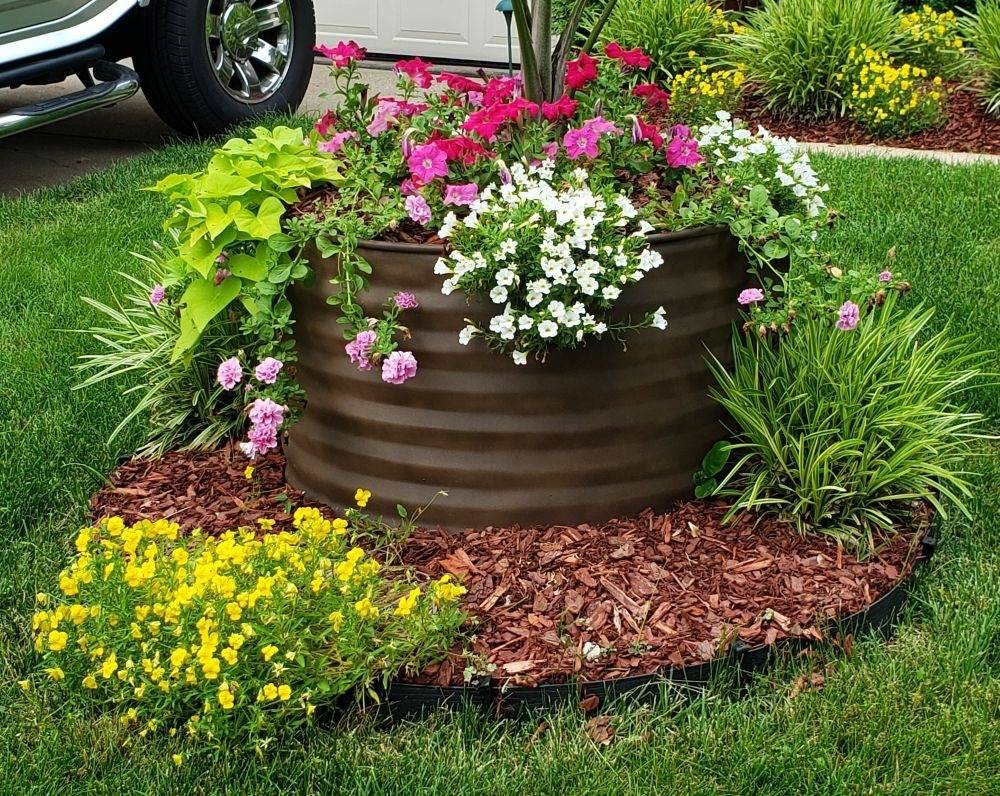
Below: Adding a planter filled with annuals to a bed is a great way to add dimension and season long color--this provides much more impact than this same planting at ground level. A dark planter blends in with the mulch, giving the trailing annuals center stage.
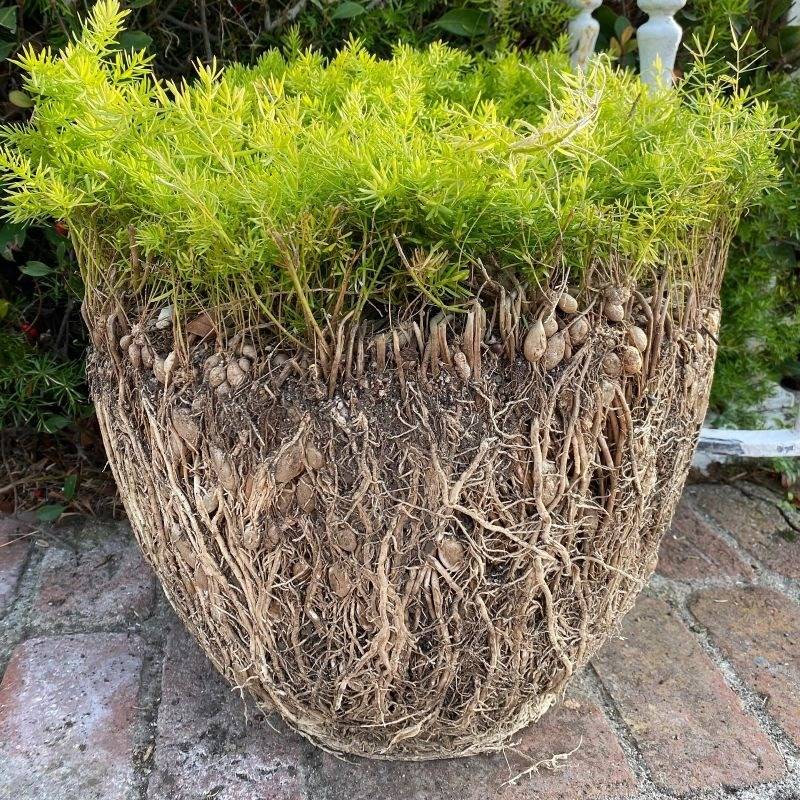
Below: One reason it's good to know something about your plant's root system! An asaragus fern can fill a container so completely with its fast-growing roots that it can crack a container, or be impossible to remove without breaking the pot.
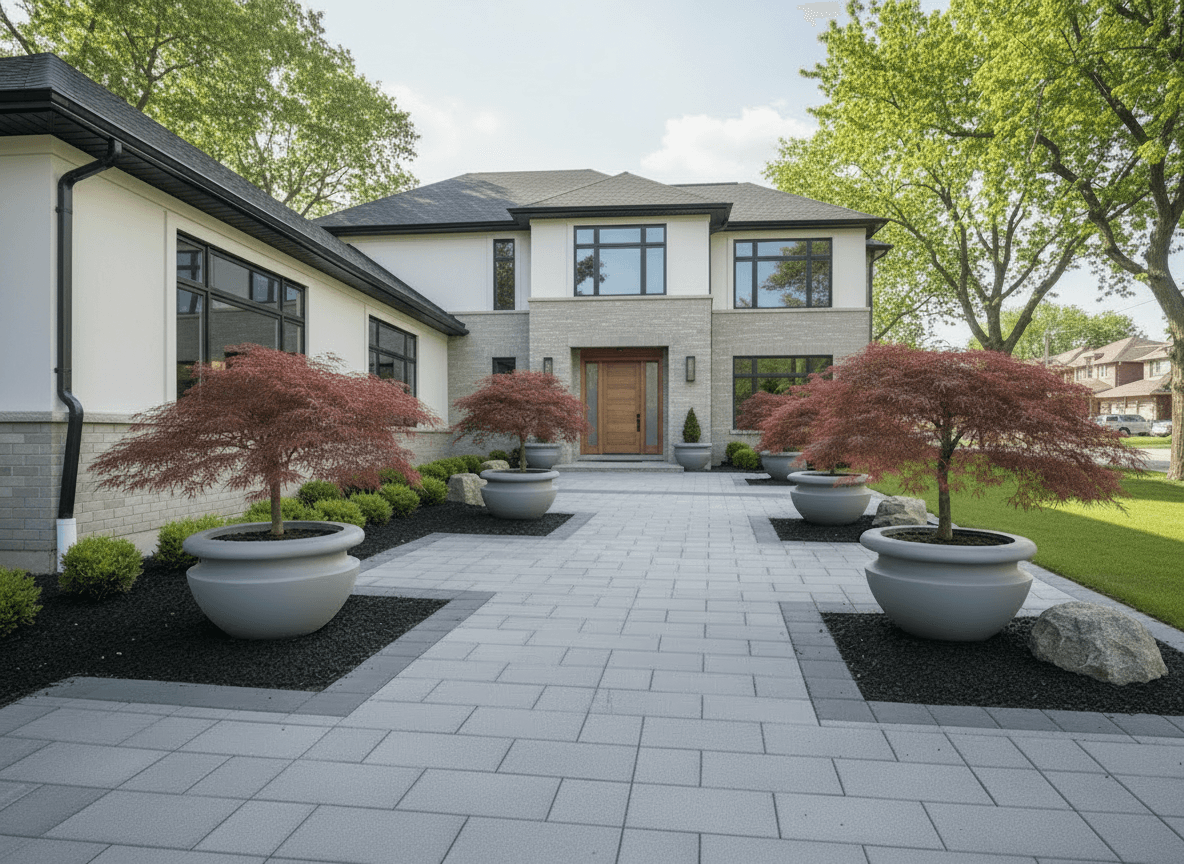
Below: Cast Stone Orchard Bowls: Permanent plantings of small trees and shrubs need large, sturdy, weatherproof planters such as these, and drainage must be ensured year-round.
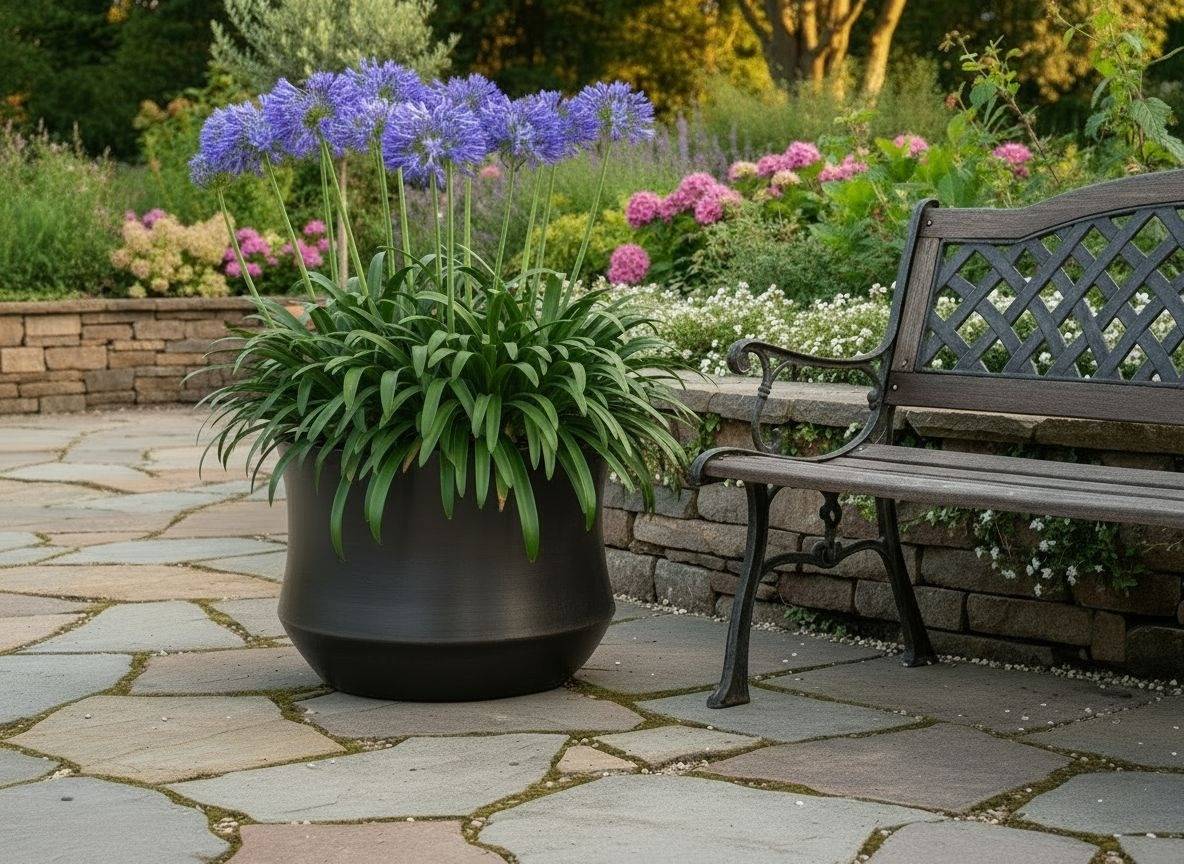
Below: Ankara Aluminum Planter: Agapanthus bloom best in a pot that restricts their root growth somewhat, so can be kept in the same size pot a bit longer than others. However, "restricted" is not the same as overly root-bound, which can impact the plant negatively overall.
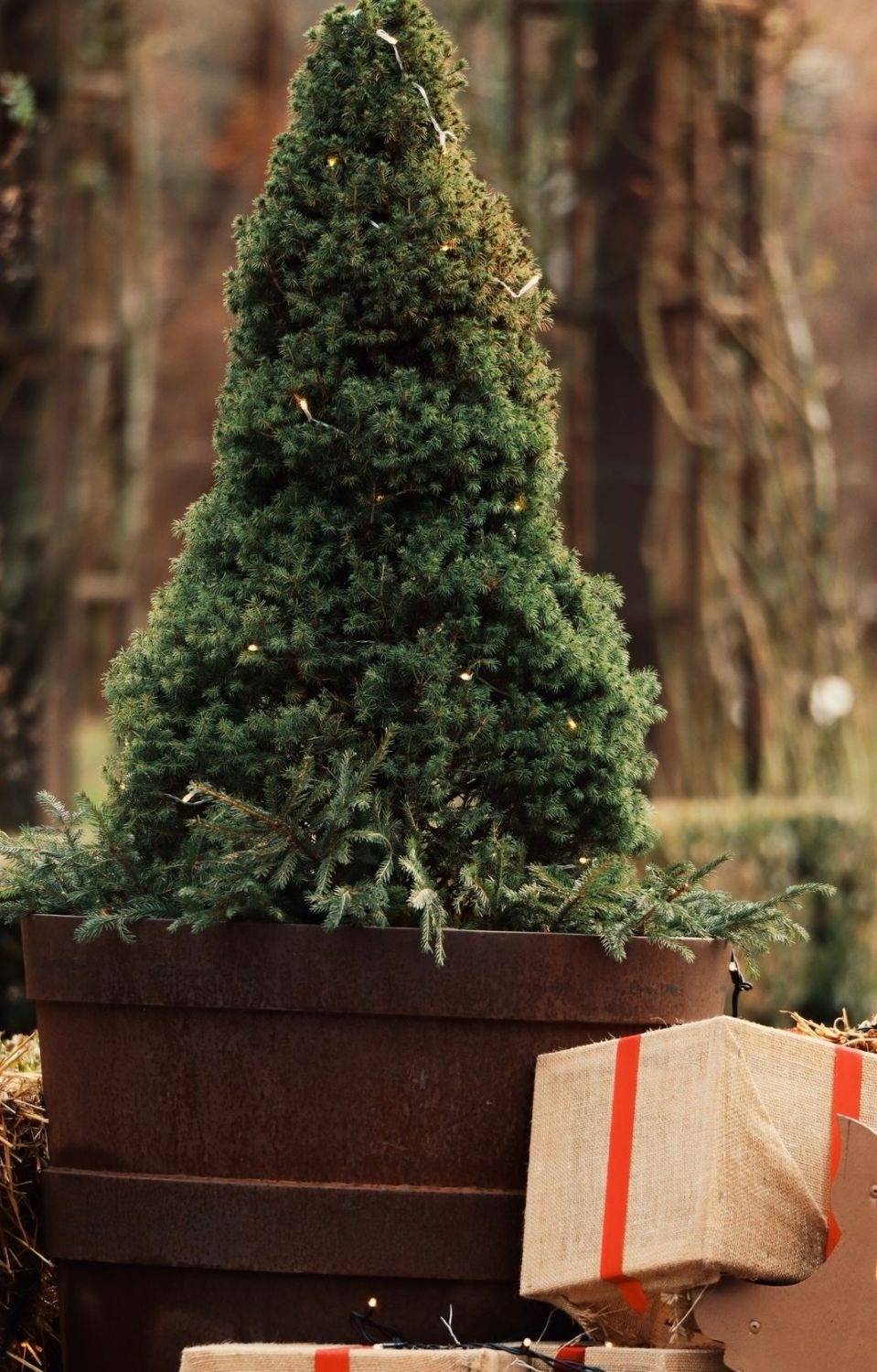
Below: Especially popular for the holidays, Dwarf Alberta Spruce are one of the best evergreen plants for containers in cold winter zones, due to their slow growth and tolerance of low root temperatures.
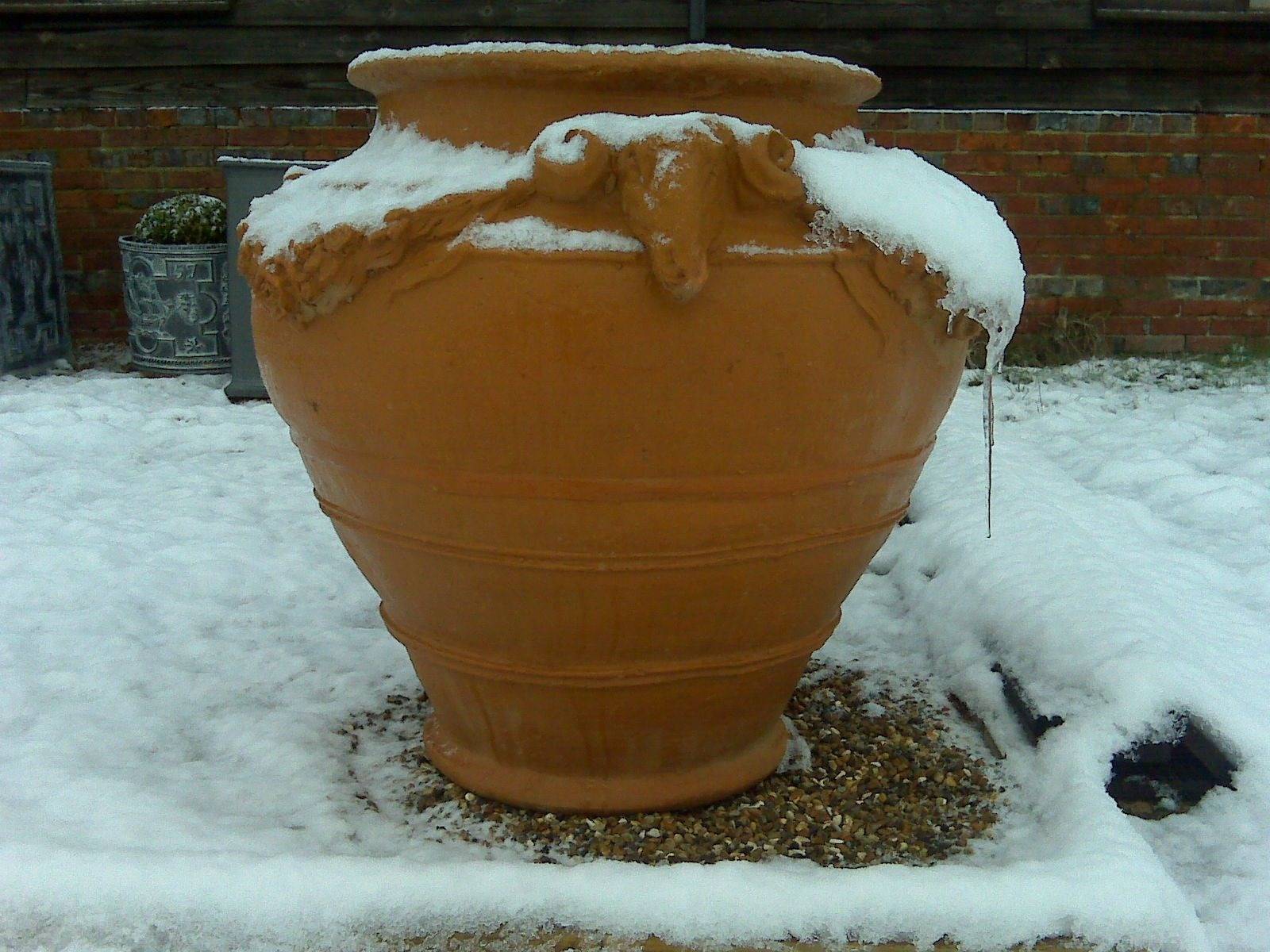
Below: Fiberglass Sussex Urn: With adequate drainage, fiberglass planters can be safely left outdoors in freezing weather.
Below: Thick bubble wrap traps layers of insulating air between your plant's roots and the outside of a container when placed inside at planting time. This will protect from extremes of both heat and cold.
Below: Crescent Garden Pebble Caddies and Planters: This clever plant caddy design hides the casters underneath, creating a stylish combination of saucer and transport device, perfect for moving plants around for best light exposure indoors, or plants that transition from outdoors.
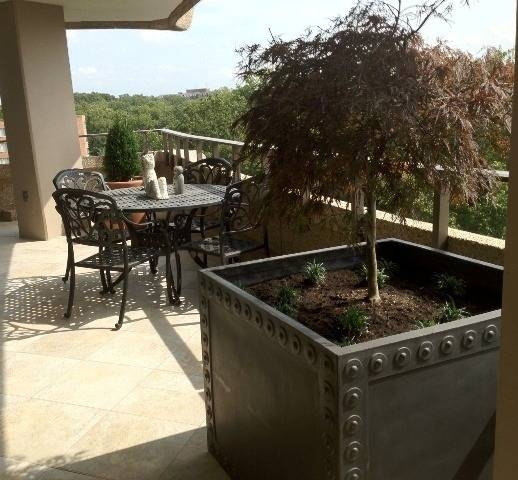
Below: Fiberglass Cromwell Planter: This large planter will be able to accommodate this Japanese Maple for many years. Smaller plants are planted around the tree to add water-absorbing roots to the currently empty volume of soil surrounding the tree's original root ball.
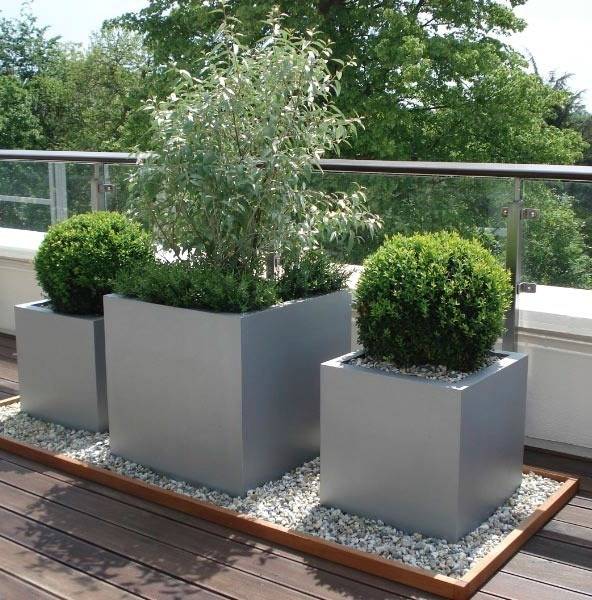
Below: Geo Cube Planters: Alternating two sizes of these simple, lightweight fiberglass cube planters creates an attractive compostion on this rooftop. The gravel bed collects water overflow while perfectly accenting the planters.
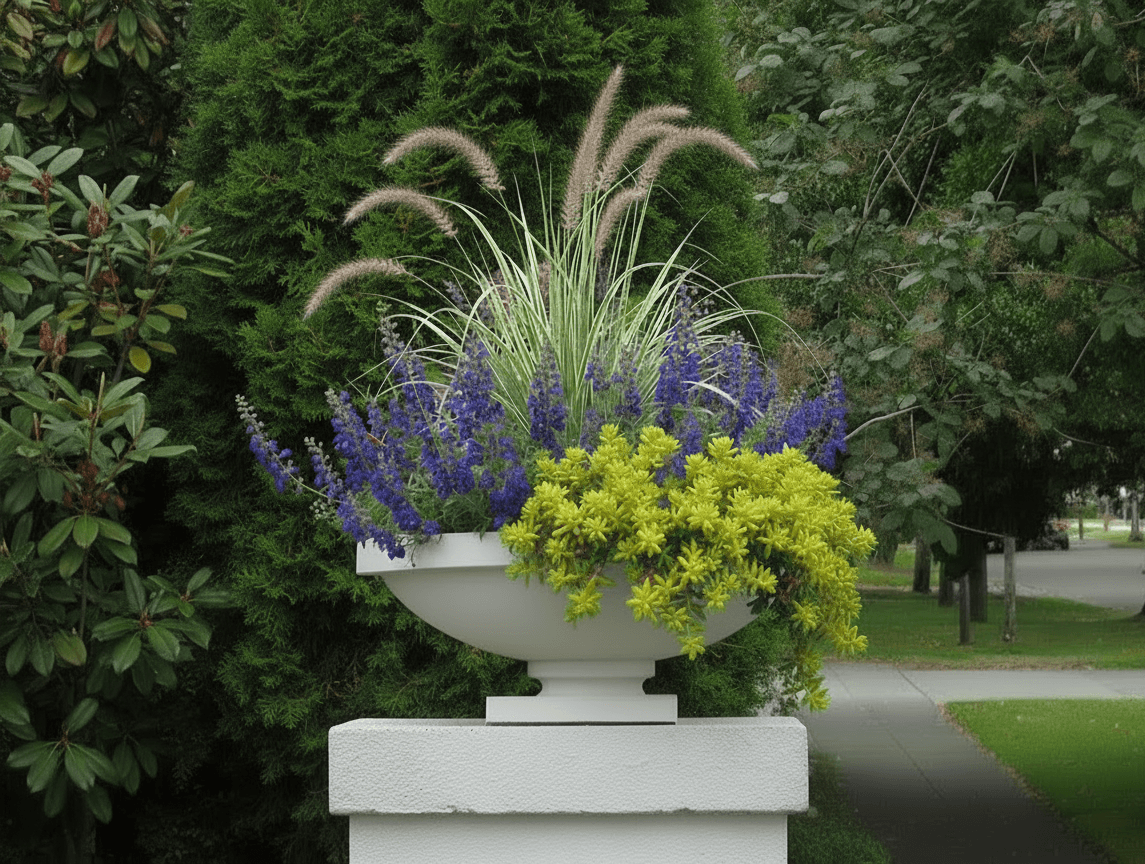
Below: Cast Stone Frank Lloyd Wright Dana House Vase reproduction: The iconic architect often specified his planters to be placed high atop walls or pedestals where they could be viewed at eye level from inside. Cast stone planters supply the strength and stability needed in such situations.
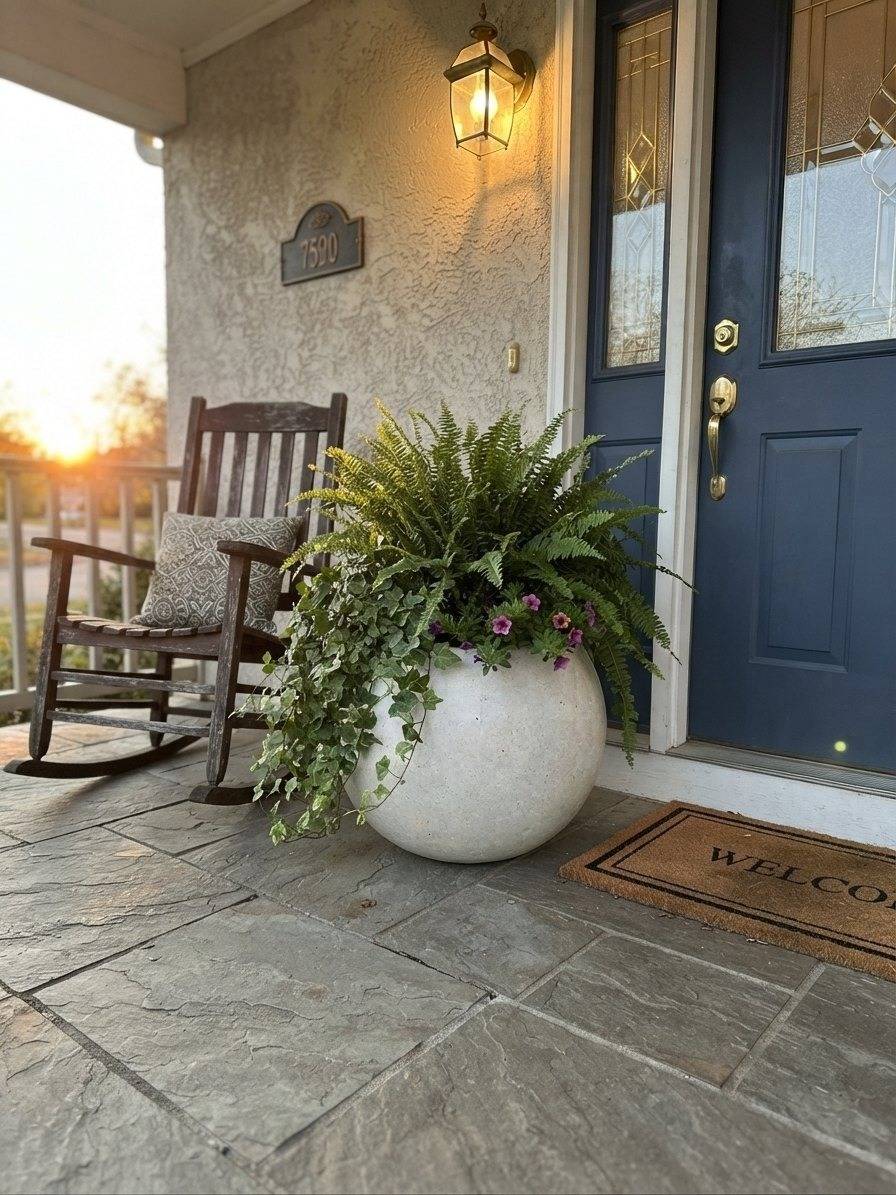
Below: Artemis Fiberstone Planter: Fiberstone is a mix of natural crushed stone and fiberglass, resulting in a lighter-weight planter with an organic, smooth textured stone-like finish combined with freeze resistance.
Below: Geo Vase Planter: Fiberglass planters are perfect for year-round plant displays as they will endure freezing conditions when adequately drained. This design shows that the recommended traditional 1/3 pot to 2/3 plant ratio can be reversed quite successfully.
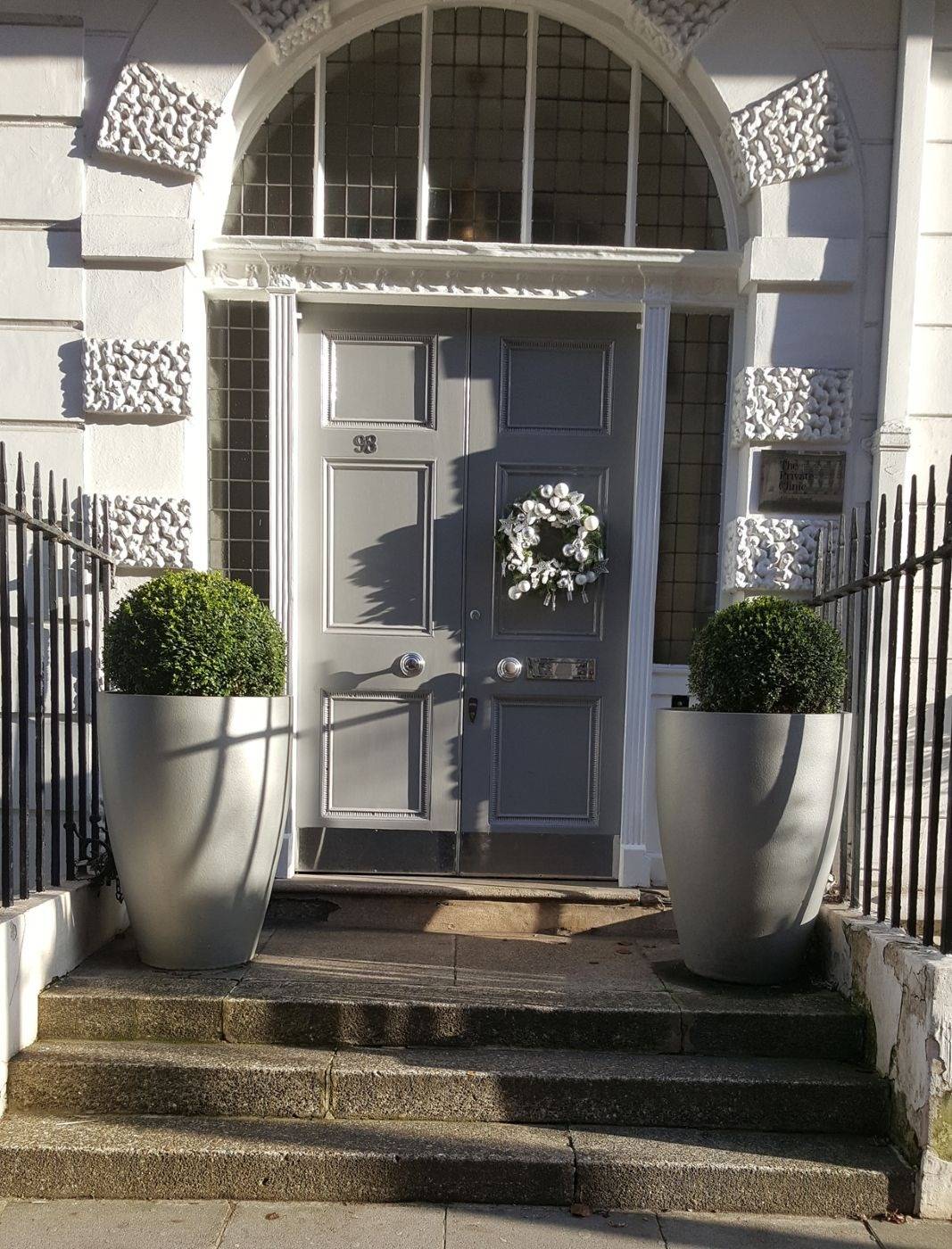
Below: Round Sienna Planters : With a hot-dipped zinc coating, steel planters take on an old-world ambience, as well as becoming rust resistant.
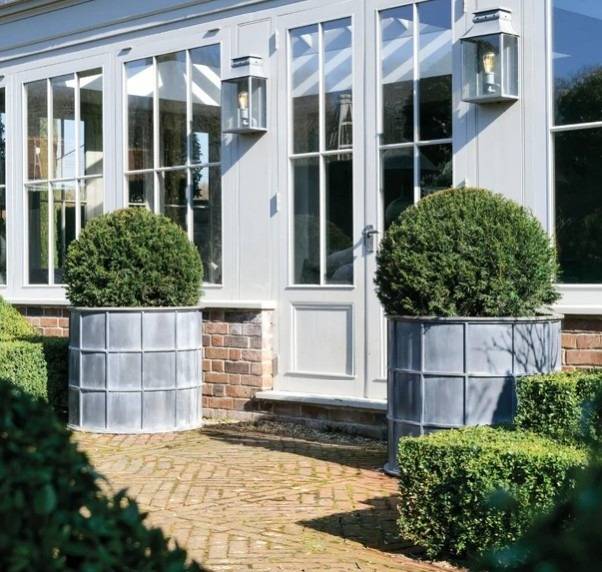
Below: Mid-Rectangle Planter: Rust-proof and virtually maintenance free, aluminum planters are incredibly versatile. Here, they enliven a contemporary balcony with a colorful planting of perennials and tropicals.
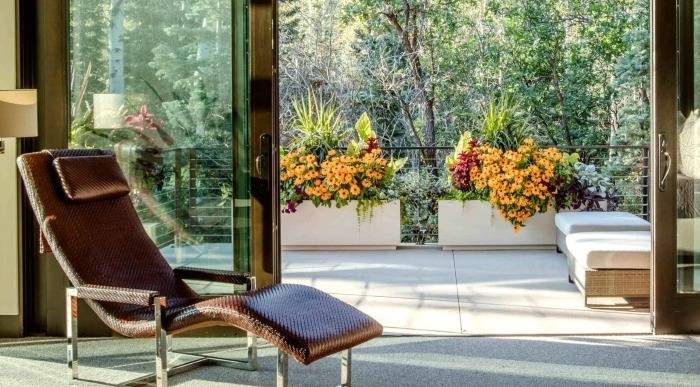
Below: Brass Arzu planter as cache pot: A blooming lavender housed in the rich, mellow tones of antiqued brass adds a note of warmth and a pop of color to this mud room
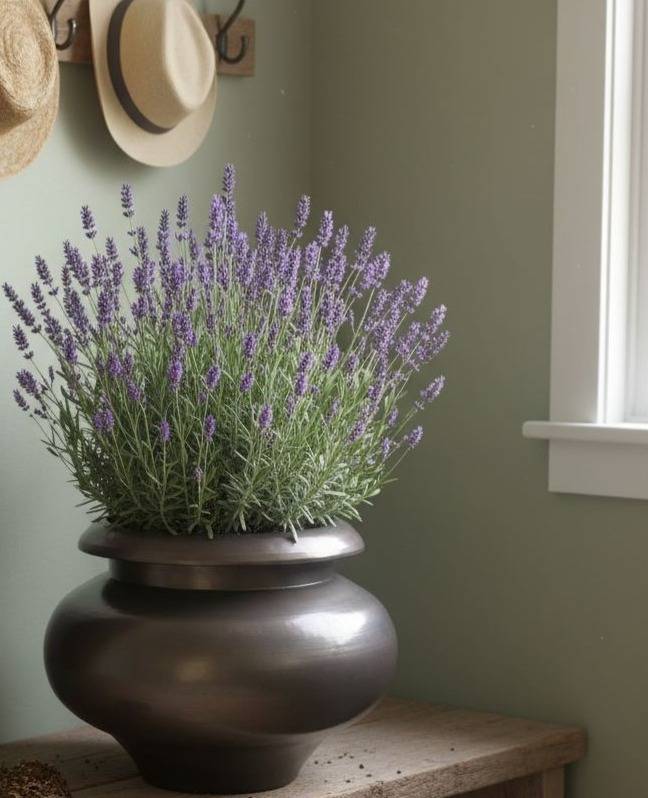
Below: Cylinder Planter: Polyurethane planters have the advantage of being lightweight, and a good quality planter will also be strong and weather and fade resistant. This makes them ideal for large outdoor plantings.
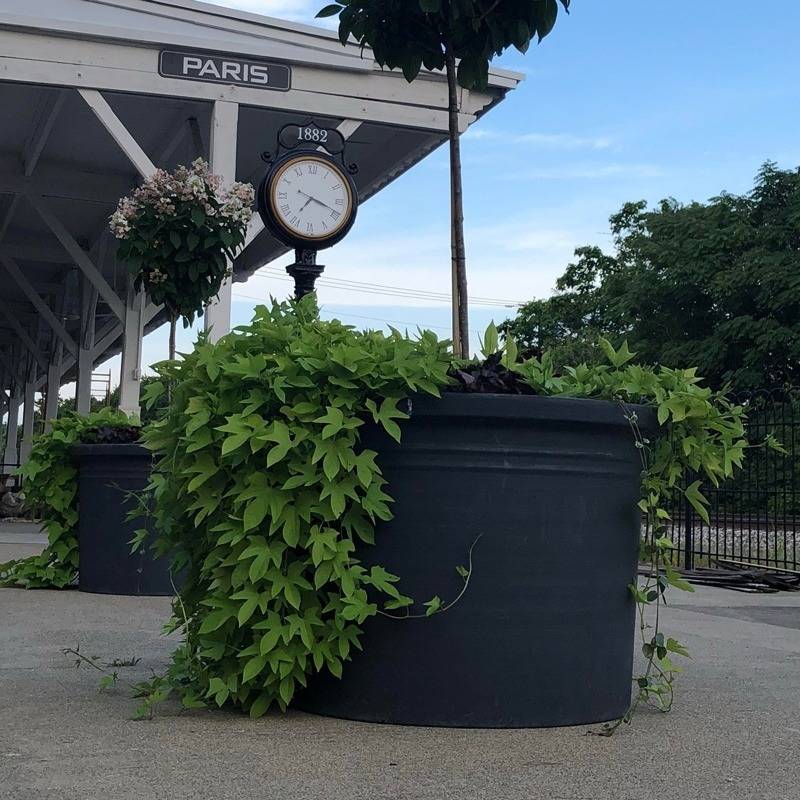
Below: Traditional terracotta pots are great for over-waterers and plants that enjoy a drier environment, as they wick water from the soil. Unglazed terracotta saucers should only be used on surfaces that won't be damaged by moisture, as they will absorb water, too.
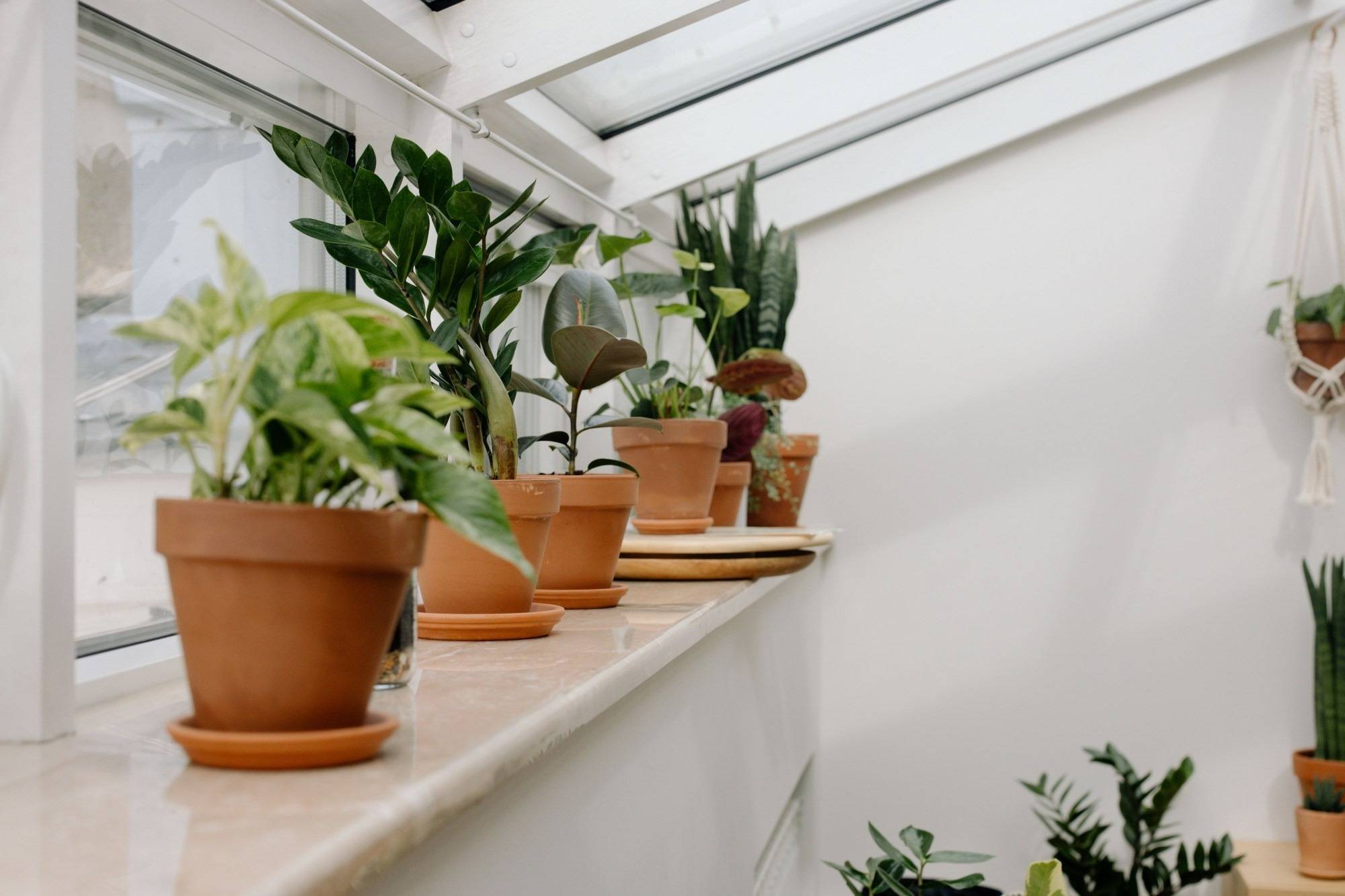
Below: Water building up in a ceramic pot with a clogged drainage hole. Repeated freeze-thaw cycles will cause cracking and flaking of the ceramic finish, as seen here.
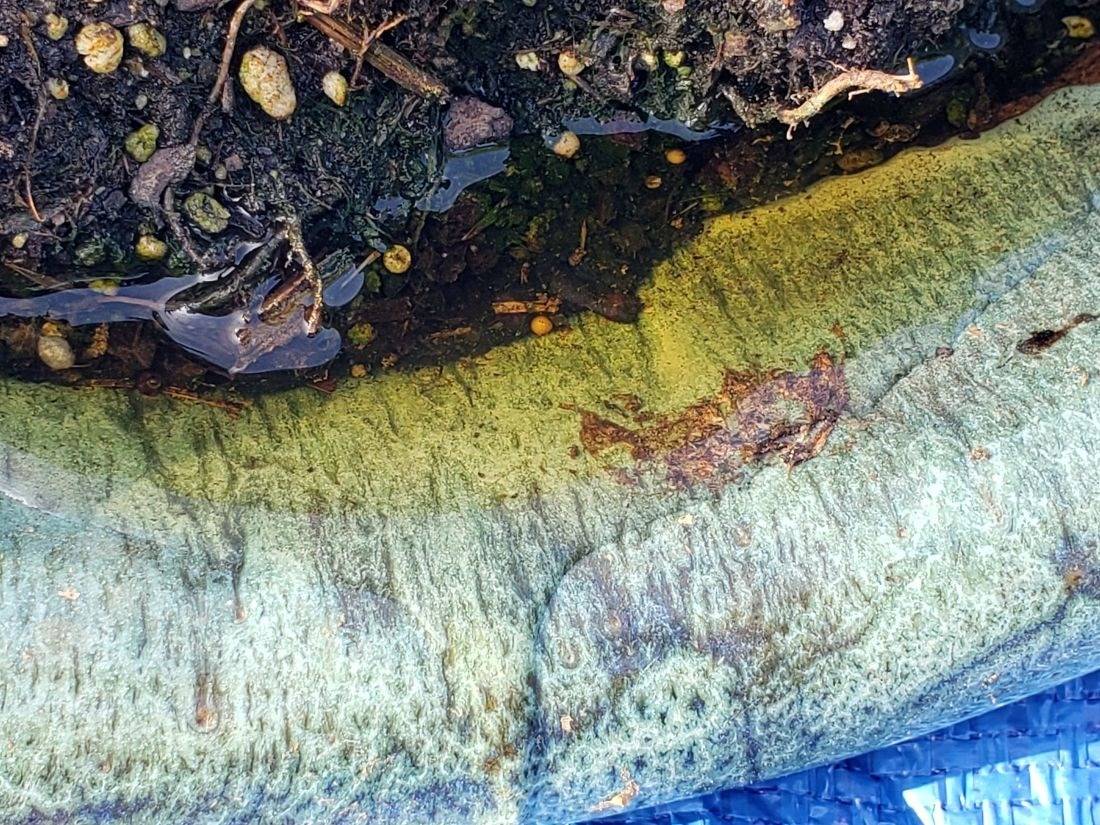
Below: This ceramic pot actually has a drainage hole, but it became clogged sitting on a mulched bed after several days of rain. This is a perfect example of why you should never automatically keep watering a wilted plant, like this flowering Vinca. The symptoms of over and under watering can look similar, and it's not until a situation like this occurs that it becomes obvious which is the problem.
Below: Pot Risers, sturdy rubber feet for pots. A minimum of three is required for stability. Available in 2 sizes, they work with almost any pot.
Below: Pot with Pot Risers pot feet installed. Virtually invisible, they promote drainage and prevent contact with wet ground, both important when overwintering planters outside.
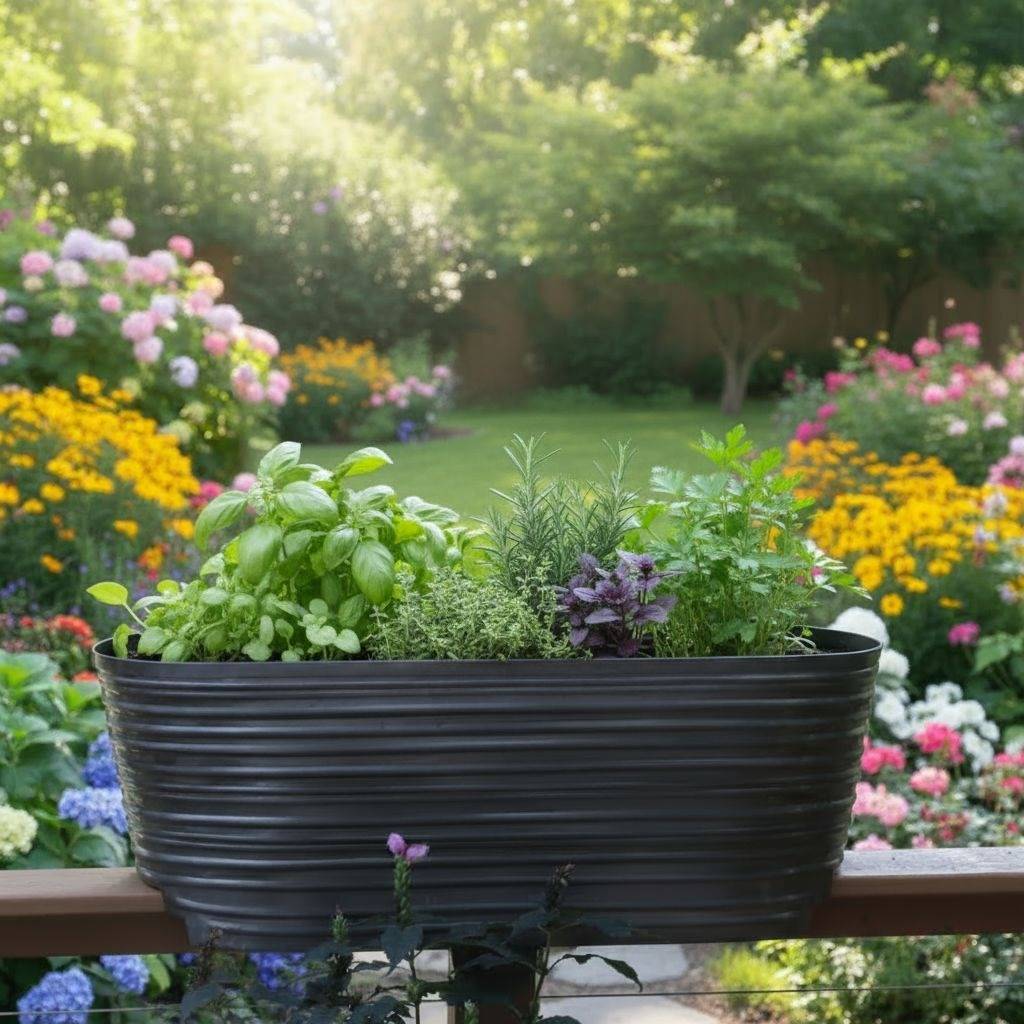
Below: Esin Aluminum Self-Watering Planter: Self-watering planters don't have to be just functional, they can be stylish, too! Adding one to a deck railing creates a thriving and handy kitchen garden for herbs and small vegetables.
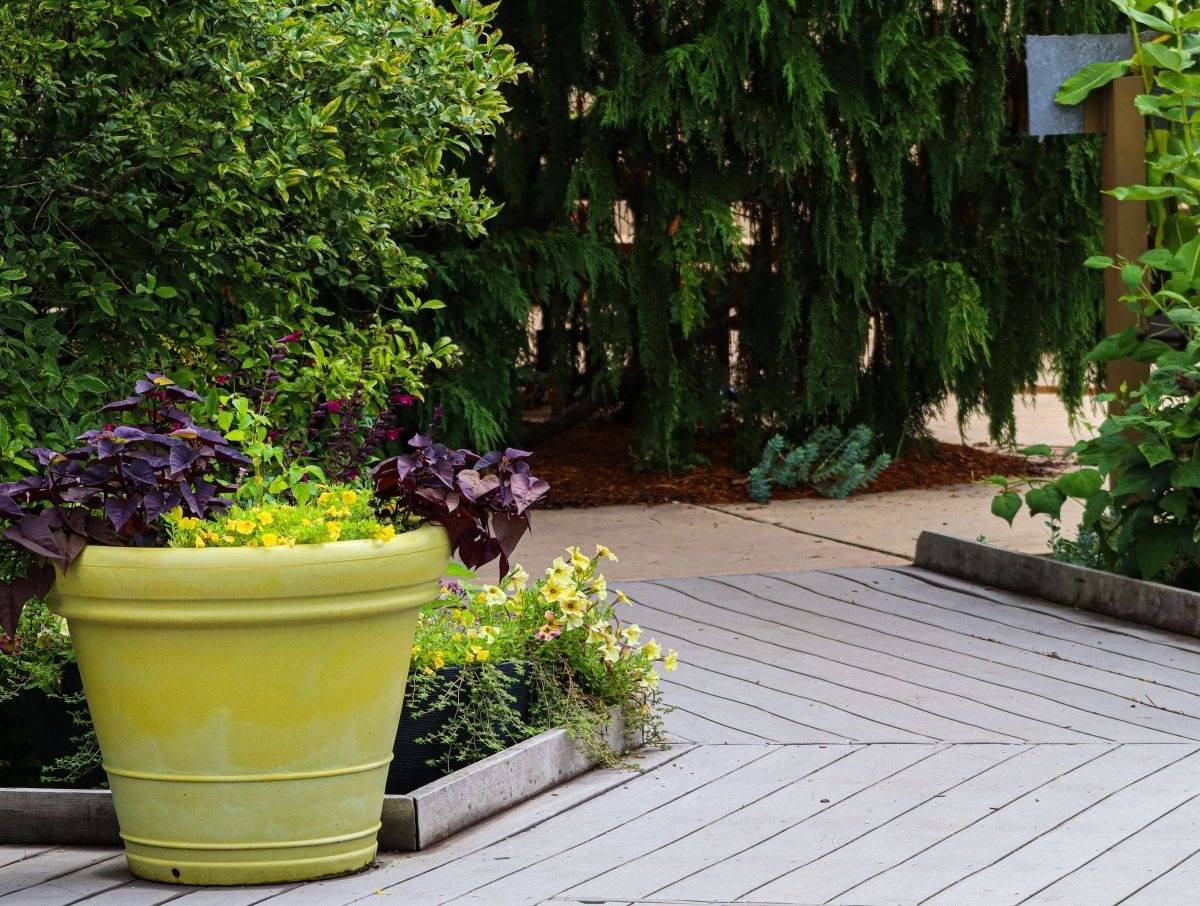
Below: The planter here is a perfect color accent--despite its brightness it does not overpower the scene, playing off the color of the petunias behind it. Adding a bit of low chartreuse foliage under the evergreen and in the corner of the bed on the right would draw the eye even further along the path.
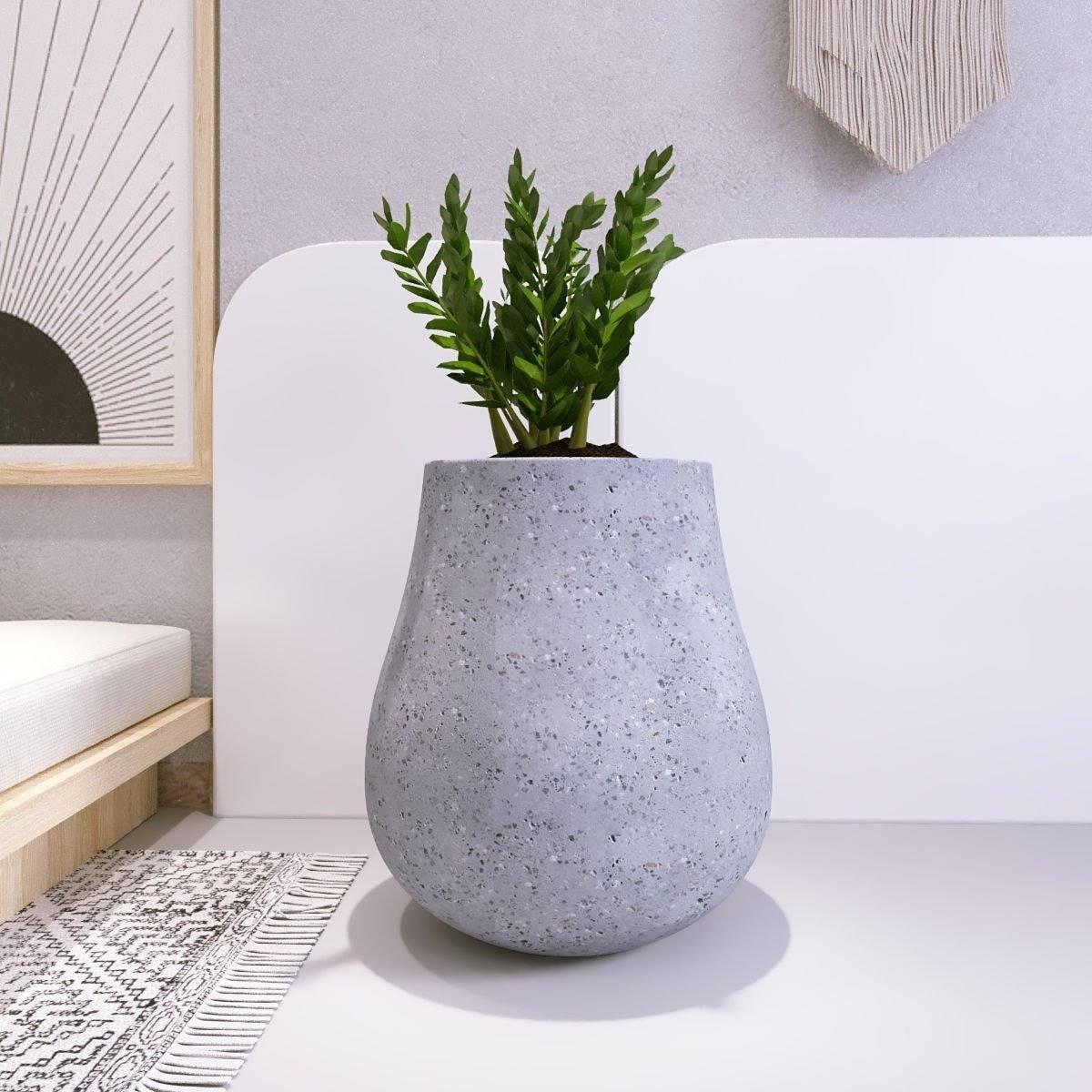
Below: An example of inappropriate scale between planter and pot. This ZZ plant is dwarfed by the substantial planter. A taller or very much fuller plant would be more suitable for the pot, while the plant would be better in a tabletop planter size.
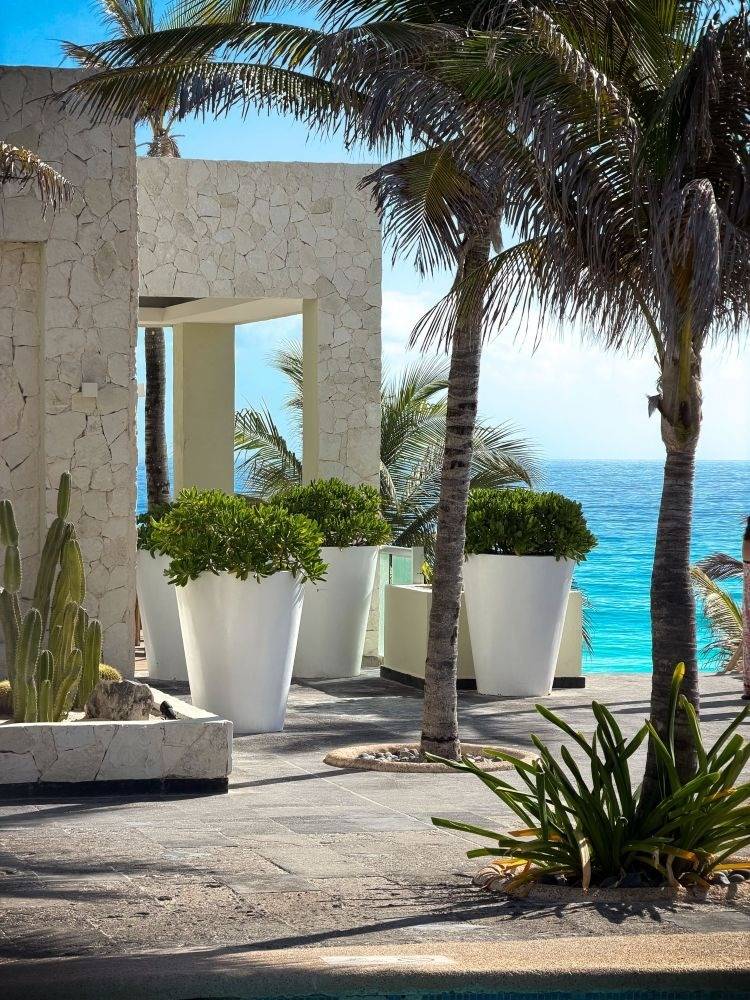
Below: There is no reason for this many large pots in this small area. They may be trying to hide an air conditioning unit, but instead have created a crowded, uncomfortable look. Narrower, more upright plants in the three corner planters would immediately relieve the congestion and draw the eye up.
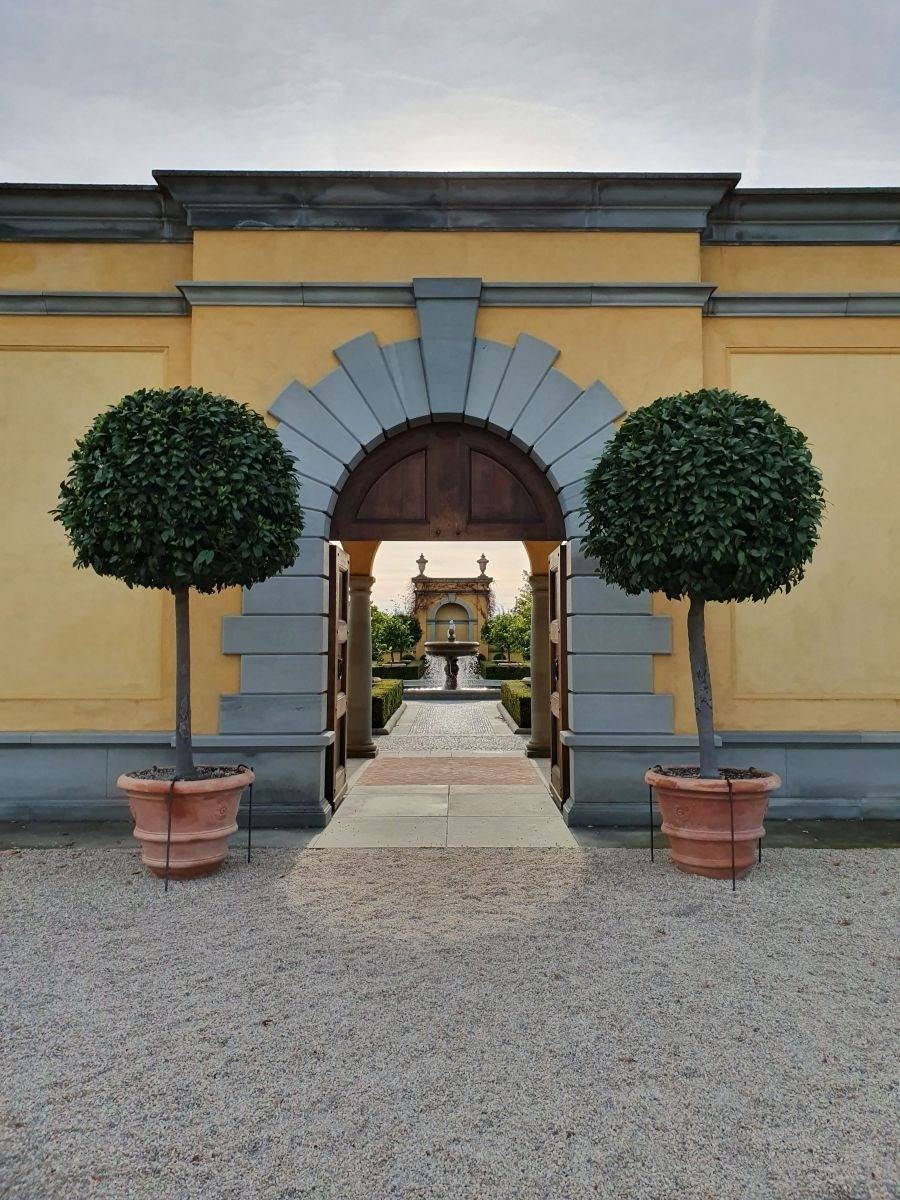
Below: Not only are these very large standard topiaries beginning to look silly in their undersized pots, they are also now very prone to wind damage from toppling over. Having kept the heads of the plant pruned smaller would have resulted in better proportions and safer conditions.
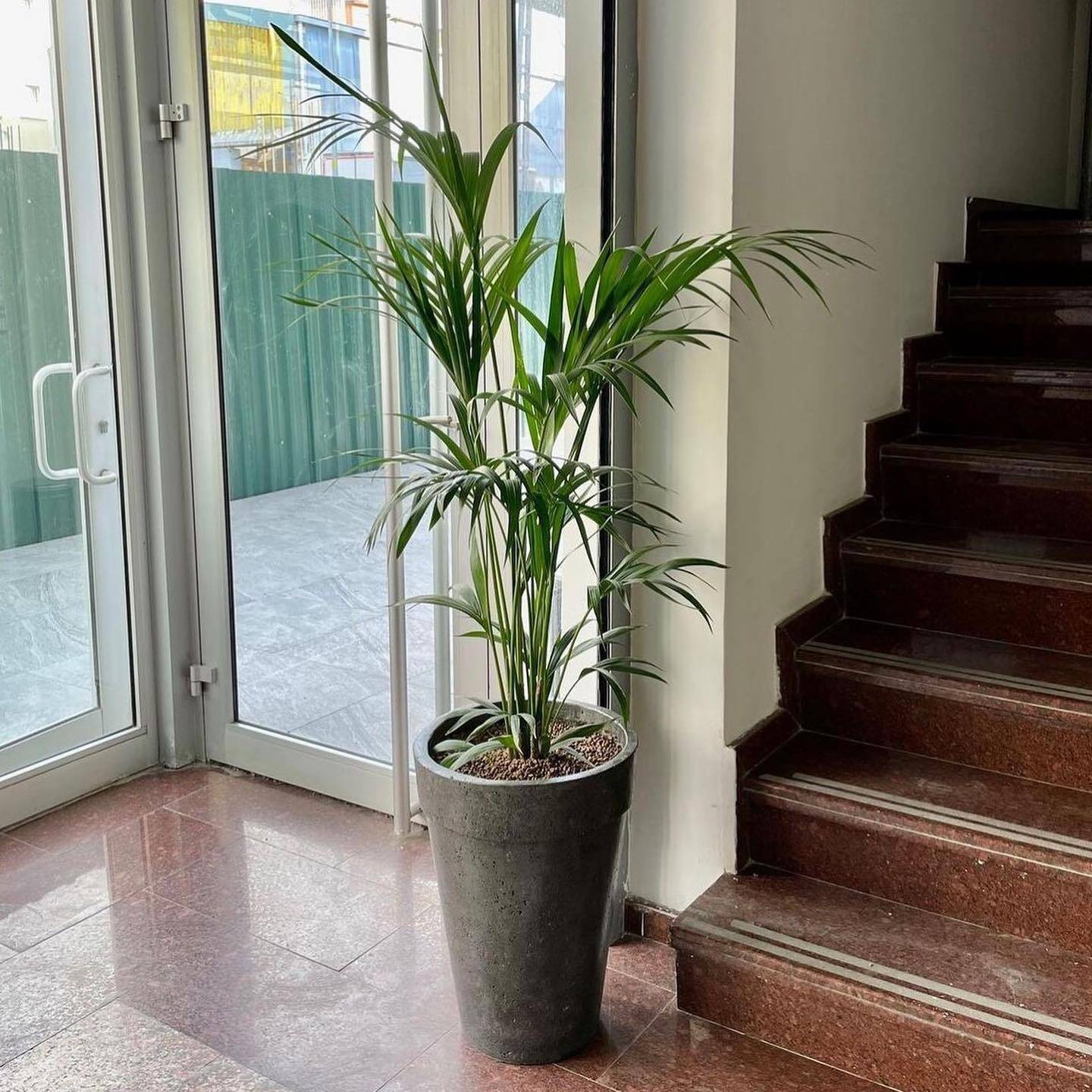
Below: Aure Fiberstone Planter: This planting demonstrates the traditional desired ratio of plant to planter height: 1/3 of the overall composition should be the planter, the remaining 2/3 plant.
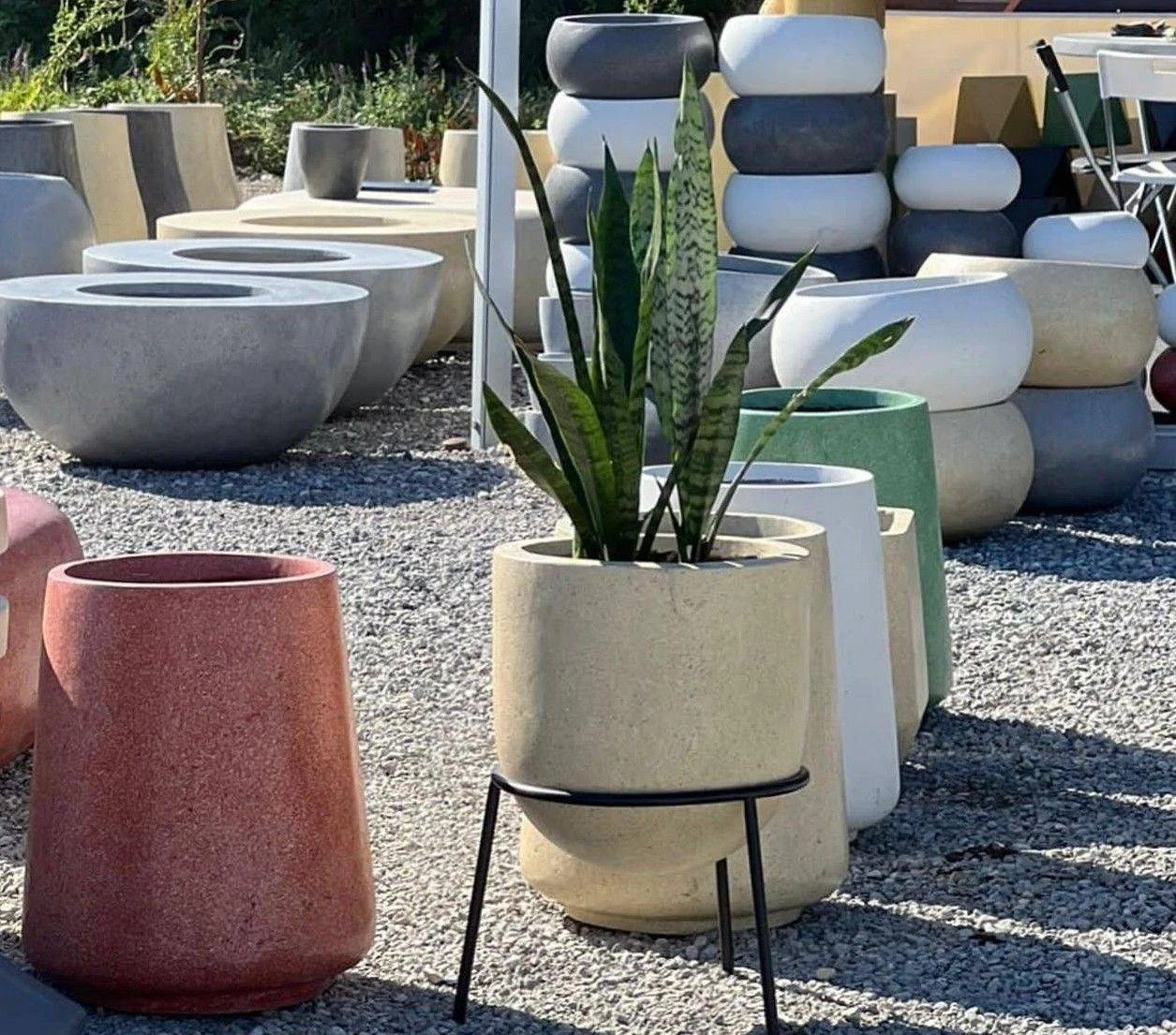
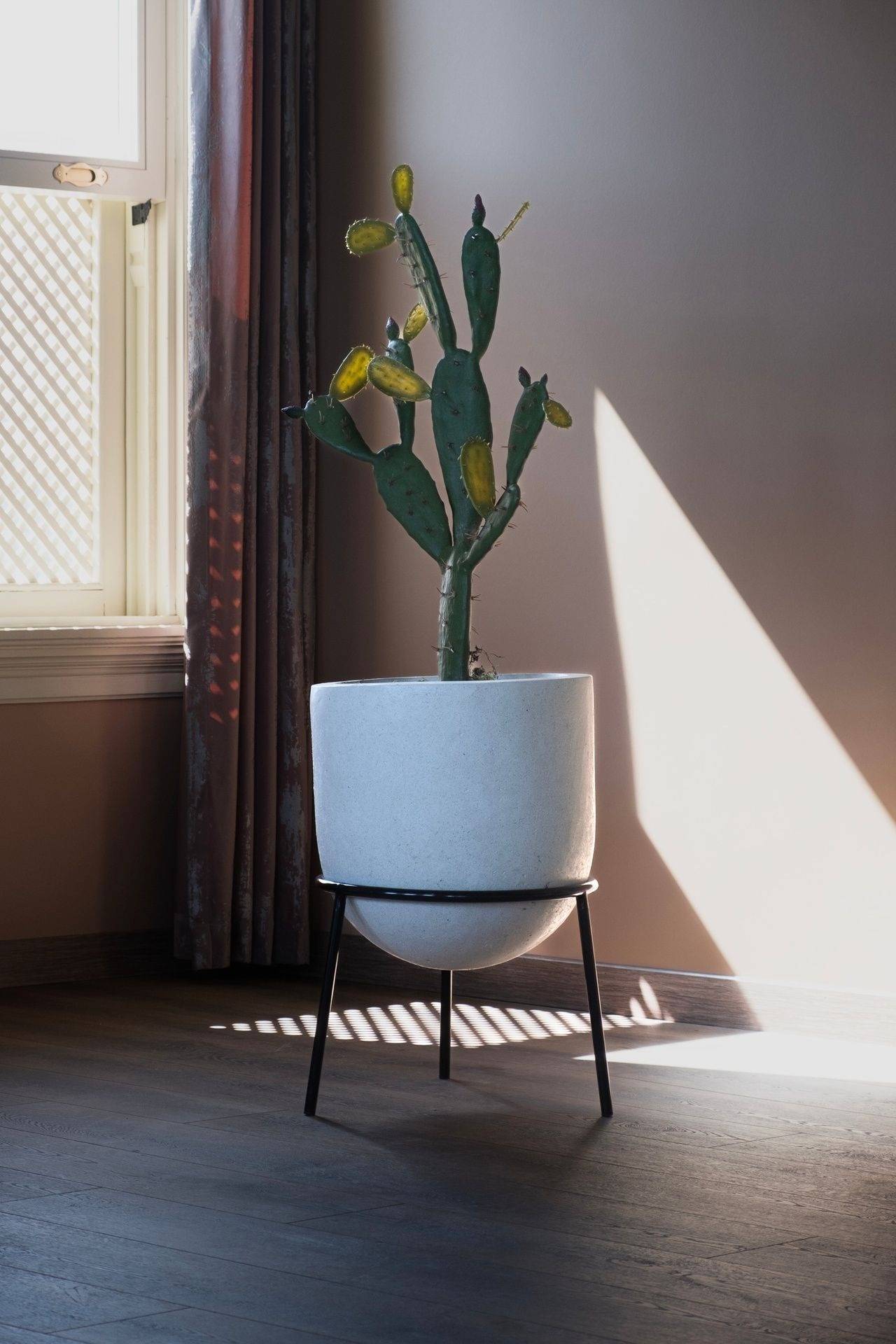
Below: Ziva Fiberstone Planter with Stand: If you need something taller for a specific area, using a plant stand can add height without using a planter that's deeper than you really need. Cacti and succulents in particular tend to have shallower root systems that don't need deep pots.
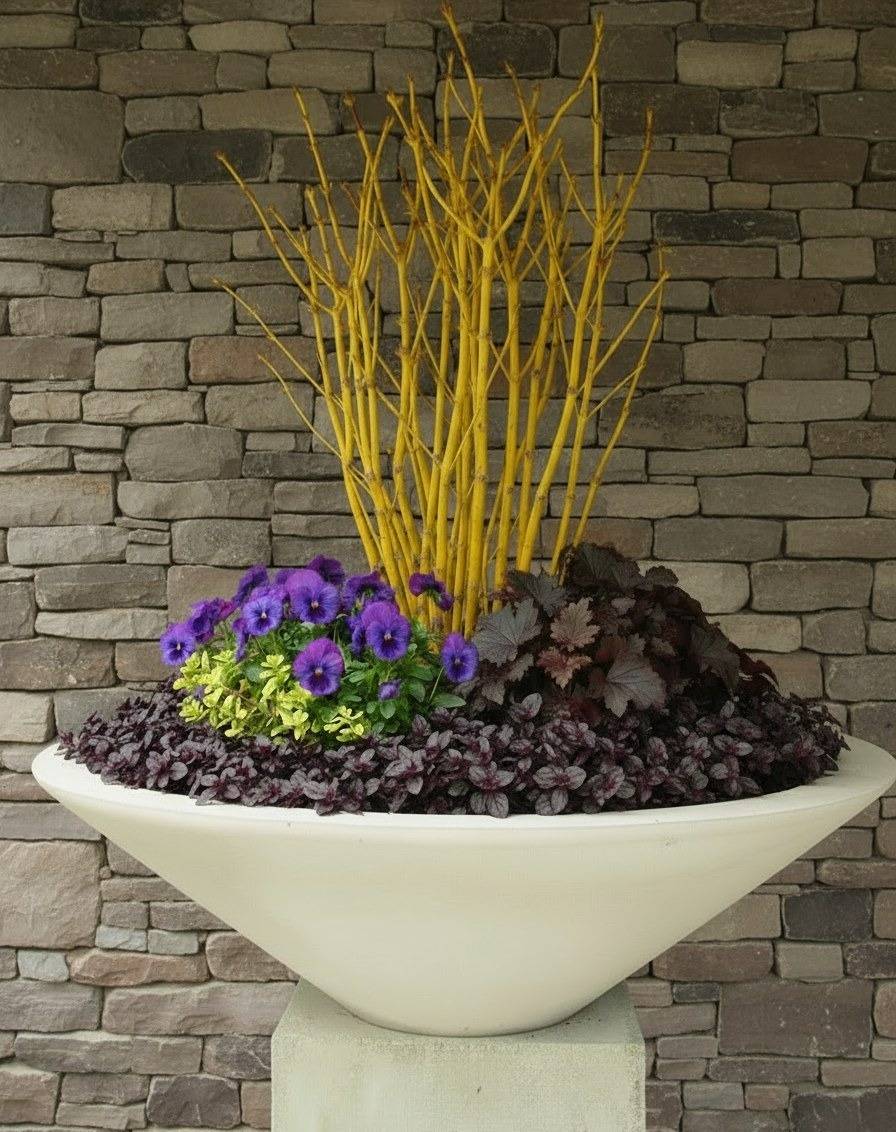
Below: Essex Bowl: The spiky gold dogwood stems add height and architectural interest to this low planting, creating a shape that pleasingly mirrors the cast stone bowl.
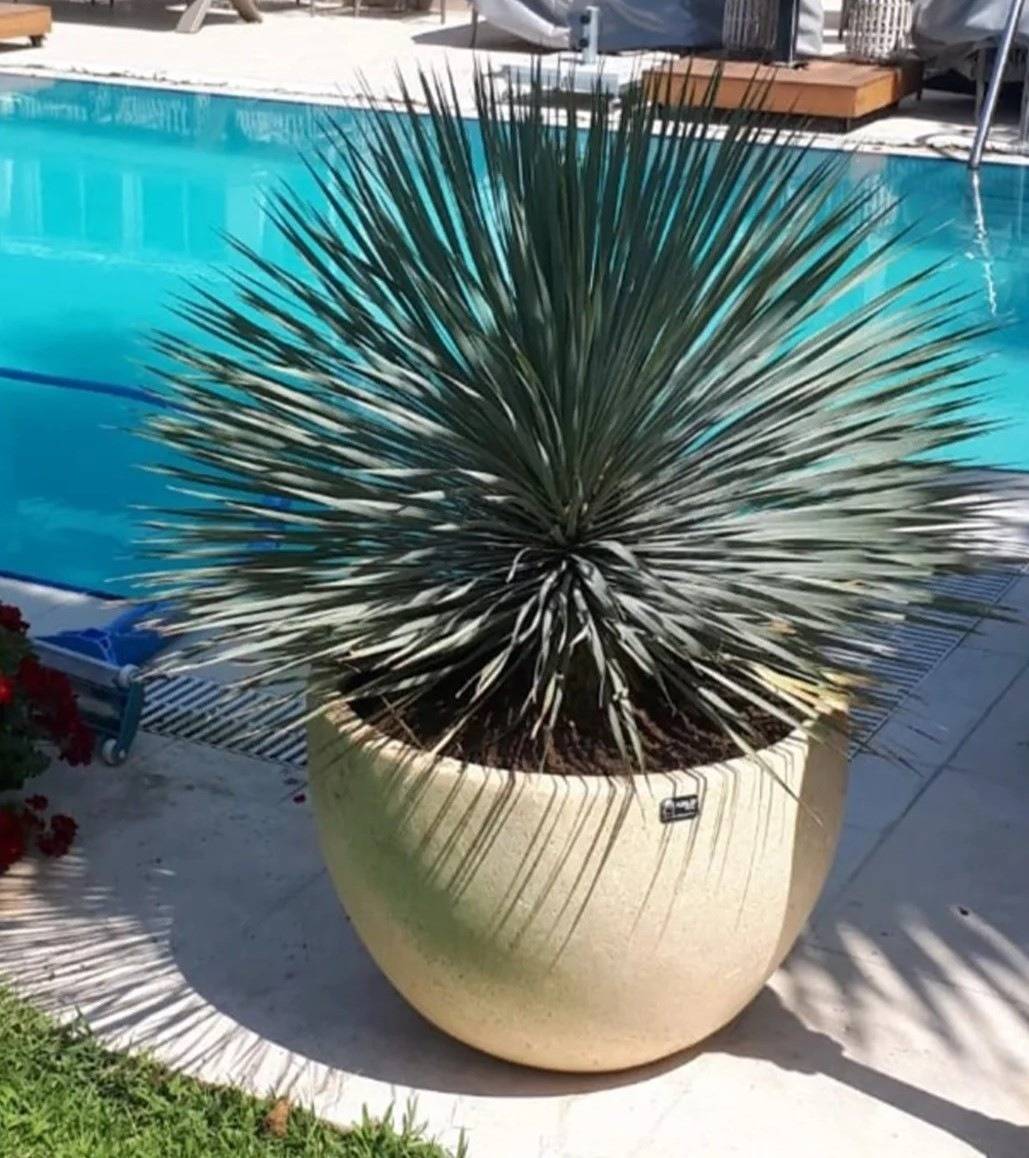
Below: Diana Fiberstone Planter: A perfect pairing of plant and planter, displaying both textural contrast and style cohesiveness. The spiky plant is softened by the smooth sculptural shape, while the architectural nature is enhanced by the simple, contemporary styling.
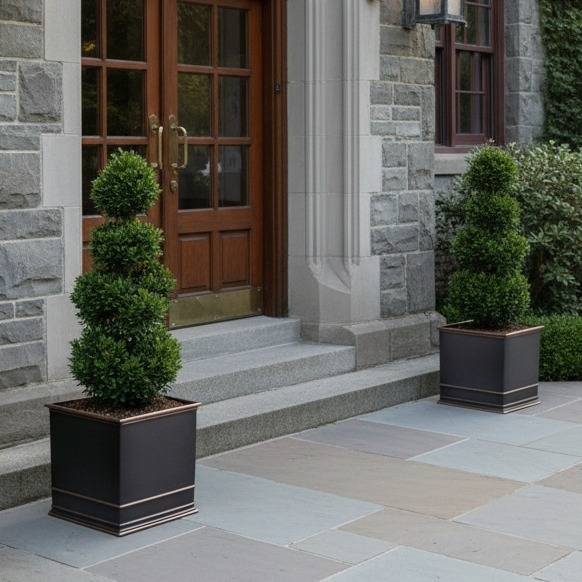
Below: Zarif Copper Planters: Boxwood topiary in simple square copper planters in an antique finish, with detailing that adds distinction but does not overwhelm. The colors blend beautifully with the stonework and wooden door. Common boxwood, while generally hardy to zones 5 or 6, may suffer root damage at temperatures well above the average winter low in those zones.
You may also like