If you've ever admired a garden covered in cascading blooms, you know that the right support can transform an ordinary vine into a spectacular focal point. Whether you're growing fragrant roses, colorful clematis, or vigorous flowering vines, an umbrella-shaped plant support creates a living canopy that becomes more beautiful with every season.
How to Grow a Beautiful Flowering Vine on an Umbrella Support
The Giverny Umbrella Rose Support by Classic Garden Elements offers a unique way to train climbing plants into a graceful, flowering umbrella that adds height, structure, and year-round architectural interest to any landscape.
Why Choose an Umbrella-Shaped Vine Support?
Unlike a traditional trellis or obelisk, an umbrella support encourages plants to grow vertically, then spread outward and down over a circular framework. As the stems mature, they create a rounded canopy of flowers and foliage that can be enjoyed from every angle.
The result is a garden feature that combines living beauty with elegant garden architecture.
An umbrella support works especially well as:
- A focal point in a perennial border
- A centerpiece in a cottage garden
- A destination feature along a garden path
- An accent beside patios or seating areas
- A vertical element in smaller gardens where space is limited
- A dramatic specimen planted within mixed borders
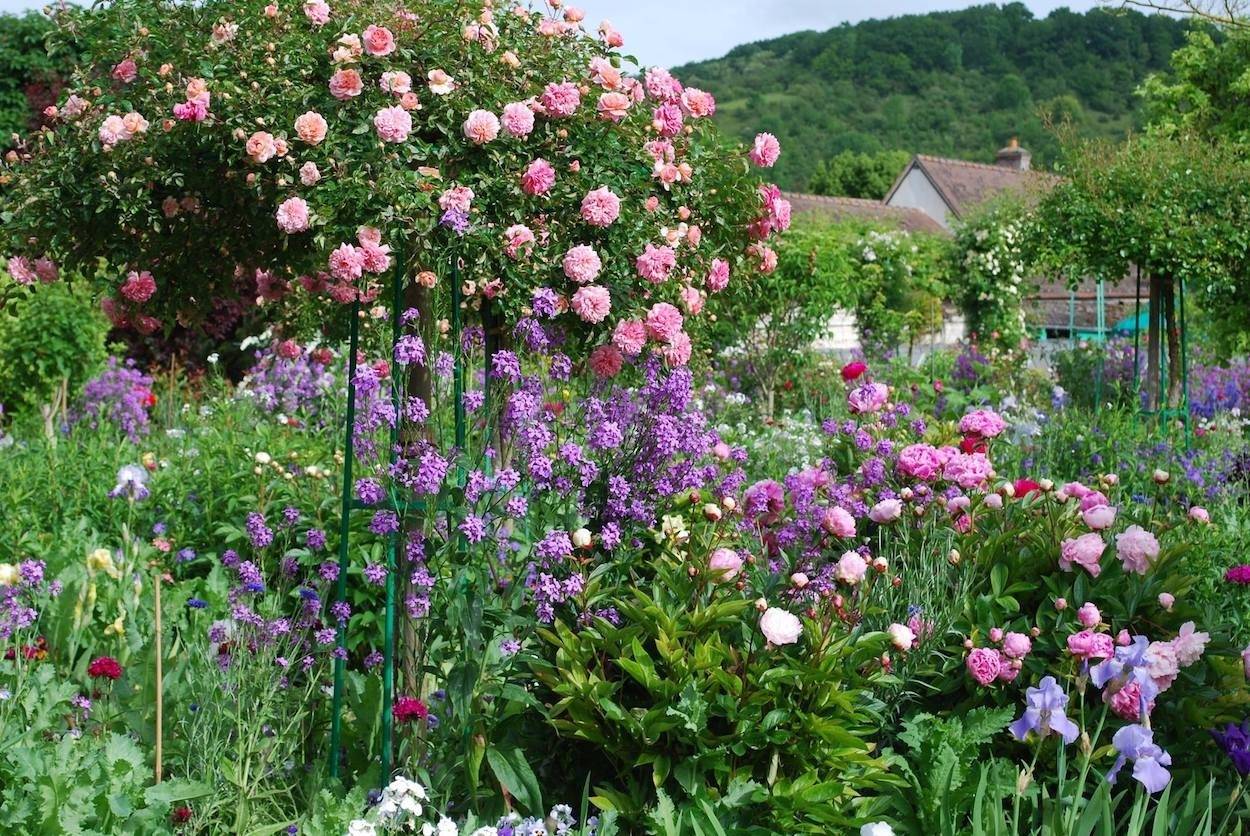
When underplanted, a layered effect is created in which one plane of color seems to float over another.
Inspired by the impressionist artist Claude Monet, the Giverny Umbrella Rose Support from Classic Garden Elements is designed to provide both beauty and long-lasting performance. Originally developed by Monet to support weeping standard roses in his gardens in Giverny, France, these structures are still used for this purpose today in many fine European landscapes.
In the US, however, weeping standard tree roses are difficult to source, being occasionally available in a 2 to 3 foot range that does not allow for the same impressive display. Fortunately, there's no reason to relegate this clever structure to roses when many other easily grown vines are capable of producing a stunning, cascading display of flowers and foliage.
- Advantages of the Giverny Rose Support
- Approximately 5 feet tall installed, creating impressive vertical interest
- Elegant umbrella-shaped design encourages cascading growth
- Strong, fully galvanized steel construction for exceptional strength and rust resistance
- Pointed bottom stakes insert 20 inches into the ground (not included in installed height) for secure placement
- Weather-resistant finish for years of outdoor use
- Decorative silhouette that looks attractive even during winter dormancy
- Supports climbing roses, clematis, jasmine, honeysuckle, and many other vines
- Creates a balanced framework for healthy plant growth and improved air circulation
- Designed to function as both a decorative garden ornament and practical plant support
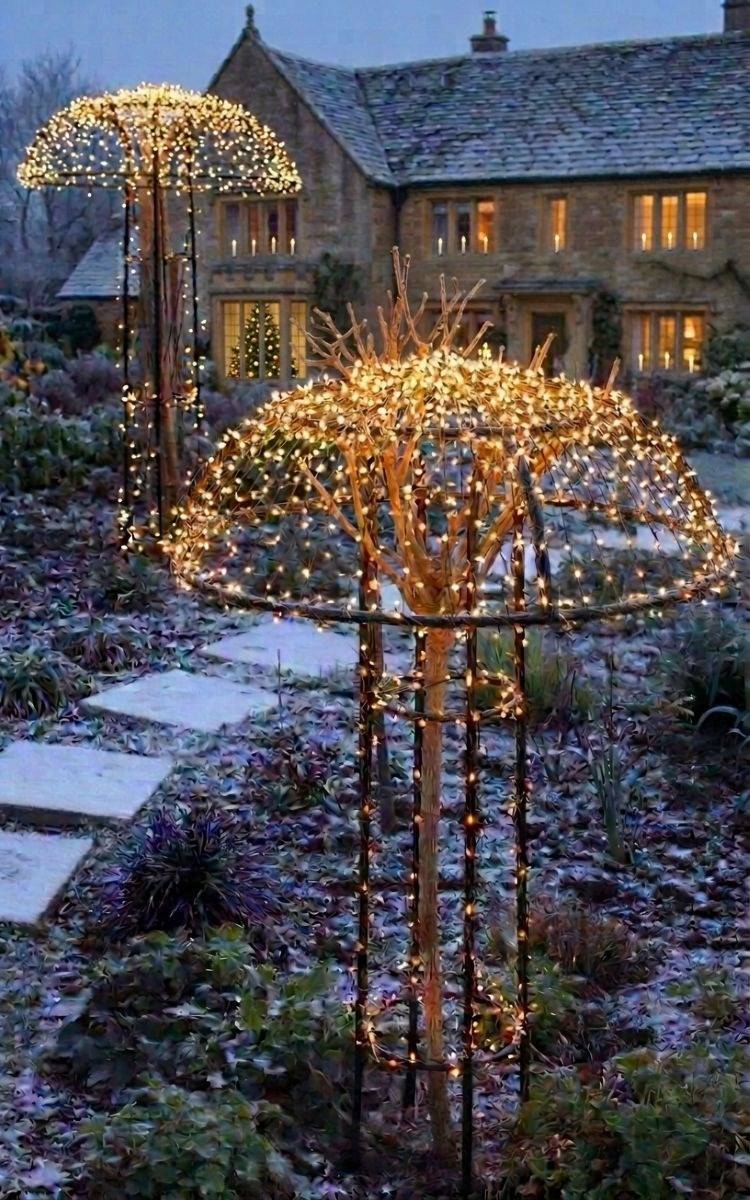
Because the support becomes an integral part of the garden design, it provides visual interest long before the vine reaches maturity. It can also be draped with outdoor string lights, rope lights, or cascading tubular or icicle lights for holidays or year-round decorative illumination.
How to Train a Woody Vine on an Umbrella Rose Support
- Step 1: Plant Carefully
Plant your vine in the center of the support. The center of the Giverny support is 12" wide, so space accordingly if using a different type of structure. Water thoroughly after planting and apply mulch to help retain moisture.
- Step 2: Establish the Main Leader
Insert a 5' tall wooden or bamboo stake next to the planted vine. Choose the strongest shoot and gently secure it to the stake using soft garden ties or reusable plant clips. Alternatively, the shoot can be trained to one of the 4 vertical rods of the Giverny support.
Tie loosely every 8 to 12 inches as the vine grows upward. Avoid tying tightly, as stems need room to expand.
- Step 3: Grow to the Top
Continue encouraging the main stem upward until it reaches the top of the umbrella frame. If multiple stems compete for dominance, prune away weaker shoots so the plant directs energy toward one strong leader.
Once the "trunk" has been established the stake can be removed if desired if using the Giverny umbrella support. Otherwise, it is best to keep the trunk staked to provide support, especially in windy areas. Allow enough flexibility when tying so the trunk can grow, and to allow for gentle movement which will strengthen it over time.
- Step 4: Spread Across the Umbrella
Once the vine reaches the top, pinch to encourage branching. Begin guiding new lateral branches outward along each umbrella rib. Attach stems loosely with soft ties and distribute growth evenly around the frame. This creates the signature umbrella shape.
- Step 5: Fill the Canopy
As new shoots develop:
- Guide stems into open spaces
- Secure growth as needed after windy weather
- Trim overcrowded shoots
- Remove damaged or dead stems
Over time the canopy will become dense, balanced, and covered in foliage and flowers.
Garden Design Ideas
The Giverny Umbrella Rose Support can be used in many different landscape styles.
- Cottage garden
- Formal Garden
Use as a focal point in a bed edged with clipped low evergreens.
- Pollinator Garden
- Vegetable Garden
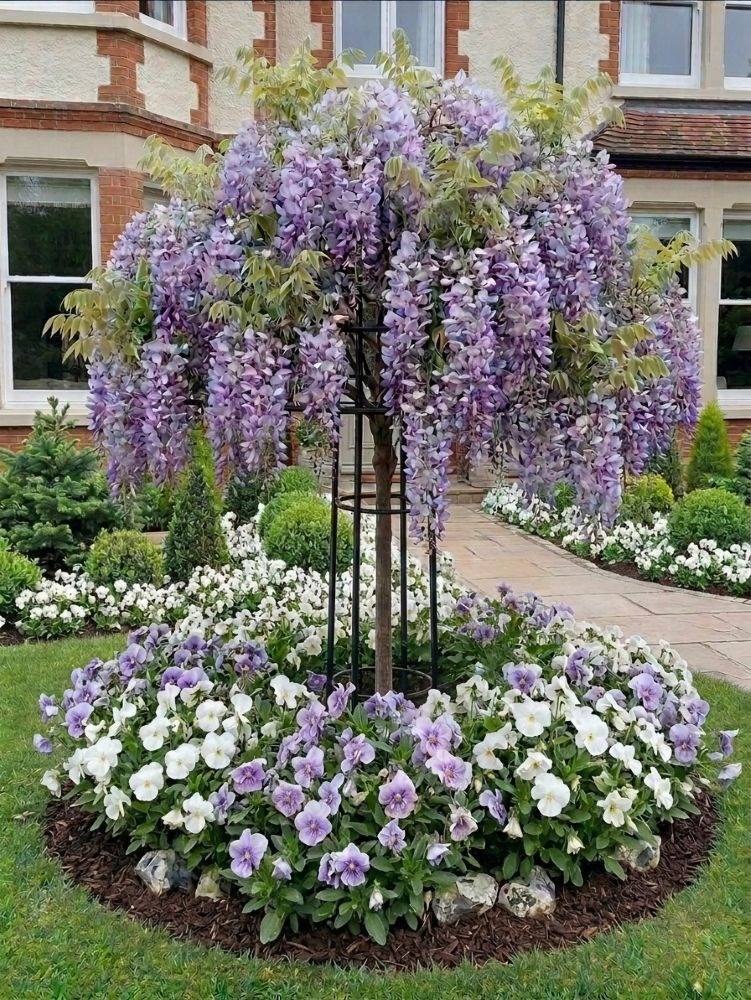
Below: Wisteria is just one of the vines that will grow beautifully on an umbrella support
Below: The Giverny Rose Umbrella offers year-round structural interest, and great holiday decorating opportunities
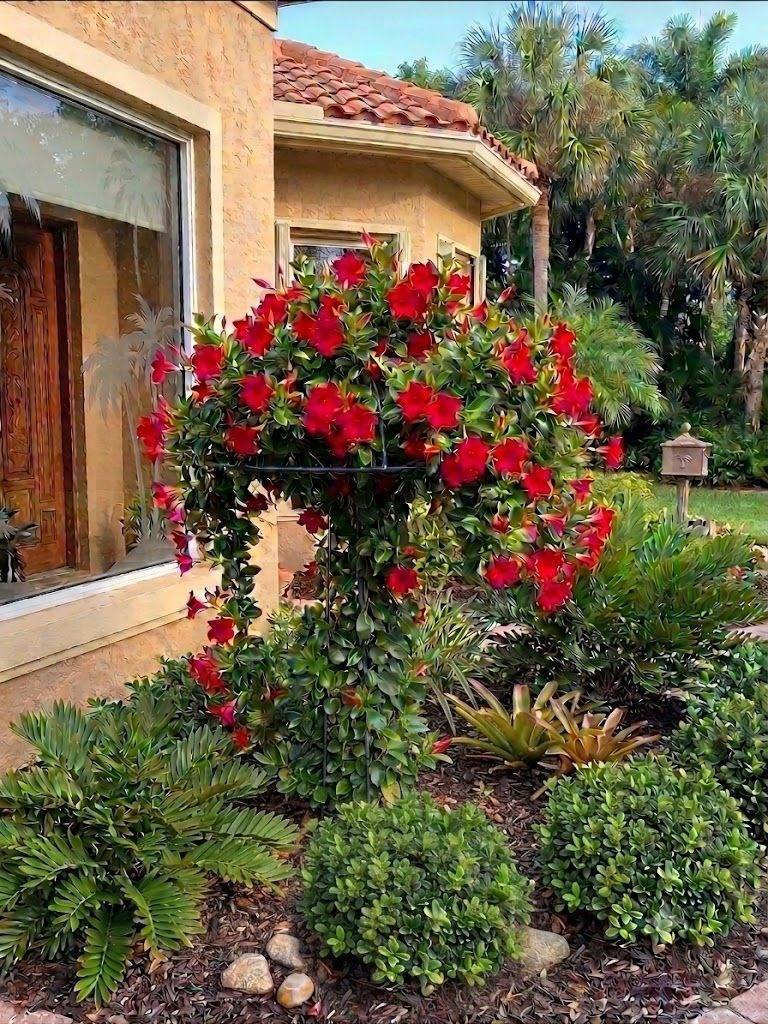
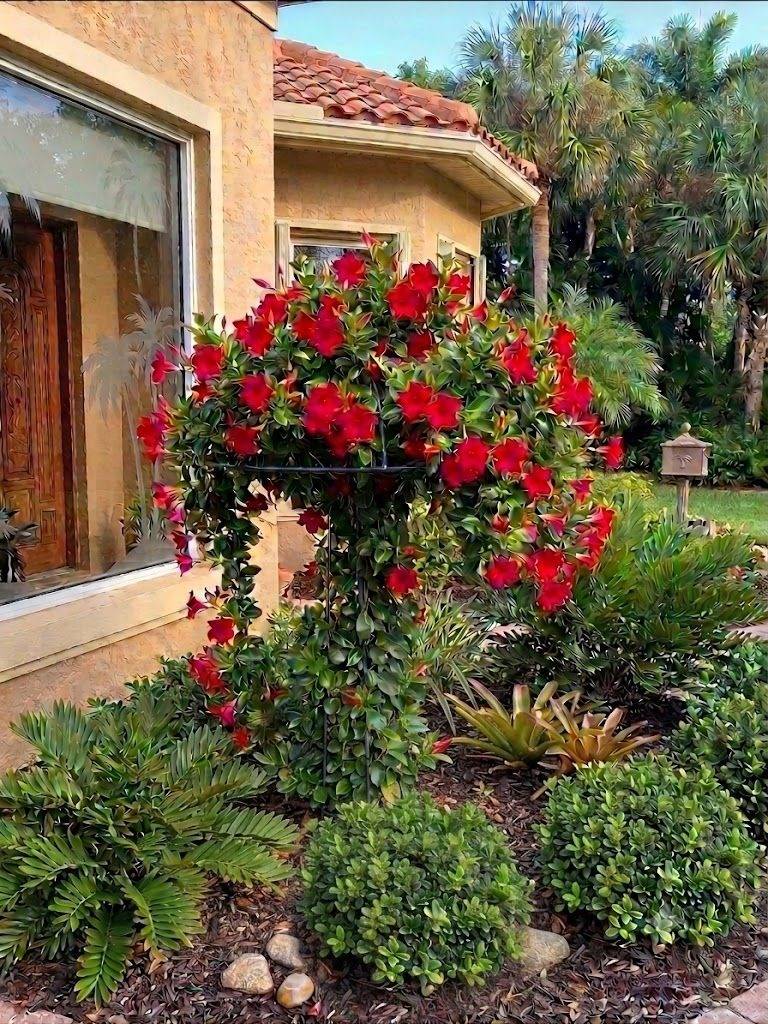
Below: Mandevilla makes a striking display grown on an umbrella shaped support
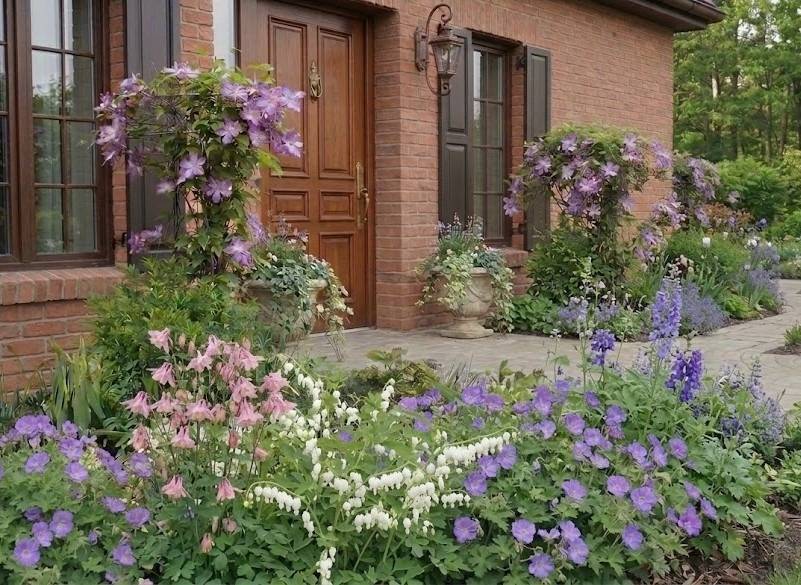
Below: Clematis on umbrella supports flank a front door - a unique and refreshing change from upright evergreens
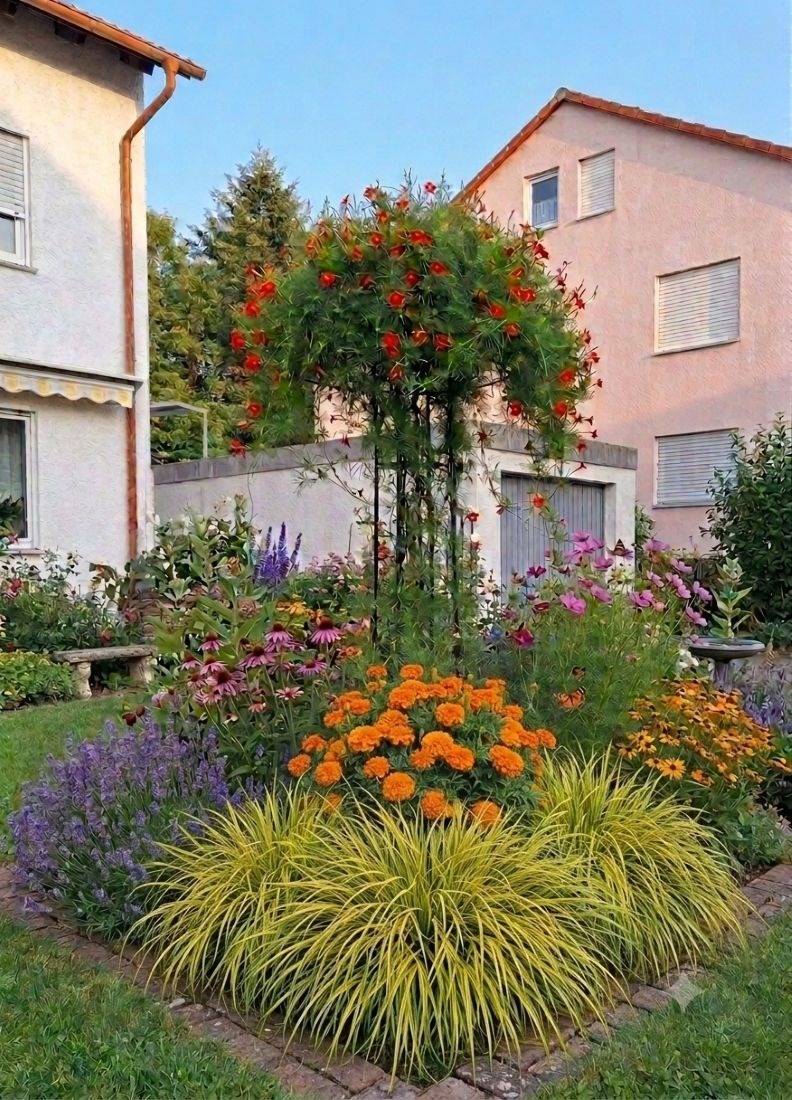
Below: Umbrella support with cardinal vine as the centerpiece of a pollinator garden
Recommended Plants for the Giverny Umbrella Rose Support
Woody vines are ideal for the umbrella support, as they can be trained over time to establish a permanent trunk with a full crown. If annual vines are to be used they should be planted in multiples to ensure proper coverage.
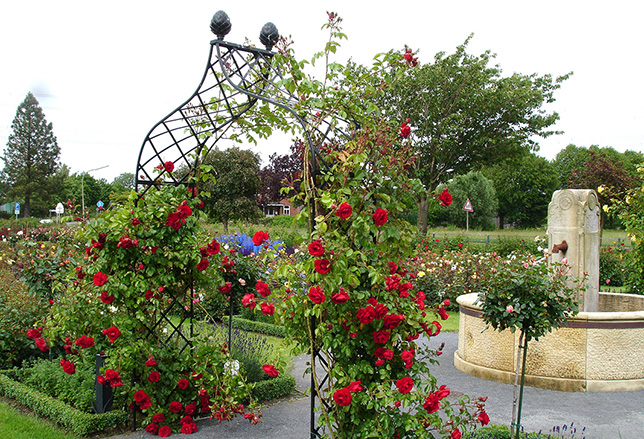
- Climbing and Rambling Roses
Rambling roses or climbers with long, flexible canes will give the best results. Climbing roses produce abundant blooms throughout late spring and summer while adding timeless elegance.
Growing Information
- USDA Zones: 5–9 (variety dependent)
- Sun: Full sun
- Height: 8–15 feet
- Bloom Season: Late spring through summer
- Water: Moderate
Because climbing roses benefit from horizontal training, the umbrella framework encourages additional flowering stems.
- Clematis
Clematis is one of the finest flowering vines for ornamental supports. Available in hundreds of varieties, flowers range from delicate bells to intriguing double flowers to spectacular large single blooms. These would be best not pruned to a single trunk, as this makes them more vulnerable to loss from wilt disease.
Growing Information
- USDA Zones: 4–9
- Sun: Full sun to light shade with cool roots
- Height: 6–12 feet (larger varieties recommended for tall umbrella supports)
- Bloom Time: Spring, summer, or fall depending on variety
- Water: Moderate
Plant low-growing perennials around the base to shade the roots.
Honeysuckle (Lonicera sempervirens)
Honeysuckle quickly covers supports with colorful tubular flowers loved by hummingbirds. There are many lovely varieties of our native honeysuckle, Lonicera sempervirens; invasive Japanese honeysuckle should not be planted.
Growing Information
- USDA Zones: 4–9
- Sun: Full sun
- Height: 10–20 feet
- Bloom Time: Late spring through summer
- Water: Moderate
L. sempervirens can be deciduous or semi-evergreen in colder zones and fully evergreen in the South.
- American Wisteria (Wisteria frutescens)
For gardeners who love the romantic look of wisteria but want a more manageable vine, American wisteria is one of the best choices for the Giverny Umbrella Rose Support. Native to the southeastern United States, it is less aggressive than its Asian relatives while still producing beautiful dangling clusters of fragrant lavender to violet flowers.
American wisteria blooms on new growth, making it easier to prune and maintain, and its moderate growth habit is well suited to decorative garden structures.
Growing Information
- USDA Zones: 5–9
- Sun: Full sun for best flowering; tolerates light shade
- Height: 10–30 feet
- Bloom Time: Late spring to early summer, with occasional reblooming in summer
- Water: Moderate; prefers evenly moist, well-drained soil
- Pruning: Once trunk and crown are established, prune twice each year: Summer: Cut long, whippy shoots back to five or six leaves after flowering to control growth. Winter: Shorten laterals to two or three buds to encourage abundant flowering the following season.
- Kentucky Wisteria (Wisteria macrostachya)
Kentucky wisteria is another outstanding native option for gardeners seeking spectacular flowers without the invasive tendencies of Chinese or Japanese wisteria. It is especially valued for its excellent cold hardiness and reliable flowering in northern climates.
Its long clusters of fragrant violet-blue blossoms create a dramatic display when allowed to cascade from the umbrella-shaped framework. One of the best-known cultivars, 'Blue Moon,' is celebrated for its ability to rebloom several times during the growing season under favorable conditions.
Growing Information
- USDA Zones: 4–9
- Sun: Full sun
- Height: 15–25 feet
- Bloom Time: Late spring to early summer, with possible repeat flowering
- Water: Moderate
- Soil: Moist, well-drained soil
- Pruning: Once trunk and crown are established, prune twice each year: Summer: Cut long, whippy shoots back to five or six leaves after flowering to control growth. Winter: Shorten laterals to two or three buds to encourage abundant flowering the following season.
- Star Jasmine
Star jasmine offers glossy evergreen foliage and intensely fragrant white flowers.
Growing Information
USDA Zones: 8–10
Sun: Full sun to part shade
Height: 10–20 feet
Bloom Time: Spring
Water: Moderate
Excellent for warm climates where evergreen foliage provides year-round beauty.
- Mandevilla
Perfect for containers and warm climates, mandevilla produces vibrant trumpet-shaped flowers throughout the growing season. A full canopy will be difficult to establish unless they can overwinter in your area.
Growing Information
- USDA Zones: 9–11 (annual elsewhere)
- Sun: Full sun
- Height: 8–15 feet
- Bloom Time: Summer through frost
- Water: Regular moisture
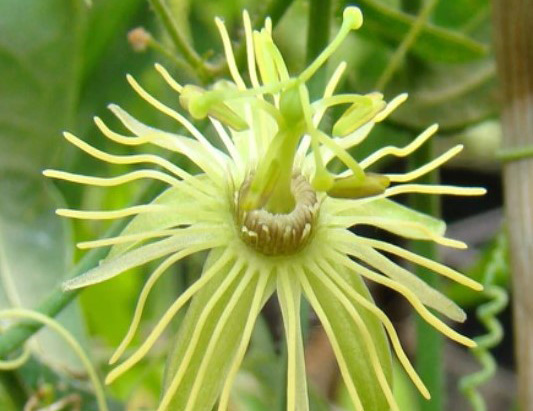
- Passionflower
Passionflower produces exotic blooms unlike any other vine. Many varieties also produce ornamental or edible fruit. Some species (Passiflora incarnata, P. caerulea, and hybrids) are cold hardy while others are strictly tropical. The umbrella shape is ideal, as flowers are produced most easily on long, loosely hanging stems.
Growing Information
- USDA Zones: 6–10 (some cultivars may die back to ground level in winter and regrow from roots in zones 6-7)
- Sun: Full sun to light shade
- Height: 10–25 feet
- Bloom Time: Summer
- Water: Moderate
An excellent choice for pollinator gardens.
- Annual Vines
Annual vines can be grown from seed and will provide quick coverage for a season. Plant at least 4 per umbrella, one near each upright rod. Planting annuals gives an opportunity to change up the look from year to year. They can also provide cover and color while perennial vines are getting started if desired- just plant one or two so they don't overtake and prevent the perennial vine from establishing.
Easy annual vines to grow from seed:
Moonflower
Cardinal Vine, Cardinal Climber
Morning Glory
Scarlet Runner Bean
Hyacinth Bean
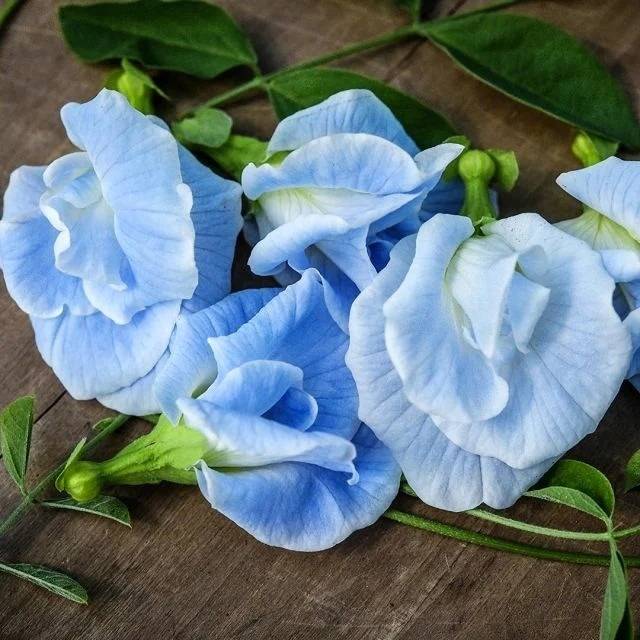
Butterfly Pea
Black-eyed Susan Vine
Mexican Flame Vine
See our article on growing flowering vines from seed!
Tips for Successful Flowering Vine Displays
- Install the support before planting to avoid disturbing established roots.
- Train stems weekly during the active growing season.
- Use soft, flexible ties that won't damage expanding stems.
- Water deeply during dry periods while plants become established.
- Feed flowering vines with a balanced fertilizer according to plant needs.
- Check plant ties several times each season and loosen them as stems thicken.
- Prune annually to maintain an open framework and encourage vigorous new growth.
Frequently Asked Questions
- How long does it take a vine to cover an umbrella support?
Fast-growing annual vines may cover the frame in a single season. Most perennial vines and climbing roses require one to three growing seasons to fully develop a lush canopy.
- Can the support hold climbing roses?
Yes. The sturdy steel construction is well suited for many climbing and rambling roses when plants are pruned and trained regularly.
- Do vines need to be tied to the support?
Rambling roses, most climbing roses, and some other flowering vines will need tying, especially while young. Once the trunk is established, many species naturally weave through the framework.
Twining species could be allowed to grow naturally up the vertical support bars if a trunk clear of foliage is not desired, as will be the case when most annual vines are used.
Multiple straight trunks could be created with woody vines by tying into each of the four upright rods, pinching when they reach the top and removing trunk foliage and any ground level shoots.
- Is an umbrella support suitable for small gardens?
Absolutely. Because it adds vertical interest instead of taking up significant ground space, the Giverny Umbrella Rose Support is an excellent choice for compact gardens, courtyards, and narrow borders.
Why Gardeners Love the Giverny Umbrella Rose Support for Flowering Vines
The Giverny Umbrella Rose Support offers more than a place for vines to climb—it creates a living garden sculpture. As plants mature, the elegant framework disappears beneath a canopy of foliage and blooms, creating a stunning display that changes with the seasons.
Even in winter, the graceful silhouette provides structure and visual interest, making it an attractive feature all year long. Whether showcased in a formal rose garden, a relaxed cottage border, or a contemporary landscape, the Giverny Umbrella Rose Support from Classic Garden Elements brings together craftsmanship, beauty, and functionality in one distinctive piece of garden décor.
With thoughtful planting, regular training, and a quality support, a single vine can become one of the most memorable features in your landscape. The 5-foot Giverny Umbrella Rose Support by Classic Garden Elements provides the strength, elegance, and timeless design needed to create a spectacular flowering canopy that will delight visitors and pollinators alike for years to come.
You may also like