Thinking back over my gardening this past season, I remembered some seeds I bought for spring that never quite made it out of the pack. Wait - who am I kidding? "Never quite" is the sheepish equivalent of "not at all, not even close (but if I admit it I'll have to stop buying seeds)". Life happened, things got busy, and...there you have it. I know I can’t be the only one—I’ve seen friends with boxes overflowing with seed packets and plenty of good intentions.

Sowing Flower Seeds in Fall and Winter
But then I remembered that just because I bought them for spring doesn’t mean I can’t plant some now. There are many perennials and even some annuals that can be sown in the fall and winter. Even better, some can be direct sown in the garden with a minimum of preparation.
What is Cold Stratification?
Most gardeners are aware that fall is an excellent time to plant. Cooler soil temperatures allow plants to root better while there is no danger of frost. That’s what you want—good root growth established before the plant flushes anew. It is less commonly known that fall sowing of some seeds to expose them to a period of low temperatures is also beneficial, or even necessary in some species. When referring to seeds this is called cold stratification.
Why do some seeds need special treatment? Nature has various ways of ensuring the survival of a species. Seeds will stay dormant, either by way of a hard seed coat or natural chemicals, until conditions are met that will encourage germination at the appropriate time for the plant. Some plants that drop their seeds late in the season need to keep those seeds intact until spring when seedlings have the best chance of success.
Dormancy in seeds is broken by a predetermined period of cold, cold & moist conditions, light, or darkness. This is the case for many common perennials, such as Echinacea, Penstemon, Phlox, and Rudbeckia, and many native perennials and wildflowers benefit from cold/moist stratification. That means it’s prime time for some almost forgotten seeds to hit the dirt.
Sowing Flower Seeds Outside in Fall
- How to Direct Sow in the Garden
- Tilling before seeding is not recommended, as you may simply be bringing weed seeds to light that will allow them to germinate.
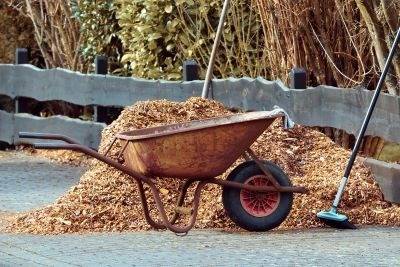
- You can use straw or sawdust to cover if you prefer. Note that some plants need light to germinate, so be sure to read the instructions on the seed packet.
- Mark the spot so you’ll be able to discriminate between any weeds and your new babies when new sprouts start growing.
- Water to keep the seed moist during early spring if those April showers don’t come your way.
- If seedlings are crowded come spring they can be transplanted once they have reached an adequate size, or simply thinned as desired.
- If the species resents root disturbance, then snip off unwanted plants at soil level rather than pulling them to avoid affecting the ones you want to keep.
That’s really all there is to it—nature will take care of the rest!
- How to Sow Outside in Flats
If you’d rather not sow directly into the garden but still want to sow outside, you can sow in flats. This has the advantage of avoiding weed seeds and fungus that may attack new seedlings.
- Use new trays (about 3” deep) with drainage, or clean old ones with a 10% bleach solution.
- Fill the flats level to the top with a soilless seed planting mix, then using a piece of carboard, compress the mix to within ½ to ¼ inch below the rim.
- Sow the seeds and cover to the depth recommended on the seed packet.
- For easy transplanting in the spring, use individual plantable pots, like our "Go-Grow" kits. This will prevent root disturbance which may disrupt growth of plants such as hellebores.
- Water with a gentle spray or mist so as not to dislodge the seeds.
- Place the flats in a cold frame or cover with glass or clear plastic and store out of direct sunlight until spring.
- In March you can remove the covering and move to a spot in partial shade.
- Water lightly to keep seeds moist, daily if needed. Within a few weeks, germination should begin.
Cold Stratification for Spring Seed Sowing
- Place seeds in a container with a tight-fitting lid, or a zip-lock bag with an equal volume of sand, peat moss, or sphagnum moss. You could also put them between layers of damp paper towel.
- For the first 24 hours keep them wet enough so that they can absorb all the water they are able.
- After that, add more sand, etc. to absorb any excess water—too much water will cause them to rot.
- Store in the refrigerator for the prescribed number of weeks and check occasionally to be sure they are not drying out and that no mold is forming.
- You should time this so that once the cold stratification is complete they can be planted right away, either indoors to grow on for transplanting or directly outside in the spring. This is commonly 30 to 90 days, with 60 days being average for native perennials.
Give Fall Sowing a Try!
If you have any of these seeds on the list below sitting in your drawer or box, give fall sowing a try. You may need to do a little additional research to find the best time to sow in your area for a particular plant. Depending on how cold your winters are, direct sowing could be accomplished from mid-summer to 8 weeks before your last frost. Dormant seeding can be done after several killing frosts in fall, with germination in spring, usually recommended for zones 1-6.
Here in our Zone 7, late summer to fall sowings would include biennials like foxglove and and Canterbury bells. Hollyhocks and bachelor buttons can be sown from August through November, and larkspur, nigella, and poppies prefer sowing after the first frost. I plan to experiment a bit to find what works best, and still save some seed to grow indoors in the spring (really, I swear).
For a busy gardener, it's nice to know that the window for starting flowers from seed is wider than we think--it's often hard to make use of all our well-intentioned seed purchases within the few short weeks of spring. Remember that the older the seed the less the percentage of germination, but that rarely means zero. In most cases there's no reason to throw away seeds that are a bit past their prime.
List of Flowers to Direct Sow in Fall
Alcea ( Hollyhock, biennial)
Alchemilla (Lady’s Mantle)
Alstroemeria (Peruvian Lily)
Astrantia (Masterwort)
Amsonia (Willow Bluestar)
Asclepias (Milkweed)
Aquilegia (Columbine)
Baptisia (False Indigo) Boltonia
Buddleia (Butterfly Bush)
Campanula (Canterbury Bells, some biennial)
Centaurea (Bachelor's Button, Cornflower)
Chelone (Turtlehead)
Clematis
Cimicifuga (Bugbane)
Coreopsis (Tickseed)
Delphinium
Dianthus (Pinks, some biennial)
Digitalis (Foxglove, most biennial, a few true perennial)
Dodecathon (Shooting Star)
Echinacea (Coneflower)
Eremerus (Foxtail Lily)
Eupatorium (Joe Pye Weed)
Filipendula
Gaillardia (Blanket Flower)
Gaura
Geranium (perennial species, not the typical container plant “geranium” which are Pelargonium spp.)
Helianthemum (Rock Rose)
Helianthus (Perennial Sunflower)
Heliopsis (False Sunflower)
Hellebore (Lenten Rose)
Heuchera (Coral Bells)
Hibiscus (Hardy Hibiscus, Swamp Mallow)
Hypericum (St. John’s Wort)
Iberis (Candytuft)
Knautia (Crimson Scabious)
Larkspur (self-seeding annual)
Lathyrus (Perennial Sweet Pea)
Lavandula (Lavender)
Liatris (Blazing Star)
Mertensia (Virginia Bluebells)
Monarda (Bee Balm)
Nepeta (Catmint)
Nigella (Love-in-a-Mist, self-seeding annual)
Oenothera (Evening Primrose)
Penstemon (Beardtongue)
Phlox
Platycodon (Balloon Flower)
Physostegia virginiana (False Dragonhead)
Primula (Primrose)
Ratibida (Prairie Coneflower)
Rudbeckia (Black-eyed Susan)
Scabiosa (Pincushion Flower)
Sedum (Stonecrop)
Sempervivum (Hens & Chicks)
Sidalcea (Prairie Mallow)
Solidago (Goldenrod)
Stokesia (Stoke’s Aster)
Sympotricum (Aster)
Thalictrum (Meadow-rue)
Tiarella (Foamflower)
Tricyrtis (Toad-lily)
Trollius (Globeflower)
Vernonia (Ironweed)
Veronica (Speedwell)
Veronicastrum virginicum
Viola species types (Violets)

Below: You can also sow in flats and store the flats outside for the winter (photo courtesy Greta Hoffman on Pexels).

Below: If seedlings emerge crowded, just thin or transplant. To transplant, seedlings should be roughly 3-4 inches tall and have at least 2 sets of true leaves (the first set of "leaves" are usually "seed leaves" (cotyledons), often noticeably different from the true leaves that emerge later.

Below: Most hollyhocks are biennials that persist in the garden by reseeding, which makes them excellent candidates for direct sowing.

- The long spurred flowers of columbine bloom in the spring
- Some foxgloves may bloom the first year after sowing
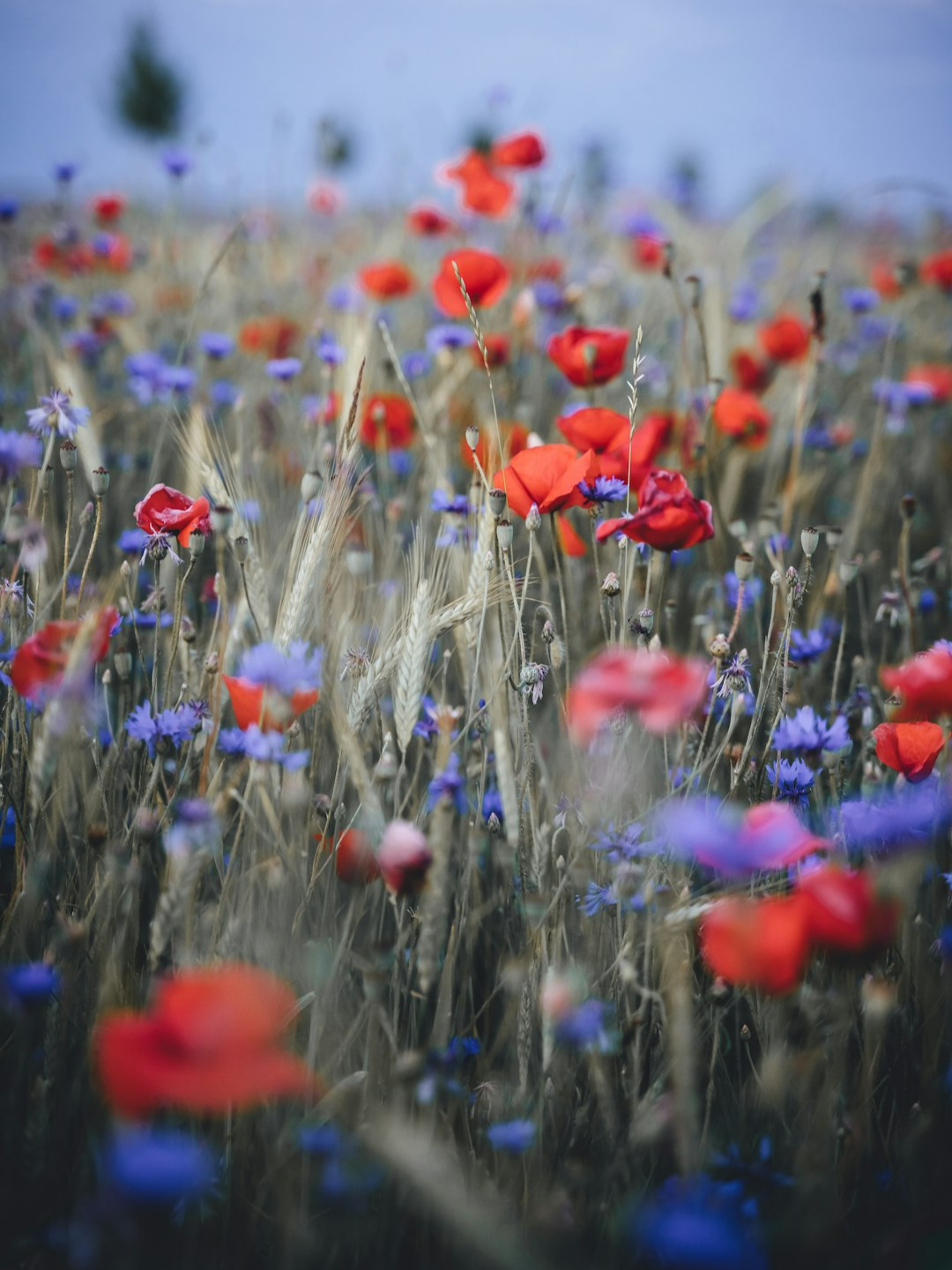
- Red poppies and blue cornflower are a particularly effective combination
- Lady's mantle has fuzzy gray-green foliage and greenish-yellow flowers
- Nigella is a self-seeding annual with blue, purple, white, or pink flowers, fine-textured foliage, and interesting seedheads


You may also like