A well-chosen garden structure can transform the experience of a landscape. A pergola creates a passageway. An arch frames a view. A trellis adds an eye-catching focal point. A series of obelisks or rose pillars introduce vertical rhythm to a border.
Clematis completes the picture.
Best Clematis for Arches, Trellises, and Pillars
With flowers ranging from enormous saucers to delicate bells and nodding urns, clematis can soften a metal structure without hiding its architectural character. Depending on the species or cultivar, a clematis may bloom in spring, early summer, midsummer or fall—and some can flower for months.
The genus also offers remarkable diversity in habit. Some clematis remain compact enough for a small obelisk or container, while vigorous species can cover a large arch or pergola. Some thrive in full sun; others are excellent choices for bright part shade. And because clematis are divided into three pruning groups, gardeners can choose between plants that require almost no pruning and those that are simply cut back hard each year.
The key to success is matching the clematis's mature size and pruning group to the structure and location.
Clematis Form, Foliage, and Flowers
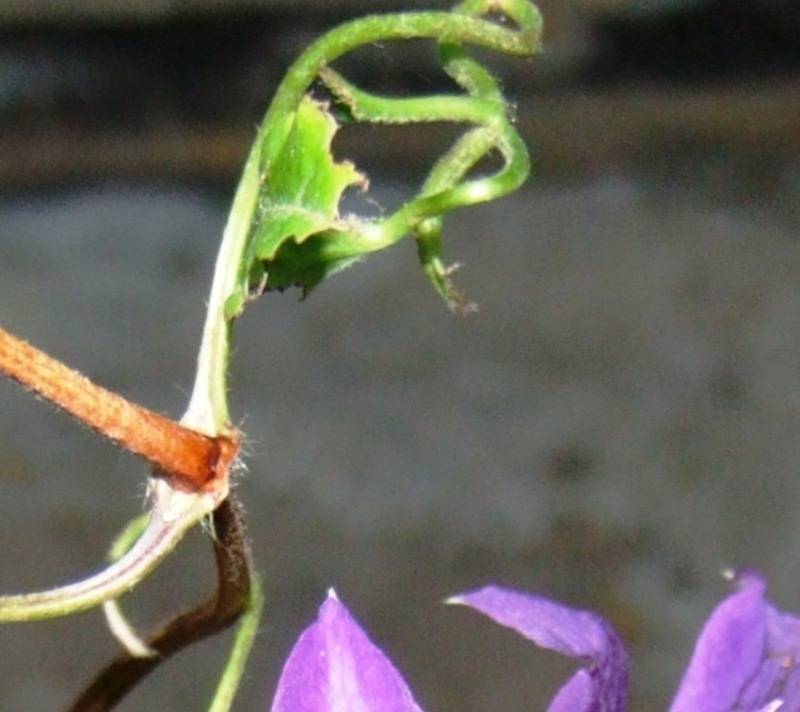
Clematis are not conventional twining vines. Most climbing types ascend by using their leaf petioles—the slender stalks that connect the leaves to the stems—to wrap around narrow supports.
That distinction matters when selecting a trellis or arch. A clematis generally performs best when it has a network of relatively thin horizontal and vertical members to grab. On a structure with wide, smooth bars guide the stems manually until they find a suitable point of contact. Clematis can benefit from wire lattice inserts when the support members are too large for the leaf petioles to grasp easily.
Once established, clematis can create a remarkably light, natural effect. The foliage is usually composed of opposite, simple to compound leaves, with forms ranging from deeply divided to trifoliate or pinnate. Most garden clematis are deciduous, although some species are evergreen in suitable climates.
Flowers may be:
- 1 to 8 inches wide
- Star-shaped
- Bell-shaped
- Tulip-shaped
- Nodding and lantern-like
- Single, semi-double or double, or in clusters
- Fragrant or virtually scentless
Many also produce attractive silky or feathery seed heads after flowering, adding a second season of interest.
Why Grow Clematis on Garden Structures?
A clematis can be planted in a border without a formal support, but a well-designed structure gives the plant—and the garden—a much stronger visual role.
A clematis-covered arch creates a living gateway at a home’s entrance or between garden rooms. Use vigorous cultivars for a substantial arch or choose a compact variety for a smaller entry.
An arch is particularly effective when it crosses a path. The structure establishes the architecture; the clematis provides the seasonal softness.
A wall-mounted or freestanding trellis is ideal for clematis that have a more upright or moderately vigorous habit.
Trellises can:
- Frame a doorway
- Hide an unattractive wall, fence, or utility feature
- Create a garden backdrop for a fountain, statue, bench or seating area
- Add privacy
- Give a narrow border vertical interest
Clematis is especially beautiful on a freestanding pillar or obelisk because the flowers can be viewed from all sides. Despite their name, rose pillars are not limited to roses, and growing roses and clematis together on a structure is a deservedly popular and effective combination.
Clematis-covered rose pillars, obelisks and tuteurs act as self-contained vertical garden features that lift color up above surrounding plantings, very valuable when planting space is limited. They work particularly well as:
- Border focal points
- Repeated accents along a long bed
- Entryway markers
- Centerpieces in perennial gardens
- Thrillers in container gardens
Clematis Growing Conditions
Although individual species differ, most garden clematis share several basic cultural requirements.
Light: Give the Flowers Sun and the Roots Shade
The classic clematis rule is "head in the sun, feet in the shade".
Most climbing clematis perform best when the foliage and flowers receive approximately six or more hours of sunlight, although many tolerate part shade. Afternoon shade can be particularly helpful in hot climates, and light shade can preserve the delicate hues of some varieties.
In very shady locations, flowering will generally be reduced. For bright woodland edges, morning sun or filtered light, choose species and cultivars specifically known for part-shade tolerance.
The roots, meanwhile, prefer a cool, evenly moist environment.
You can shade the root zone with:
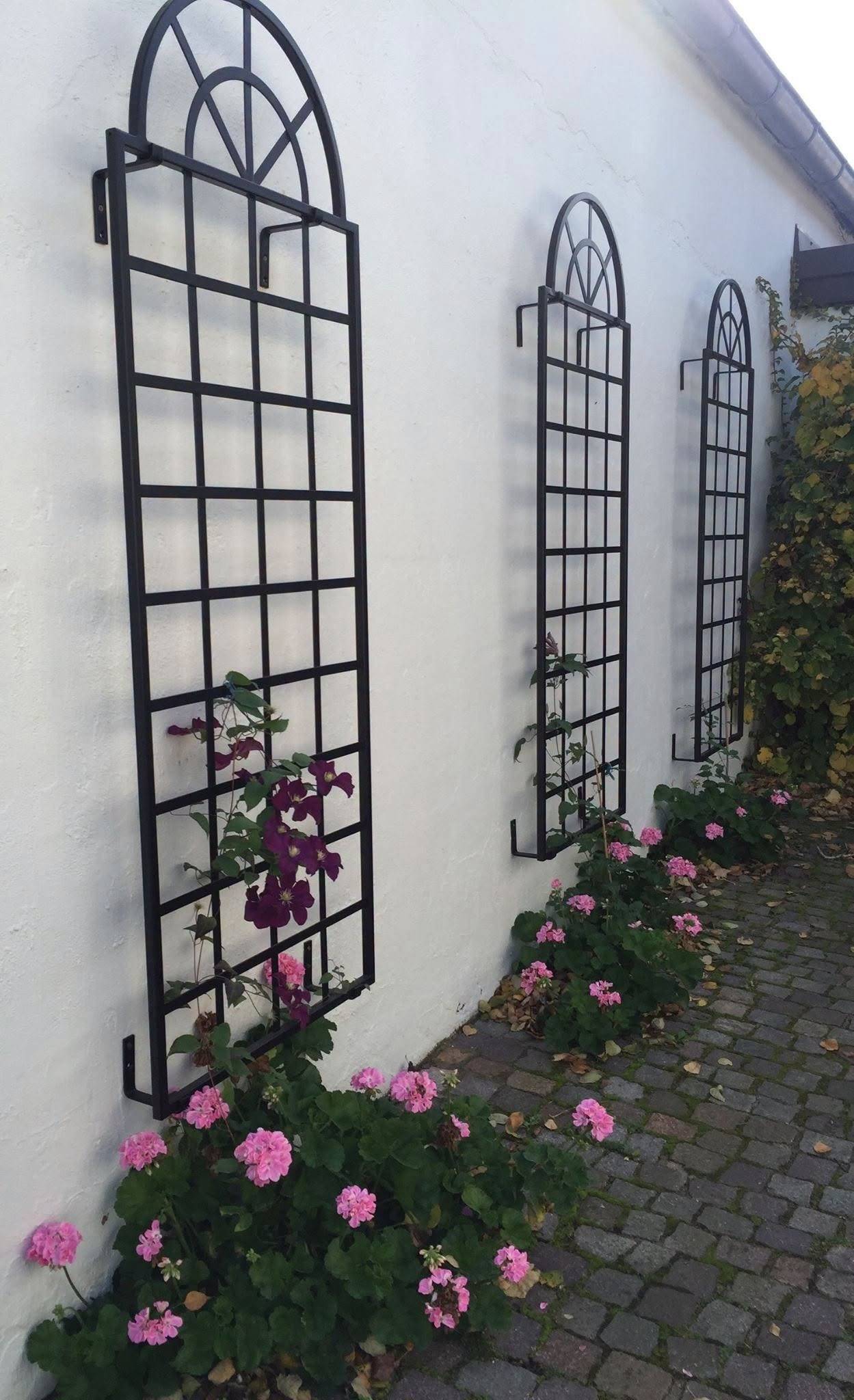
- Low-growing perennials, groundcovers, or annuals
- A 2–3 inch layer of organic mulch kept away from the crown
- Stones or other garden materials that do not trap excessive moisture around the crown
Avoid planting a clematis where the root zone becomes intensely hot and dry.
Soil: Fertile, Moist, and Well-Drained
Clematis appreciate deep, fertile soil with good drainage and consistent moisture. The ideal soil is rich in organic matter but never waterlogged, providing both moisture and oxygen. Improve heavy clay with organic matter and improve excessively sandy soil by incorporating compost or other suitable organic amendments.
Clematis generally prefer a neutral to slightly alkaline soil, with approximately pH 6.5–7.5 being a useful target range. Soil testing is preferable to guessing or automatically adding lime as unsuitable pH can contribute to nutrient deficiencies or toxicities.
How to Plant Clematis
Clematis benefit from careful planting because they can remain in the garden for decades.
- Put the support in place before planting. This is especially important for obelisks and rose pillars because installing a structure after a clematis has become established can damage the root system or break stems.
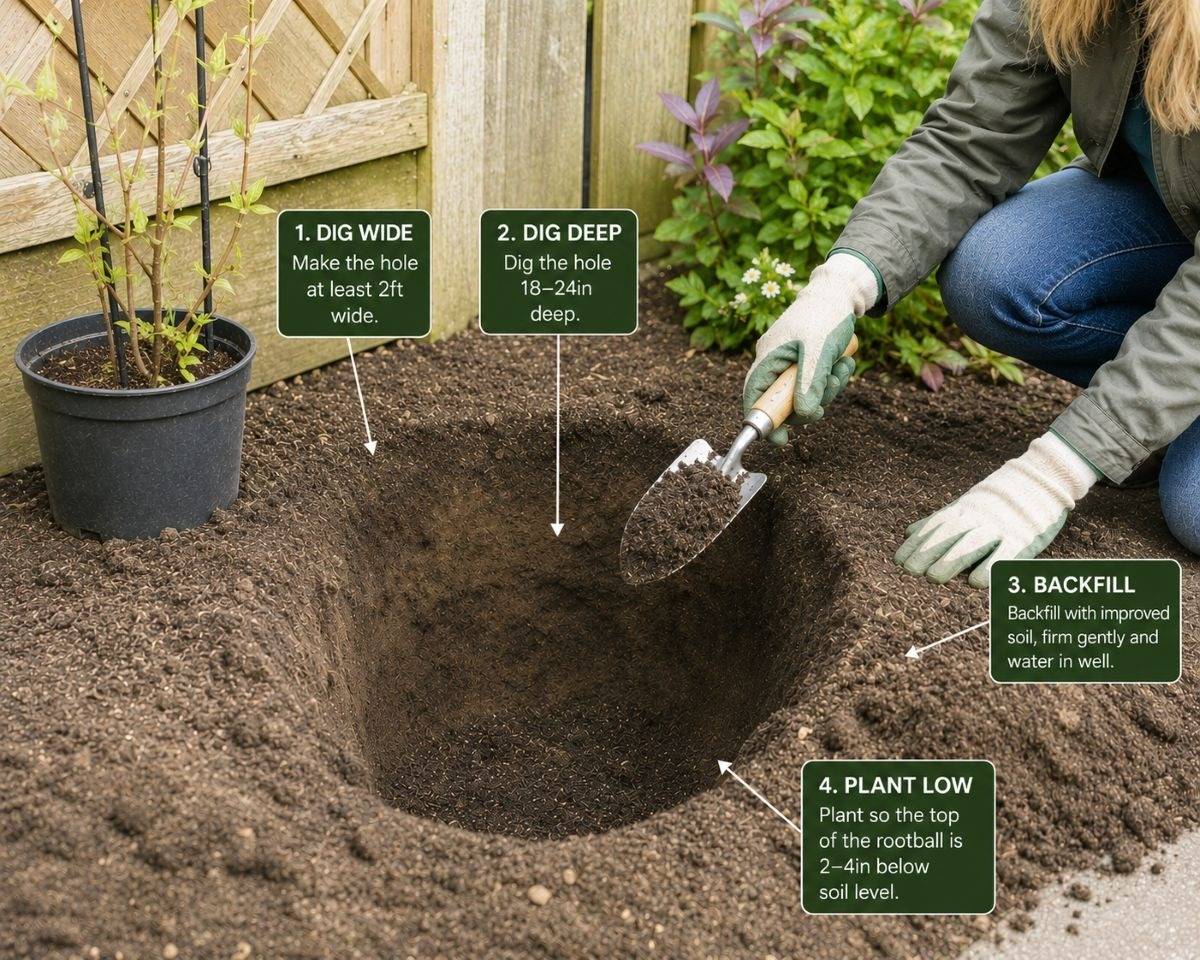
- Prepare a generous planting hole. Prepare a hole approximately twice as wide and deep as the container. Improve the soil with compost or other organic matter where appropriate but maintain good drainage.
- Plant slightly deeper than the original container level. Planting depth is one of the most important details in establishing a healthy clematis. For many cultivated clematis, particularly large-flowered types, planting the crown approximately 2–3 inches below soil level is advised. This places dormant buds below ground, encouraging new stems from the base and potentially helping the plant recover if stems are damaged by clematis wilt.
- Water thoroughly and mulch the root zone. Keep mulch away from the actual crown and stems. Keep newly planted clematis consistently moist.
- Train the young shoots immediately. Gently guide them toward the support. Clematis stems can be surprisingly fragile when young. Handle the vine carefully during planting and training, and avoid damaging stems with cultivation tools. Physical injury can increase problems with wilt.
Expert Tip: Prune Young Clematis for Better Structure
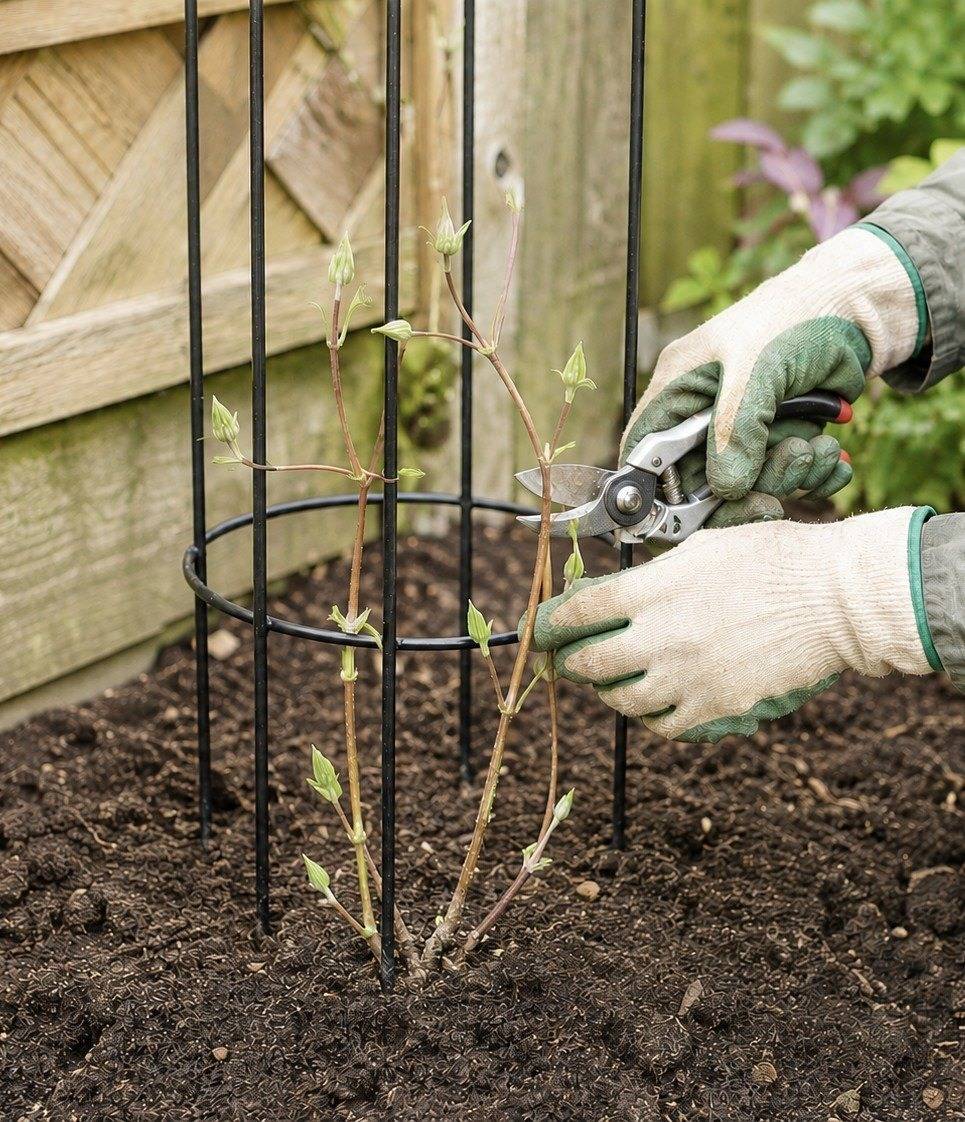
Regardless of pruning group, a newly planted clematis can benefit from an initial cutback. If the plant has only one or two long stems, cutting it back to approximately 6–12 inches above the ground can encourage several strong shoots from the base.
This may delay some flowers in the first season, but it often produces a much better-shaped plant in subsequent years. RHS recommends an initial pruning of newly planted clematis to encourage multiple stems and better coverage of the support.
For a pillar or obelisk, this is especially valuable because you want several stems developing from the base rather than one long vine that flowers only at the top.
- Watering Clematis
Clematis need consistent moisture, particularly while becoming established and during hot or dry weather. Water deeply when the upper soil begins to dry rather than relying on frequent shallow sprinkling.
Pay particular attention to:
- Newly planted clematis
- Container-grown plants
- Plants growing beside paved areas or walls and under eaves where rain is limited
- Vines competing with established shrubs or roses
- Plants during prolonged summer drought
Water the soil rather than the foliage when possible. Keeping leaves dry can help reduce fungal disease pressure. Do not allow the soil to repeatedly dry completely, but avoid constantly saturated soil.
- Feeding Clematis
Clematis are relatively vigorous plants and benefit from adequate nutrition.
- A practical approach is to incorporate compost or other well-rotted organic matter into the planting soil and apply a slow-release balanced fertilizer in spring according to the product label.
- If using a liquid fertilizer, use a formula with higher phosphorous and low nitrogen. Begin when new growth begins and cease once flower buds swell. Fertilizing may be resumed after flowering if desired, but should not be continued beyond 2 months before your average first frost date.
- Avoid excessive nitrogen. Too much nitrogen can encourage lush vegetative growth at the expense of flowering. The goal is healthy, sturdy stems and abundant flowers—not a giant mass of foliage.

Below: Closeup of clematis petiole, the thin leaf stalk that must wrap around a support in order for it to climb. Supports with rods larger than about 1/2" wide may require tying in.
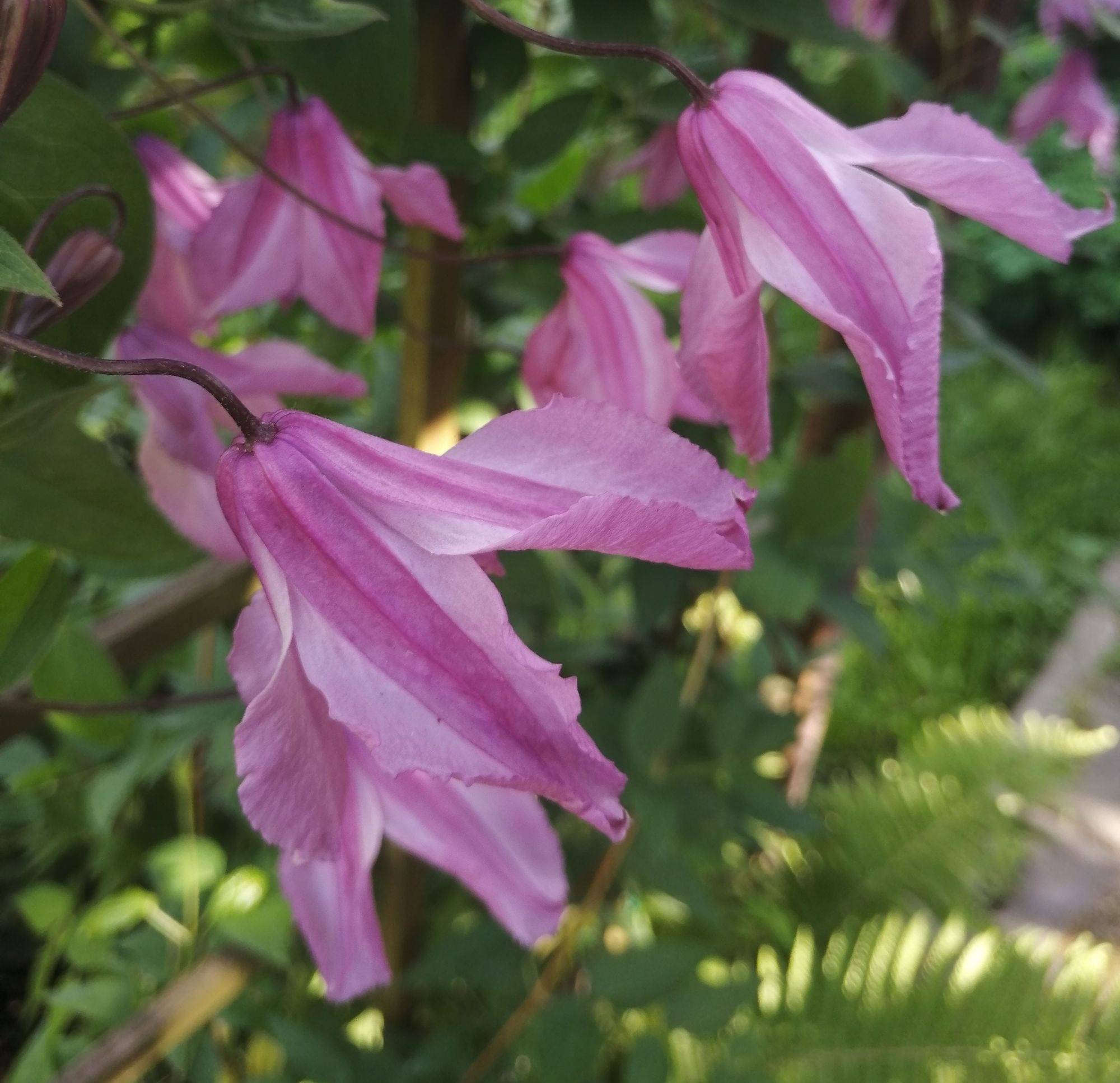
Below: "Typical" clematis blooms are flat, open-faced, and star-shaped, but several species bear flowers that are nodding bells or lantern shapes.
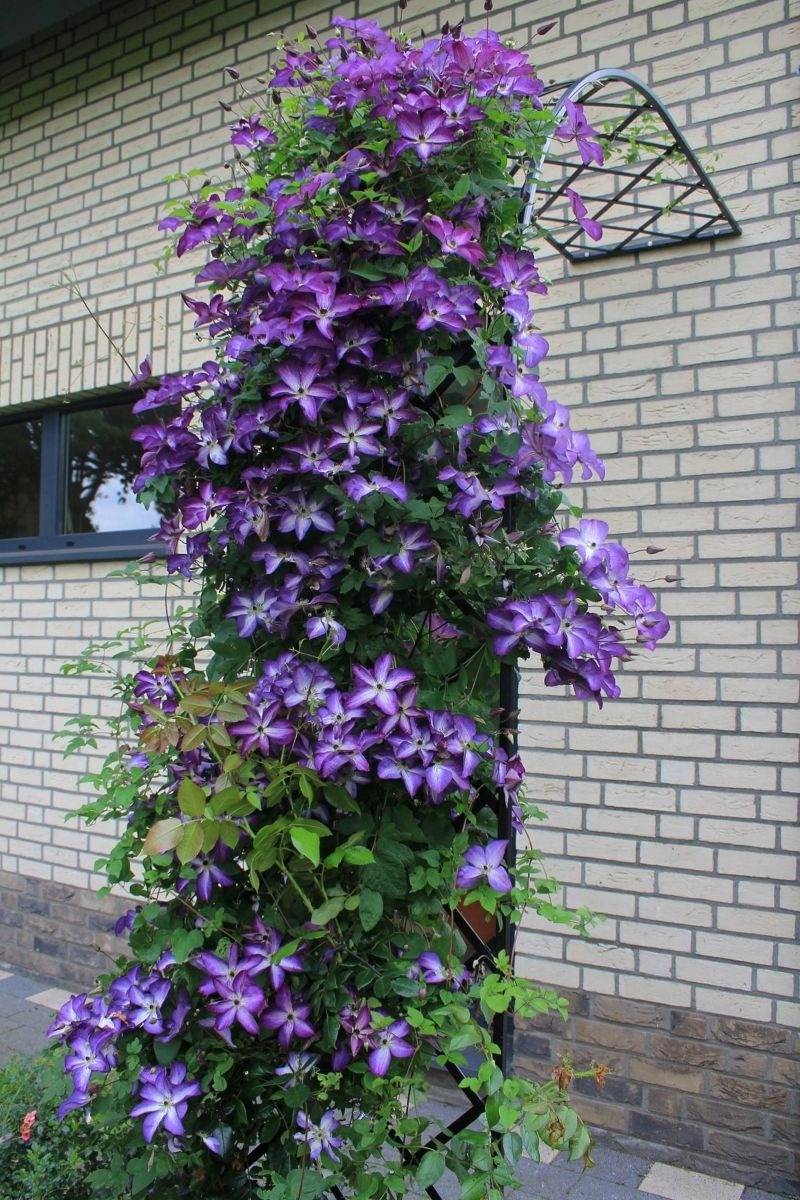
Below: Clematis 'Venosa Violacea' creates a shower of purple on this half arch.
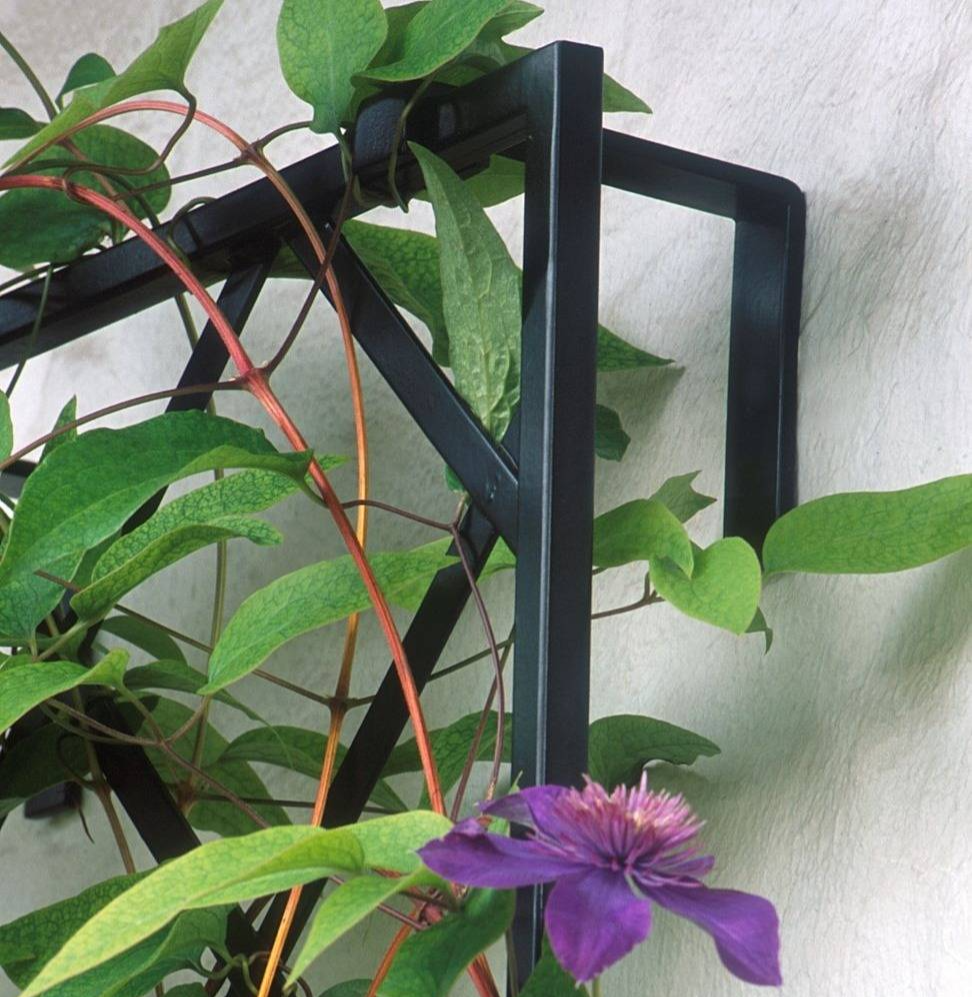
Below: Wall trellises must be offset to allow for proper air circulation and attachment of the vine, as with our Classic Garden Elements trellises.
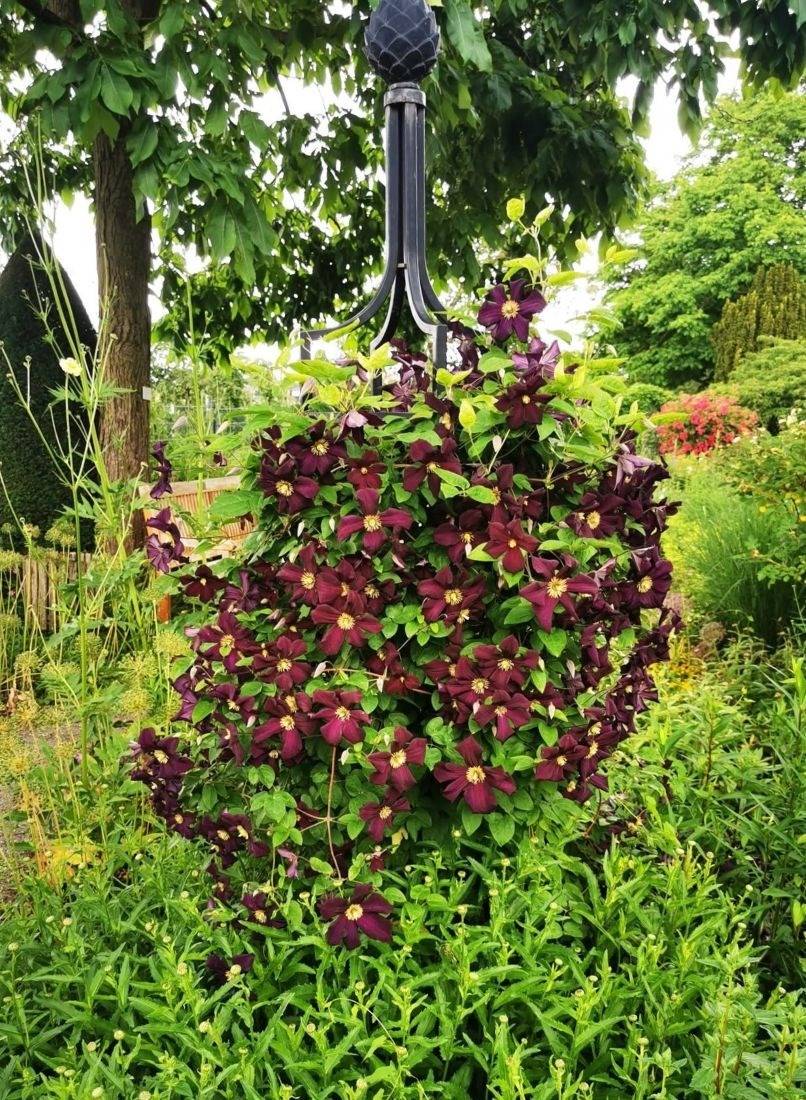
Below: Clematis 'Rouge Cardinal' on Classic Garden Elements Obelisk I in a perennial bed. It would be difficult to provide this much color at a height above the other plantings without the use of a flowering vine on such a support.
Below: Planting perennials or annuals around the base of clematis helps to shade the roots. Here, pink geraniums with newly planted purple clematis.
Below: Clematis should be planted as carefully as any shrub, as they can last for decades with proper care. Provide a large hole and plant most varieties a bit deeper than they were in the original pot.
Below: Newly planted clematis, especially those with only one or two stems, benfit from initial pruning to encourage new shoots from the crown.
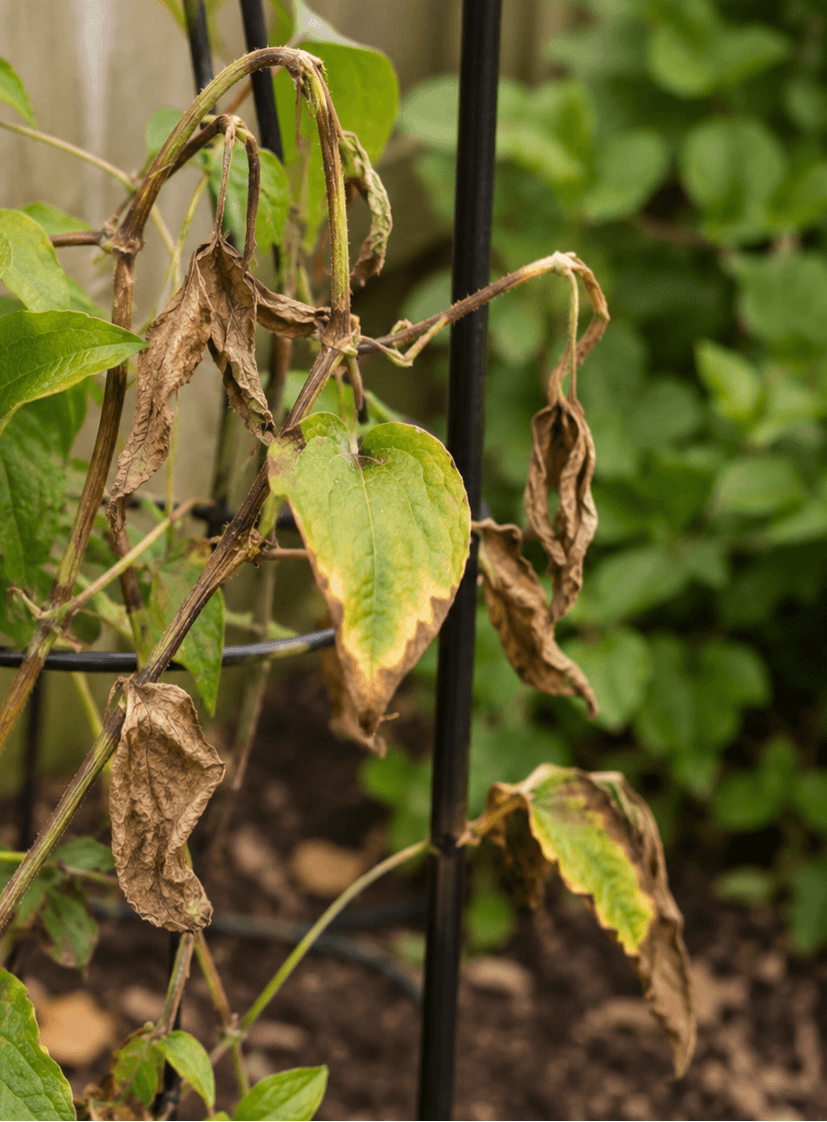
Below: Clematis wilt is a disease that causes wilting and browning or blackening of stems and foliage. It occurs more frequently on large-flowered Group 2 hybrids and is less common on C viticella and other species.
Clematis Pests and Diseases
Clematis are generally dependable, but several problems deserve attention.
Clematis Wilt
Clematis wilt is the disease gardeners fear most. A previously healthy vine may suddenly wilt, with stems becoming brown or black. Large-flowered Group 2 hybrids are particularly susceptible. Small-flowered viticella hybrids, C. alpina and C. montana are generally more resilient, making them useful choices where wilt has been a recurring problem.
Good cultural practices include:
- Planting deeply
- Avoiding stem injury
- Providing good air circulation
- Keeping roots evenly moist
- Removing affected stems promptly
- Disinfecting pruning tools before pruning, and after cutting diseased tissue
A wilted clematis is not necessarily a dead clematis. If the crown remains healthy, new shoots can emerge from below the soil.
Powdery Mildew
Powdery mildew appears as a white, dusty coating on leaves and stems. It is more likely under conditions of poor air circulation and stressed plants.
Improve conditions by:
- Avoiding overcrowding
- Training stems rather than allowing a tangled mass
- Watering at soil level
- Avoiding unnecessary overhead irrigation
- Providing adequate sunlight
- Removing badly affected foliage when practical
Other Diseases
Common Clematis Pests
Often, healthy clematis can tolerate modest pest damage without intervention. Regular inspection is preferable to routine spraying.
Watch young shoots and foliage for:
- Aphids
- Slugs & snails
- Earwigs
- Vine weevils
- Scale
- Spider mites
- Caterpillars
While considered relatively deer and rabbit resistant due to the bitter compounds in the leaves, tender young shoots may be browsed. Young plants are more likely to be attractive to rabbits, as they feed at ground level.
Understanding Clematis Pruning Groups 1, 2,and 3
It may seem confusing at first, but one should not be intimidated by the designation of clematis pruning groups. Clematis pruning becomes relatively straightforward when you know when your plant flowers and whether it blooms on old or new wood.
The three pruning groups are based on flowering time and the age of the wood that carries the flowers. Note that these are not “rules,” but flexible guidelines that allow for managing size and adjusting the blooming period and flower placement to best suit the structure.
Group 1: Early Flowering on Old Wood
Group 1: Early Flowering on Old Wood
Typical bloom period: winter and spring
Pruning: After flowering, only if needed
Examples: Clematis alpina, C. macropetala and C. montana types.
- Group 1 clematis flower on stems produced the previous year. They generally need little pruning. After flowering, remove dead or damaged stems and shorten growth only as needed to shape and keep the plant within its allotted space.
- If major renovation is necessary, prune immediately after flowering—not in late winter—because the following spring's flower buds are already developing on the old stems.
- For vigorous C. montana, pruning immediately after flowering is particularly important if the vine is growing on a structure that it could quickly outgrow.
Group 2: Blooms on Old and New Wood
Group 2: Blooms on Old and New Wood
Bloom Period: Usually late spring/early summer, with some cultivars reblooming later
Pruning: Light pruning in late winter/early spring; optional pruning after first bloom
Examples: Many of the classic large-flowered hybrids such as 'Nelly Moser', 'The President', 'Doctor Ruppel', ‘Henryi’
- They flower primarily from old wood in early summer and may produce a second flush on new growth later in the season.
- In late winter, remove dead or weak growth and cut healthy stems back to a strong pair of buds.
- After the first flush, selectively shorten flowering stems if you want to encourage additional growth and flowers.
- If you prune a Type 2 clematis more lightly, you can retain more old wood and encourage flowers higher on an arch or trellis. If you prune it more substantially, you may encourage new growth lower on the structure and shift flowering later.
- Avoid hard pruning Group 2 plants if the early display is important to you.
Group 3: Flowers on New Wood
Group 3: Flowers on New Wood
Typical bloom period: summer through fall
Pruning: Hard prune in late winter/early spring
Examples: Clematis viticella, C. texensis, ‘Polish Spirit’, ‘Etoile Violette’, ‘ Princess Diana’, ‘Jackmanii Superba’, ‘Betty Corning’, ‘Burning Love’, ‘Sweet Summer Love’, ‘Duchess of Albany’
Group 3 is arguably the easiest group to prune and includes many excellent choices for smaller arches, obelisks and rose pillars because the entire framework can be renewed every year. This is particularly useful when you want flowers distributed over fresh growth rather than maintaining a permanent woody framework.
- As these produce flowers on new growth made during the current season, prune in late winter or early spring.
Cut the previous year's stems back to the lowest pair of healthy buds, generally about 6–12 inches above ground level. This annual reset encourages fresh growth from the base and prevents the plant from developing a woody, bare lower section with all its flowers at the top.
- For a tall arbor or overhead structure, you can deliberately leave longer stems. Again, the objective is not to blindly follow a prescribed rule, but to prune strategically to create the flowering shape you want.
Choosing a Clematis for a Garden Structure
When shopping for clematis, gardeners often begin with flower color, but we recommend approaching clematis selection from the structure outward.
Start with these five questions:
- How tall is the structure?
A 4-foot obelisk needs a compact cultivar. A large pergola can accommodate a vigorous vine.
- How much sun does the site receive?
Full sun gives the greatest range of choices, while part shade requires more selective cultivar choice.
- When do you want flowers?
Group 1 gives early-season flowers. Group 2 provides an early flush and potentially a second display. Group 3 excels from summer into fall.
- How much pruning do you want to do?
Group 3 is the easiest: cut it back hard in late winter and start over.
- What flower form suits the garden?
For instance, large, showy blooms for a formal garden; delicate bells for a cottage or romantic garden; tulip-shaped blossoms for something unusual; small flowers for a naturalistic effect or woodland garden
Clematis Species: From Nodding Bells to Clouds of White Flowers
Before choosing a cultivar, it helps to understand the extraordinary range of flowers found within the clematis genus. The "traditional" clematis gardeners think of are most often the large-flowering Group 2 hybrids or the slightly smaller-flowered hybrids in Group 3, with open, flat, star-like blooms, but there are many other options that deserve consideration.
Clematis alpina: Delicate Bells for Spring
Clematis alpina is one of the classic early-flowering species. Its flowers are typically nodding, bell-shaped and composed of four petal-like sepals. It is an excellent choice for a smaller trellis or obelisk because its habit is generally more restrained than that of the huge C. montana types. Several named cultivars are available in commerce.
Flower color: Blue and violet to pink and white, depending on selection
Pruning Group 1: flowering on stems produced the previous year.
Zones 4–9, depending on selection
Best use: small obelisks, tuteurs and early-season trellises.
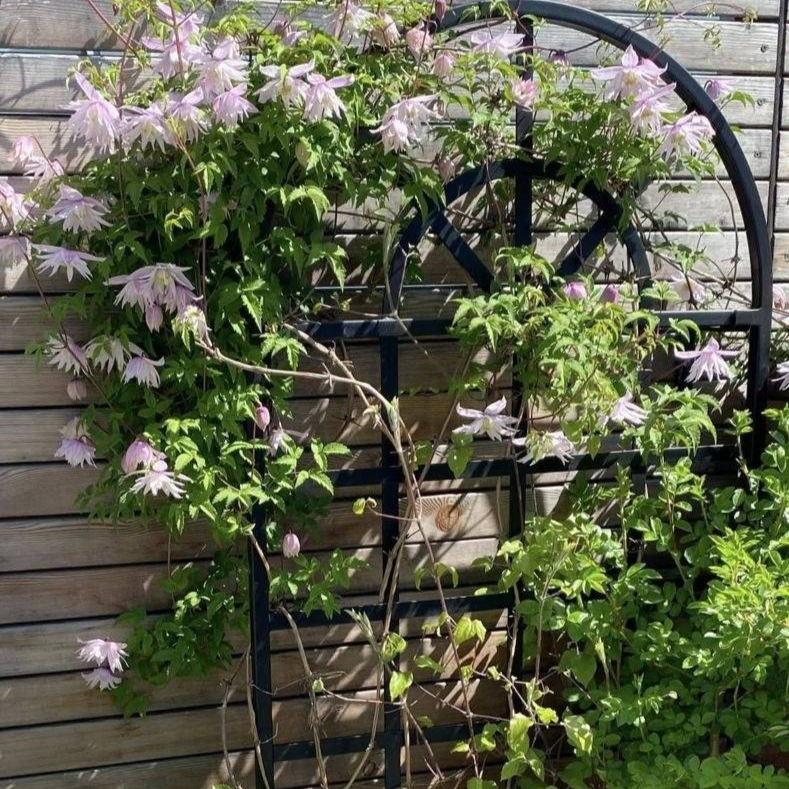
Above: C. alpina 'Pink Princess' , a semi-double flowering variety, on Orangery Trellis
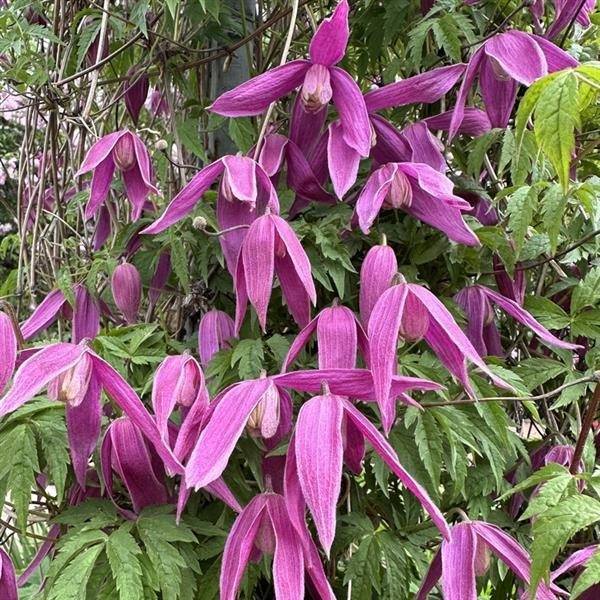
Above: C. alpina 'Constance' photo courtesy Ball Horticulture
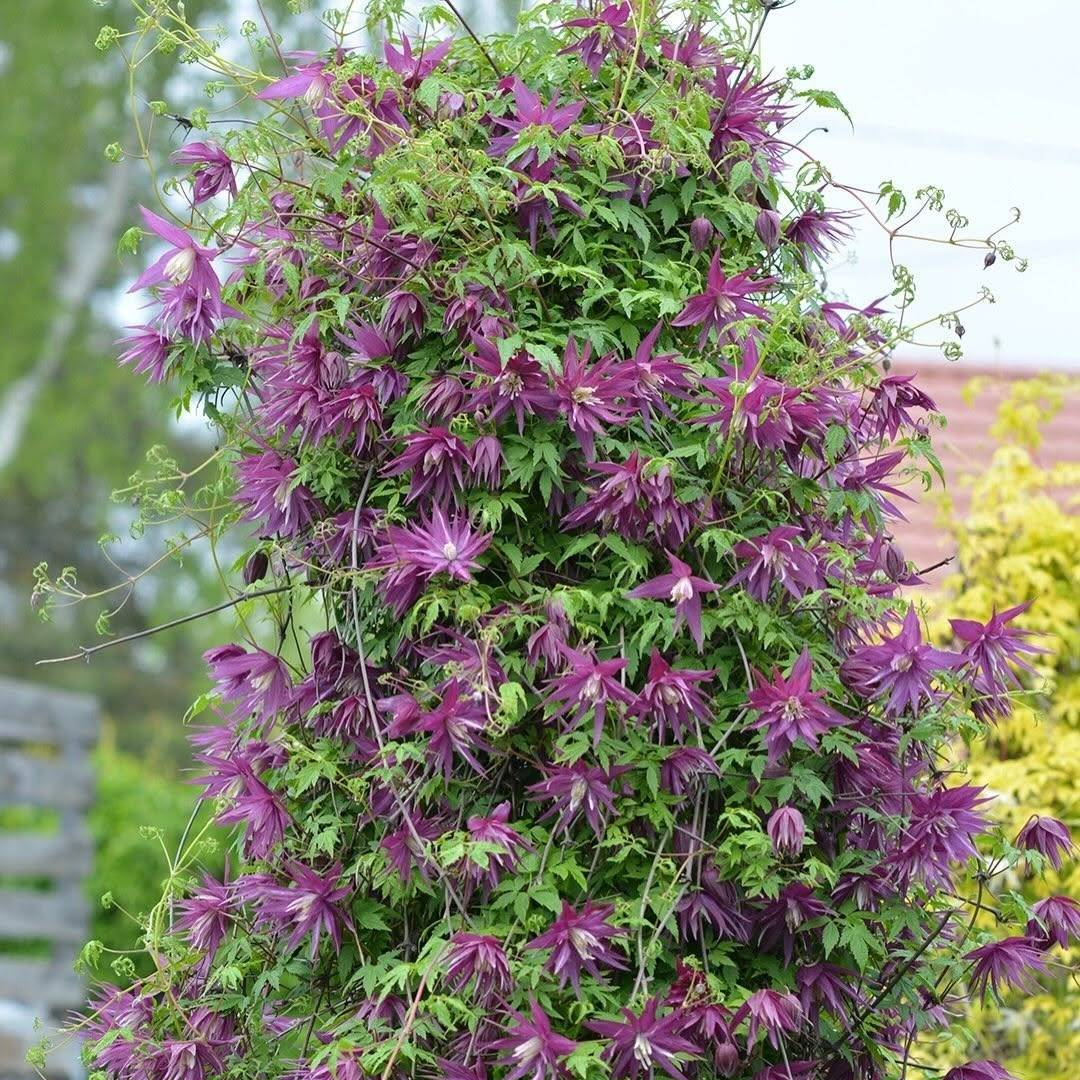
Above: C. alpina x C. macropetala hybrid 'Purple Surprise' on pillar
Clematis macropetala: Double and Semi-Double Spring Flowers
Another excellent early-season species, C. macropetala produces charming nodding flowers with layered, petal-like sepals. The flowers have a distinctly graceful, almost lantern-like appearance, making C. macropetala especially attractive when trained over a small arch or through a cottage-garden planting.
Flower colors include lavender-blue, violet, pink and white.
Pruning Group 1 clematis, so it blooms on old wood and is pruned only after flowering when necessary.
Zones 3–9, depending on cultivar.
Best use: smaller arches, obelisks and trellises in cottage or woodland-edge gardens.
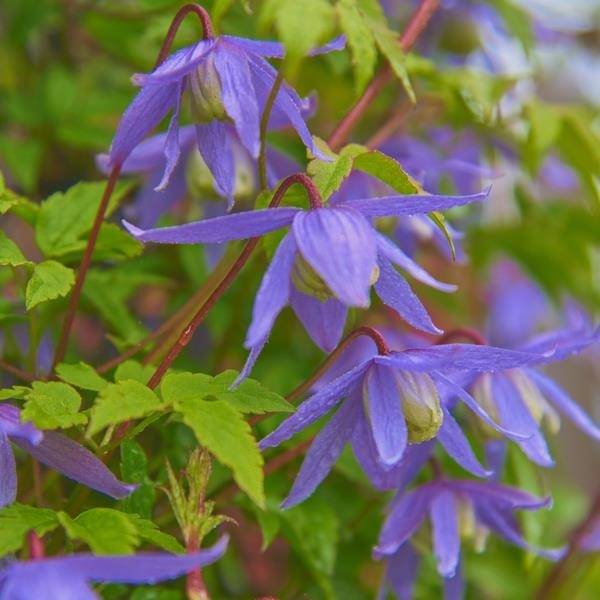
Above: C. macropetala 'Blue Bird' photo courtesy Ball Horticulture, Inc.
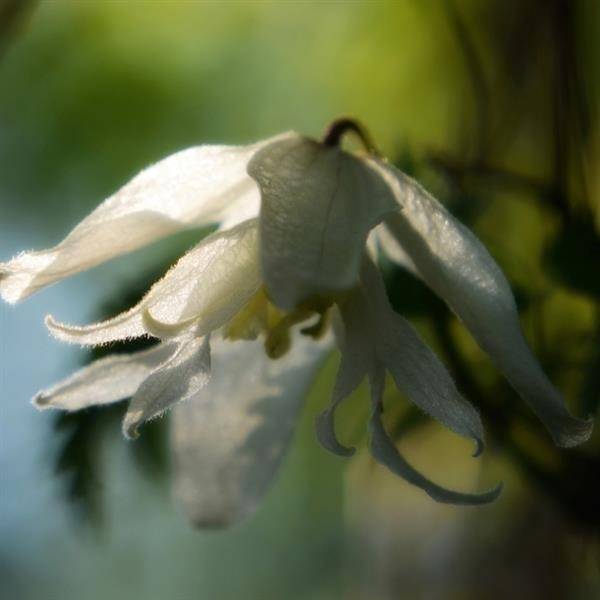
Above: C. macropetala 'White Swan' photo courtesy Ball Horticulture, Inc.
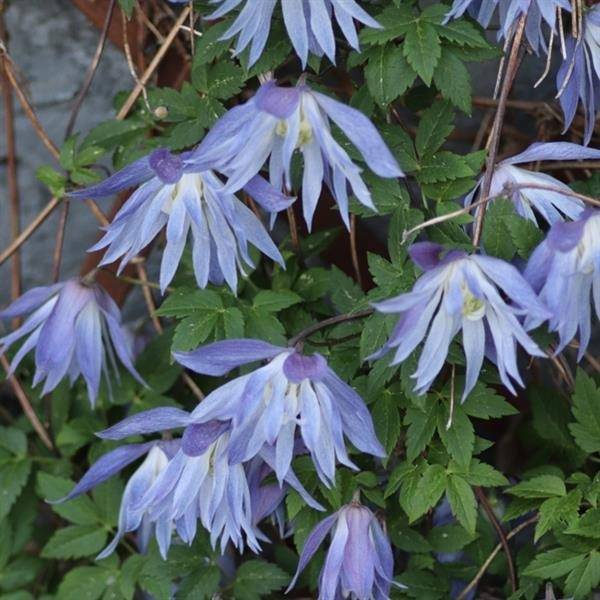
Above: C. macropetala 'Maidwell Hall' photo courtesy Ball Horticulture, Inc.
Clematis montana: A Spring Cloud of Flowers
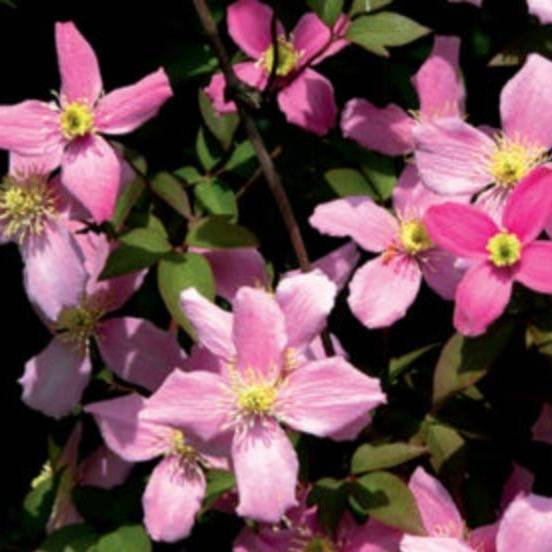
If you want a dramatic spring display on a large structure, Clematis montana is difficult to beat. Unlike the huge individual flowers of many modern hybrids, C. montana produces masses of smaller, four-petaled flowers, many of which are fragrant. The species is exceptionally vigorous and can reach 16–40 feet, making it suitable for substantial arches, pergolas and large trellises—not small obelisks.
Flower color: white, pink or rose, often with contrasting yellow stamens.
Pruning Group 1, blooms on old wood
Zones 6–9
Best use: large arches, pergolas and very substantial trellises.
More compact cultivars include 'Freda' (10-20'), 'By the Way' (10-13'), 'Jurry' (10-15'), and 'Primrose Star' (8-13')
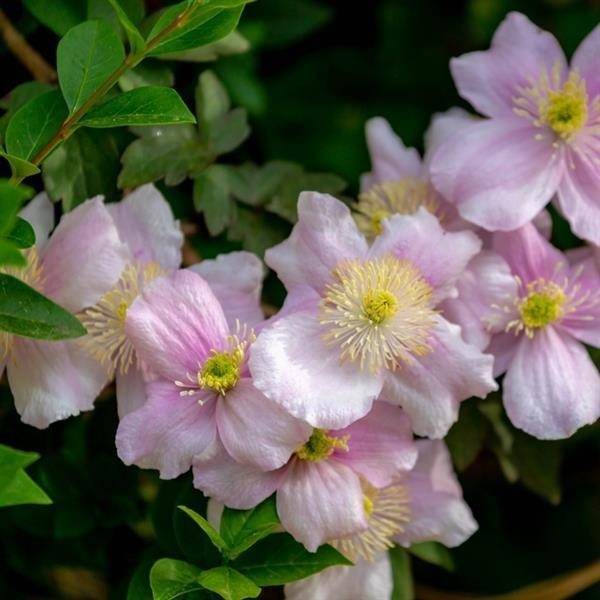
Above: C. montana 'Fragrant Spring' grows 20-30'. Photo courtesy Ball Horticulture, Inc.
Above: C. montana var. rubens 'Freda' is a more compact cultivar, but still grows 10-20 feet. Photo courtesy Ball Horticulture, Inc.
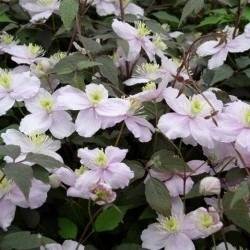
Above: C. montana 'Mayleen' photo courtesy Ball Horticulture, Inc.
Clematis texensis: Tulip-Shaped Flowers
Texas clematis, also called scarlet leather flower, is particularly distinctive. Instead of the broad, flat flowers associated with many hybrid clematis, C. texensis produces thick, leathery, bell- or tulip-shaped flowers. The species reaches approximately 6–9 feet tall and 2–3 feet wide, making it a useful choice for smaller vertical structures.
Flower Color: scarlet or red-orange exterior, while the interior can show cream, yellow or pinkish tones
Pruning Group 3, flowering on new wood
Zones 4–8
Best use: smaller obelisks and informal trellises.
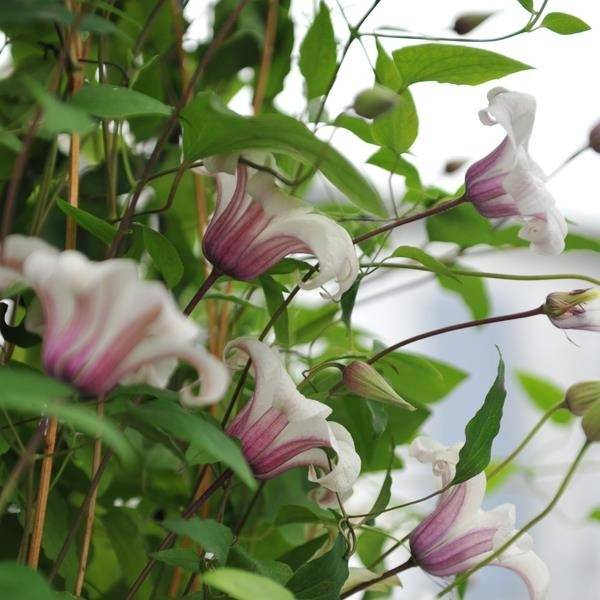
Above: C. texensis 'Princess Kate' photo courtesy Ball Horticulture, Inc.
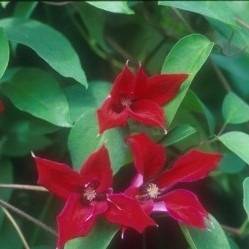
Above: C. texensis 'Gravetye Beauty' photo courtesy Ball Horticulture, Inc.
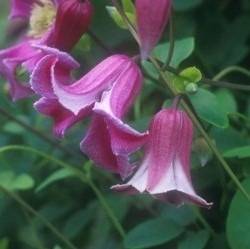
Above: C. texensis 'Etoile Rose' photo courtesy Ball Horticulture, Inc.
Clematis viticella: Long-Blooming Summer Color
Italian clematis, C. viticella, is one of our favorite groups for gardeners who want abundant summer and fall flowers with relatively easy pruning. The species produces numerous bell- or star-like flowers followed by attractive silky seed heads. Individual flowers are generally smaller than those of large-flowered hybrids, but they are produced generously on plants approximately 10–16 feet. It is also notably resistant to clematis wilt.
Flower color: purple, lavender
Pruning Group 3, flowering on new wood; responds well to hard pruning in late winter or early spring
Zones 4–8
Best use: arches, large obelisks and trellises
This species is also a parent of numerous beloved cultivars, including:
- 'Betty Corning'
- 'Etoile Violette'
- 'Polish Spirit'
- 'Madame Julia Correvon'
- 'Venosa Violacea'
- 'Purpurea Plena Elegans'
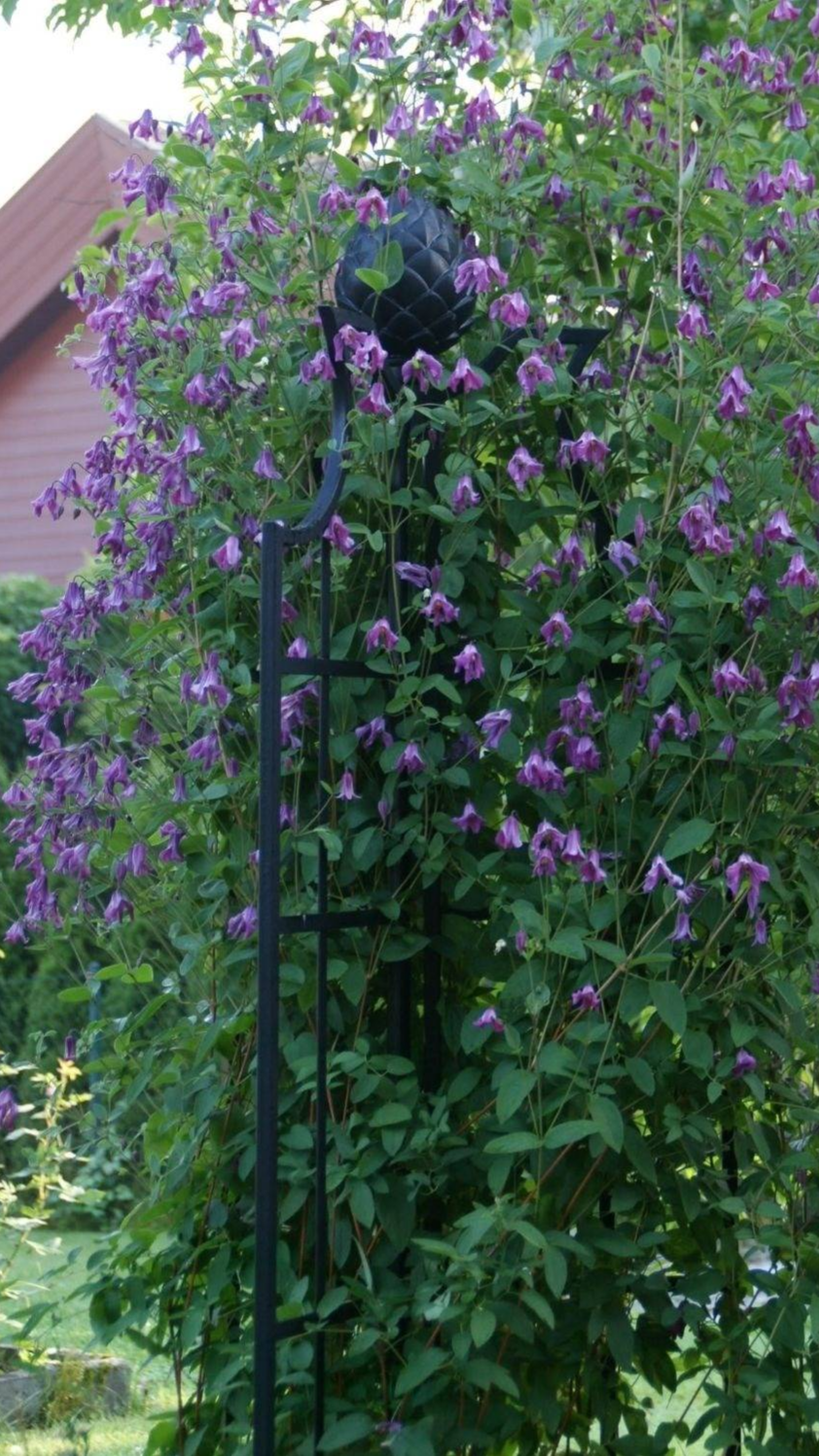
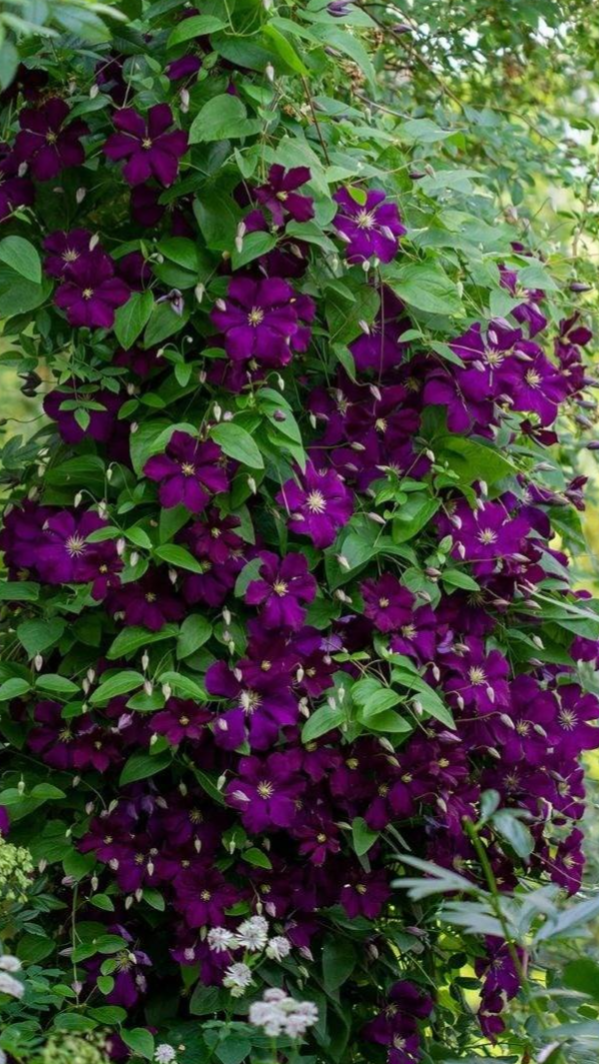
Above: C. viticella 'Etoile Violette'
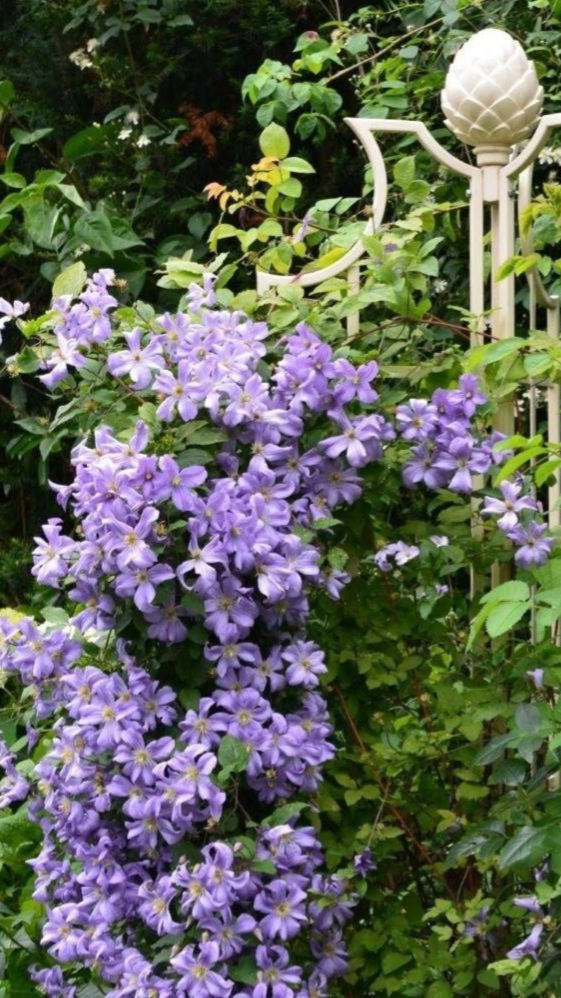
Above: C. viticella 'Prince Charles'
Clematis virginiana: A Native Cloud of White
For gardeners interested in native plants, C. virginiana (Sweet Autumn clematis or Virgin's Bower) is a particularly useful North American species. It produces masses of small, fragrant white flowers in branched clusters from July through September. A dioecious species, female plats can subsequently develop the characteristic silky, feathery seed heads often associated with "old man's beard." The foliage is compound and the plant is a rapid, dense climber tolerating conditions ranging from full sun to shade.
Flower Color: white
Pruning Group 3
Zones 3-8
Best use: pergolas, arches, large trellises in naturalistic gardens, woodland edges and informal gardens
Note that the invasive C. terniflora/C. paniculata is also called sweet autumn clematis!
Clematis for Specific Situations
When choosing a clematis for an arch, trellis, rose pillar or obelisk, we recommend looking beyond flower color. Mature height, flowering season, pruning type, hardiness and flower form all determine whether a particular clematis will be successful on a structure.
- Small trellises/obelisks in containers: Choose a variety that grows no more than 6' and a container with a minimum 18" diameter. Evison hybrids are more recent introductions that focus on compact size and floriferous habit and are particularly well-suited for containers.
- Small structure: Choose a compact 4–8 foot clematis.
- Medium structure: Look for a 6–12 foot cultivar.
- Large arch or pergola: Consider vigorous species and hybrids reaching 10–30 feet or more.
Consult our chart of recommendations for clematis for different garden situations.
Garden Design Tips for Clematis
- Create a Flowering Gateway
Plant a pair of clematis on opposite sides of an arch. For a long season, consider a Group 2 or Group 3 selection such as 'Jackmanii Superba' or 'Sweet Summer Love'. Underplant with: catmint, Salvia, hardy geranium, lavender, and/or heuchera. The low planting ties the base of the structure into the landscape and shades the clematis roots.
- Use Repeated Obelisks
Place three (or more) identical obelisks along a long border, each planted with the same clematis to add rhythm and vertical structure. Repetition makes the garden feel intentional rather than cluttered. For a formal effect, use one cultivar throughout. For a cottage-garden effect, repeat a color family—for example, plum, purple, rose pink and soft pink.
- Pair Clematis with Ornamental Grasses
A clematis climbing through a vertical support looks especially beautiful when surrounded by plants with contrasting texture. Try a clematis with switchgrass, feather reed grass, or little bluestem. In shadier gardens look to carex or hakonechloa. The grass provides a low-maintenance, softly textured base while the clematis carries color upward.
- Combine Clematis Varieties or With Other Vines
Instead of just one clematis, mix two varieties or combine with another flowering vine, such as native honeysuckle. Try a different variety on each side of an arch or together on a trellis or obelisk. Choose plants with different attributes, such as a small-flowered viticella or texensis type with a traditional large-flowered hybrid clematis for a dramatic textural contrast, or those with different blooming periods to extend the flowering display.
- Clematis and Roses: A Classic Combination
Clematis and roses are natural companions—but they should not be treated as interchangeable climbers. A rose generally needs to be trained and tied to its support. Clematis uses its leaf petioles to grasp the structure. The result can be spectacular when the two are deliberately paired. One important cultural point: a rose and clematis planted together are competing plants. Both need adequate water, nutrients and root space. Do not assume that because they share a support they should share exactly the same planting pocket.
Try these combinations:
1- White rose + purple clematis
2- The classic high-contrast combination. Pair a white-flowered climbing or shrub rose with 'Jackmanii Superba' or 'Etoile Violette'.
3- Yellow rose + blue/purple clematis: The cool blue-violet flowers of clematis create an especially dramatic contrast with yellow roses.
4- Pink rose + silvery-pink clematis: Use 'Samaritan Jo' for a softer, romantic palette.
5- Large-flowered rose + small-flowered clematis: A small-flowered viticella, texensis or integrifolia-type clematis can weave through the rose foliage without competing visually with every rose bloom.
6- Pale Rose + 'Betty Corning': The nodding lavender bells of 'Betty Corning' create a softer, more informal effect than a large-flowered hybrid. Its pendulous flowers can hang naturally through rose foliage.
- Clematis in Native Gardens
Pair C. virginiana or C. texensis with Joe-Pye weed, native asters, goldenrod, switchgrass, and/or beebalm.This creates a looser, ecological planting in which the clematis looks as though it belongs to the landscape rather than being placed on a formal support.
Create a Moon Garden
For an evening garden, use white or pale clematis against dark foliage or a dark metal structure. White-flowered clematis, like 'Henryii' or 'Huldine', can be magical against dark metal structures at dusk. Combine white-flowered clematis with white roses, silver artemesia, lamb's ear, white foxglove, nicotiana, white phlox, shasta daisies, and white yarrow. A white clematis climbing an obelisk becomes especially luminous at dusk.
- Purple/Blue Clematis + Chartreuse Foliage
Use 'Polish Spirit' or other blue or purple flowering clematis against chartreuse foliage for a stunning contrast. Try lady's mantle, Euphorbia 'Ascot Rainbow', 'Citronelle' heuchera, 'Sun King' aralia, bleeding heart 'Gold Heart', or hakone grass.
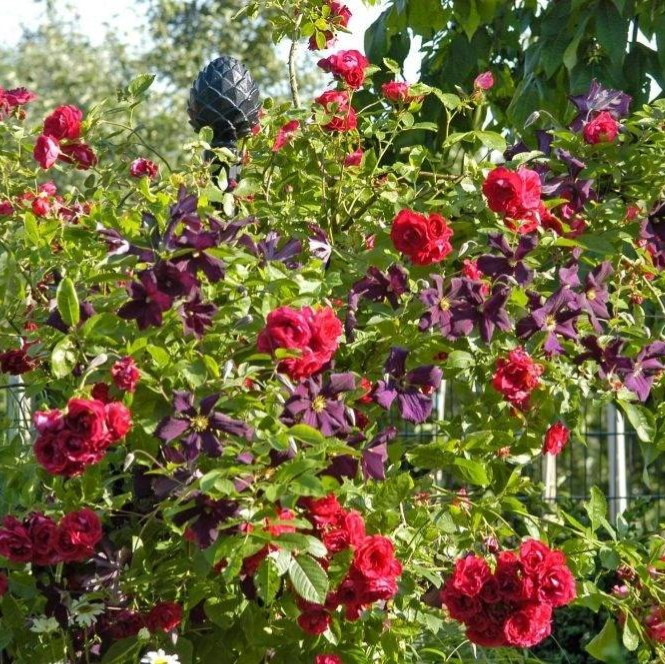
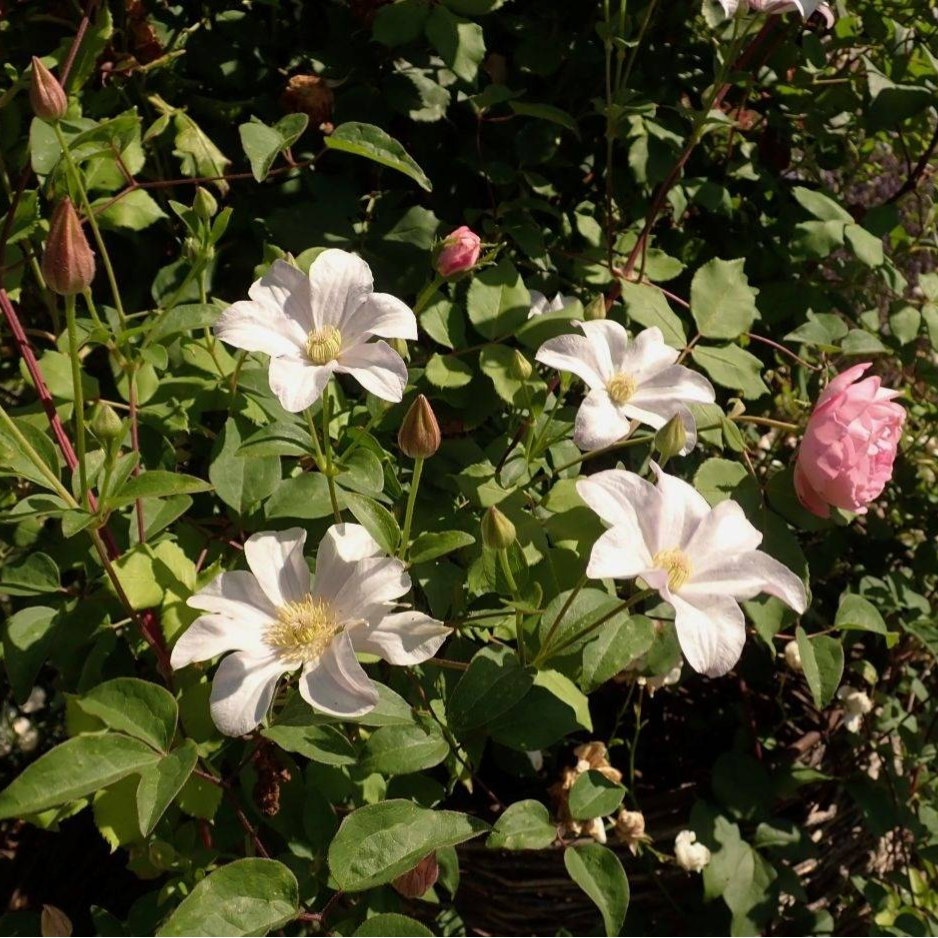
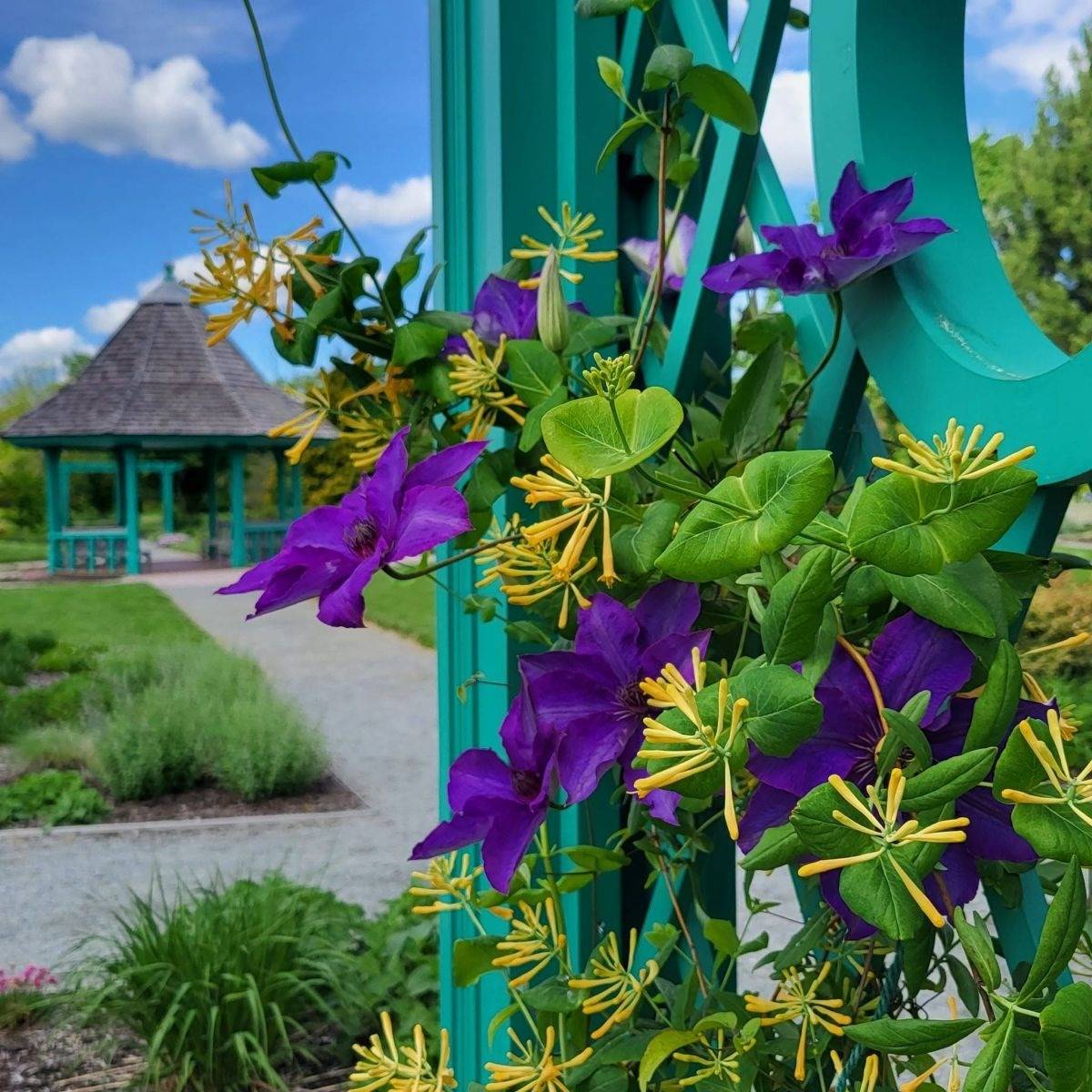
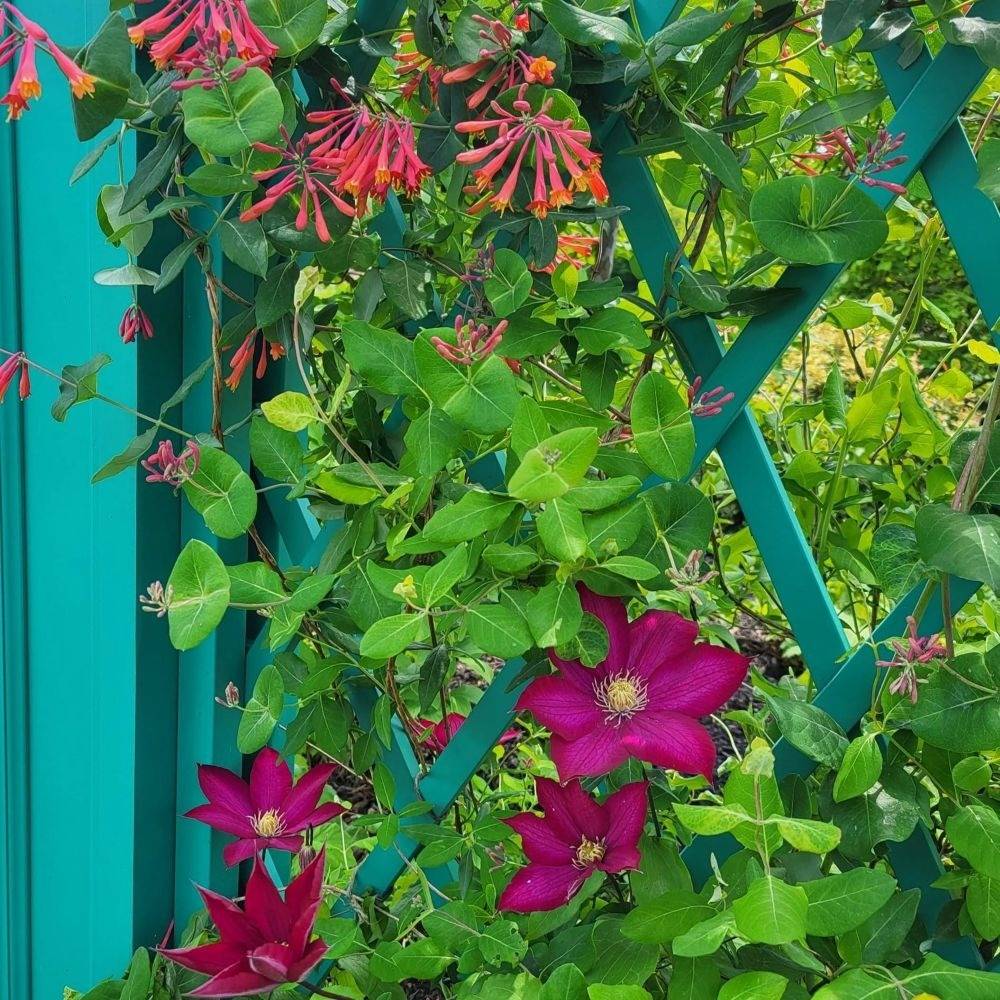
Above, L to R: Red roses and 'Etoile Violette' on obelisk; 'Huldine' clematis with pink rose; purple clematis with yellow honeysuckle; red clematis with orange honeysuckle
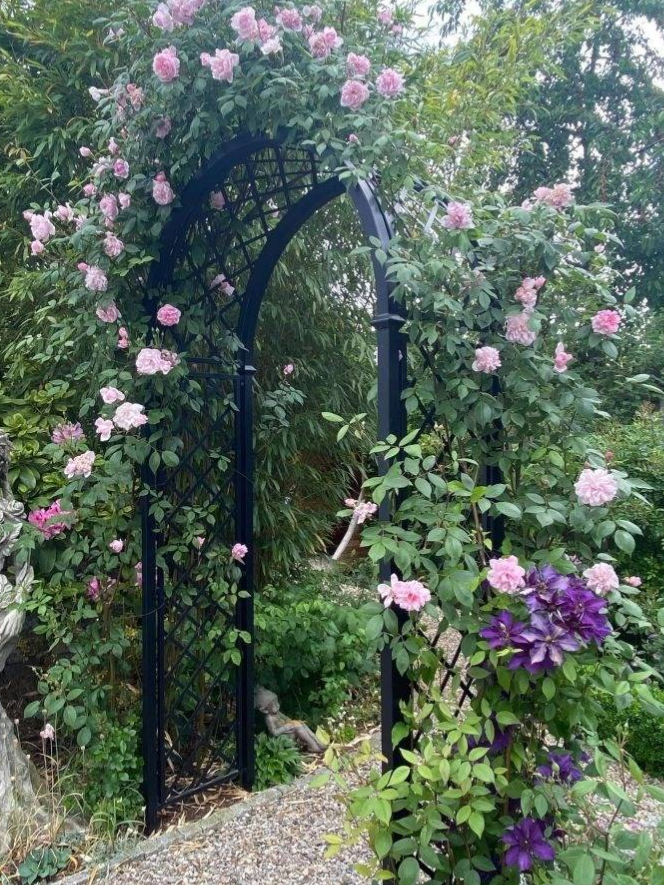
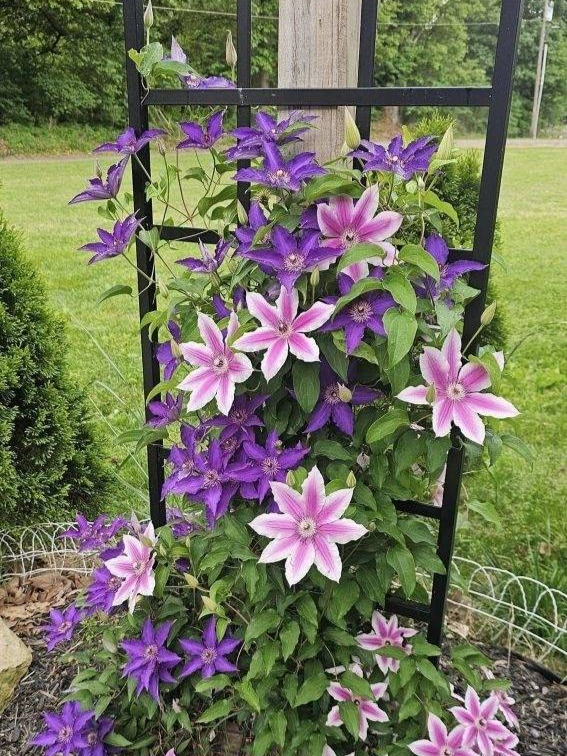
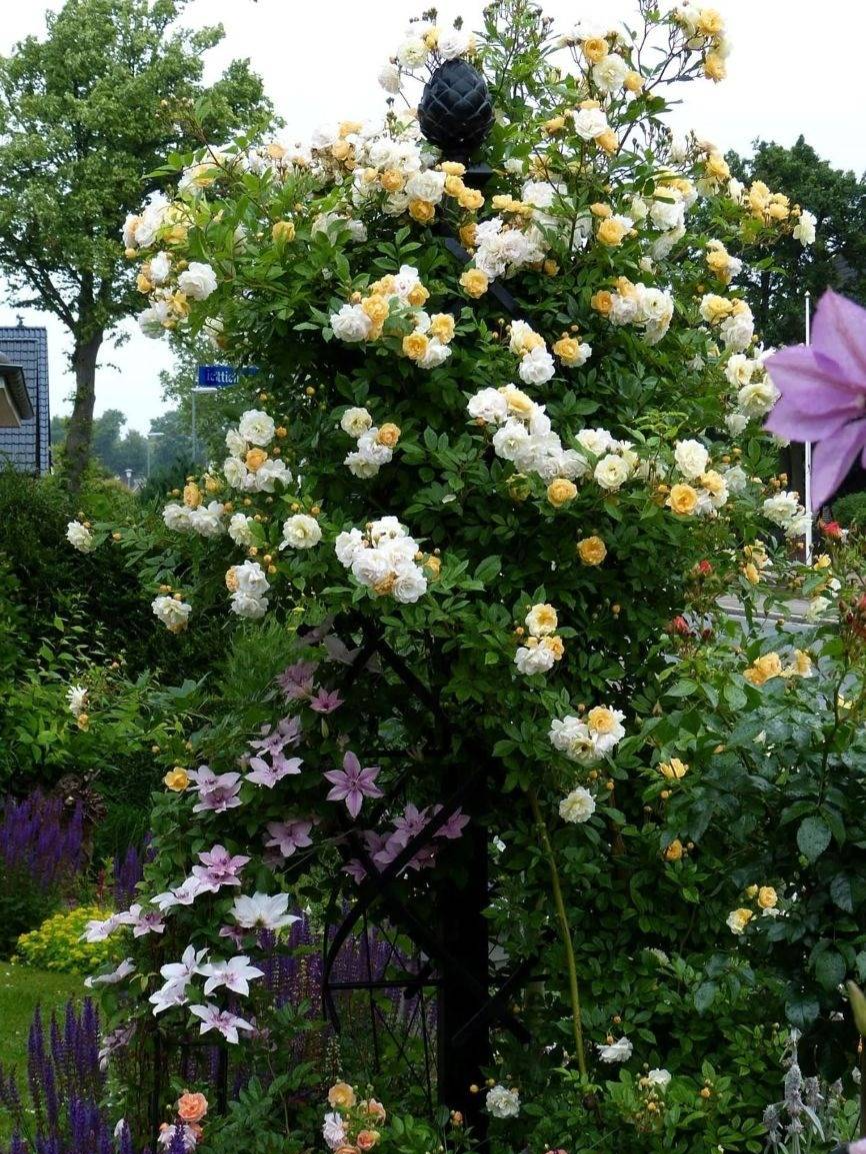
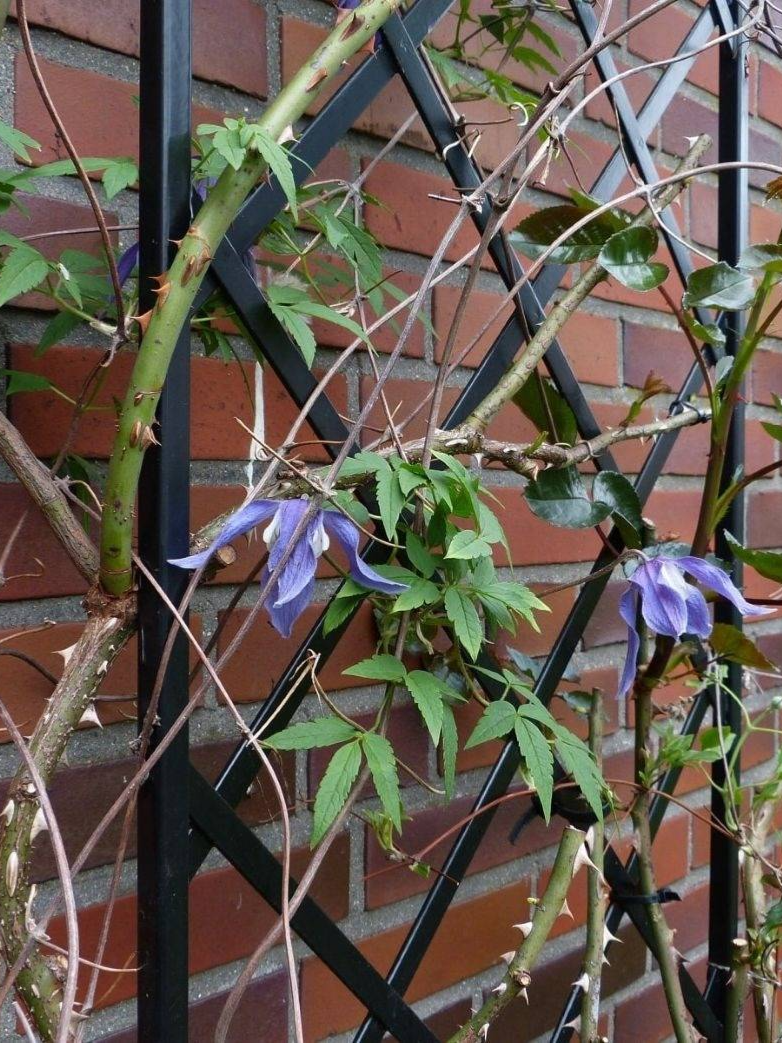
Above, L to R: Rose and clematis share a Portofino Arch; purple and pink large-flowered hybrids on metal trellis; Charleston Rose Pillar with 'Ghislaine de Feligonde' rose and 'Pink Fantsy' clematis; early blooming clematis adds color to a trellis before roses spring to life.
Make Clematis Part of the Garden Architecture
The most successful clematis plantings don't treat the vine as an afterthought. A clematis should never be selected simply because its flower color is attractive. For the best display, consider the structure, plant and surrounding garden as one composition.
With a little forethought, a garden arch can become a welcoming gateway; a trellis becomes a wall of color; a rose pillar becomes a flowing waterfall of blooms. And because clematis come in different sizes, flowering seasons, colors and pruning groups, there is a cultivar for nearly every scale of garden structure.The secret is simply to match the vine to the structure. With the right combination of light, soil, moisture, root protection, support and pruning, clematis can turn the metal framework of a garden structure into one of the most memorable flowering features in the landscape.
You may also like