For decades, Leyland cypress (× Cuprocyparis leylandii) has been one of the most commonly planted screening plants in America. While its growth rate of up to 3 to 4 feet per year creates quick cover, its popularity has also revealed significant drawbacks. Mature Leyland cypress often outgrows residential landscapes, suffers from disease and storm damage, and requires frequent maintenance to remain attractive.
Creating a Living Privacy Screen without Leyland Cypress
Today's gardeners and landscape designers are increasingly choosing more refined, longer-lived alternatives that provide beauty in every season while creating natural privacy.
Whether you're designing a secluded garden retreat, screening neighboring homes, or creating a lush backdrop for outdoor living spaces, considering other exceptional trees and shrubs that offer superior performance and ornamental value may be to your benefit.
Why Homeowners Are Replacing Leyland Cypress
Although a fast growing screen, Leyland cypress presents several challenges:
- Susceptible to canker diseases and root rot
- Prone to bagworms and spider mites
- Weak wood is easily storm damaged, including broken branches and split trunks.
- Can exceed 60–70 feet tall
- Requires regular pruning to prevent becoming sparse at the base with age
- Poor longevity in many landscapes
- Shallow roots compete with nearby plants and leave the plant vulnerable to tipping or uprooting in high winds or wet soil.
- Only moderately deer resistant
Fortunately, numerous evergreen trees and shrubs provide dense screening with fewer maintenance concerns.
Alternatives to Leyland Cypress for Privacy Screens
Below you'll find a list of some of the faster growing alternatives to Leyland Cypress that will get your living fence established as quickly as possible.
Note on growth rates, mature size, and deer resistance:
Growth rate:
Refers to the average growth rate in optimal conditions (proper siting, regular water, etc.) Younger plants with smaller root systems generally do not achieve the maximum growth rate for the first couple of years while the plants establish.
- Slow is generally considered less than 12 inches per year
- Moderate growth is 1 to 2 feet per year
- Fast growth rate is over 2' per year.
Mature size:
Refers to the size at 10 years. While the 10-year estimate is the standard adopted by the nursery industry, that certainly does not mean the plant stops growing at that point. Plants may slow down with age, but depending on growing conditions they may maintain or even increase their growth rate.
Deer Resistance:
High resistance indicates that these plants are infrequently browsed by deer. However, any plant, especially young plants and tender new foliage, may be eaten in the case of hunger pressure due to scarcity of food in winter or high deer populations. Deer resistance also seems to be highly localized -- deer in one community may ignore a plant that may be often browsed in others.
- Green Giant Arborvitae (Thuja standishii × plicata 'Green Giant')
Green Giant Arborvitae has become one of the premier privacy plant alternatives to Leyland cypress thanks to its exceptional vigor, disease resistance, and graceful pyramidal form.
Best For:
Elegant living walls for large estates, long driveways, and property boundaries. Plant 8–10 feet apart for a dense evergreen screen.
Plant Profile:
- Mature Height: 40–60 feet
- Mature Spread: 12–18 feet
- Growth Rate: 2-3' or more per year once established
- Growing Zones: USDA 5–8
- Sunlight: Full sun to light shade
- Soil: Moist, well-drained soil; adaptable to clay; cannot tolerate soggy soil
- Water: Moderate; consistent moisture while establishing
- Fertilizer: Slow-release balanced fertilizer in early spring
- Pruning: Minimal; remove stray branches if desired. If pruning will be required, a regular light shearing is recommended. Plants do not tolerate hard pruning - overgrown specimens cannot be substantially reduced in size!
- Winter Care: Water deeply before freeze; mulch roots
- Pests: Occasionally bagworms or spider mites
- Deer Resistance: High
- Foliage: Rich emerald-green sprays remain attractive year-round with only slight winter bronzing in very cold temperatures
- Flowers: Inconspicuous
Similar but Smaller:
- 'Junior Green Giant' is smaller at 15 to 20 feet tall and 12 to 15 feet wide, with an moderate growth rate of 1.5 to 2' per year.
- 'Baby Giant' is smaller yet at 14 feet tall and 6 feet wide, with a moderate growth rate.
- Tiny Tower (Thuja x 'Monrig') is a slim-growing cultivar growing to 20 feet tall but only 4 to 5 feet wide with a moderate growth rate.
- 'Steeplechase' grows about 2 feet per year to a mature size of 20-30 feet high and 6-12 feet wide.
- Emerald Green Arborvitae (Thuja occidentalis 'Smaragd')
One of the most popular evergreen privacy plants for smaller landscapes, Emerald Green Arborvitae offers a refined, narrow habit that requires very little maintenance. Unlike larger screening trees, it fits comfortably into suburban gardens while providing year-round privacy
Best For:
Narrow side yards, property lines, foundation plantings, and formal hedges. Plant 3 to 4 feet apart for a dense privacy screen.
Plant Profile:
Mature Height: 12–15 feet (occasionally 18 feet)
Mature Spread: 3–4 feet
Growth Rate: moderate until 12-15' in height, then slow
Growing Zones: USDA 3–8
Pests: Bagworms, spider mites, arborvitae leafminers
Deer Resistance: Poor; deer browsing may remove your privacy up to about the 6' level - just where you need it most!
- Sunlight: Full sun to partial shade (best color and density in full sun)
Soil: Moist, fertile, well-drained soil; tolerates clay if drainage is good
Water: Water regularly during establishment. Mature plants appreciate deep watering during prolonged drought.
Fertilizer: Apply a slow-release balanced fertilizer in early spring.
Pruning: Rarely needed. Light trimming may be done in late spring or early summer to maintain a formal appearance.
Winter Care: Water thoroughly before the ground freezes. In colder climates, protect from heavy snow accumulation that may spread branches.
Habit: Dense, upright, narrowly pyramidal evergreen with naturally symmetrical growth
Foliage: Bright emerald-green scale-like foliage maintains its color exceptionally well throughout winter with minimal bronzing.
Flowers: Inconspicuous. Small seed cones provide little ornamental value.
Similar varieties:
'American Pillar': 20-30 feet high x 3-5 feet wide; fast growth rate
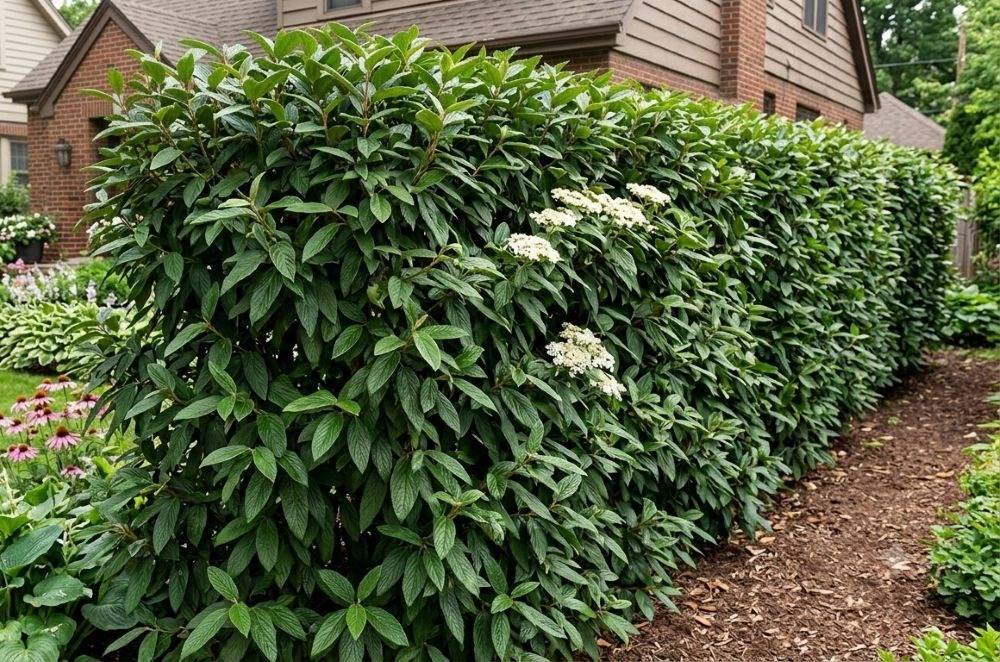
Prague Viburnum (Viburnum x pragense)
Best For:
Naturalistic screens and woodland borders where bold foliage creates visual interest. Can be pruned as a hedge, but berries will be sacrificed, as will flowers if pruned too early (blooms on old wood).
Plant Profile:
- Mature Height: 8–12 feet
- Mature Spread: 8–12 feet
- Growth Rate: moderate to fast
- Growing Zones: USDA 5–8
- Pests & Diseases: Generally very resilient; occasional scale or aphid problems, spider mite in hot, dry weather; leaf spot and mildew may be encountered with high humidity and poor air circulation, canker with drought stress
- Deer Resistance: Moderate to high
- Sunlight: Full sun to partial shade
- Soil: Moist, fertile, well-drained
- Water: Moderate
- Fertilizer: Spring application of balanced fertilizer
- Pruning: Trim individual branches to shape as needed; prune after flowering if maintaining as hedge.
- Winter Care: Very cold hardy; mulch young plants
- Habit: Dense, upright, rounded to oval evergreen shrub
- Foliage: Glossy, highly textured, elliptical, 4 inch long dark green leaves with fuzzy gray undersides
- Flowers: Large creamy-white flower clusters in late spring followed by bright red berries that mature to black
Chinese Fringe Flower (Loropetalum chinense)
Loropetalum combines colorful evergreen foliage with vibrant spring flowers, making it one of the most ornamental privacy shrubs for warm climates.
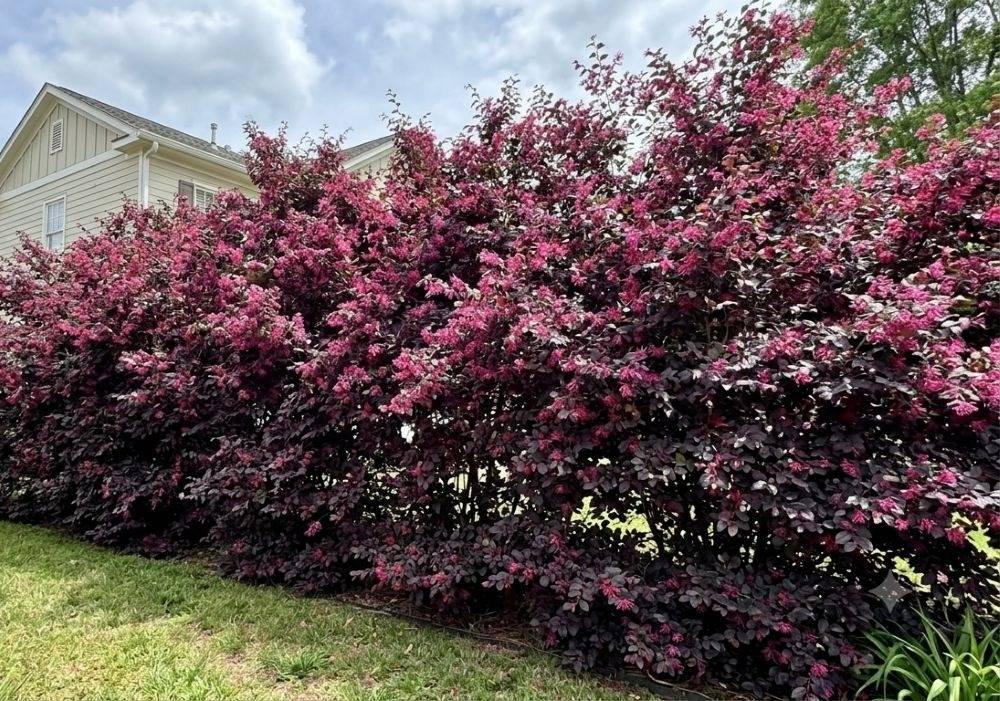
As much recent breeding has focused on plants with compact habits, larger-growing varieties may be harder to find. Look for 'ZhuZhou Fuschsia' or 'Carolina Midnight' for tall screens, or 'Cherry Blast' for a mid-size (6') screen. Most other varieties commonly sold will be 4 feet and under.
Best For:
Tall living screens, either sheared and shaped for a formal garden or left softly weeping for a more natural look. Colorful backdrop for garden beds. Can be limbed up and grown as a small tree.
Plant Profile:
- Mature Height: 6-15 feet
- Mature Spread: 5-12 feet
- Growth Rate: Moderate to fast
- Growing Zones: USDA 7–10
- Pests/Diseases: Generally pest resistant; occasional aphids, spider mites, and root rot in poorly drained soils.
- Deer Resistance: Very high
- Sunlight: Full sun to partial shade
- Soil: Rich, slightly acidic, well-drained soil
- Water: Moderate; drought tolerant once established
- Fertilizer: Apply an acid-loving shrub fertilizer in early spring.
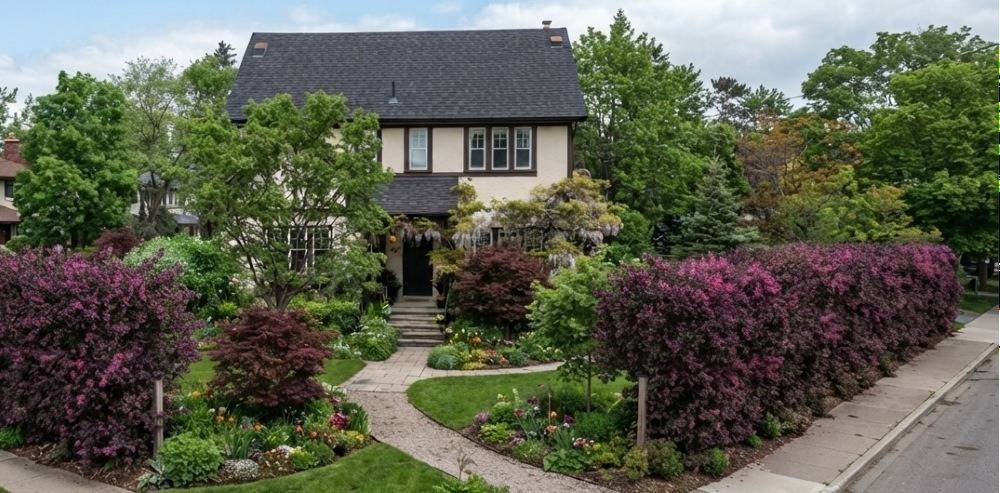
- Pruning: Light pruning after flowering to maintain shape. Sheared formal hedges may require pruning several times per year.
- Winter Care: Mulch roots in colder portions of its range.
- Habit: Gracefully arching, multi-stemmed evergreen shrub with dense branching
- Foliage: Deep burgundy to rich purple foliage provides year-round color.
- Flowers: Fringed ribbon-like bright pink flowers bloom heavily in spring on old wood, with sporadic reblooming on new wood throughout the growing season.
Skip Laurel (Prunus laurocerasus 'Schipkaensis')
Skip Laurel offers luxurious evergreen foliage and thrives in shadier spots where many screening plants struggle.
Best For:
Broadleaf evergreen elegance, shaded property lines, and Mediterranean-inspired gardens. Ideal for narrow side yards and intimate garden rooms.
Plant Profile
- Height: 10–18 feet
- Spread: 6–10 feet
- Growth Rate: moderate to fast
- Zones: 6–9
- Sunlight: Full sun to almost full shade--one of the most shade-tolerant privacy hedges available
- Soil: Rich, organic, well-drained soil. Prefers slightly acidic to neutral pH (5.5–7.0). Avoid waterlogged soils.
Water: Moderate. Regular watering required during establishment. Needs supplemental water
during heat waves in hotter zones.
- Fertilizer: Feed with a balanced evergreen fertilizer (such as Holly-tone) in spring.
- Pruning: After flowering, avoiding shearing so as not to cut the large leaves which will leave brown edges.
- Deer Resistance: Generally high
- Winter Care: Apply 2–3 inches of bark mulch over the root zone to retain moisture. Protect from harsh, dry winter winds in Zone 6.
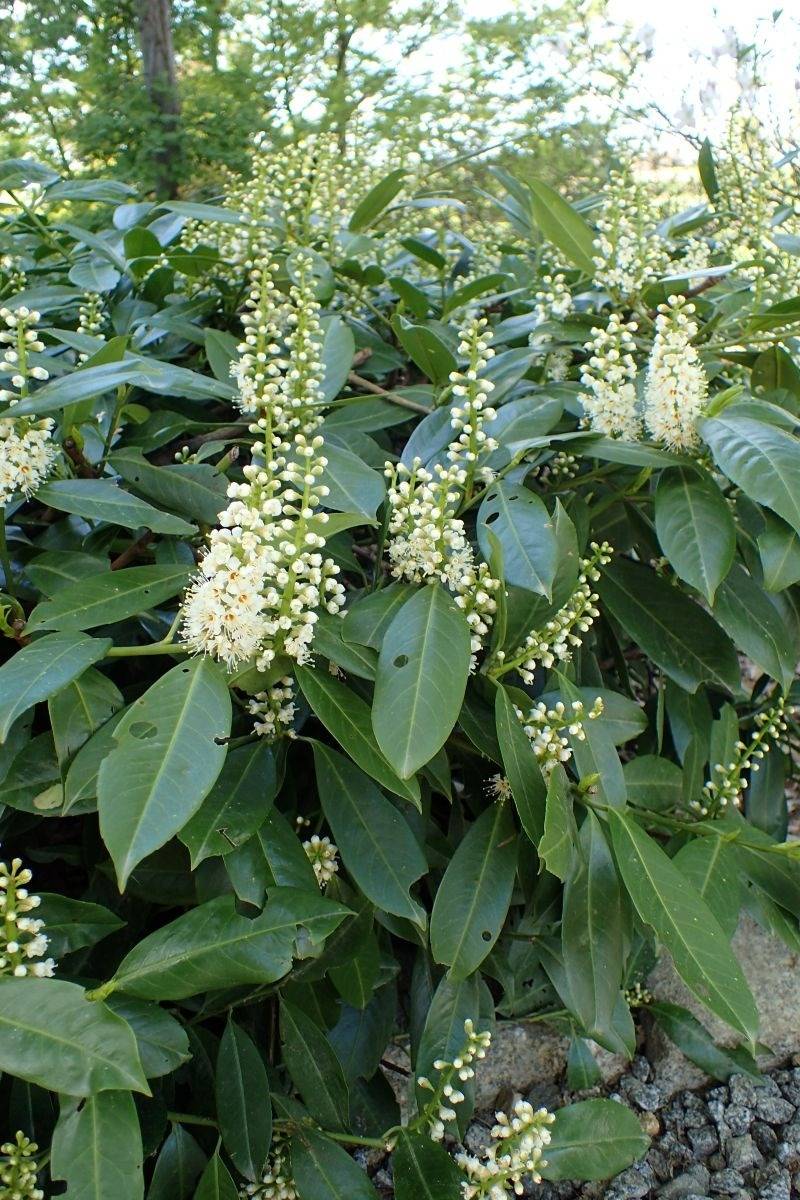
- Pests & Diseases: Scale occasionally; generally disease-resistant, though susceptible to mildew and "shot-hole" fungus in overly wet conditions and occasional root rot if drainage is poor. Shot hole is unsightly but rarely damaging to health--if it should occur, prune out affected leaves, clean up fallen leaves promptly and avoid overhead watering.
- Habit: Dense, broad, rounded, maturing to vase-shaped
- Foliage: Glossy, narrow, deep emerald-green leaves up to 5 inches long
Flowers: Produces upright, fragrant white flower racemes in late spring, followed by small black drupes that attract songbirds.
Carolina Cherry Laurel (Prunus caroliniana
Carolina Cherry Laurel is a fast-growing native evergreen prized for its glossy foliage and dense screening ability.
Best For:
Tall privacy hedges, screening pools, and buffering neighboring properties. Excellent wildlife value and tolerates coastal conditions.
Plant Profile
- Mature Height: 20–40 feet
- Mature Spread: 15–25 feet
- Growth Rate: Fast
- Growing Zones: USDA 7–10
- Sunlight: Full sun to partial shade
- Soil: Well-drained soils a must; highly adaptable
- Water: Moderate; drought tolerant after establishment
- Fertilizer: Balanced fertilizer in spring if needed
- Pruning: Easily pruned into hedges or small trees
- Deer Resistance: High
- Winter Care: Minimal
- Pests: Black knot, scale insects, borers, leaf spot
- Habit: Dense upright evergreen tree or large shrub
- Foliage: Glossy dark-green leathery leaves create a polished appearance year-round.
- Flowers: Fragrant white flower spikes appear in spring followed by small black berries that attract birds.
Cultivars:
- Centre Court (P. caroliniana 'GRECCT'): 20-30 feet high by 15 feet wide with a moderate growth rate
- 'Compacta': 8 to 12' high and 6-8 feet wide with a moderate growth rate
Nellie Stevens Holly (Ilex × 'Nellie R. Stevens')
This hybrid of I. aquifolium and I. cornuta is one of the finest evergreen screening plants available. Although a female plant, it will produce berries without a pollinator; however, fruiting is increased with nearby Ilex cornuta species.
Best For:
Tall, dense living screens, formal privacy hedges in upcale landscapes, security barriers. Excellent winter interest and wildlife value.
Plant Profile
Height: 20–30 feet
Spread: 10–15 feet
Growth Rate: 2-3 feet per year
Zones: 6–9
Sunlight: Full sun to partial shade
Soil: Well-drained, slightly acidic
Water: Moderate
Fertilizer: Slow-release fertilizer each spring
Pruning: Easily maintained
Winter Care: Little required
Pests: Scale insects; leaf miners
Deer Resistance: Generally high
Habit: Naturally pyramidal and exceptionally dense
Foliage: Glossy evergreen leaves with rich color year-round, with fewer spines than many other prickly hollies
Flowers: Small white blooms followed by abundant bright red berries
Red Holly Hybrids
In residential landscapes, Hybrid Red Hollies provide year-round beauty while functioning as durable living privacy walls, windbreaks, and architectural focal points.
Best For:
Large, dense privacy screens, elegant formal hedges, estate entrances, buffering roads, enclosing outdoor living spaces, and wildlife gardens. The brilliant berries provide exceptional seasonal interest and food for birds while maintaining dense evergreen screening throughout the year. Space roughly 6-8 feet apart for screening.
Plant Profile:
- Mature Height: 14-25 feet, depending on cultivar
- Mature Spread: 8-15 feet, depending on cultivar
- Growth Rate: Moderate
- Growing Zones: USDA 6–9
- Pests: Scale insects, leaf miners, spider mites
- Deer Resistance: Generally high
- Sunlight: Full sun to partial shade
- Soil: Moist, well-drained, slightly acidic
- Water: Moderate
- Fertilizer: Balanced slow-release fertilizer for acid-loving plants each spring
- Pruning: Easily maintained with occasional shaping
- Winter Care: Minimal; water during dry winters, mulch root zone
- Habit: Dense,upright, pyramidal
- Foliage: Spiny, glossy leaves; most have some degree of reddish to bronze new growth that matures to green
- Flowers: Relatively insignificant white flowers in spring, followed by red berries without the need for a pollinator
Cultivar Specifics:
Oakleaf (Ilex x 'Magland'): 14-20' high x 8-12' wide; oakleaf shaped leaves and orange-red berries
Oakland (Ilex x 'Conaf'): 15-20' high x 12-15' wide; similar to Oakleaf but with denser branching
Robin (Ilex 'Conin'): 15-20' high x 8-12' wide; generally considered the fastest grower of the group; dark red berries
Festive (Ilex x 'Conive'): 18-25' high x 10-15' wide; vivid red berries
Acadiana (Ilex x 'Magiana'): 14' high x 8' wide; deep red new growth with orange-red berries
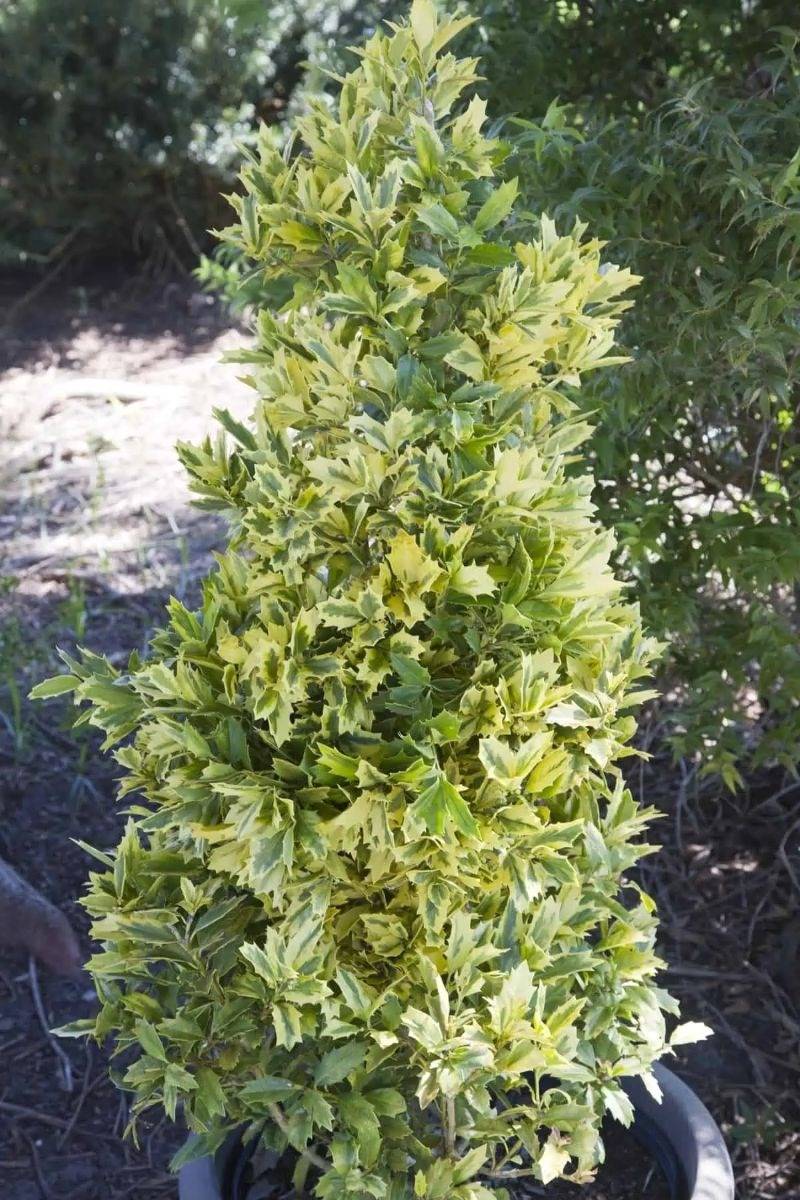
Golden Oakland (Ilex x 'Magden'): 15-20' high x 12-15' wide; golden variegated leaves and orange-red berries
- Eastern Red Cedar (Juniperus virginiana)
A durable native evergreen with outstanding drought tolerance.
Best For:
Evergreen screens or windbreaks for large rural properties, native landscapes, wildlife plantings, and coastal gardens. Offers excellent heat, drought, cold, and salt tolerance. Smaller, narrower cultivars suitable for suburban property line boundary screening or living fence.
Plant Profile
Height: 30–50 feet; cultivars smaller
Spread: 8–20 feet; cultivars smaller
Growth Rate: 1 to 2 feet per year
Zones: 2–9
Sunlight: Full sun
Soil: Extremely adaptable
Water: Low once established
Fertilizer: Usually unnecessary
Pruning: Minimal; cannot be cut back hard to reduce size - will not rejuvenate from old wood
Winter Care: Very hardy
Pests: Cedar apple rust (do not plant near apple, crabapple, serviceberry, or hawthorn), bagworms
Deer Resistance: High
Habit: Columnar to pyramidal
Foliage: Blue-green evergreen needles
Fruit: Tiny pollen cones on male plants and fleshy, waxy blue cones (juniper "berries") on female plants
Good Screening Cultivars:
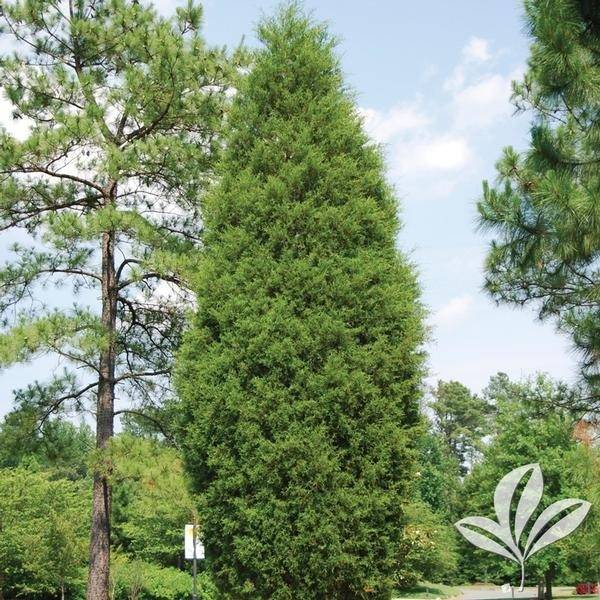
- 'Brodie': One of the fastest-growing cultivars at a rate of 1 to 2 feet or more per year,with a denser habit than the species and mature size of 30 to 45 feet high and 8-10 feet wide; can be male or female
- 'Taylor': tight and narrow, 15-20 feet high and 3 to 4 feet wide, with a moderate growth rate; generally considered to be a male plant
- Emerald Sentinel (J. virginiana 'Corcorcor'): Female cultivar, 15-20 feet high and 5-7 feet wide with a moderate growth rate
Southern Wax Myrtle (Morella cerifera)
One of the fastest-growing native screening shrubs, rarely bothered by pests or disease. Fine-textured evergreen leaves emit a pleasantly spicy scent when crushed. It may be semi-evergreen in very cold winters in upper parts of its growing zones.
Best For:
Naturalistic screens, informal hedging, wildlife plantings, and coastal gardens.
Plant Profile
Height: 15–25 feet
Spread: 10–20 feet
Growth Rate: 2-3 feet per year or more
Zones: 7–10
Sunlight: Full sun to partial shade
Soil: Highly adaptable but good drainage preferred
Water: Low to moderate
Fertilizer: Rarely needed
Pruning: Responds well to rejuvenation pruning
Winter Care: Minimal
Pests: Rarely serious
Deer resistance: High
Habit: Multi-stemmed evergreen shrub or small tree, with a loose, rounded to spreading shape
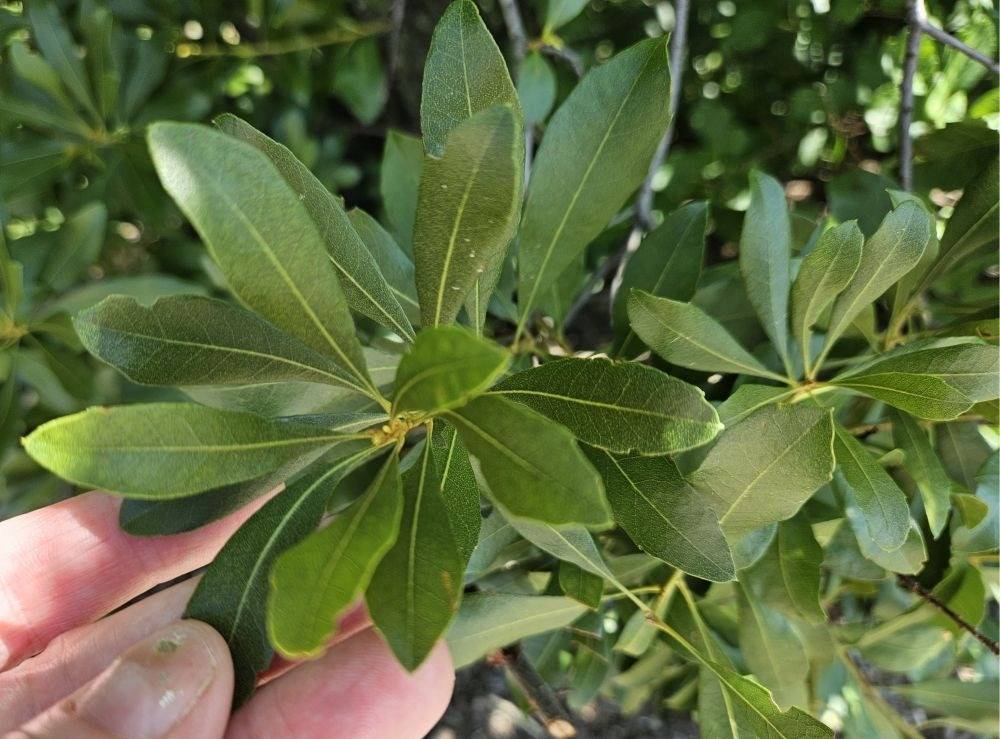
Foliage: Fine-textured, glossy olive-green leaves
Flowers: Inconspicuous; followed by gray-blue berries on female plants that are a food source for birds
Cultivars:
- 'Wolf Bay': grows up to 20' with a denser, more upright habit
Yaupon Holly (Ilex vomitoria)
Native to the southeastern United States, Yaupon Holly is one of the most versatile and dependable evergreen screening plants available. Its adaptability, drought tolerance, and resistance to pests make it an excellent alternative to Leyland cypress, especially in coastal, urban, and low-maintenance landscapes. Yaupon holly responds well to pruning, making it suitable for both formal hedges and naturalized privacy screens.
Best For:
- Informal privacy screens, with upright types planted 6 to 8 feet apart
- Planting 4 to 6 feet apart for a dense clipped hedge
- Year-round seasonal interest when combined with flowering shrubs such as Loropetalum, Viburnum, or Camellias to create layered privacy plantings
- Areas where space is limited, such as along side yards, property lines, or pool enclosures, especially the narrow columnar forms
- Naturalistic screens and mixed evergreen borders with magnolias, Southern wax myrtle, or American holly
- Winter interest and wildlife plantings as berries support birds and small mammals
Plant Profile
- Mature Height: 15–25 feet (depending on cultivar and pruning)
- Mature Spread: 8–20 feet
- Growth Rate: Moderate
- Growing Zones: USDA 7–10
Sunlight: Full sun to partial shade; performs best in full sun for dense growth and abundant berry production.
Soil: Highly adaptable to sandy, loamy, clay, acidic, or alkaline soils, provided drainage is adequate.
- Water: Water regularly during the first growing season to establish a deep root system. Once established, Yaupon Holly is highly drought tolerant but benefits from occasional deep watering during prolonged dry periods.
- Fertilizer: Apply a balanced, slow-release fertilizer or one formulated for hollies and other acid-loving evergreens in early spring. Avoid excessive nitrogen, which may encourage overly vigorous growth at the expense of berry production.
- Pruning: Yaupon Holly responds exceptionally well to pruning. Light shaping may be performed in late winter or early spring before new growth begins. Formal hedges may require one or two additional light trimmings during the growing season. Older plants tolerate rejuvenation pruning remarkably well.
- Winter Care: Minimal winter protection is required throughout its growing range. Apply a 2–3 inch layer of mulch around the root zone to conserve moisture and moderate soil temperatures. Water during extended winter dry spells, especially for newly planted specimens.
- Pests & Diseases: One of the most pest-resistant evergreen hollies. Occasionally affected by scale insects, leaf miners, spider mites, or sooty mold associated with insect infestations. Root rot may occur in poorly drained soils, but serious disease problems are uncommon.
- Deer Resistance: High
- Habit: Yaupon Holly develops a naturally dense, upright, multi-stemmed habit with fine-textured branching that creates excellent year-round privacy. Depending on the cultivar, it may grow as a large shrub, small tree, or narrow columnar evergreen. Its dense branching extends nearly to the ground, making it particularly effective as a living privacy fence.
- Foliage: Small, oval, glossy leaves emerge bright green before maturing to deep emerald green. The fine-textured foliage creates a softer, more refined appearance than many larger-leaved evergreens while maintaining excellent year-round color. Leaves remain attractive throughout the winter with little discoloration.
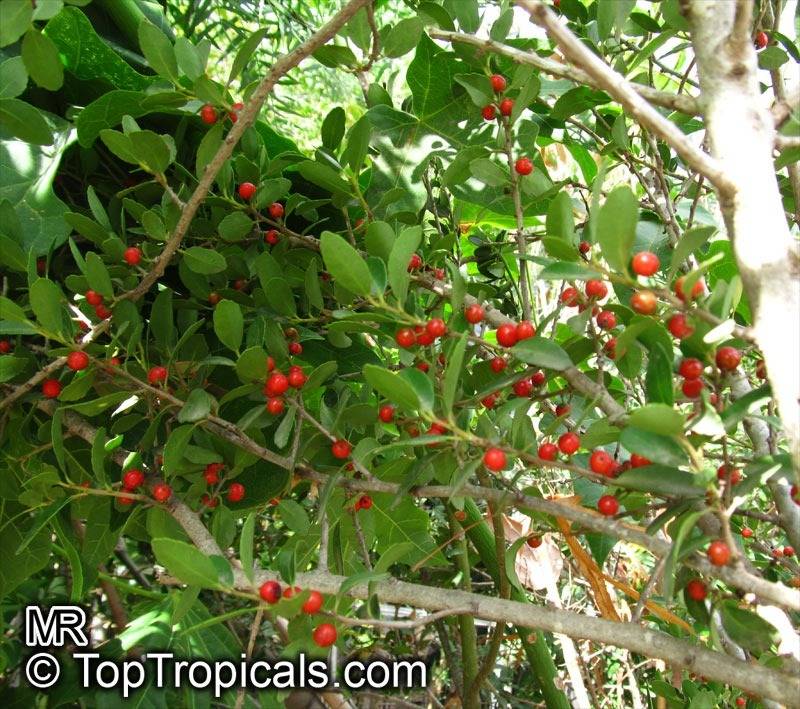
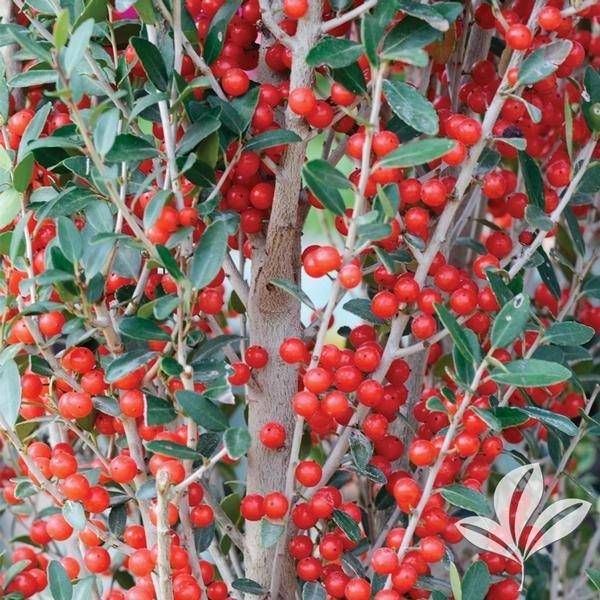
- Flowers: Small, creamy-white flowers appear in spring and are lightly fragrant, attracting bees and other pollinators. Female plants produce abundant clusters of bright red berries in fall and winter when a compatible male pollinator is nearby. The berries persist well into winter, providing valuable food for songbirds and adding vibrant seasonal color to the landscape.
Fun Fact:
Native Americans made a ceremonial tea from the leaves. Steeping leaves for 5 to 10 minutes will produce a smooth, caffeinated beverage that lacks the bitterness of tea or coffee.
Named Cultivars Suitable for Screening:
'Pride of Houston': This female cultivar grows 15-20 feet high and 8-12 feet wide at a rate of about 18 to 24 inches per year.
'Scarlet's Peak': Female cultivar; tall and slim; 20 feet high by 3 feet wide at maturity; moderate to fast growth rate
Skyward (I. vomitoria 'WAH-EH'): Male cultivar; upright to 12-15 feet high and 6-8 feet wide with a moderate growth rate
Skyline (I. vomitoria 'WAH-SL'): Male cultivar with narrow, columnar form 15-18 feet high and 2-3 feet wide. Slow to moderate growth rate, but may be desired as a pollinator for similarly sized females.
'Will Fleming': Older male cultivar with an upright columnar form that tends to splay out after a few years, requiring tying to retain shape. Newer cultivars such as those listed above are superior in this regard.
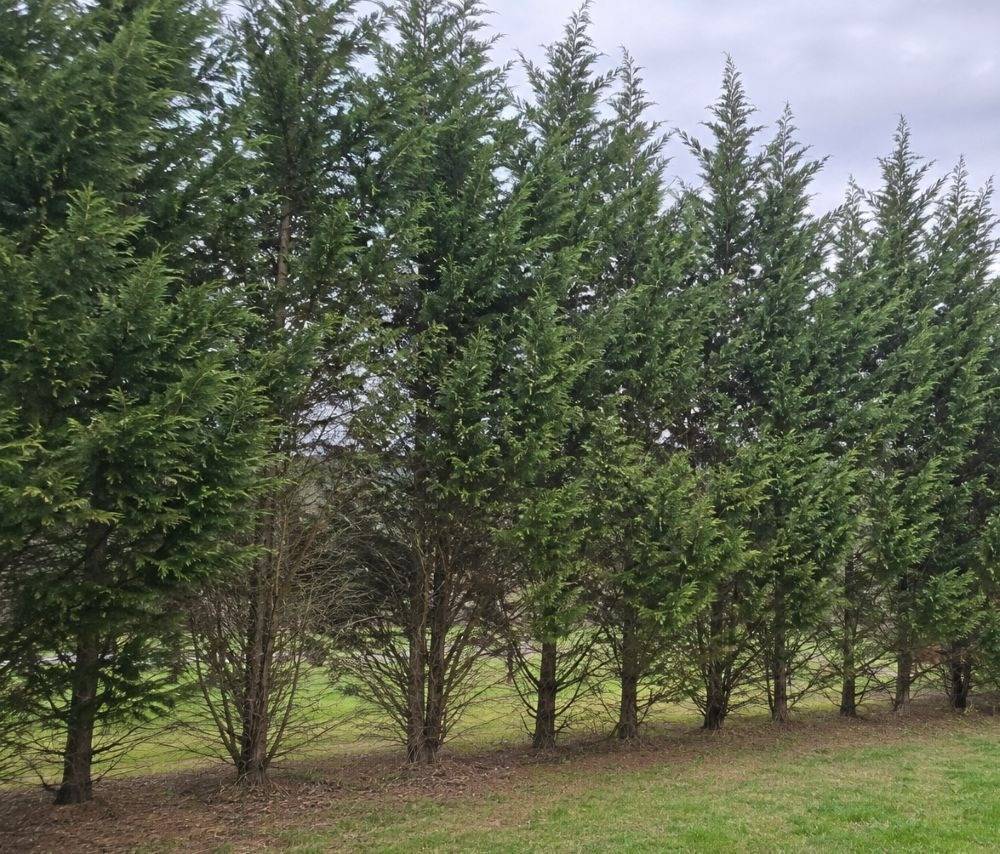
Below: Leyland Cypress, especially when planted closely to form a screen, may become sparse at the bottom with age.
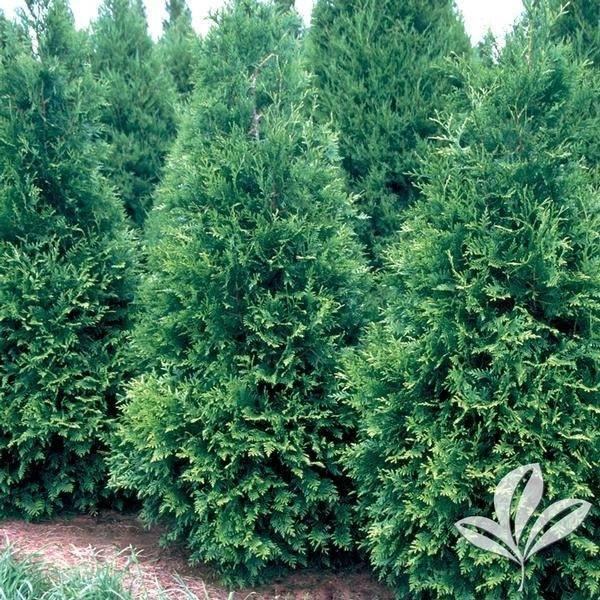
Below: 'Green Giant' arborvitae has become a popular substitute for Leyland Cypress, but its large mature size makes it potentially unsuitable for smaller properties. Photo courtesy Greeleaf Nursery, www.greenleafnursery.com
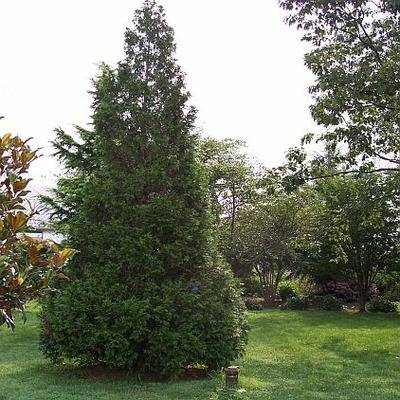
Below: 'Steeplechase' arborvitae grows a bit more slowly than 'Green Giant' with a more manageable size. Photo courtesy Greenleaf Nursery, www.greenleafnursery.com
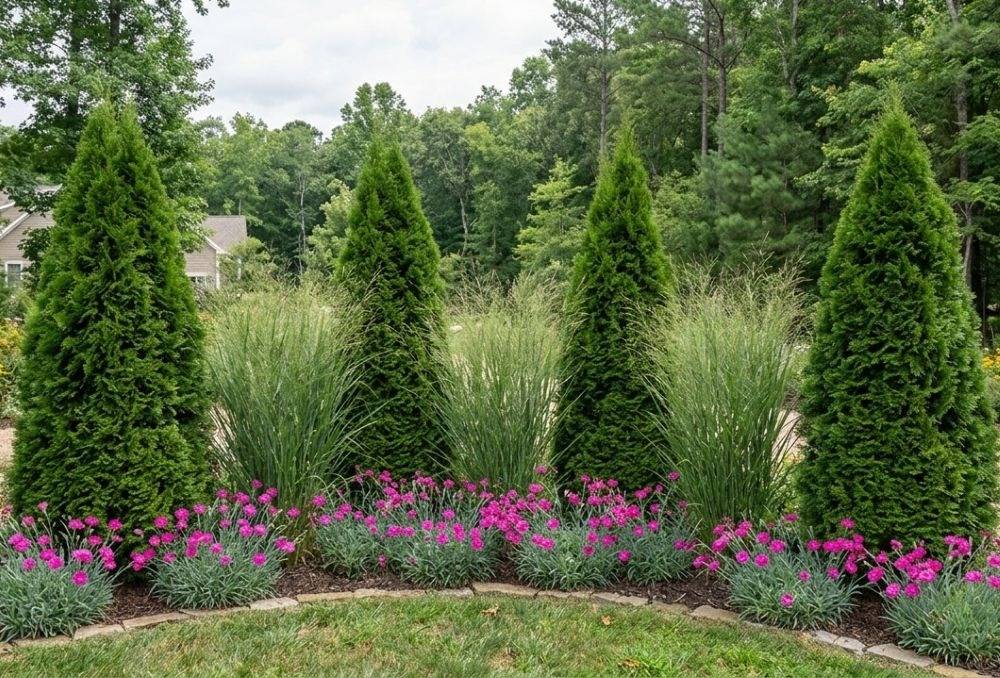
Below: Emerald Green arborvitae provide privacy in this mixed border planting with switchgrass and dianthus. Planting the grasses forward, rather than in line, allows room for the trees to grow while still maintaining the screening effect.
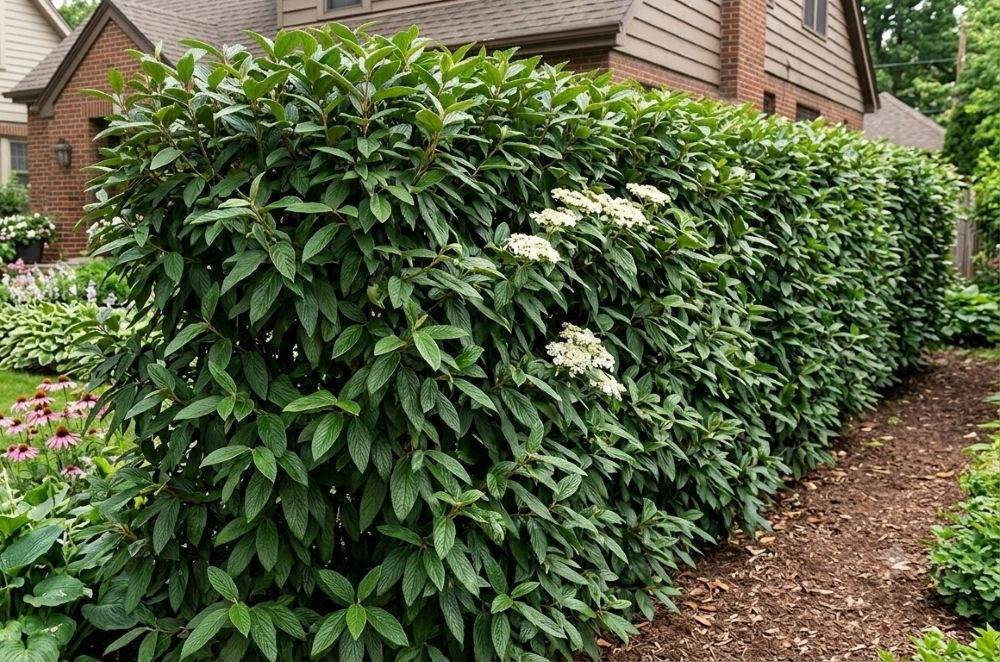
Below: Prague viburnum can be maintained as a neat privacy hedge if desired, but pruning should be delayed until after flowering in late spring to avoid removing blooms.
Below: Chinese Fringe Flower, Loropetalum chinense, grown as a lightly pruned privacy screen. Be sure to choose a larger-growing cultivar for this effect.
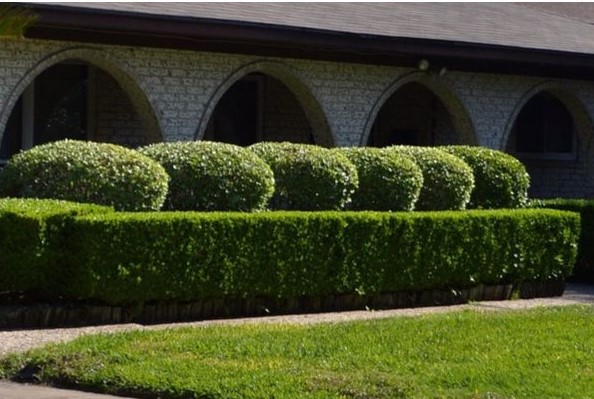
Below: Chinese Fringe Flower, Loropetalum chinense, as a more formal pruned privacy hedge.
Below: Skip Laurel, like other cherry laurels, may get small holes in the leaves. "Shot hole" disease is exacerbated by wet spring weather, and tends to be worse on nursery plants, often resolving once planted in the landscape. It is generally not a sign of poor health, being primarily cosmetic, but damaged and fallen leaves should be removed to prevent spread.
Photo credit: Krzysztof Ziarnek, Kenraiz, CC BY-SA 4.0
<https://creativecommons.org/licenses/by-sa/4.0>, via Wikimedia Commons
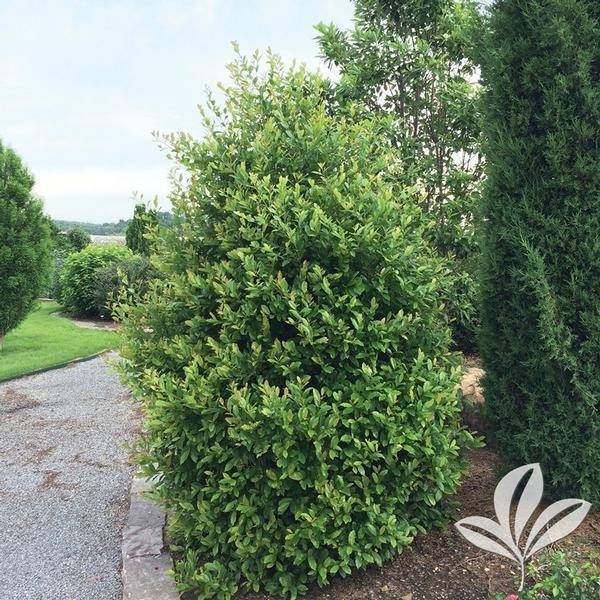
Below: 'Centre Court' Carolina cherry laurel creates a very dense screen or hedge. Photo courtesy Greenleaf Nursery, www.greenleafnursery.com
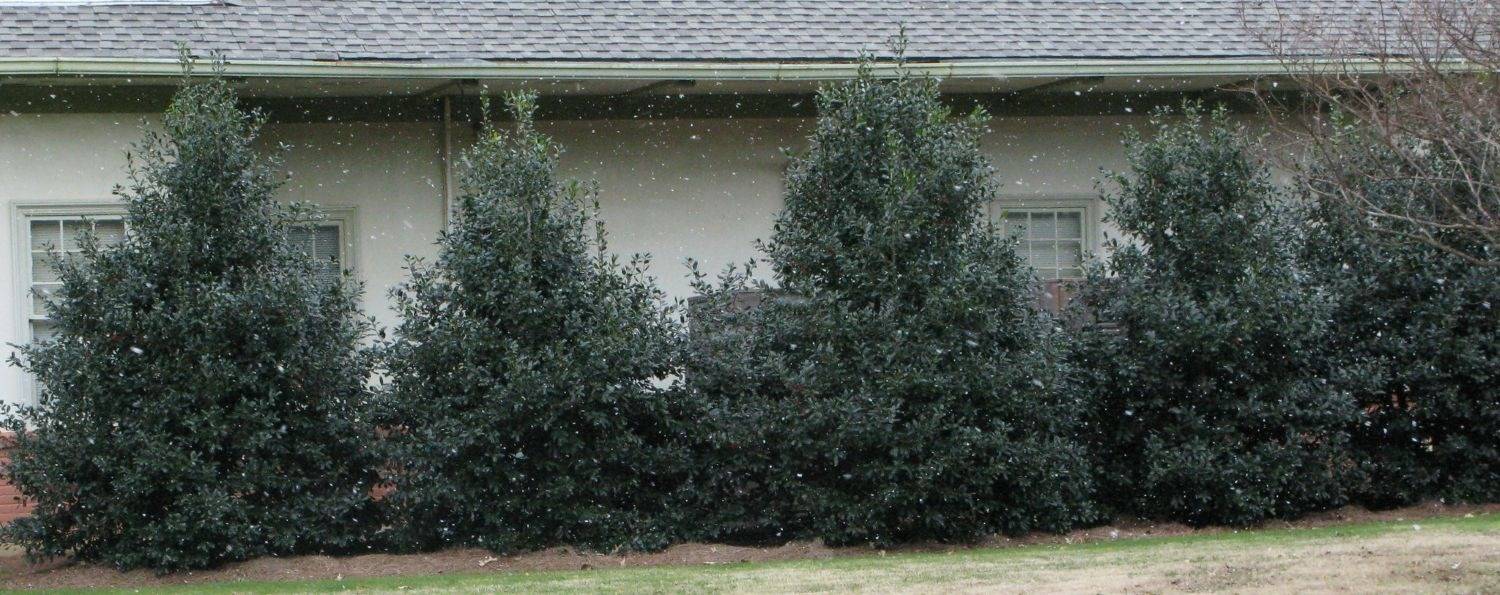
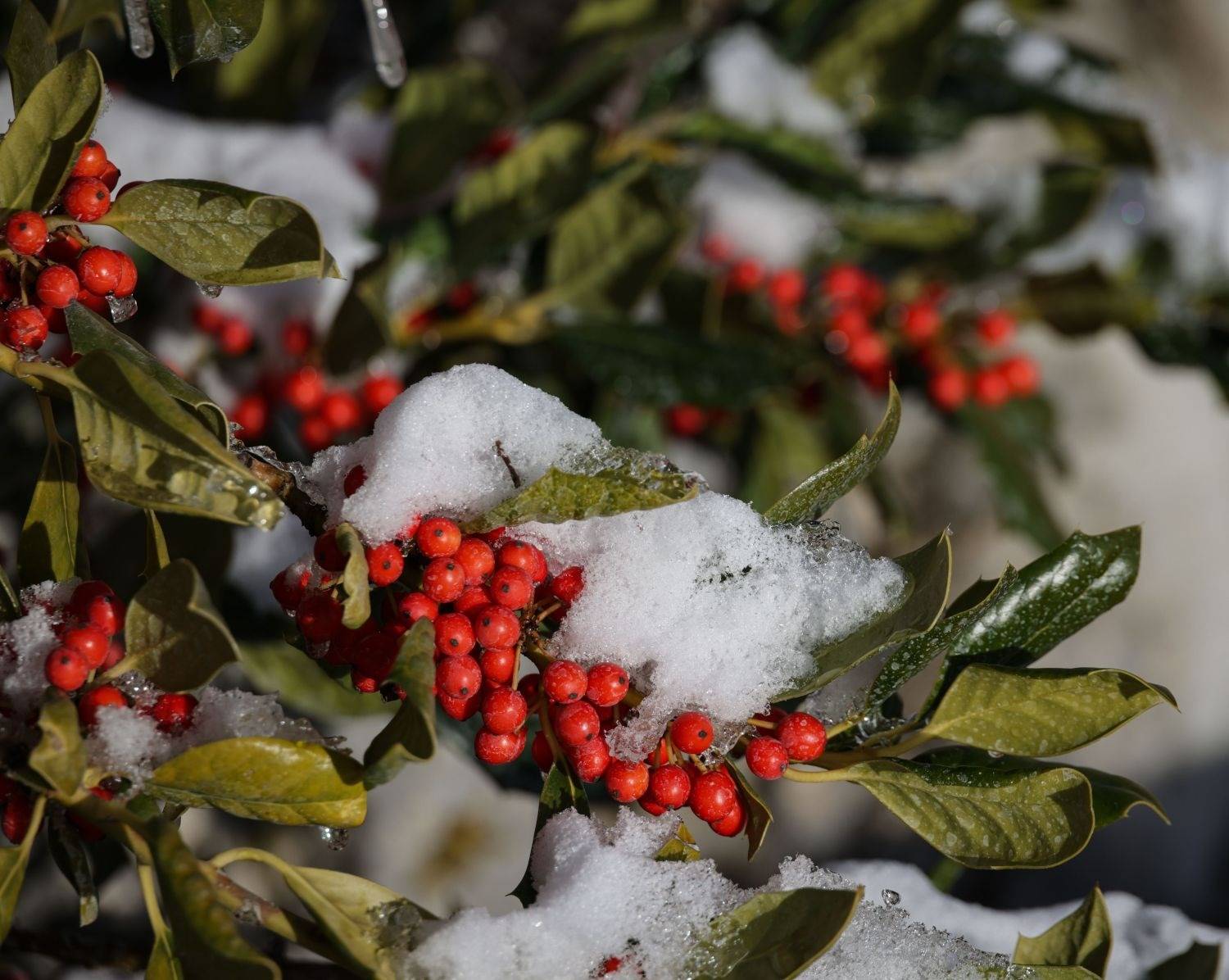
Below: Nellie Stevens holly will produce an abundant display of berries perfect for holiday decorating
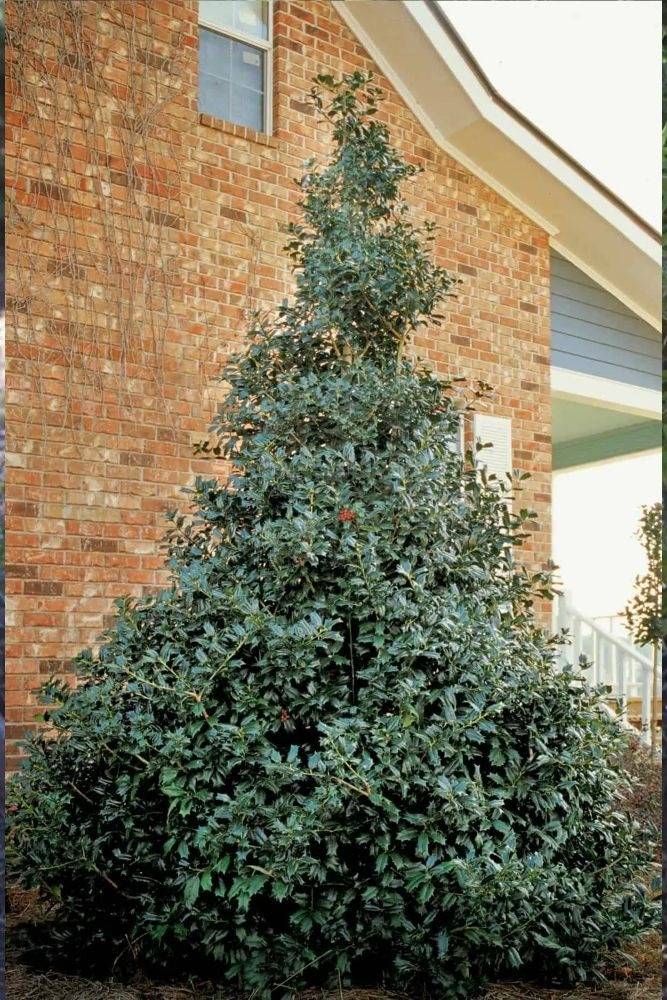
Below: Red holly hybrid 'Robin' grows in a dense pyramidal shape requiring virtually no pruning. Photo courtesy Southern Living Plants.
Below: 'Brodie' Juniper, one of the fastest growing cultivars of Eastern red cedar. Photo courtesy Greenleaf Nursery, www.greenleafnursery.com
Below: Southern Wax Myrtle leaves have an appealing fine texture quite different from many other screening plants
Below: Yaupon holly has non-prickly leaves and female forms produce red berries with a suitable pollinator nearby. Photo courtesy Top Tropicals, Inc., www.toptropicals.com, licensed under CC BY-NC-ND 4.0.
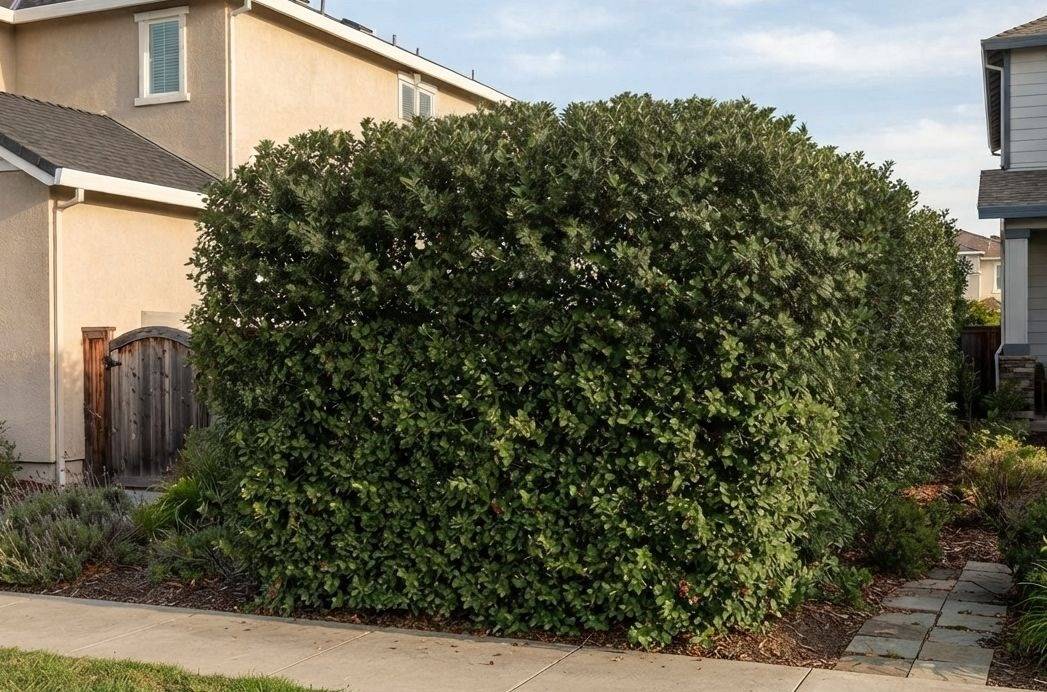
Below: Yaupon holly grown as a privacy screen
Designing Beautiful Living Privacy Screens
A privacy planting should do more than block a view—it should become an integral part of the landscape,
enhancing your garden's architecture rather than feeling like an oppressive green wall.
Consider these professional design principles:
Stagger Your Plantings (Mixed-Species Layering)
- Instead of a single, monotone row of identical trees, plant in a offset triangular pattern using 2–3 complementary species.
- A mixed hedge prevents total canopy loss if a single species encounters a pest or disease, and it creates a richer,
more natural backdrop. - A blend of evergreen screening plants with flowering shrubs provides year-round structure and changing seasonal color.
- Underplant with ornamental grasses and perennials to soften the base and add seasonal texture.
- Allow Proper Spacing
- Avoid planting too closely. Proper spacing improves airflow, reduces disease, and allows plants to reach their natural form.
Calculate spacing based on the mature spread of the plant, not its size at the nursery. Overcrowding plants leads to dieback along lower branches due to light deprivation.
For faster coverage without overcrowding, plant two alternating rows staggered 4–6 feet apart.
- Keep it Natural
- Gentle curves feel more natural and visually soften property lines compared to screening plants stiffly arranged in straight rows.
- Allow plants to maintain their natural shape whenever possible rather than shearing into rigid rectangles.
- A staggered row of plants is more aesthetically pleasing than a massive wall of green.
- Add Garden Accents
- Complement your living privacy fence with elegant garden décor such as benches, decorative planters, or garden sculptures, or repeat plants from other garden beds to visually tie the screen into the landscape.
- Highlight plants with exceptional ornamental features with landscape lighting to showcase their branch structure, glossy foliage, or winter berries after dark.
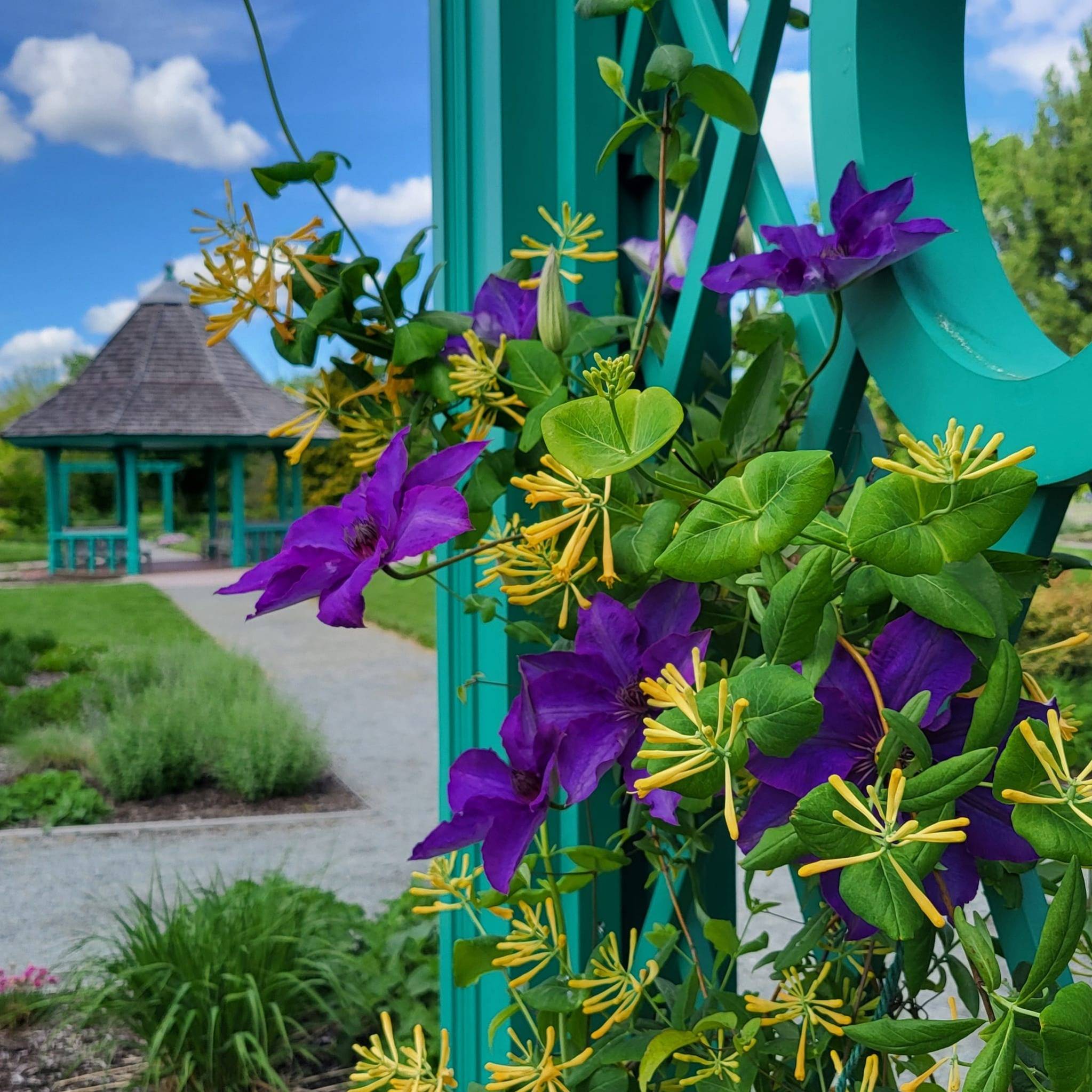
- Standalone trellises, fencing screens, or decorative fencing panels can be installed in between sections of homogenous plantings to alleviate visual monotony. Flowering vines will add color and coverage.
These elements transform a simple evergreen privacy screen into a luxurious outdoor destination.
Final Thoughts
Replacing Leyland cypress with thoughtfully selected evergreen trees and shrubs results in a healthier, more resilient landscape that provides privacy without sacrificing beauty. Whether you prefer the classic elegance of holly, the natural effect of juniper or wax myrtle, or the rapid growth of Green Giant arborvitae, these alternatives offer lasting performance and year-round appeal.
By combining layered plantings, complementary garden décor, and species suited to your local climate, you can create a living privacy screen that enhances both the value and enjoyment of your outdoor spaces for decades to come.
You may also like