Spring-blooming bulbs are one of the easiest ways to bring color to the garden after a long winter—but if deer, rabbits, mice, voles, or squirrels routinely turn your flower beds into a buffet, choosing the right bulbs to plant this fall can make all the difference.
The good news is that you don’t have to give up on spring flowers. Daffodils, alliums, snowdrops, fritillaria, grape hyacinths, squill, and other less-palatable bulbs can provide weeks of color while generally receiving less attention from wildlife than tulips and crocuses.
11 Deer, Rabbit, & Rodent Resistant Bulbs to Plant this Fall
This guide covers the best animal-resistant spring-flowering bulbs, including their deer, rabbit, and rodent resistance, flower and foliage characteristics, growing conditions, USDA hardiness zones, and best garden uses. You’ll also find bulb-planting instructions, expert tips, and design ideas for creating a beautiful spring garden that is less attractive to hungry animals.
If you're new to gardening, you should know that these bulbs are planted in fall, ideally 6 to 8 weeks before the ground freezes, for bloom the following spring.
Soil temperatures should be below 60 degrees, so planting can be delayed in an unseasonably warm autumn. In fact, bulbs can be planted in December or even January as long as the ground is not yet frozen - this is far better than attempting to to store purchased bulbs if the intended planting window is missed.
In warmer zones (8-10), tulips, grape hyacinths, hyacinths, and crocuses will need pre-chilling for 8 to 14 weeks, creating an artificial winter to ensure proper growth and floral display.
Important: Resistance ratings are relative and indicate how likely a plant is to be avoided compared with more palatable spring bulbs. “High” does not mean animal-proof. Wildlife preferences vary by species, location, and food availability.
Daffodils: Best All-Around Wildlife-Resistant Bulb
If you want one spring bulb that combines dependable flowering, longevity, and excellent wildlife resistance, daffodils are hard to beat.
Daffodils contain toxic compounds that make them distinctly unappealing to many browsing animals. Extension sources from around the country specifically identify daffodils as resistant to deer, rabbits, and other mammals.
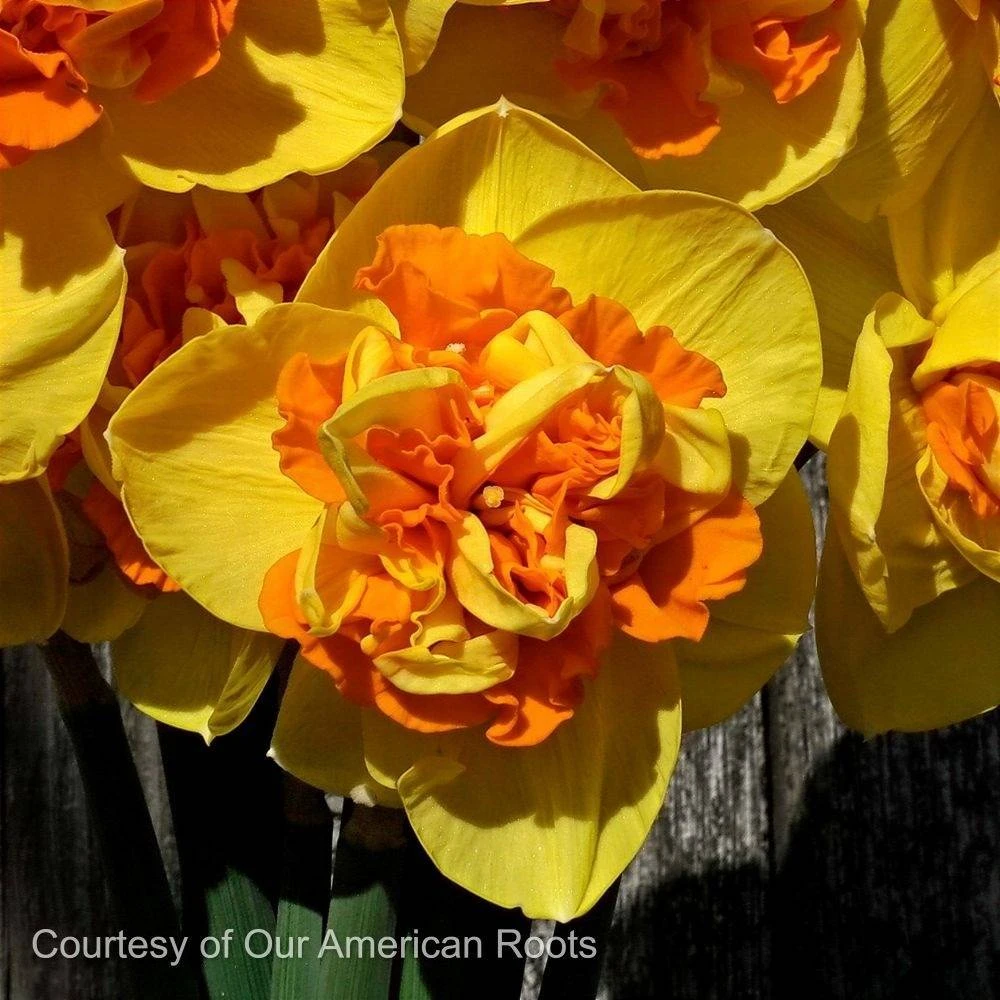
And if the thought of Grandma's bed of sunny daffodils doesn't excite you, you should know that there's far more to them than the old-fashioned yellow with the trumpet shaped cup (corona). Some varieties sport spectacular frilly double centers, showy split coronas, restrained and elegant disc-shaped cups (poet's daffodils), or delicate nodding blooms.
Colors include many shades of yellow from soft primrose yellow to pale yellow-green to gold, as well as white, cream, pink, salmon, apricot, or orange, often with contrasting colors on the petals and corona.
If that still doesn't inspire you, some even have exceptional fragrance, with notes of vanilla, honey, or citrus -- and not just those paperwhites you grow inside for the holidays, but fully hardy varieties that will return year after year.
With sizes ranging from diminutive and dainty miniatures to big and bold giants with 5-inch blooms, and varied bloom seasons from early to late spring, daffodils offer numerous design opportunities sure to enhance almost any garden.
Convinced yet?
Animal Resistance
- Deer: High
- Rabbits: High
- Rodents: High
Flowers
Daffodils produce cheerful trumpet, cup, or double flowers in combinations of yellow, white, orange, peach, and pink. Depending on the cultivar, flowers can be solitary or produced in clusters and anywhere from under one inch to 5 to 6 inches in size.
Bloom time ranges from early to late spring, making it possible to create a succession of flowers by planting several varieties.
Foliage
Growing Conditions
- Full sun to part shade
- Well-drained soil
- Moderately fertile soil
- Areas that receive several hours of direct sunlight
- They can also perform well beneath deciduous trees, where spring sunlight reaches the ground before the tree canopy fills in.
- Zones 3–9, depending on species and cultivar.
Best Garden Uses
- Perennial borders
- Woodland edges
- Lawns and informal meadows
- Under deciduous trees
- Cottage gardens
- Naturalized plantings
- Slopes
- Cut flower gardens
For the most natural effect, plant them in irregular groups rather than straight rows.
Alliums: Architectural Flowers Animals Usually Avoid
Animal Resistance
- Deer: High
- Rabbits: High
- Rodents: High
Flowers
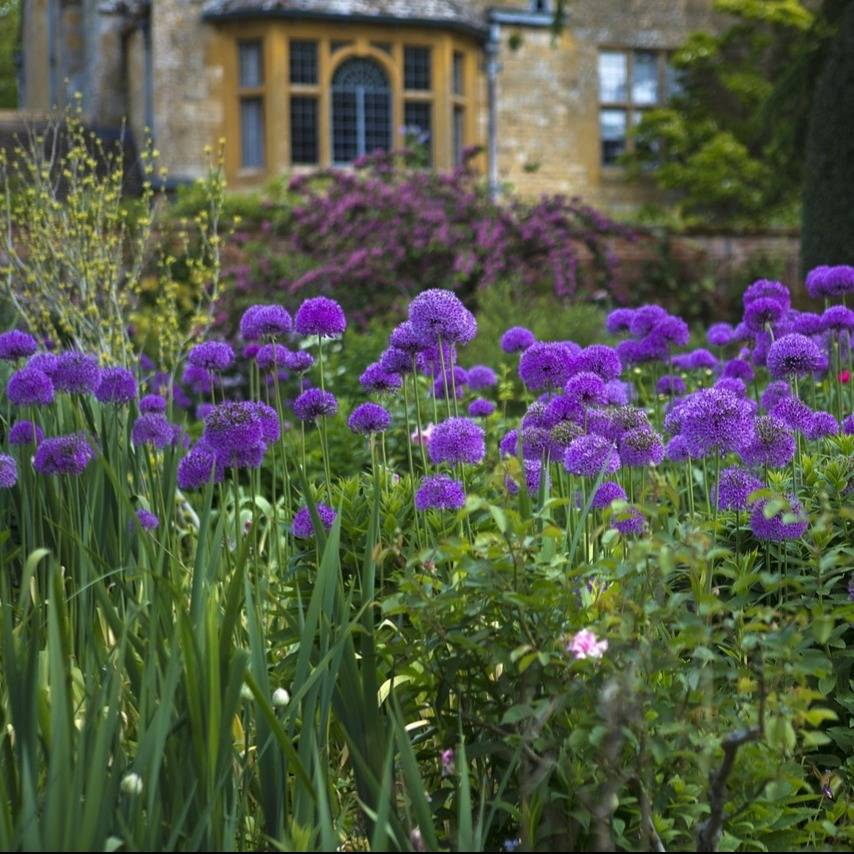
Alliums are famous for their distinctive round flower heads. Depending on the species, flower heads may range from small clusters to enormous spheres several inches across.
Colors include purple, lavender, pink, white, and yellow.
Early bloomers flower in mid- to late spring, while the classic large globe types put on their show in late spring to mid-summer.
Foliage
Foliage is basal with blooms rising above on bare stalks. Overall height may be small (8-12", e.g. A. moly), medium (12-24", e.g. A. schubertii, A. christophii), large (20-30", e.g. A. ostrowskianum, A. caeruleum), or giant (3-6 feet tall, e.g. 'Purple Sensation' or 'Globemaster')
Growing Conditions
- Full sun
- Well-drained soil; avoid consistently wet planting sites
- Average to fertile soil
- Moderate moisture during active growth
- Zones 4–9, depending on species and cultivar.
Best Garden Uses
- Vertical accents in perennial borders
- Focal points
- Pollinator-garden plants
- Cottage-garden accents
- Deer-resistant foundation plantings
- Cut flowers
Large alliums create a particularly dramatic late spring focal point.Their tall flower stems rise above many emerging perennials, creating strong vertical structure.
For more information on Allium species and cultivars, see our blog article.
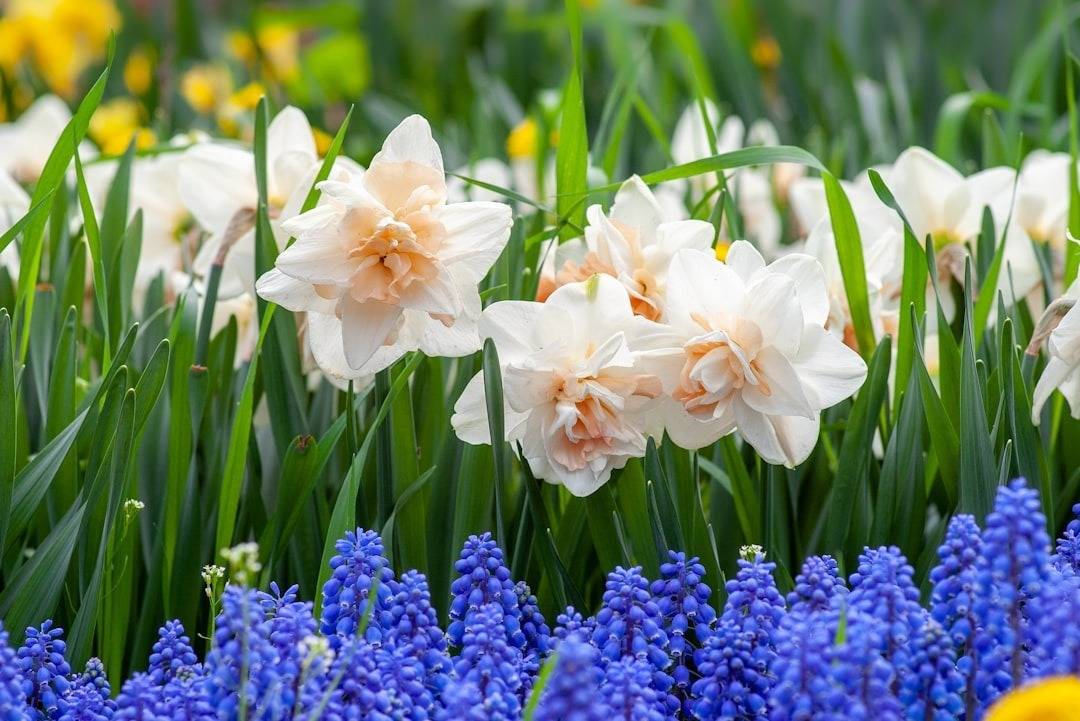
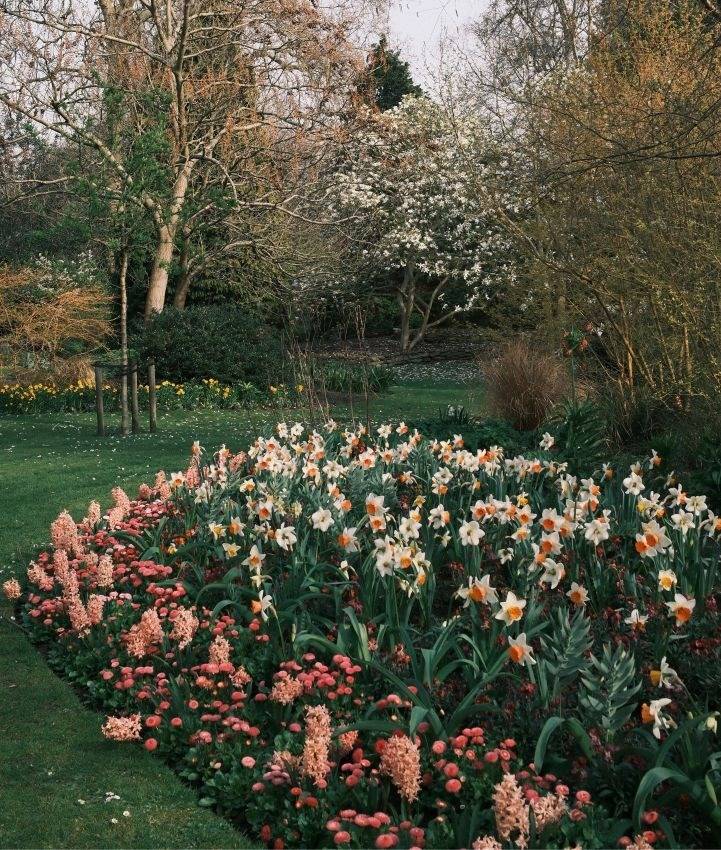
Below: A charming, deer resistant, spring-blooming bulb planting of peachy-pink toned daffodils and hyacinths. The English daisies are preferred over pansies as an underplanting where deer are a problem, as they are far less palatable.
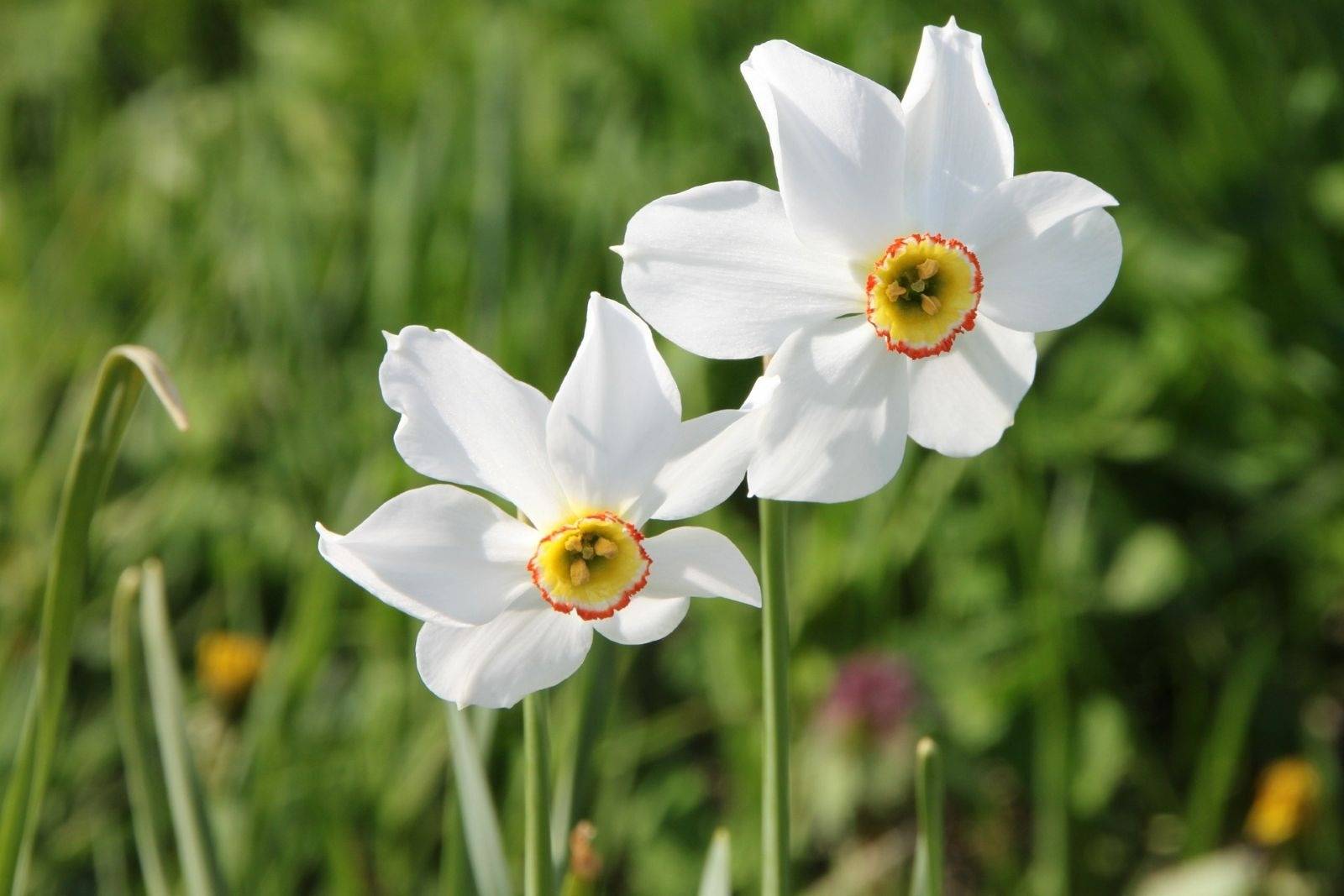
Below: Poet's daffodil 'Actaea' bears flat-cupped white flowers with a strong spicy-sweet fragrance in mid- to late spring. *+Photo courtesy Ball Horticulture, Inc.
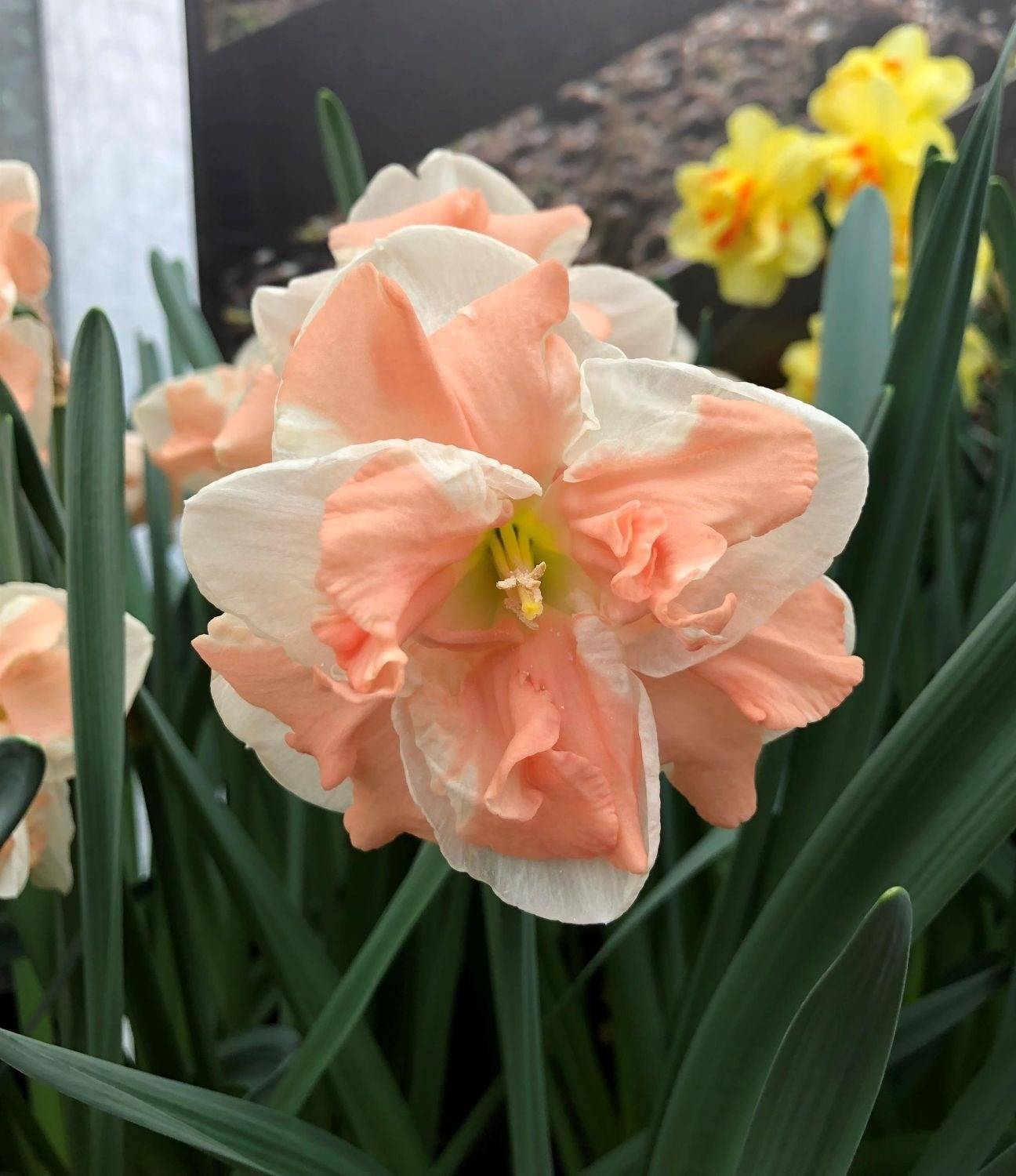
Below: 'Apricot Whirl' split corona daffodil*+
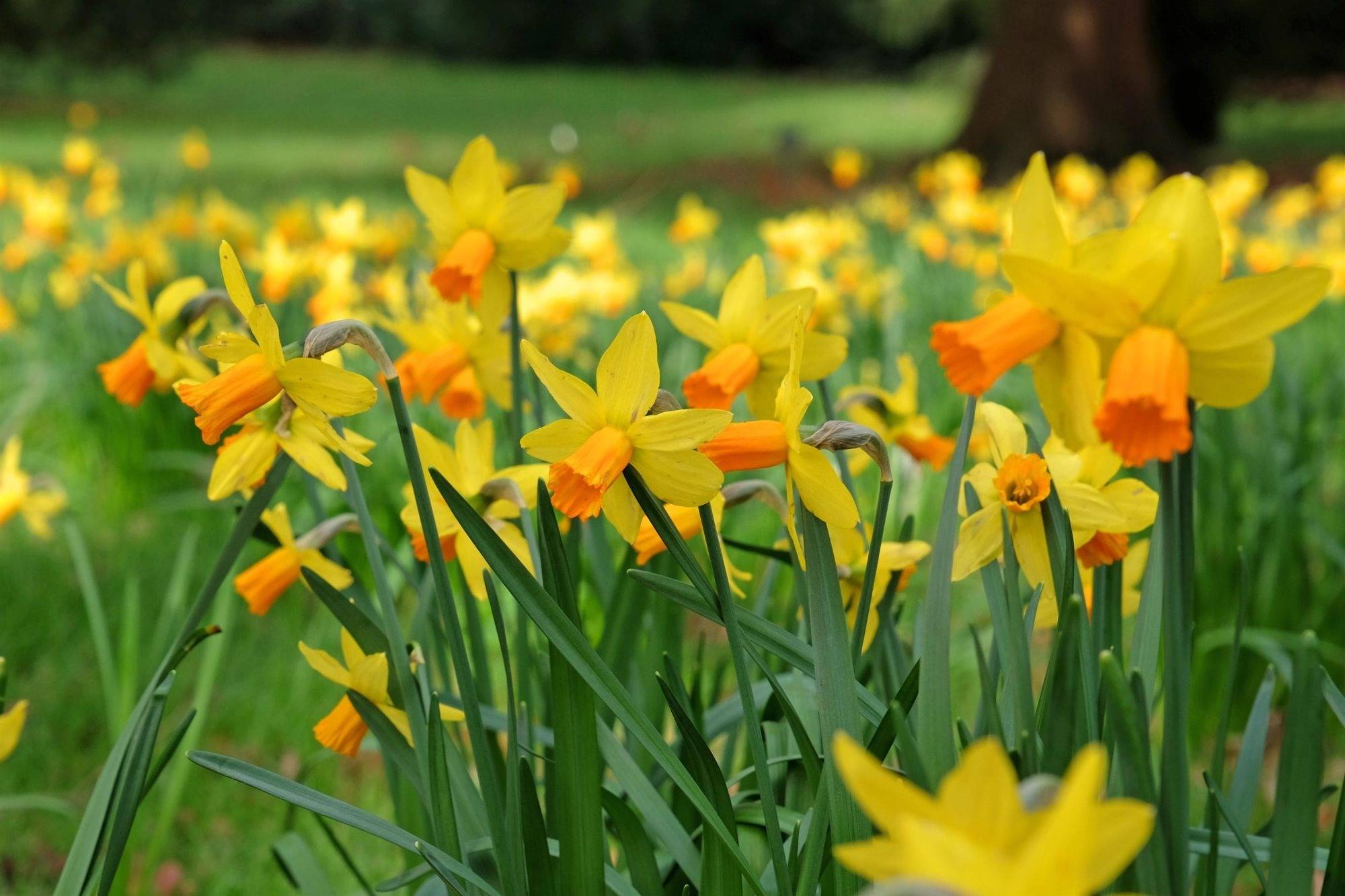
Below: Dainty, 8-12 inch high 'Jetfire' daffodils bloom in early spring *+
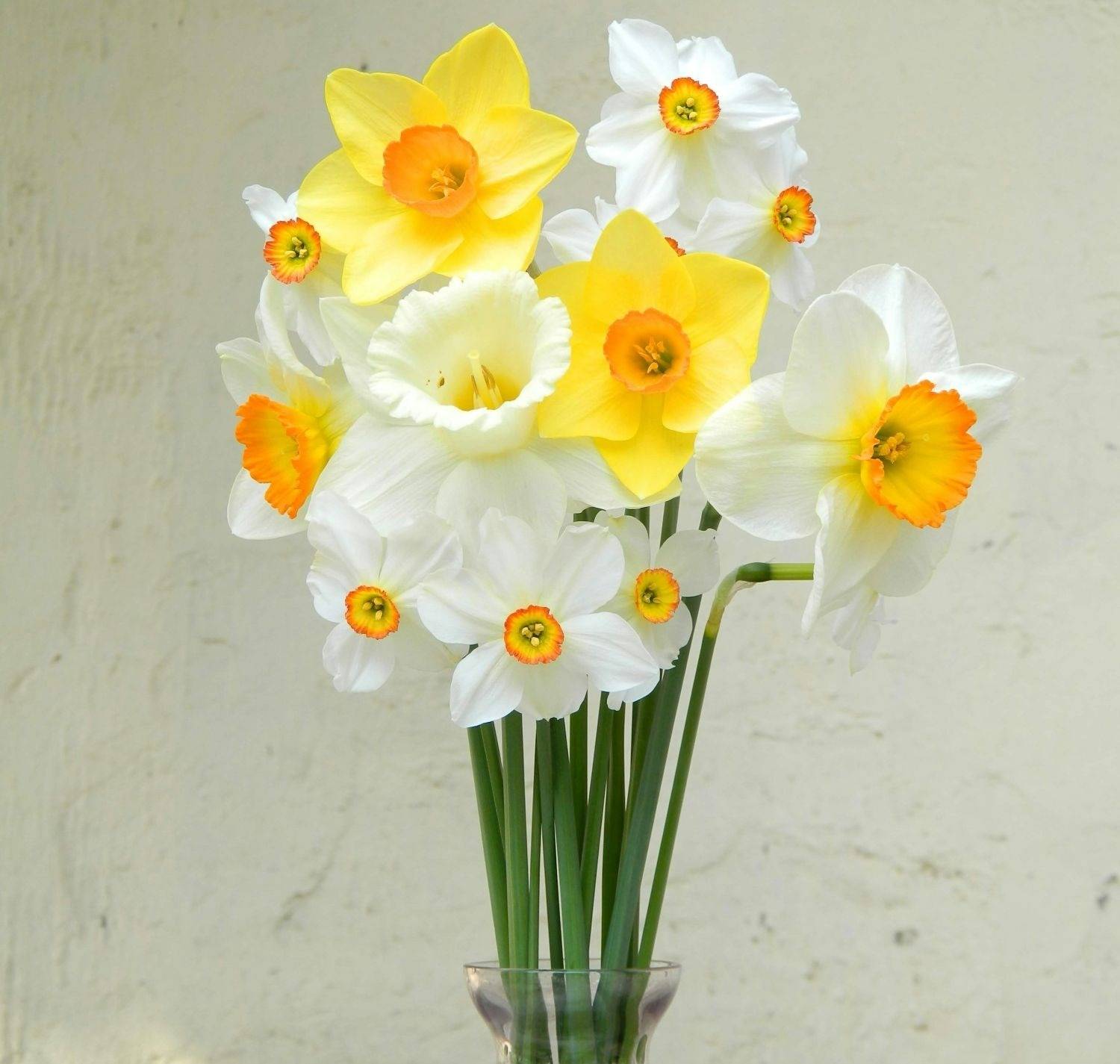
Below: A bouquet of varied daffodils is just as attractive in the vase as in the garden. Note that when mixing daffodils with other flowers in a vase they need to sit alone in water for 4 to 12 hours to allow the milky sap to drain out of the stem, or the other flowers may be affected and wilt.
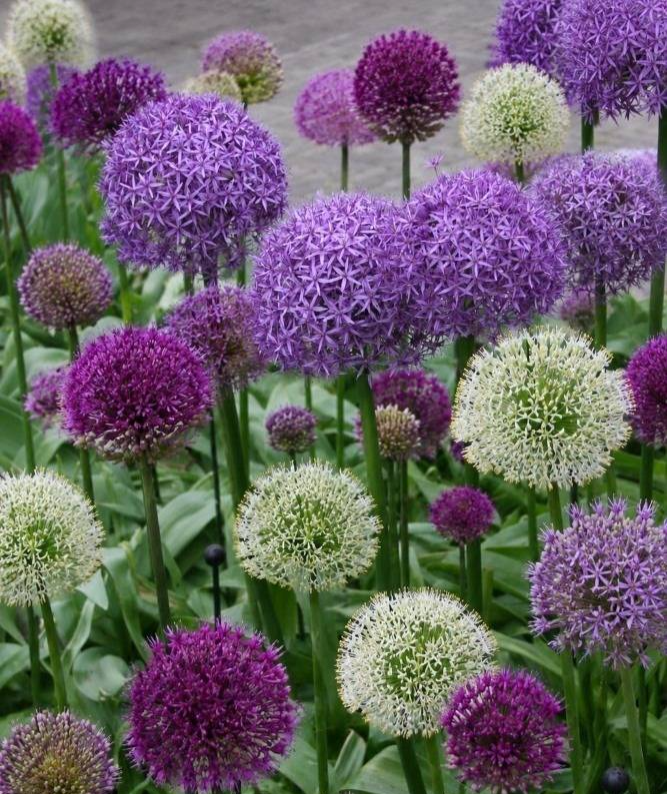
Below: Multi-species Allium mix*+, with spherical flowerheads typical of the genus
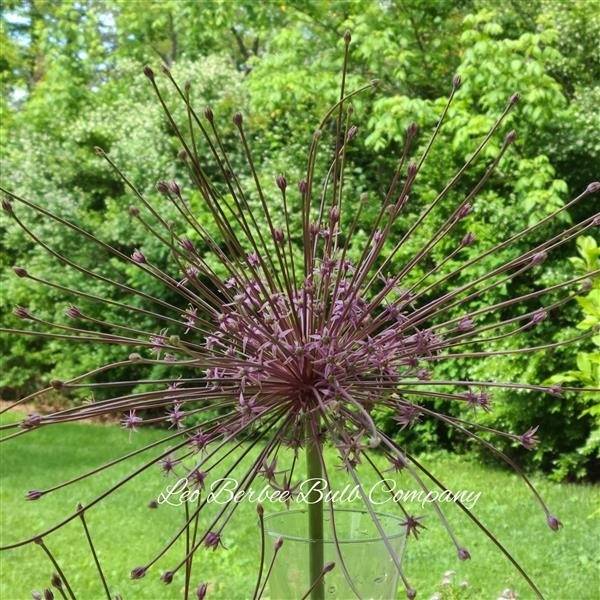
Below: Spidery bloom of Allium schubertii*+
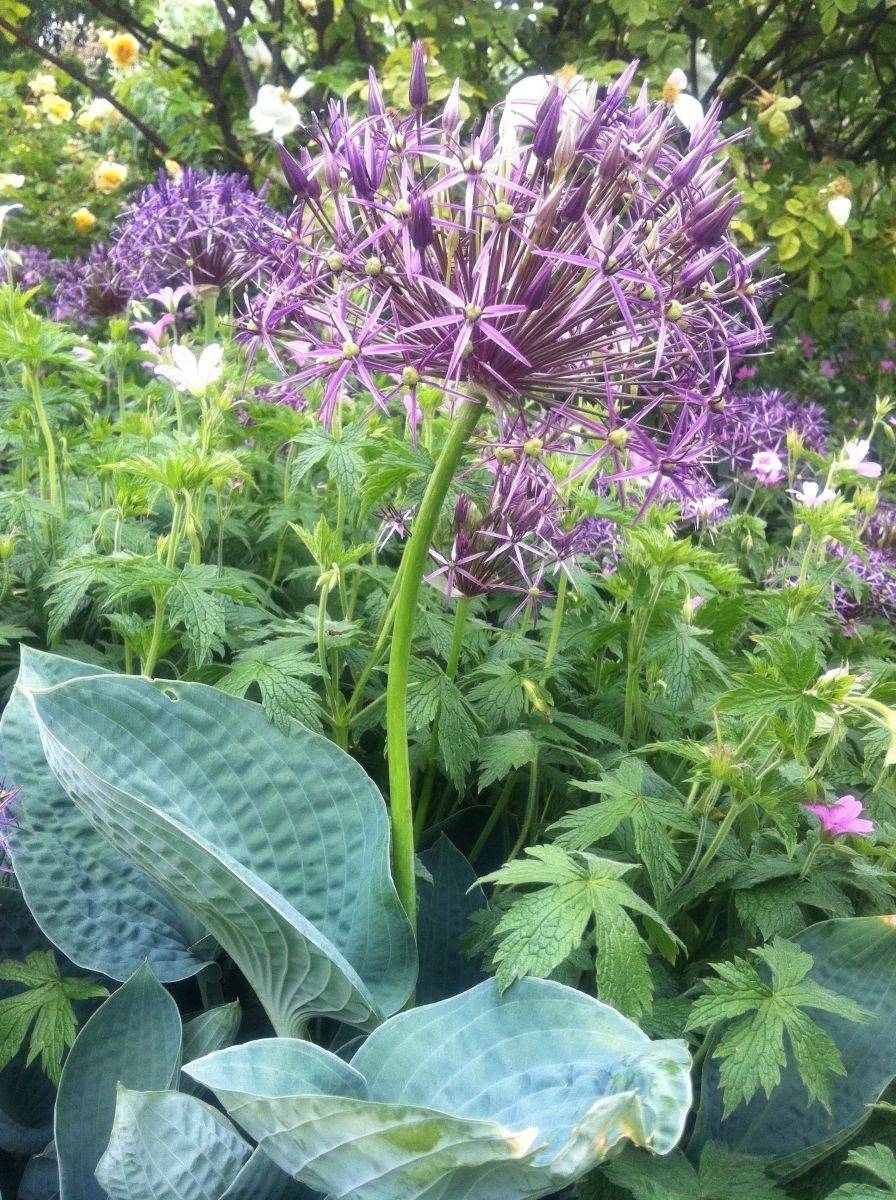
Below: Allium christophii amongst hostas and hardy geraniums, which help hide the declining bulb foliage
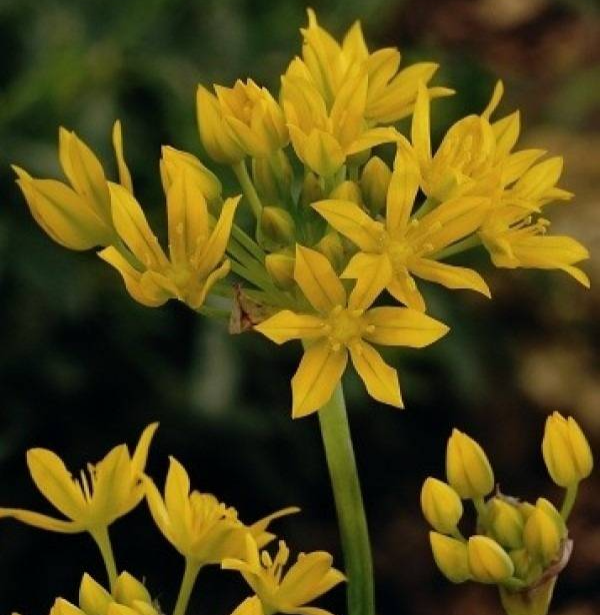
Below: Yellow blooms of the smaller species, Allium moly*+
Fritillaria: Unusual Flowers with Excellent Wildlife Resistance
Fritillarias are an especially interesting choice when you want something more unusual than the standard daffodil or hyacinth.
Animal Resistance
- Deer: High
- Rabbits: High
- Rodents: High
Flowers
Flowers of Fritillaria are often bell-shaped and nodding, giving them an almost exotic appearance.
Depending on species, flowers may be purple, yellow, orange, red, green, or checkered in burgundy and cream.
- Crown imperial (Fritillaria imperialis) is particularly dramatic, producing a tall (2-4') stem topped by a cluster of pendant bell-shaped flowers and a crown-like tuft of leaves in mid- to late spring. The entire plant from roots to bulb to flower has a musky, even skunky, odor.
- Checkered lily (Fritillaria meleagris) is considerably smaller at 8 to 16" high, and features distinctive checkerboard-patterned flowers in early to mid-spring, with the bulb or crushed stems or leaves emitting only a faint odor.
- Persian Lily (Fritillaria persica) bears impressive 2-3' tall spires of dark smoky purple nodding bells in mid- to late spring.
Foliage
The foliage varies by species. Crown imperial produces whorls of narrow leaves, while smaller fritillarias have more delicate, grass-like foliage.
Growing Conditions
- Full sun to part shade
- Well-drained soil
- Moderate moisture during growth
- Protection from standing water
- Zones 3–8, depending on species
Fritillaria bulbs should be planted as soon as they are received--they don't like being out of the soil for very long, and are extremely sensitive to drying out. As "tunicless" bulbs, they do not have the protective papery covering that most other bulbs do. It is therefore ill-advised to purchase these in mesh bags or loose from bulk bins at the garden center where they will most certainly have deteriorated--even though they may look fine on the outside, the growing point inside may have died.
Crown Imperial and Persian Lily have large bulbs, often with a divot on the top of the bulb from the previous year's growth. These can be planted on a 45-degree angle to prevent water from collecting and causing rot.
Best Garden Uses
- Cottage gardens
- Mixed perennial borders
- Woodland-edge plantings
- Specimen locations
- Rock gardens
- Naturalized areas
Their unusual flowers make them excellent conversation pieces.
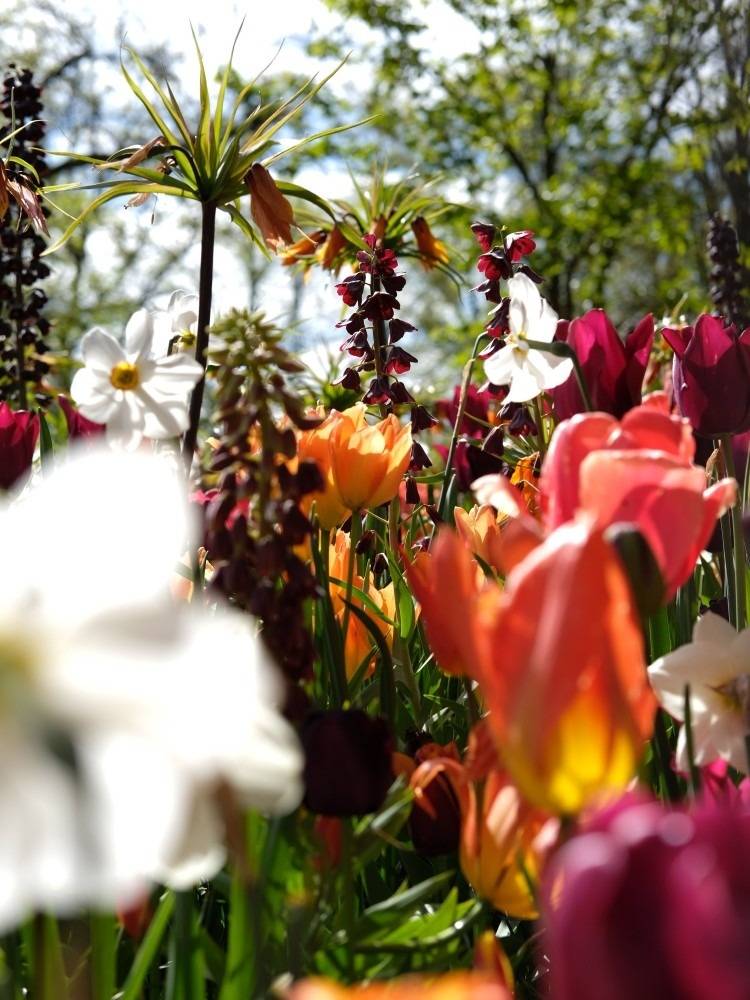 Crown Imperial and Persian Lily may help deter deer from eating tulips when planted together
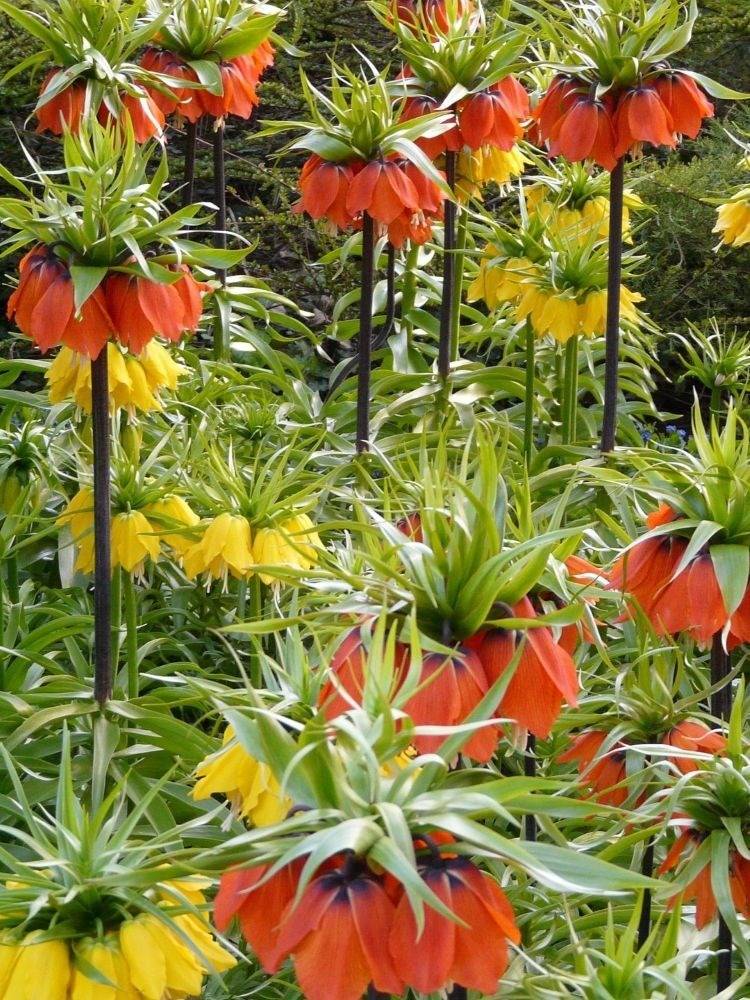 Orange and yellow Crown Imperial
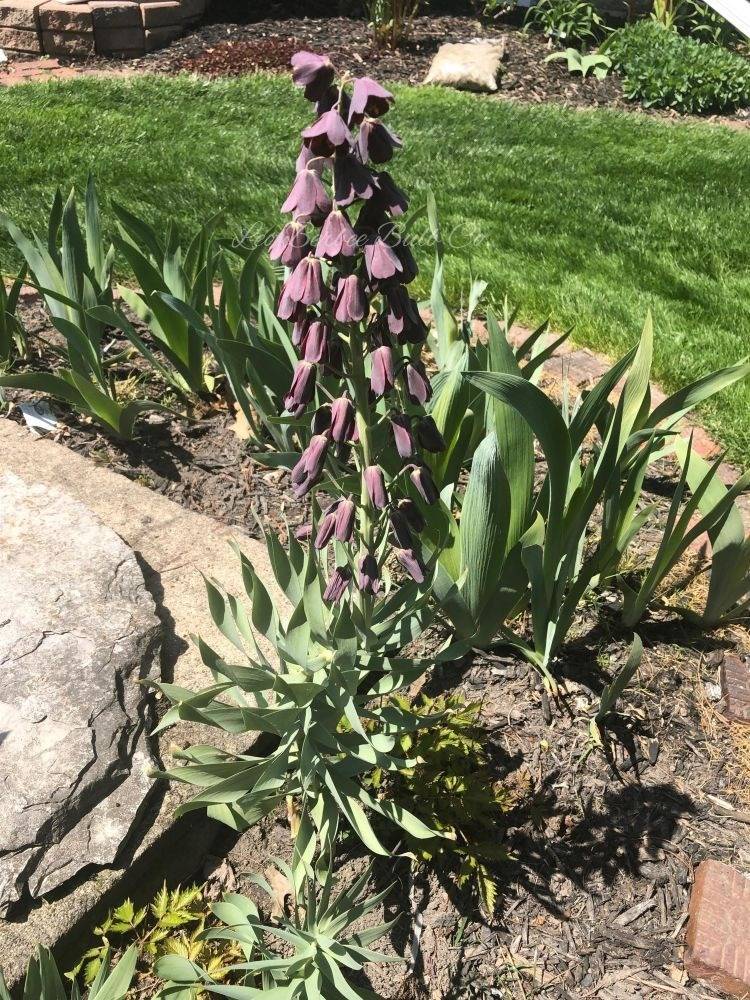 Fritillaria persica
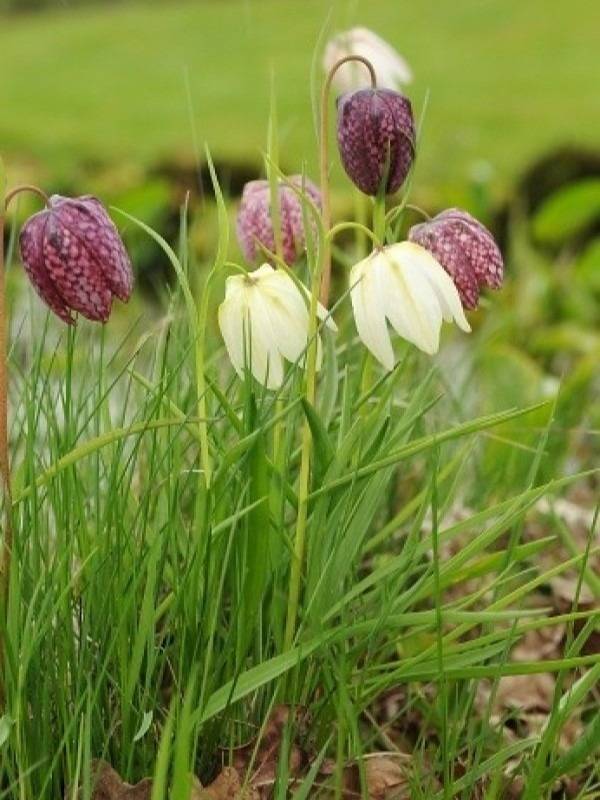 Checkered lily mix
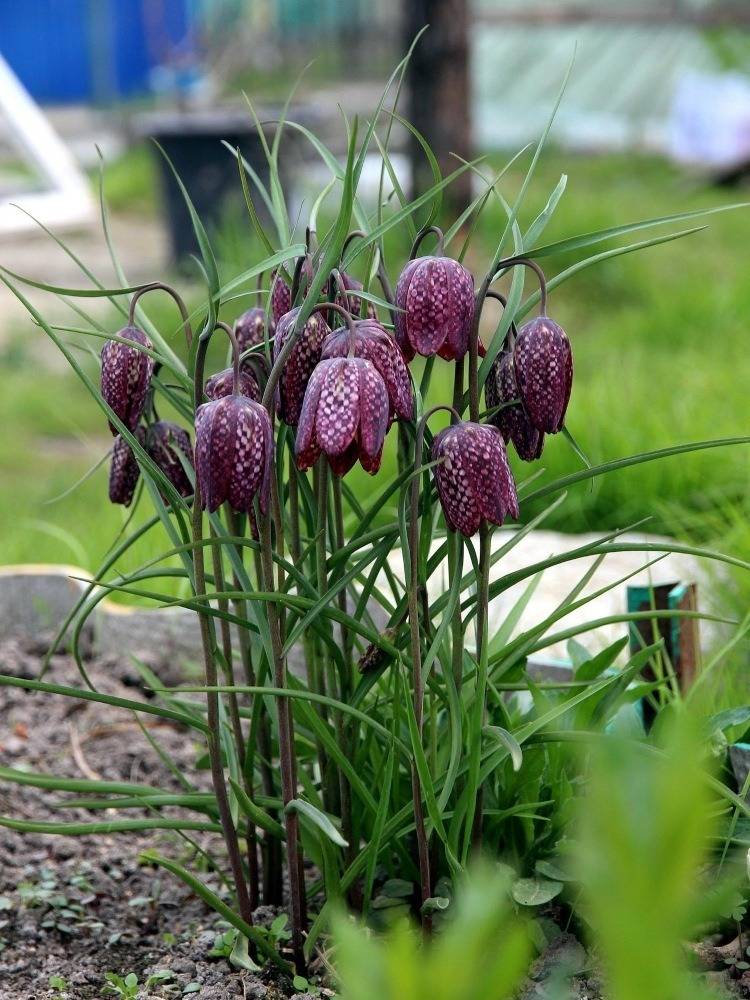 Purple checkered lily
Grape Hyacinth (Muscari): Blue Spring Color in Dense Drifts
Grape hyacinths aren’t true hyacinths, but they are among the most useful small bulbs for creating masses of spring color.
Animal Resistance
- Deer: High
- Rabbits: High
- Rodents: Moderate to high
Flowers
The flowers are small, urn-shaped bells arranged in compact clusters. The most familiar color is deep sky blue, although white, pink, and multi-blue forms are available.
Foliage
Narrow, grass-like leaves form from the base of the plant. Depending on species, foliage may emerge in fall and remain green through winter before flowering in spring.
Plants range from 4 to 12 inches tall, but typical species are 6 to 8 inches in height.
Growing Conditions
- Full sun to part shade
- Fertile soil, well-drained soil
- Zones 3–9, depending on species
Best Garden Uses
- Large drifts
- Rock gardens
- Front-of-border plantings
- Under deciduous trees
- Edging paths
- Containers
- Naturalized areas
Plant generously. Small bulbs have much more visual impact when grouped rather than scattered individually.
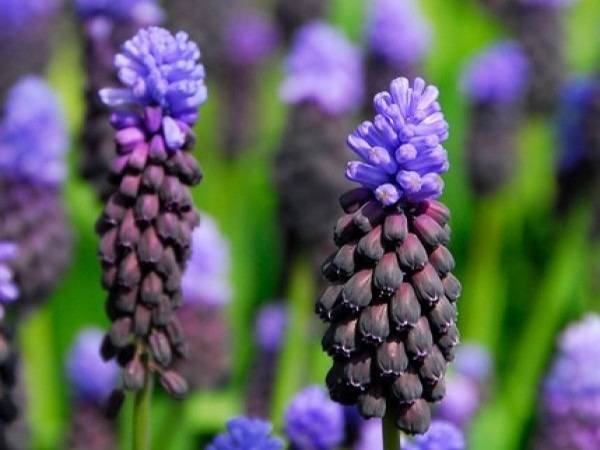 Muscari latifolium*+
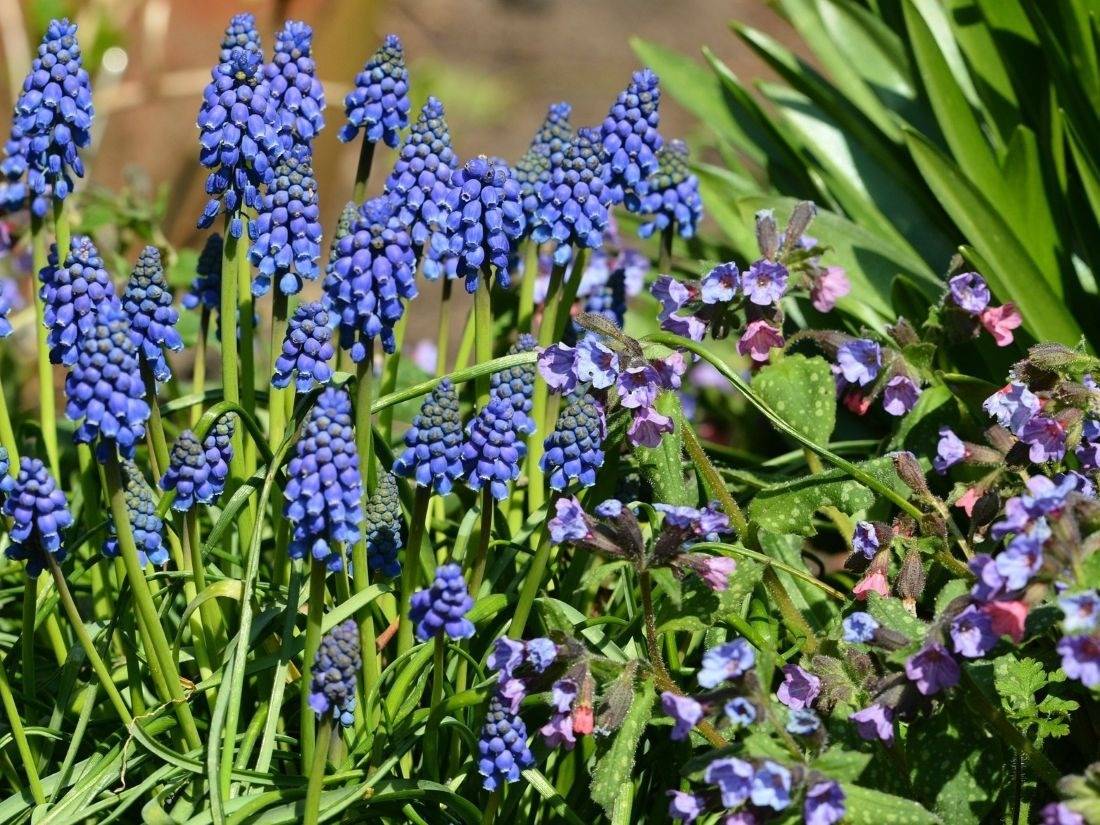 Muscari with pulmonaria makes an attractive pastel spring planting
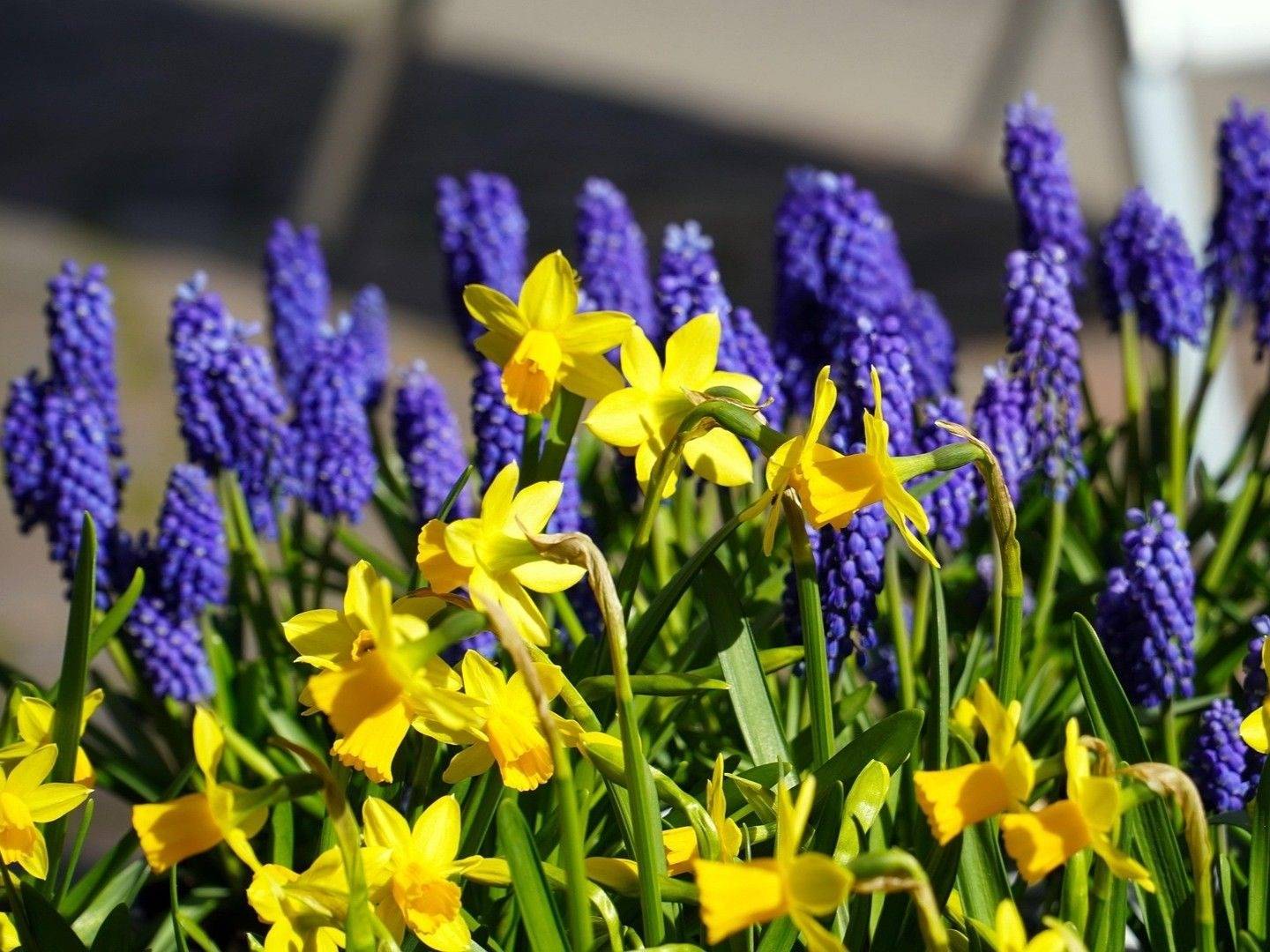 Purple muscari with yellow daffodils provides bold color contrast
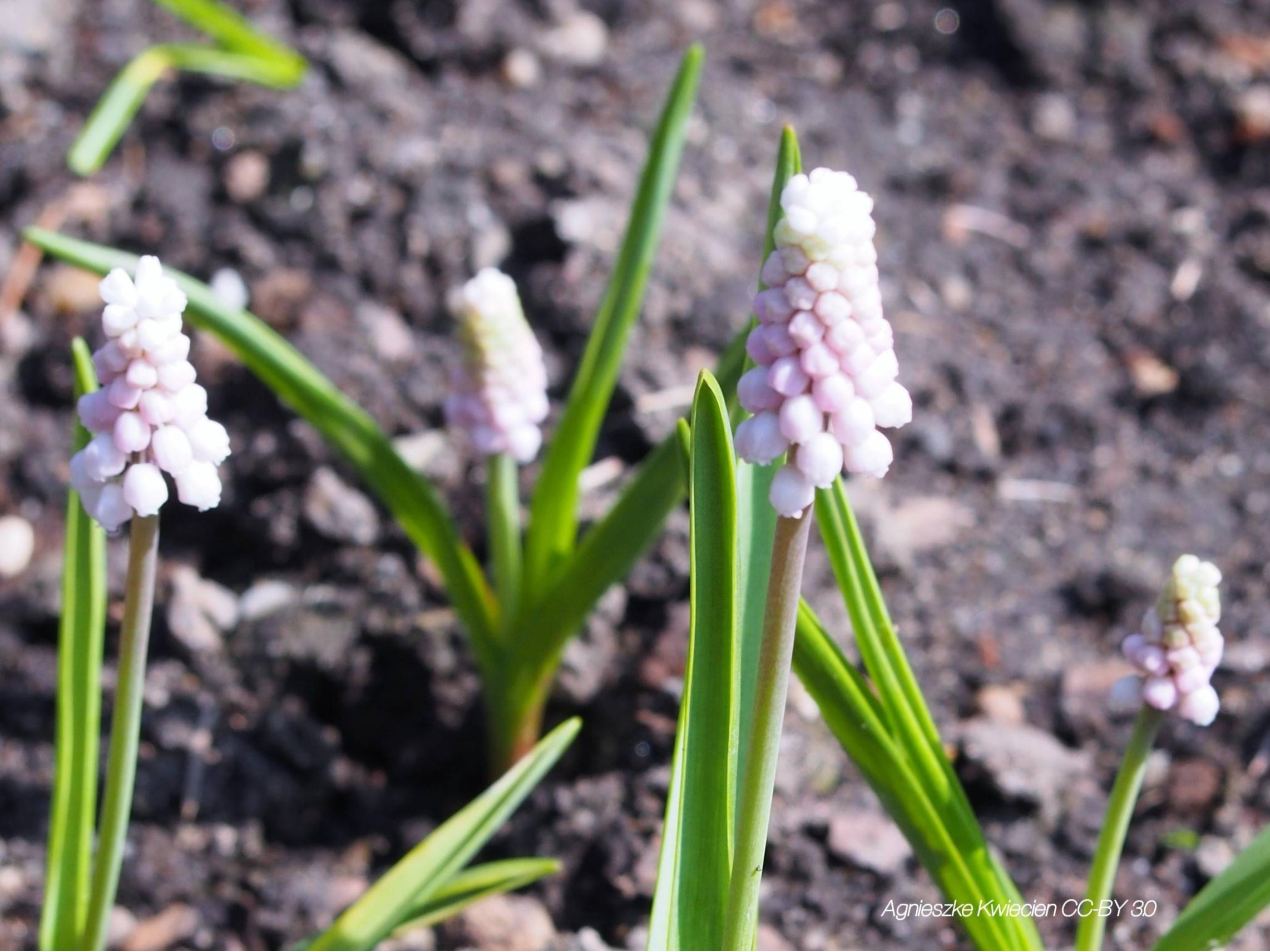
- Muscari 'Pink Sunrise' *+
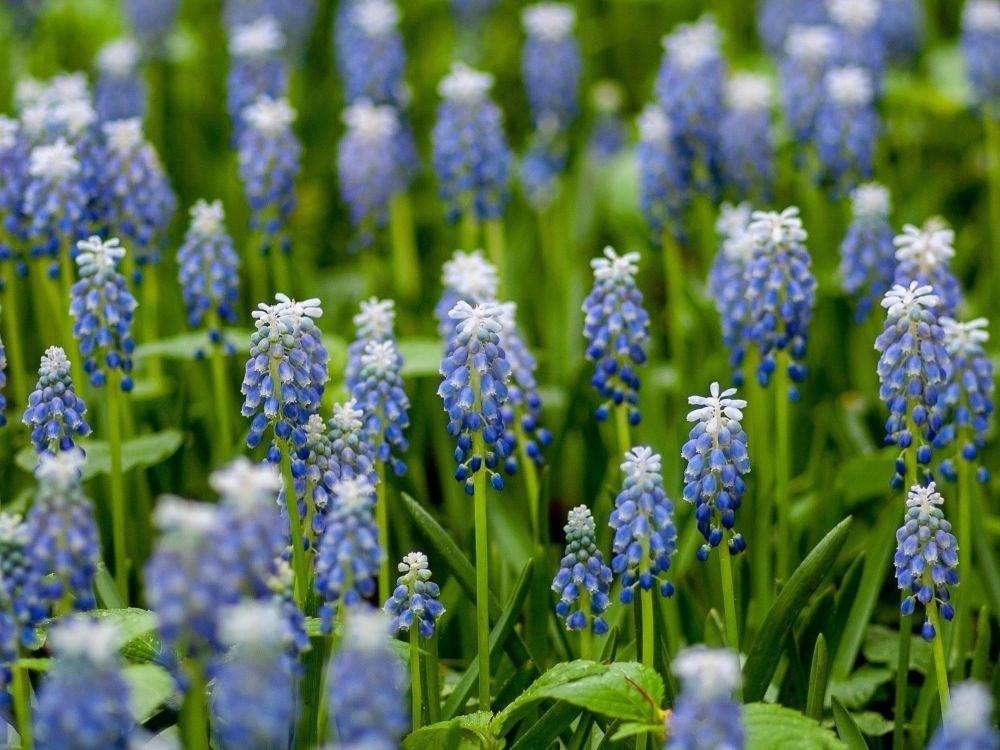 'Mount Hood' muscari has a bicolor effect*+
Snowdrops (Galanthus): Tiny Flowers for the Earliest Spring Blooms
Snowdrops are among the classic early spring-blooming bulbs, often appearing when the garden still looks firmly rooted in winter.
Animal Resistance
- Deer: High
- Rabbits: High
- Rodents: Moderate to high
Flowers
The familiar snowdrop flower is a small, nodding white bell with green markings, usually with three longer petals and three shorter petals; 'Flore Pleno' and 'Hippolyta' are double-flowering forms. Flowers appear on slender stem and can emerge as early as January depending on species, but generally late winter to early spring.
Foliage
Leaves are narrow and grass-like, usually blue-green or green, forming small clumps around the flower stems.
Height ranges from 3-12 inches depending on species.
Growing Conditions
- Part shade to full shade
- Moist but well-drained soil
- Soil rich in organic matter
- Woodland-style conditions
- Zones 3–8, depending on species
Best Garden Uses
- Along woodland paths
- At the front of perennial borders
- Around shrubs
- In naturalized drifts
- Near entrances where their early flowers can be appreciated
They are especially valuable for adding color before many other spring plants wake up.
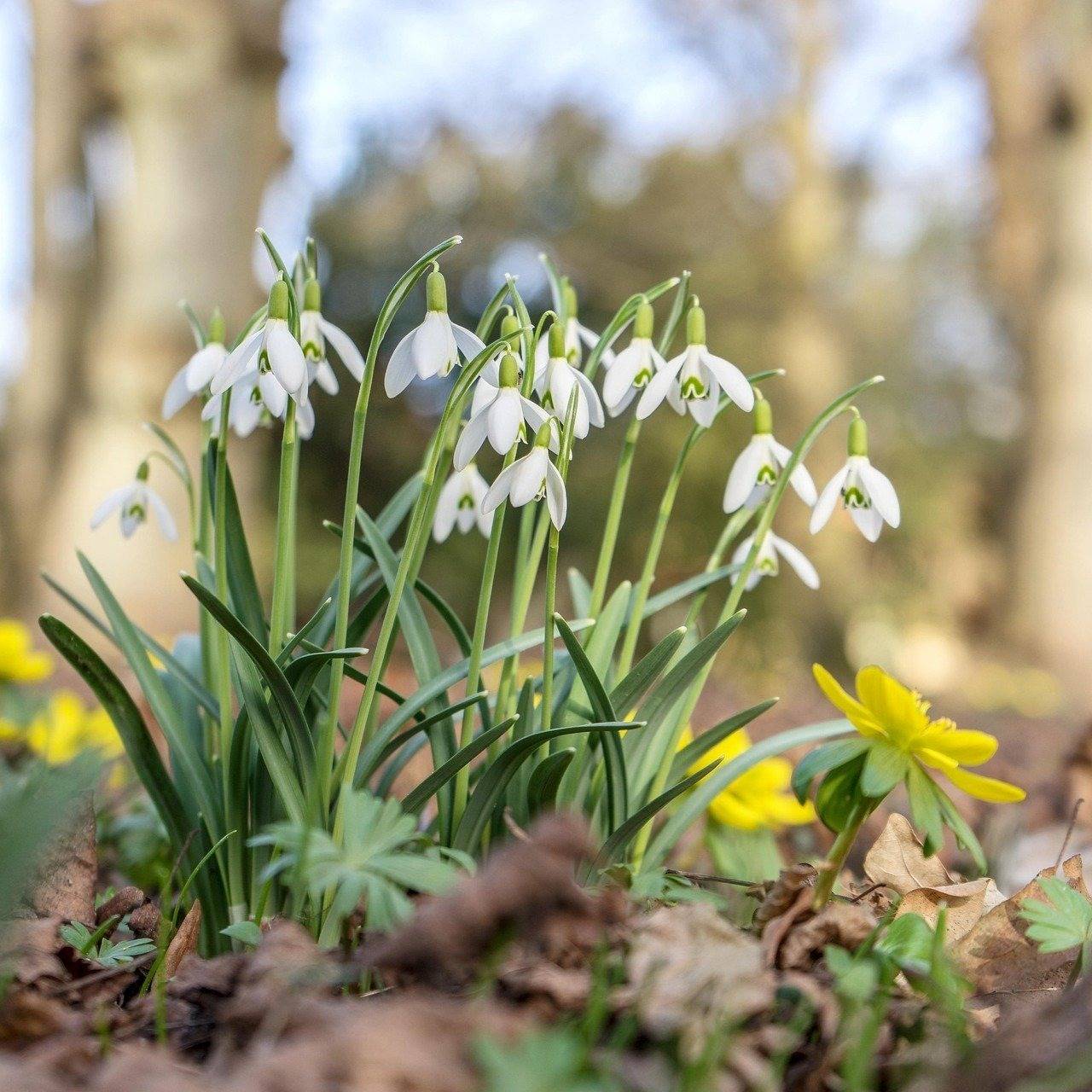 Galanthus with winter aconite
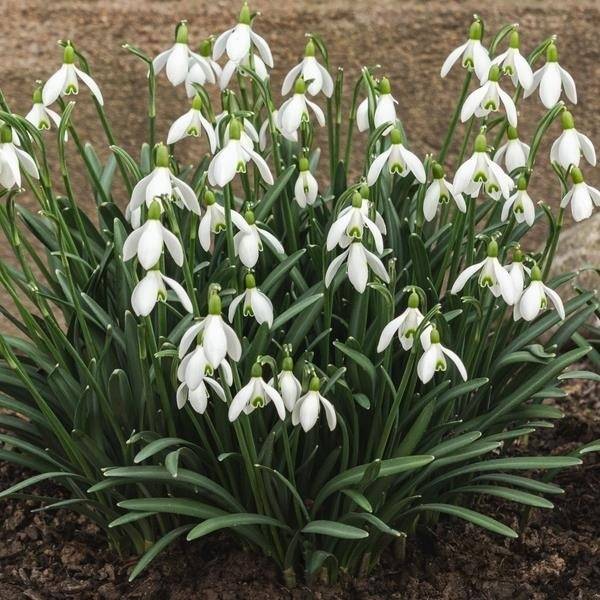 Galanthus, snowdrops*+
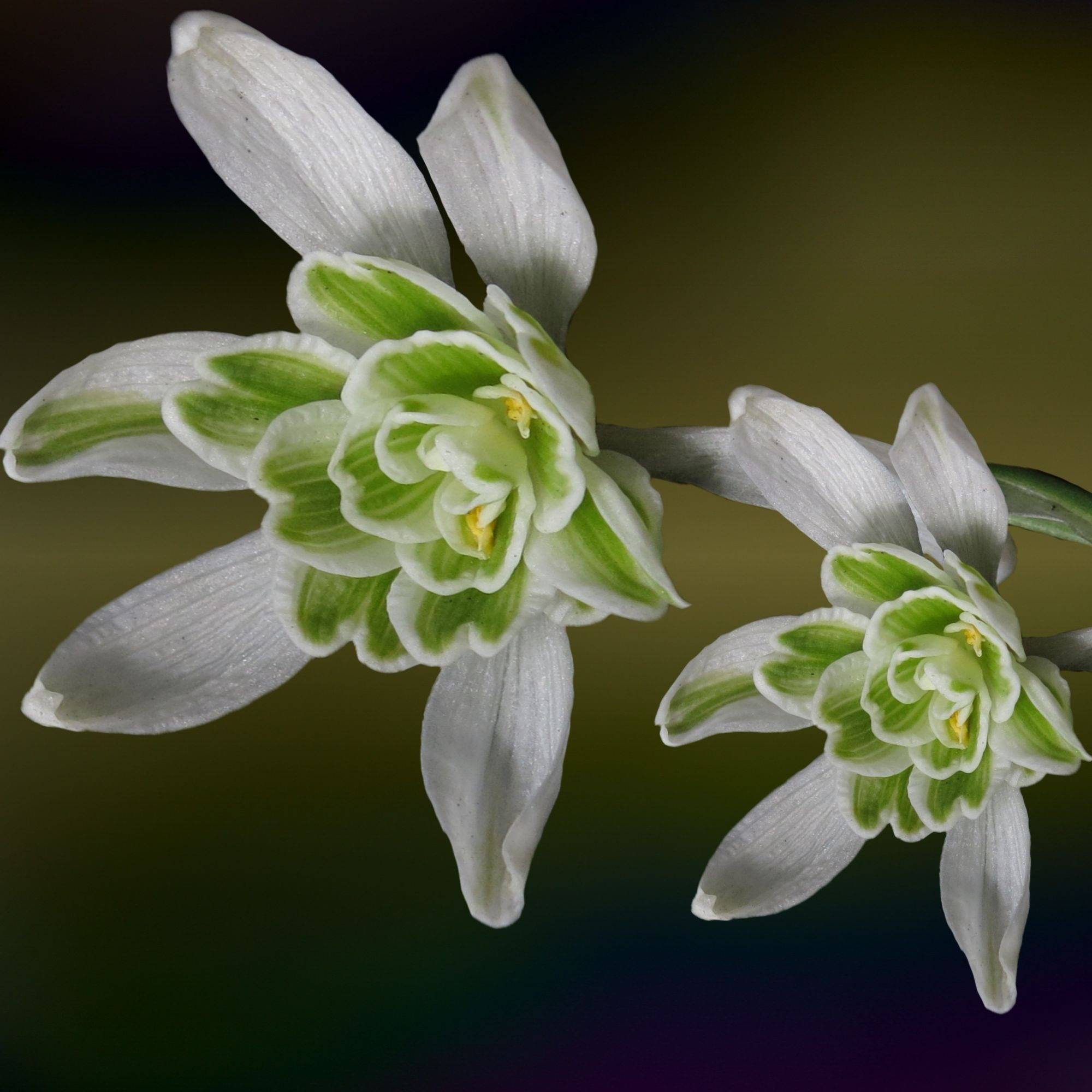 Double flowering Galanthus
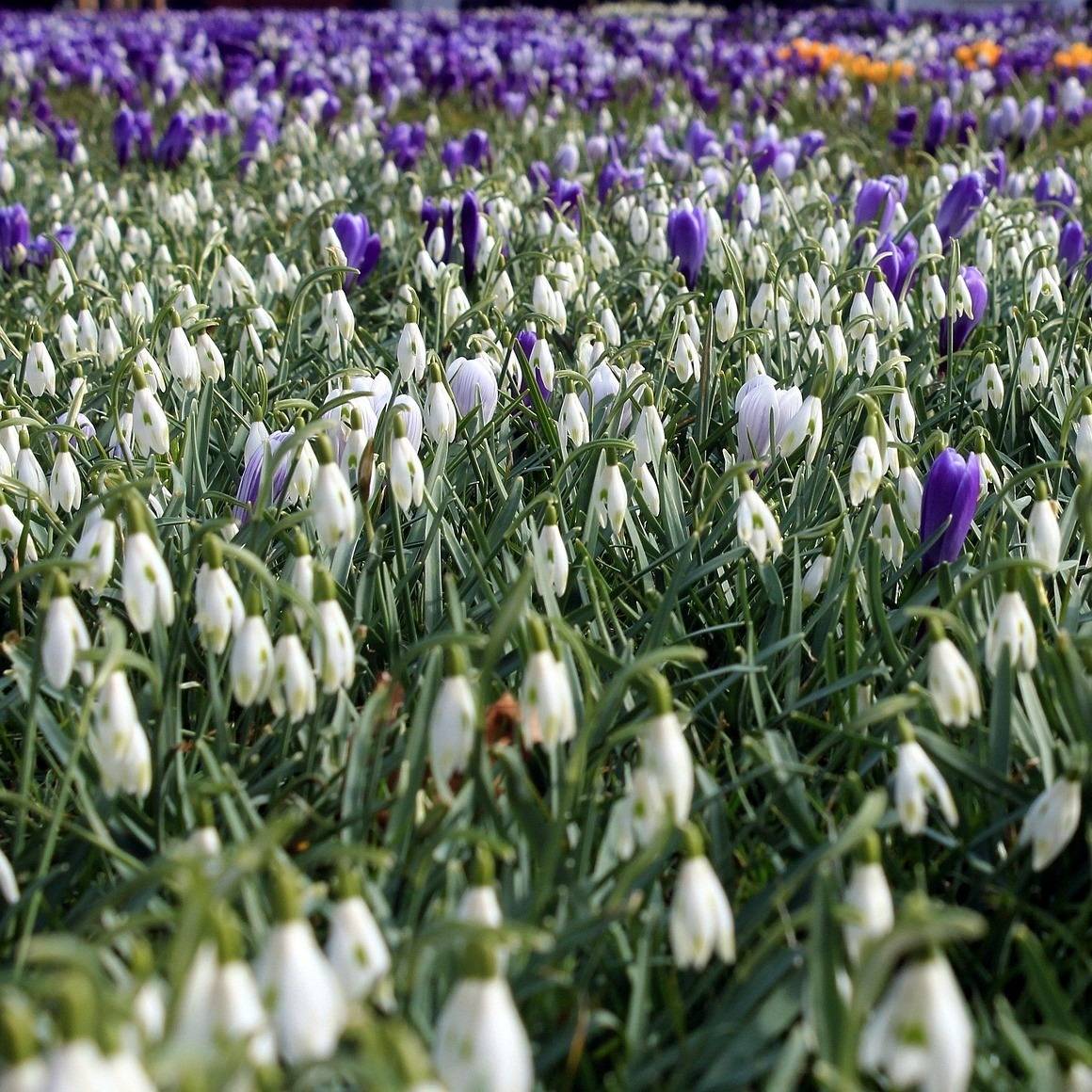 Galanthus mixed with purple crocus
Glory-of-the-Snow (Chionodoxa): Starry Flowers for Rock Gardens
Glory-of-the-snow is another excellent small bulb for early spring color. Plant it near a walkway, at the front of the border, or massed to make the most of its small cheery blooms.
Animal Resistance
- Deer: High
- Rabbits: High
- Rodents: Moderate to high
Flowers
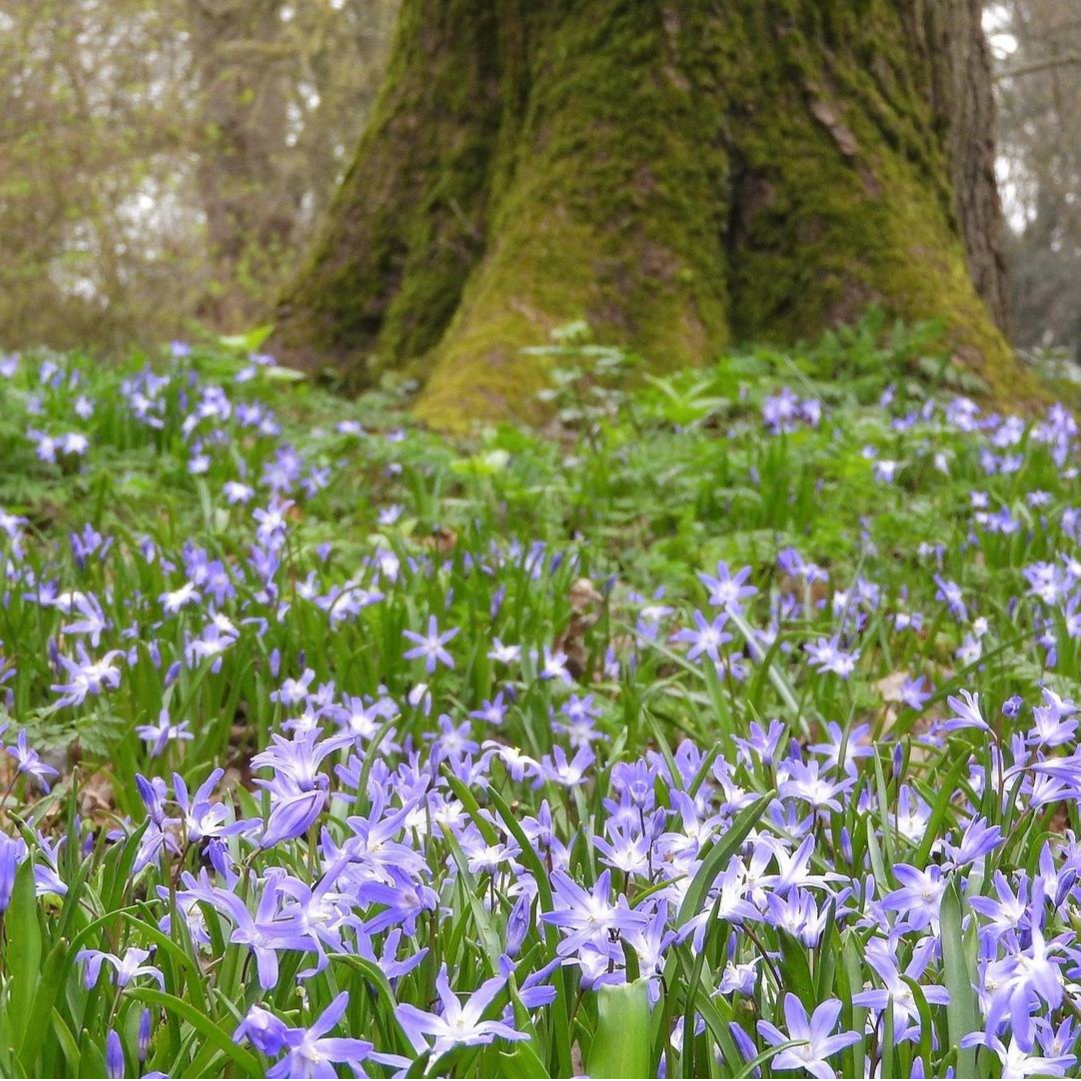
Flowers are typically blue, violet-blue, pink, or white, with a contrasting lighter center and a star-like appearance. Blooming occurs in late winter to early spring.
Foliage
The narrow foliage emerges close to the ground and disappears after the plant completes its spring growth cycle.
Height ranges from 3-9 inches, depending on species.
Growing Conditions
- Full sun to part shade
- Well-drained soil
- Moderate moisture during growth
- Zones 3–8
Best Garden Uses
- Rock gardens
- Front borders
- Woodland edges
- Under deciduous shrubs
- Naturalized plantings
Because the plants are short, position them where taller plants won’t hide their flowers.
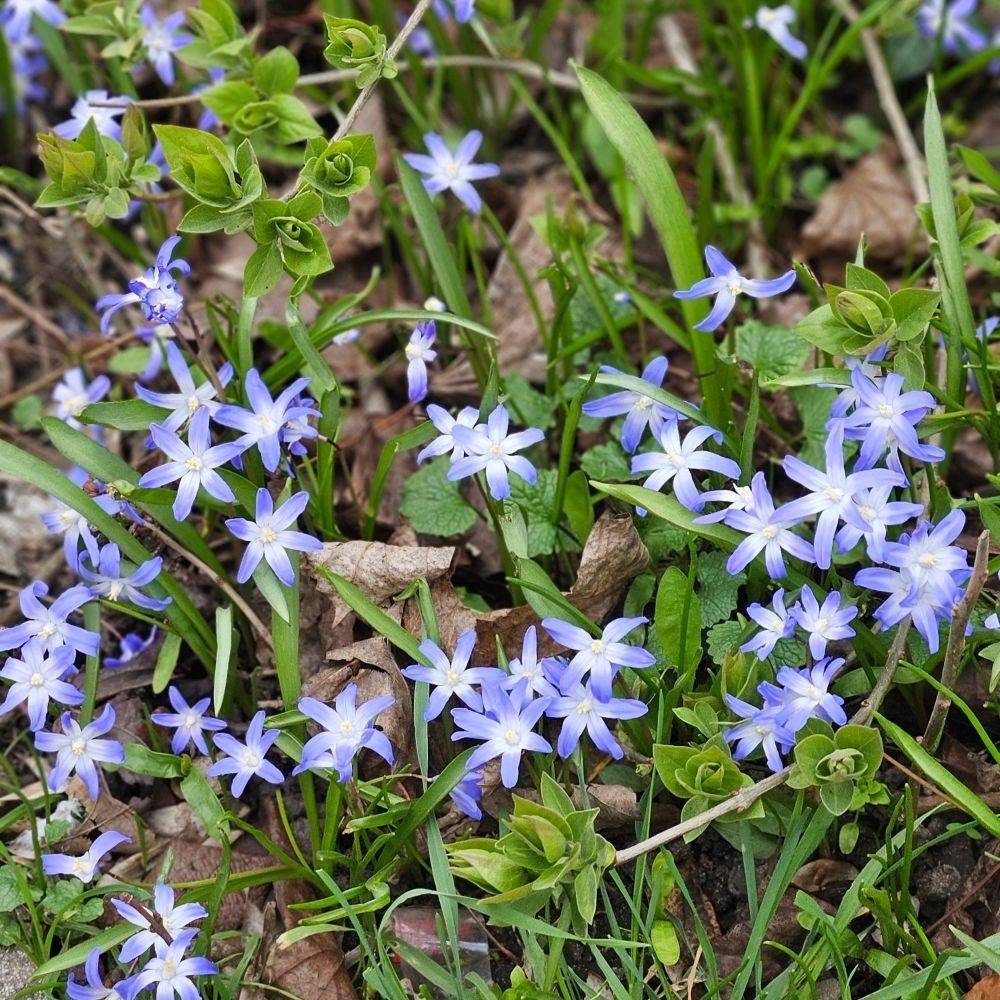
- Chionodoxa in woodland edge planting
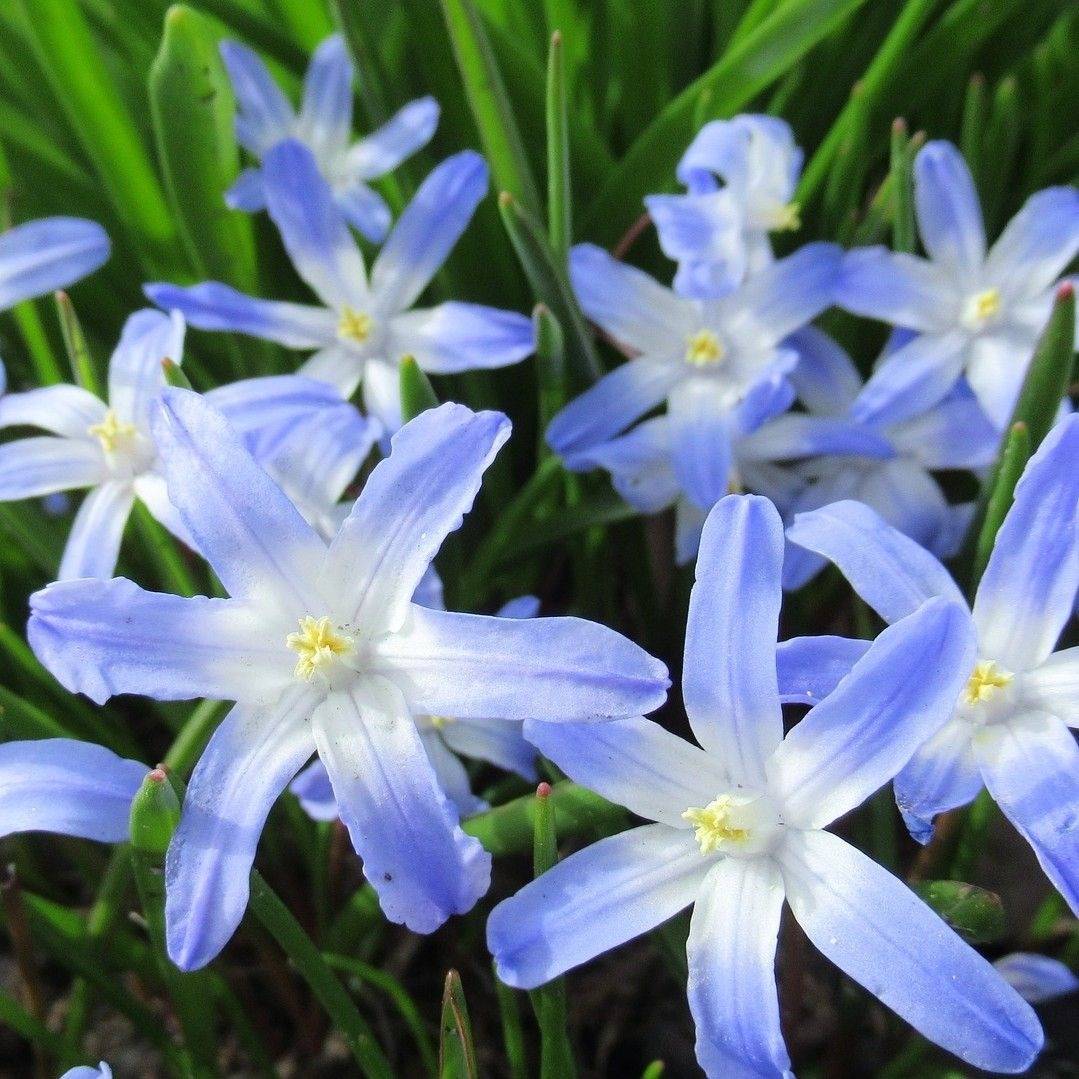 Flowers of Chionodoxa luciliae*+
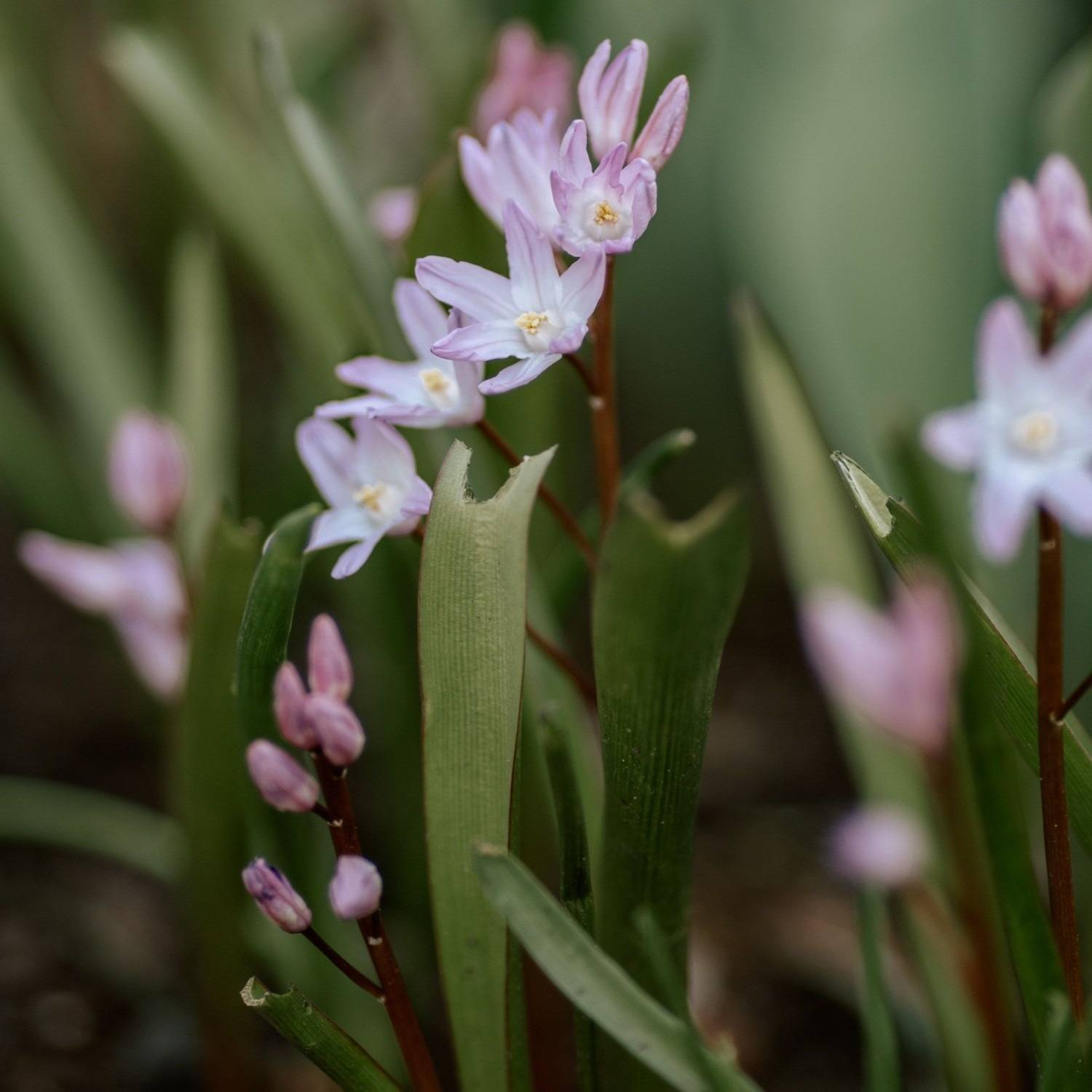 Pink Chionodoxa
 Hydrangea underplanted with Chionodoxa
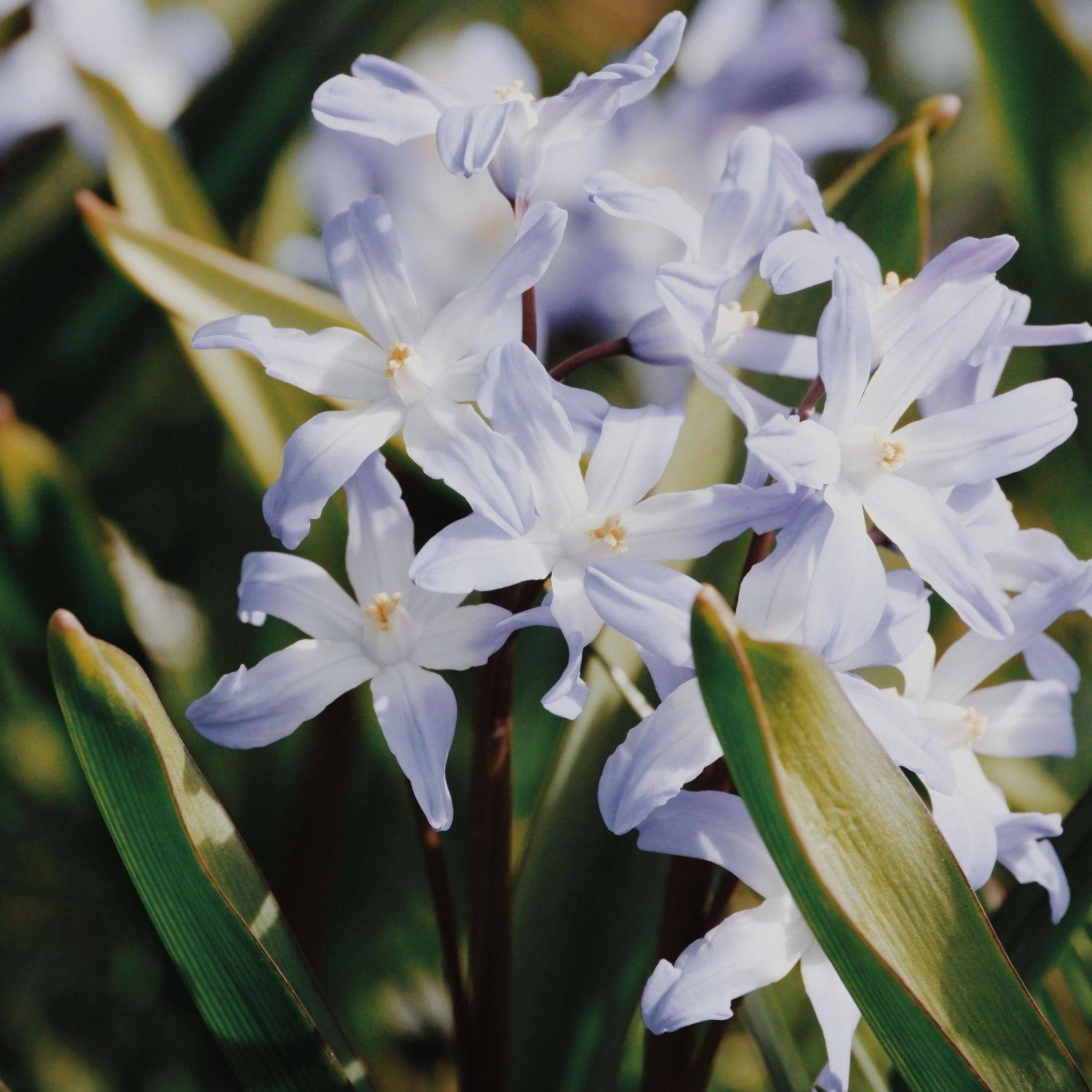 White Chionodoxa, Glory-of-the-snow
Spring/Summer Snowflake (Leucojum vernum, L. aestivum): A Graceful Choice for Moist Soil
Spring and Summer Snowflake resemble larger, more robust snowdrops and are particularly useful in areas where the soil stays somewhat moist.
Animal Resistance
- Deer: High
- Rabbits: High
- Rodents: Moderate to high
Flowers
The flowers are white, bell-shaped, and pendant, usually with small green markings at the tips of the petals. Spring Snowflake blooms in late winter to early spring, while the so-called Summer Snowflake blooms a bit later in mid-spring. Both bloom for approximately 2 to 3 weeks.
Foliage
The plant produces narrow, upright green leaves that form a neat clump. Spring snowflake tends to have narrower, grassier foliage and a smaller habit.
Depending on the species and cultivar, they range in height from 6-12", 12-18" or 18-30".
Growing Conditions
- Full sun to part shade
- Moist but well-drained soil
- Organic-rich soil
- Consistent moisture during active growth
- Zones 3 to 8
Best Garden Uses
- Woodland gardens
- Moist borders
- Streamside gardens
- Cottage gardens
- Naturalized plantings
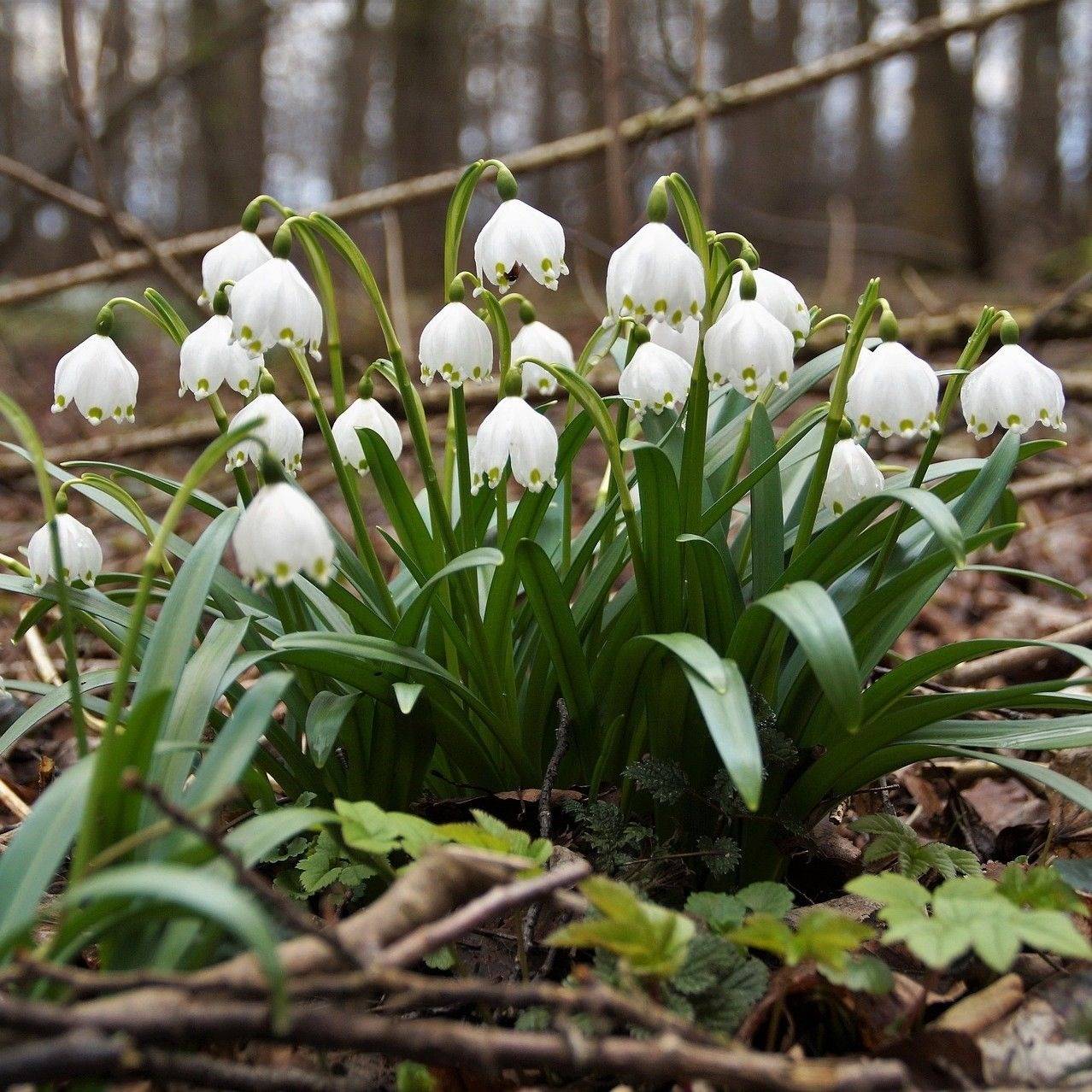 Leucojum in damp woodland
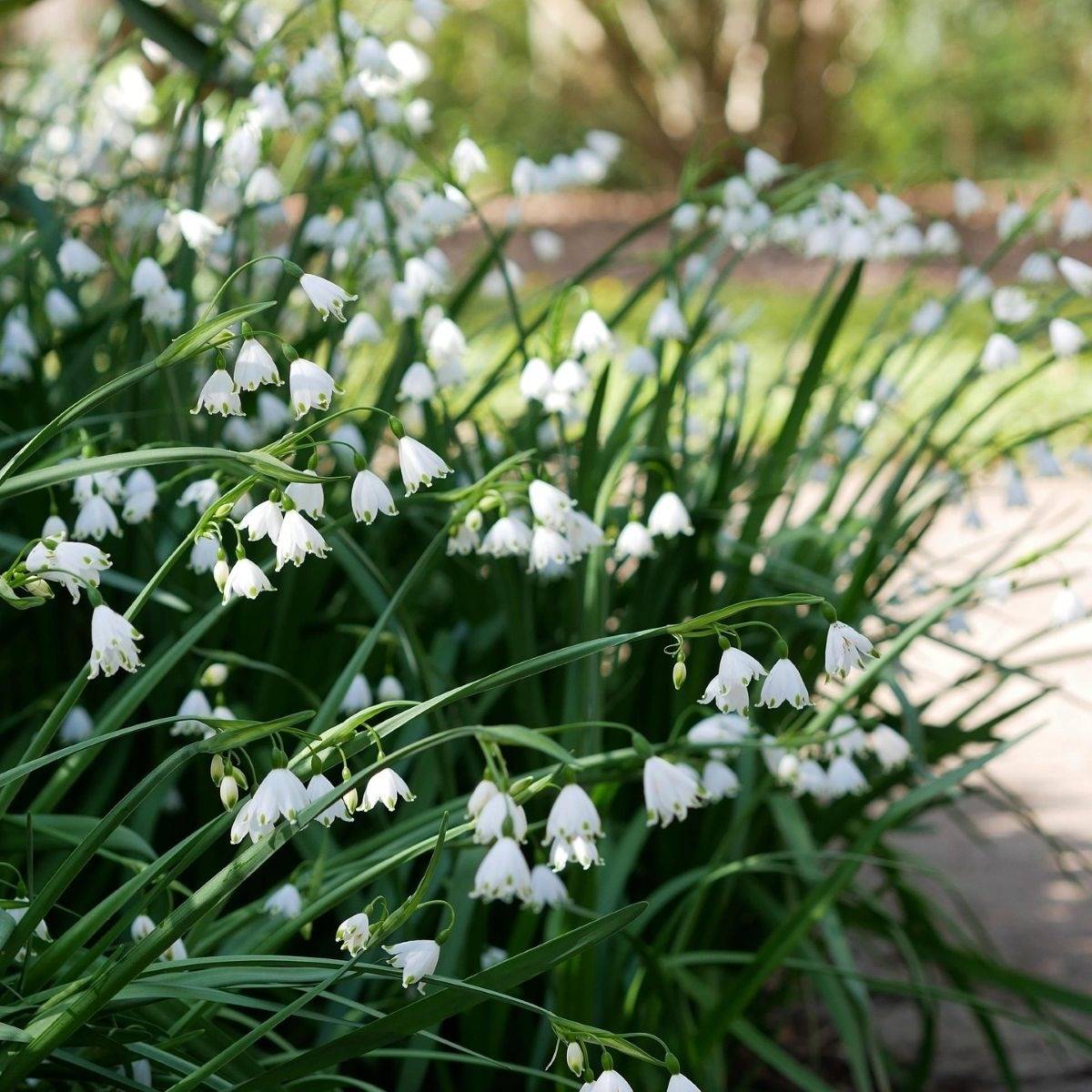 Spring snowflake, Leucojum vernum
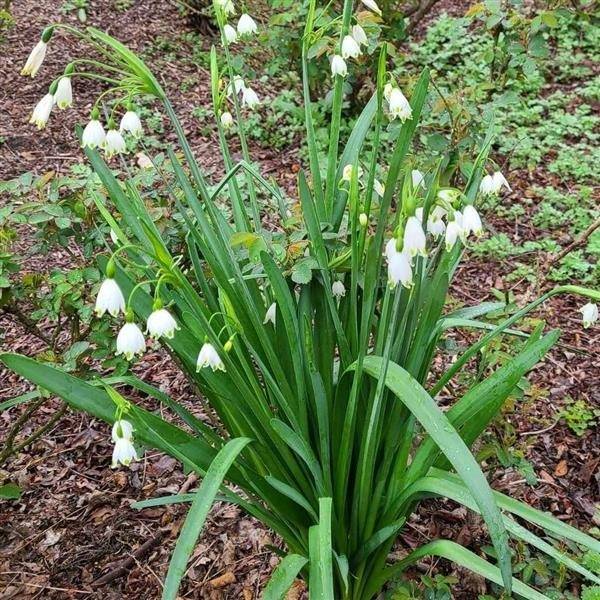 'Gravetye Giant' is the largest growing variety.+
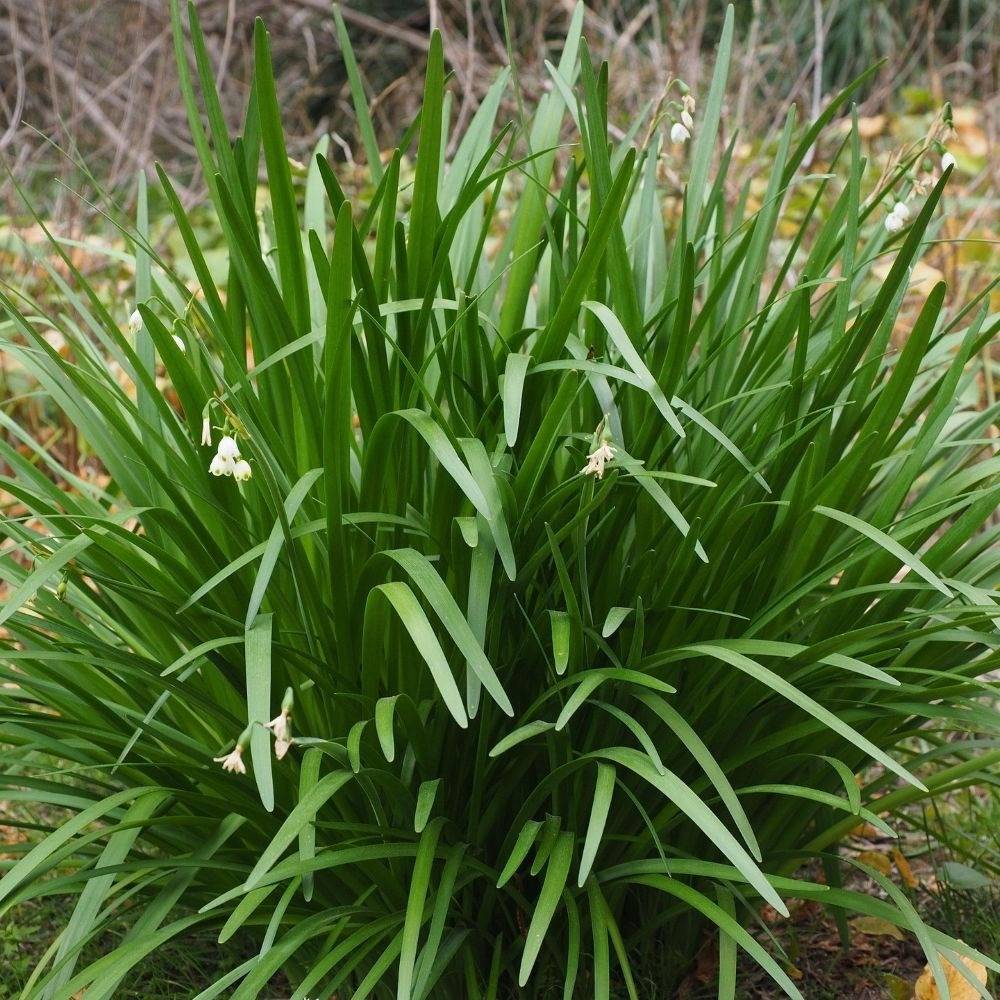 Foliage of summer snowflake, Leucojum aestivum
Hyacinths: Fragrant Spring Flowers with Good Deer Resistance
If fragrance is a priority, don’t overlook hyacinths. Their dense flower spikes make a powerful sensory impact in spring. Note that some people have an allergic reaction to handling hyacinth bulbs, so gloves are recommeded when planting.
Animal Resistance
- Deer: High
- Rabbits: High
- Rodents: Moderate
Flowers
Hyacinths produce dense spikes covered with highly fragrant, star- or bell-shaped flowers. As plantings age, spikes will naturally become thinner and less dense. Colors include both pastel and bold tones in blue, purple, pink, rose, white, peach, and yellow, with some double flowered forms available.
Foliage
The foliage consists of several thick, strap-like leaves emerging from the bulb’s base.
Growing Conditions
- Full sun to part shade
- Well-drained soil
- Moderately fertile soil
- Zones 4-8
Best Garden Uses
- Front doors
- Walkways
- Patios
- Windows
- Seating areas
- Formal borders
- Containers
Put fragrant bulbs where you will actually smell them--close to a walkway or entertaining area.
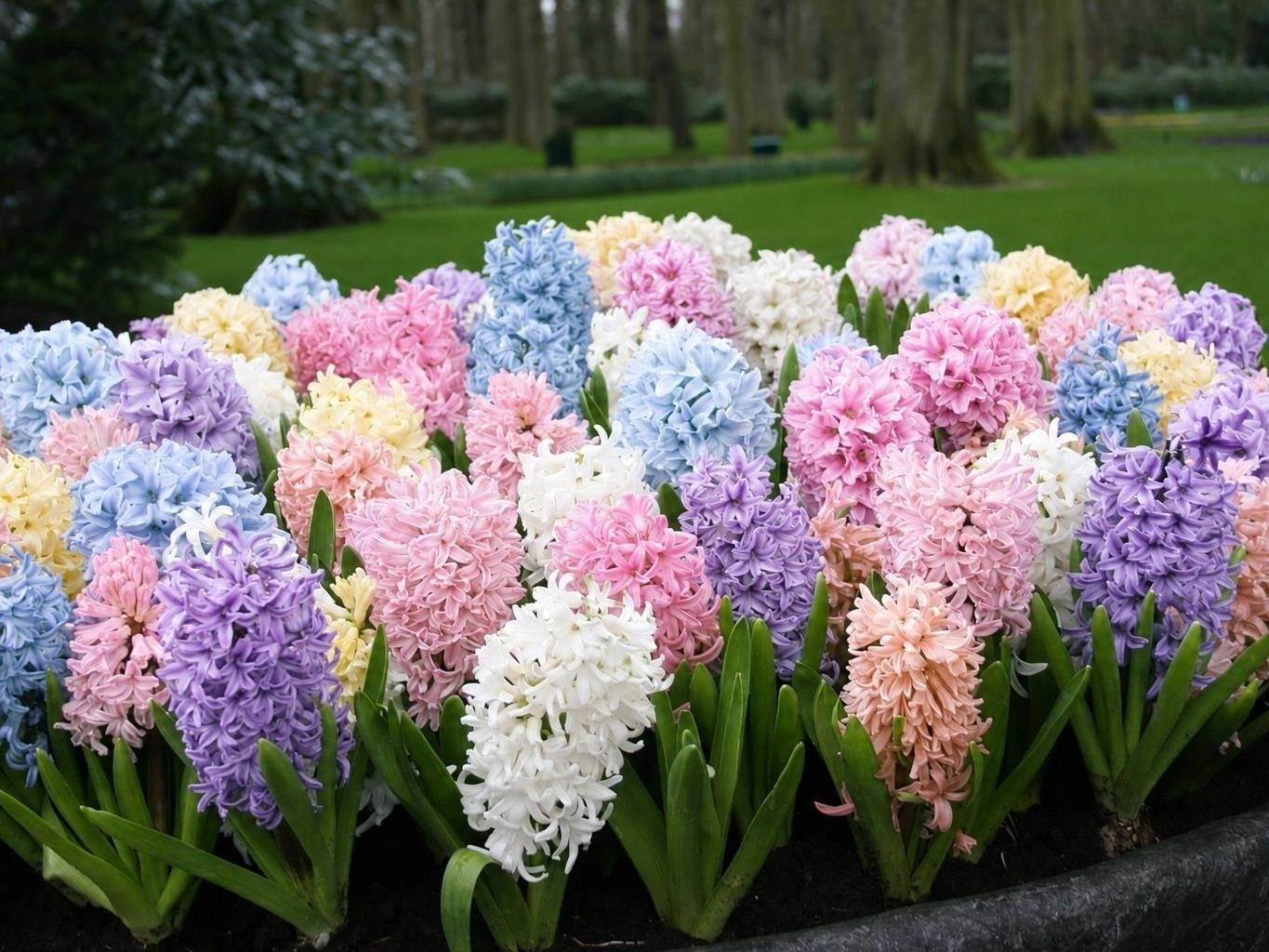 A beautiful spring pastel planting of mixed hyacinths*+
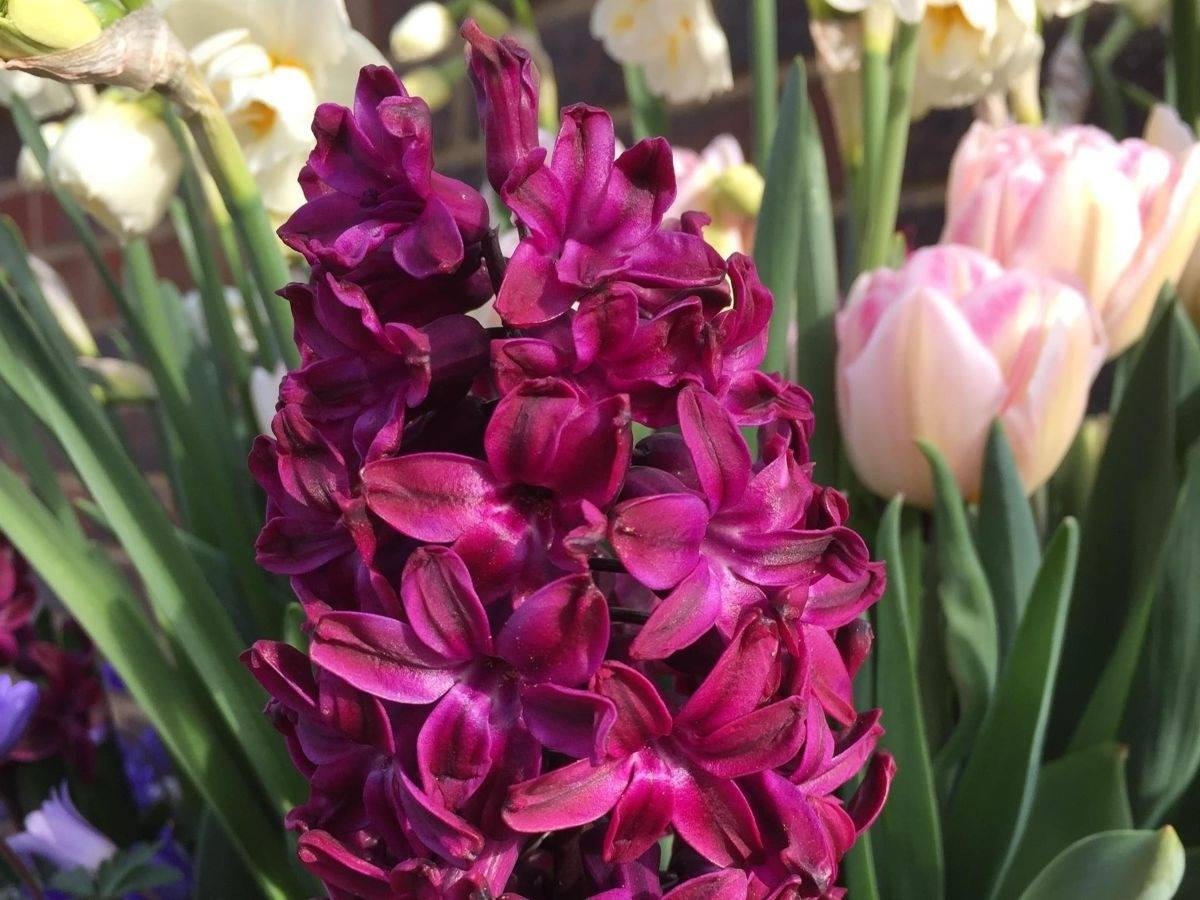 Hyacinth 'Woodstock'*+
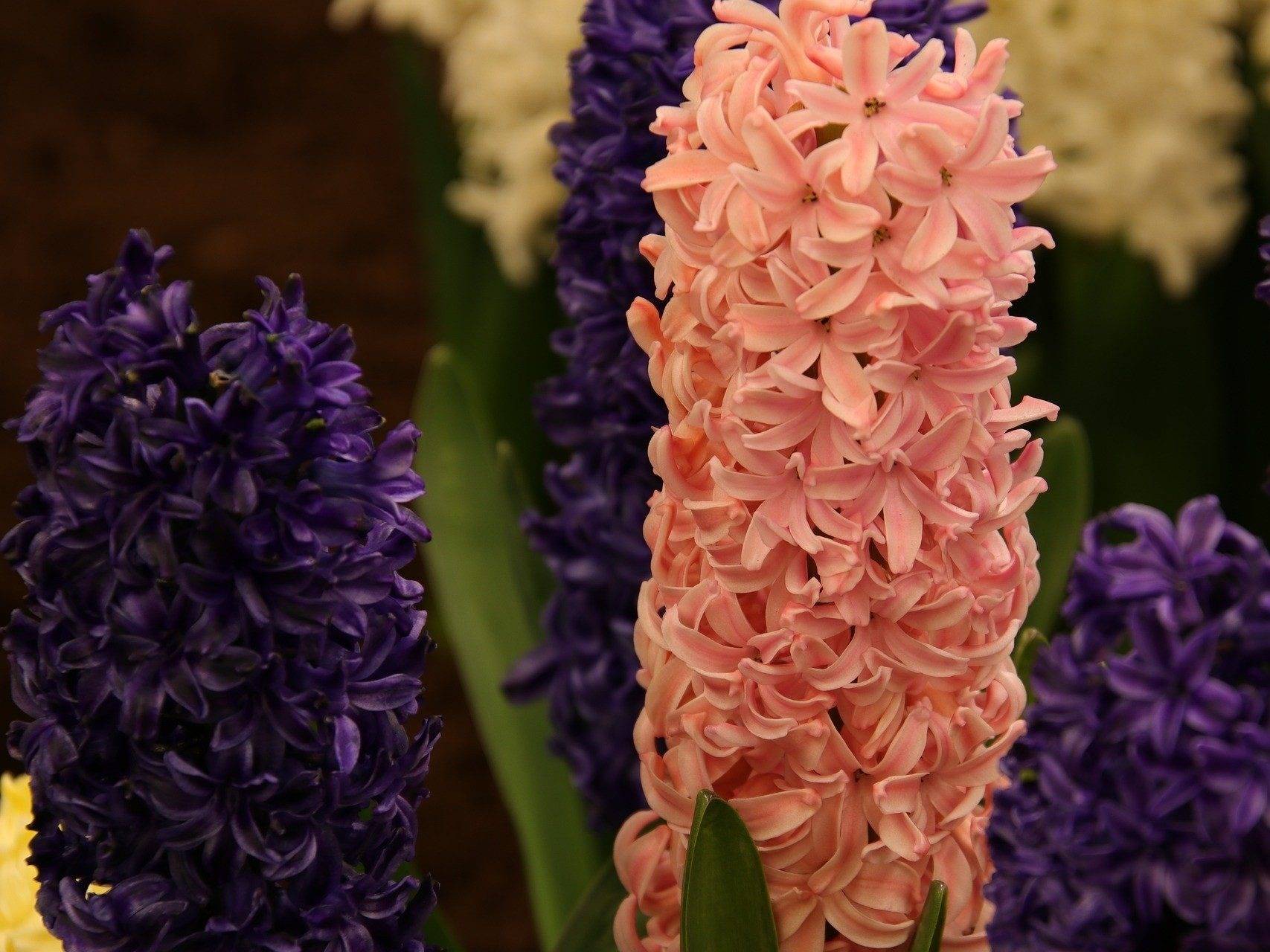 Dramatic planting of dark peach and deep purple hyacinths
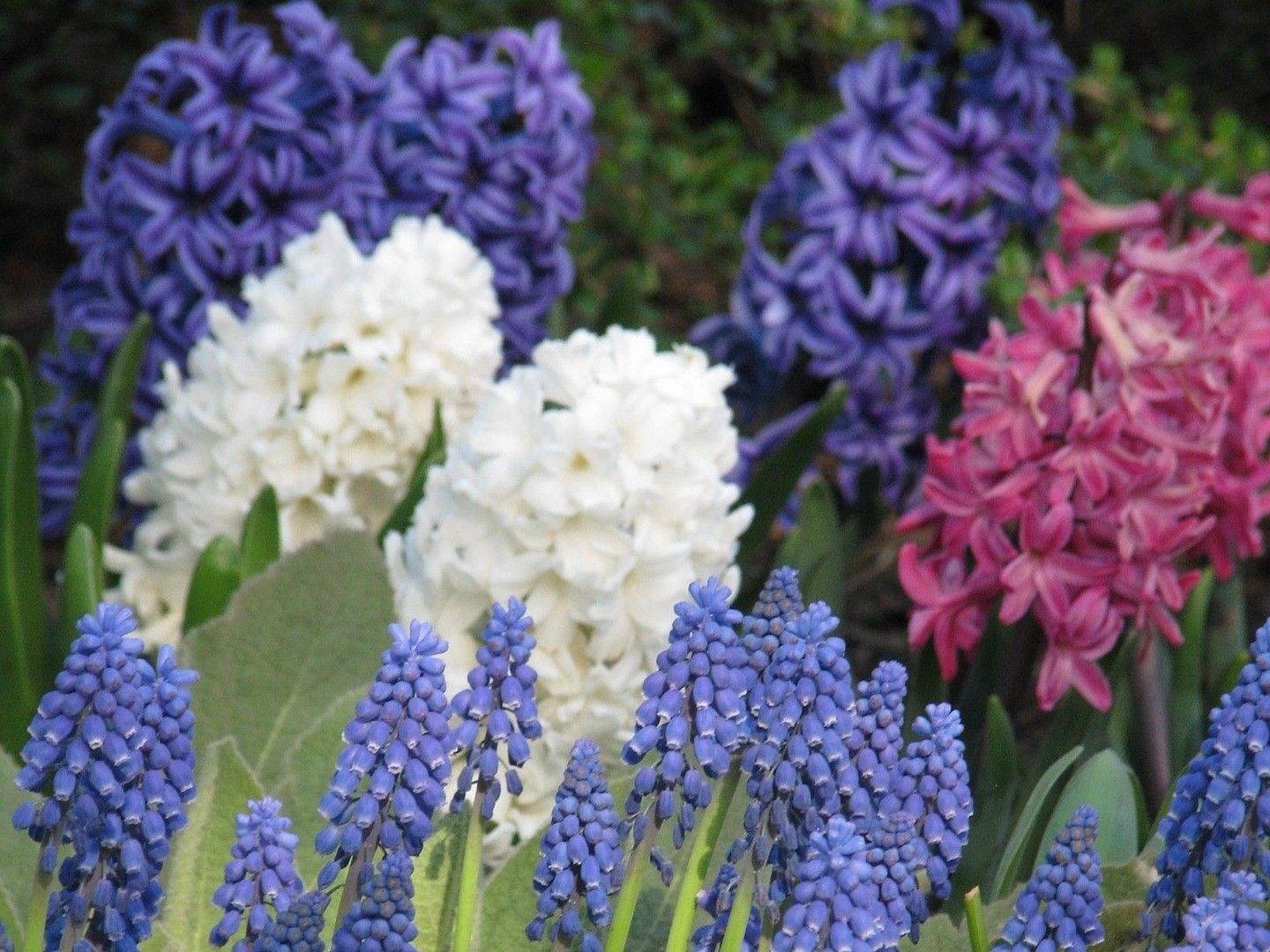 Hyacinths and muscari planted together creates a rhythmic harmony
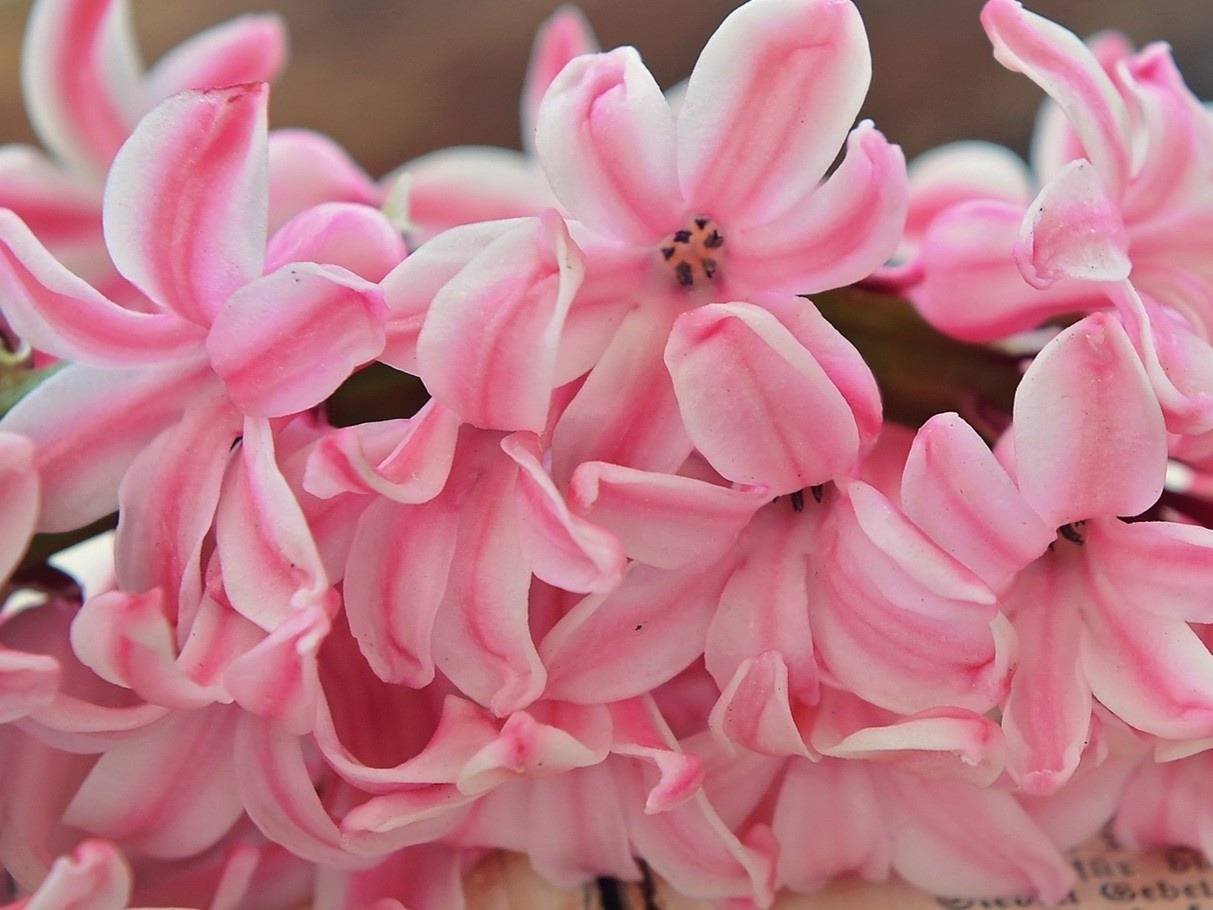 Bi-colored florets of 'Fondant' hyacinth*+
Camassia (Camas, Wild Hyacinth: Elegant Spring Spikes for Native Gardens
Camassia, sometimes called camas, quamash, or wild hyacinth, is an excellent choice for gardeners who want spring-blooming bulbs that deer and rabbits tend to avoid. With all species native to North America, Camassia naturally grows in moist meadows and woodland edges, where it can form impressive colonies.
- Camassia scilloides: 12 to 24 inches; blooms mid-spring
- Camassia quamash: 12 to 24 inches; blooms mid- to late spring
- Camassia leichtlinii: 24 to 48 inches; blooms late spring
- Camassia cusickii: 18 to 30 inches; blooms late spring to early summer
Animal Resistance
- Deer: High resistance
- Rabbits: High resistance
- Rodents: Moderate resistance
Flowers
Camassia produces tall spikes covered with numerous star-shaped flowers. Depending on the species, flowers range from pale lilac and lavender to blue-violet and white. The individual flowers open progressively along the flower stalk, creating an elegant vertical display in late spring.
Foliage
The plant forms a basal clump of long, narrow, strap-like green leaves. The foliage emerges early in spring and generally begins to die back after flowering, making camassias easy to combine with later-emerging perennials.
Growing Conditions
- Full sun to partial shade
- Moist, well-drained, humus-rich soil
- Zones 3-8, depending on species and cultivar
Unlike many bulbs that demand dry conditions, camassia tolerates moist sites, making it particularly useful for rain gardens, meadow edges, and areas that remain damp in spring.
Best Garden Uses
- Naturalized plantings
- Rain gardens
- Native plantings
- Cottage gardens
- Pollinator gardens
- Woodland edges
- Moist borders
- Pond and waterside plantings
- Mass plantings
- Cut-flower gardens
Plant camassia in groups for the greatest visual impact. Its tall flower spikes look especially effective rising through lower-growing perennials and grasses.
Pair blue or lavender camassia with yellow daffodils for a classic spring color combination. For a softer naturalistic design, combine it with ornamental grasses and other meadow plants. Because camassia tolerates more moisture than many traditional spring bulbs, it can also bridge the transition between a conventional perennial border and a wetter naturalistic area.
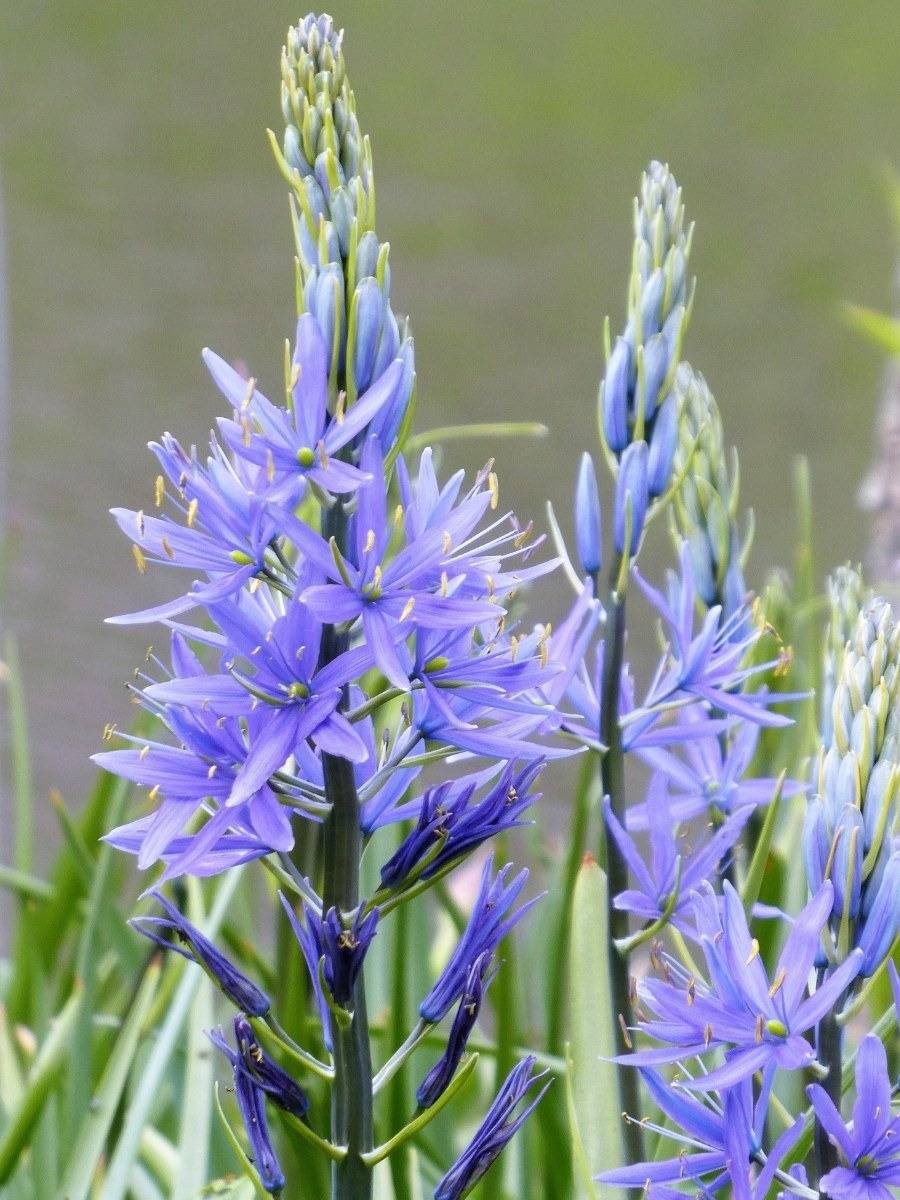 Camassia is a North American native plant
- Blue camassia in a pondside planting
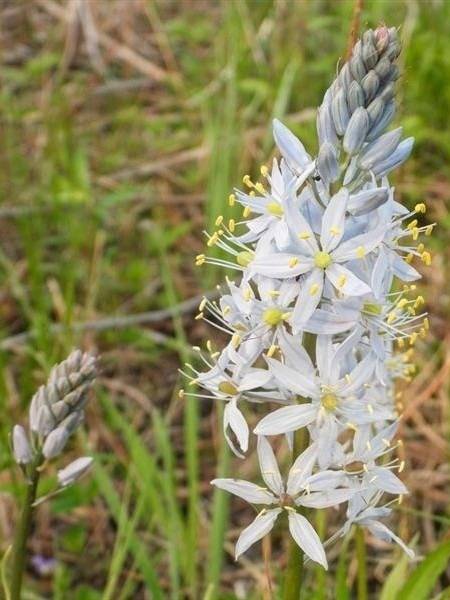 Camassia scilloides*+
- Camassia cusickii*+
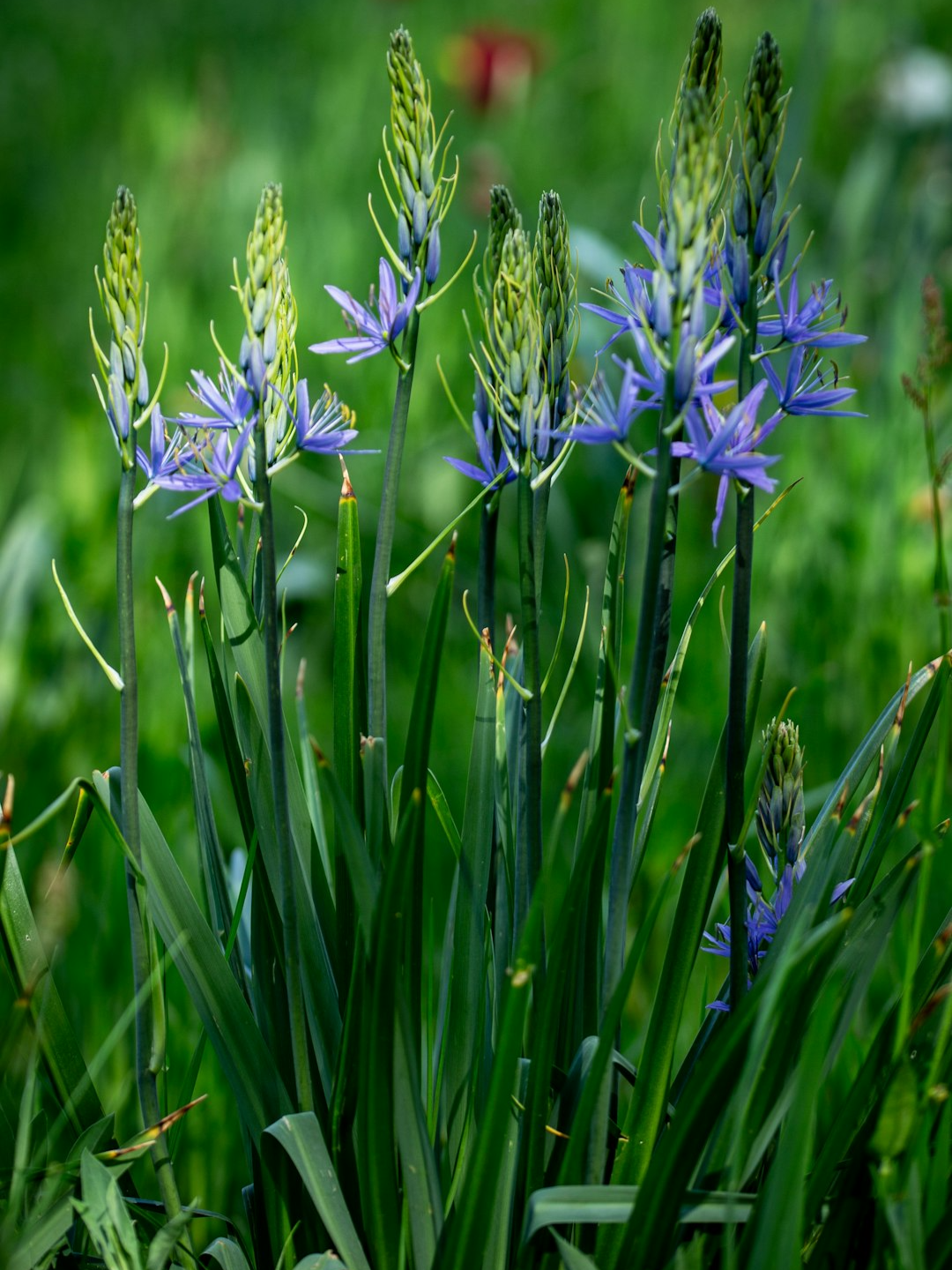
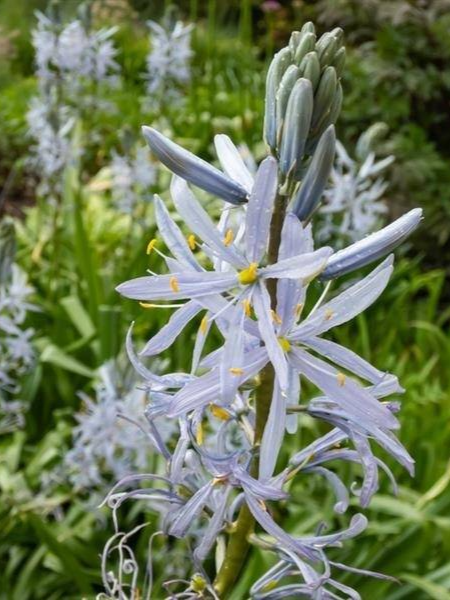
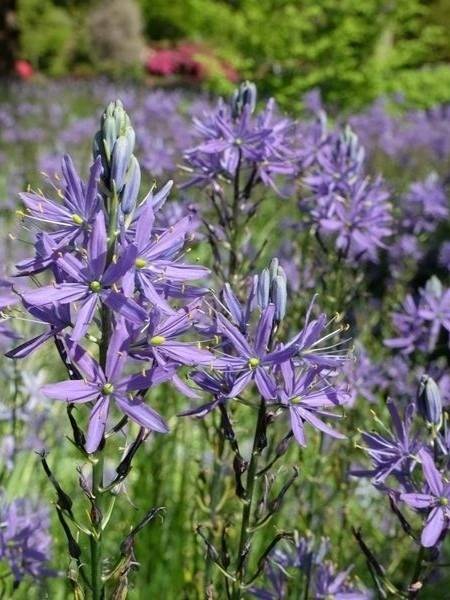 Camassia quamash*+
Dutch Iris (Iris x hollandica): Colorful Tall Blooms for Borders and Cut Flower Gardens
Dutch iris (Iris × hollandica) brings sophisticated color and strong vertical form to the spring garden. Unlike bearded iris, Dutch iris grows from a bulb and produces slender stems topped with elegant, orchid-like flowers. It is generally considered deer- and rabbit-resistant, making it a useful addition to wildlife-conscious landscapes.
Animal Resistance
Deer: High resistance
Rabbits: High resistance
Rodents: Moderate resistance
Flowers
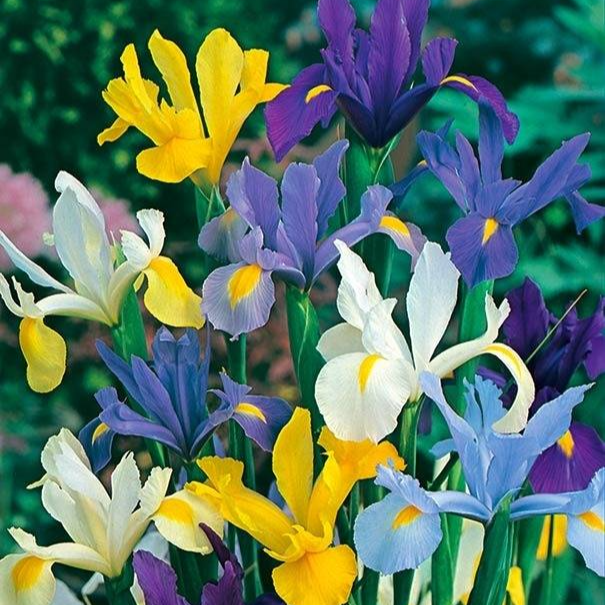
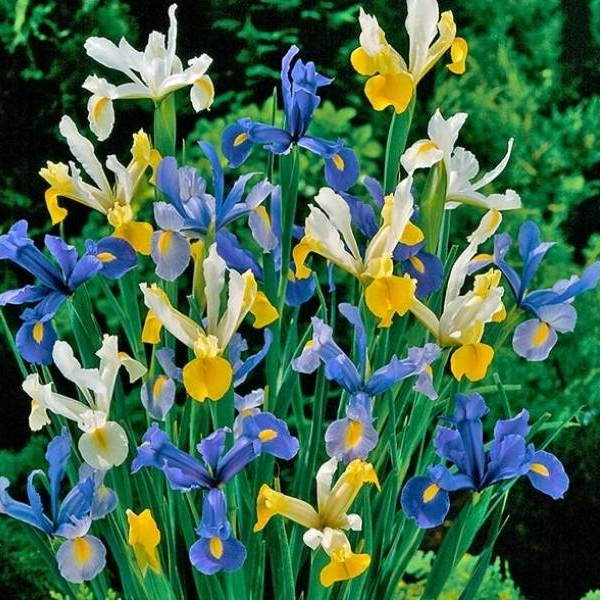
Dutch iris produces elegant, orchid-like flowers in shades of blue, purple, violet, yellow, and white. Individual flowers can be several inches across and are carried on slender, upright stems. The flowers have a refined appearance that makes Dutch iris particularly valuable as a cut flower. Blooming period of about 3 weeks from late spring to early summer; each individual flower lasts about a week.
Foliage
The foliage is narrow, upright, and sword-like, with a blue-green to green color. Leaves emerge from the base and form a neat, architectural clump around the flower stems.
Height 18-24"
Growing Conditions
- Full sun
- Well-drained soil
- Moderate moisture during active growth
- Soil that becomes relatively dry during summer dormancy
- Zones 5-9
Good drainage is especially important because the bulbs are dormant during the summer and do not perform well in consistently wet soil.
Best Garden Uses
- Perennial borders
- Cutting gardens
- Cottage gardens
- Containers
- Entry gardens
- Foundation plantings
- Mass plantings
- Naturalistic plantings
Use Dutch iris where its narrow, upright form can contrast with rounded flowers such as alliums. A combination of Dutch iris, alliums, and daffodils creates a succession of flower shapes while maintaining a wildlife-resistant planting palette.
Because Dutch iris makes an excellent cut flower, plant a generous group in a cutting garden and repeat the same color in nearby ornamental borders.
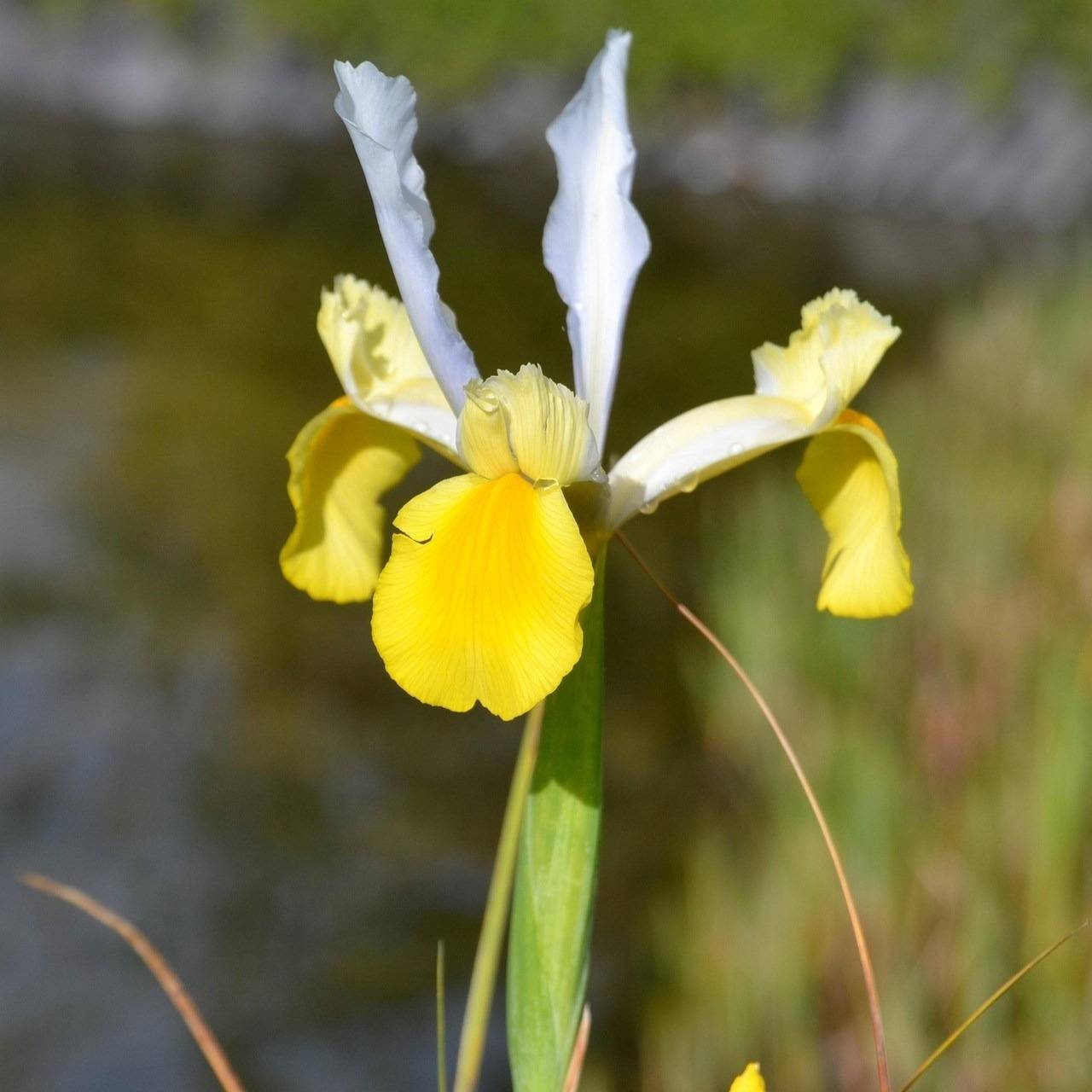 Yellow Dutch Iris
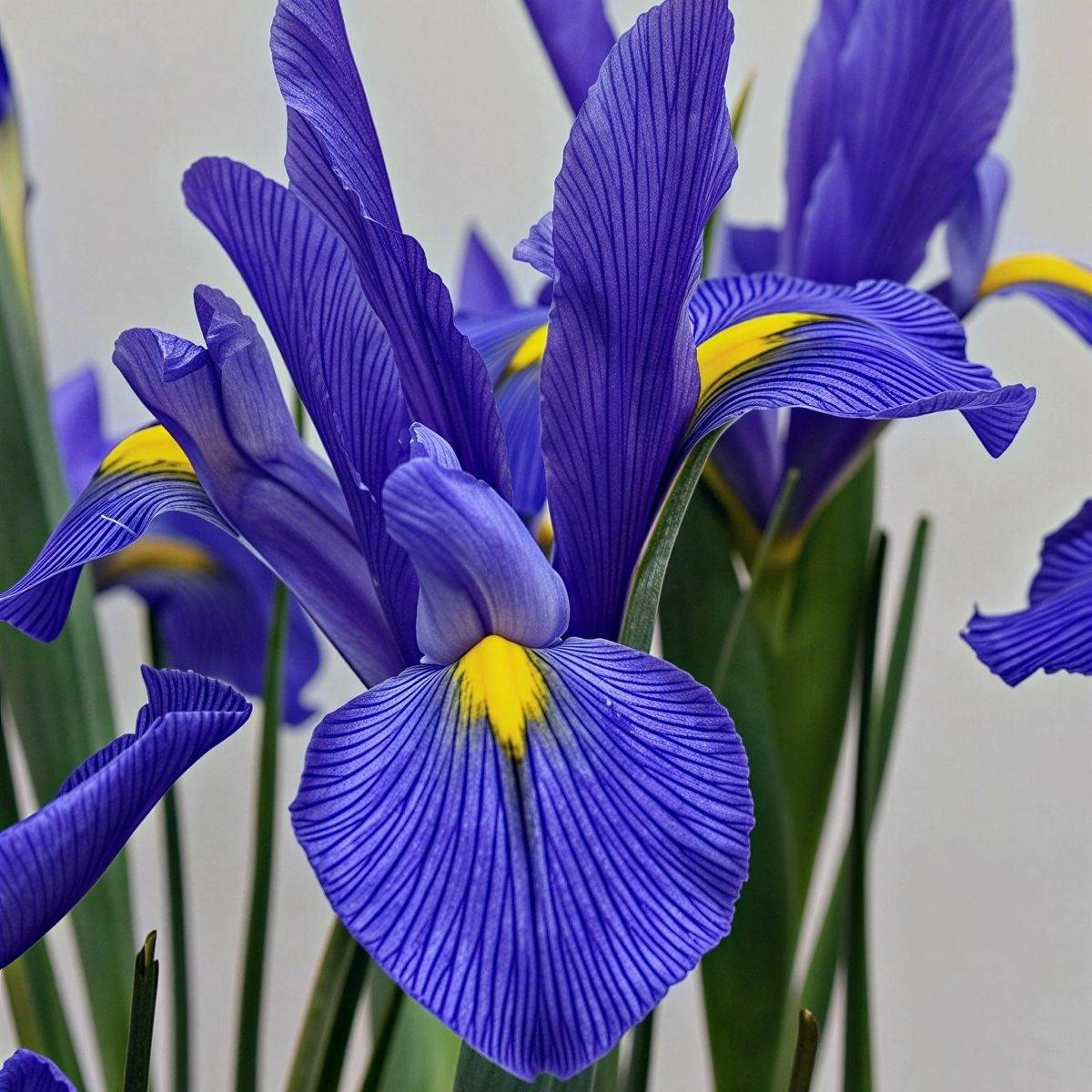 'Mickey Ocean' Dutch Iris*+
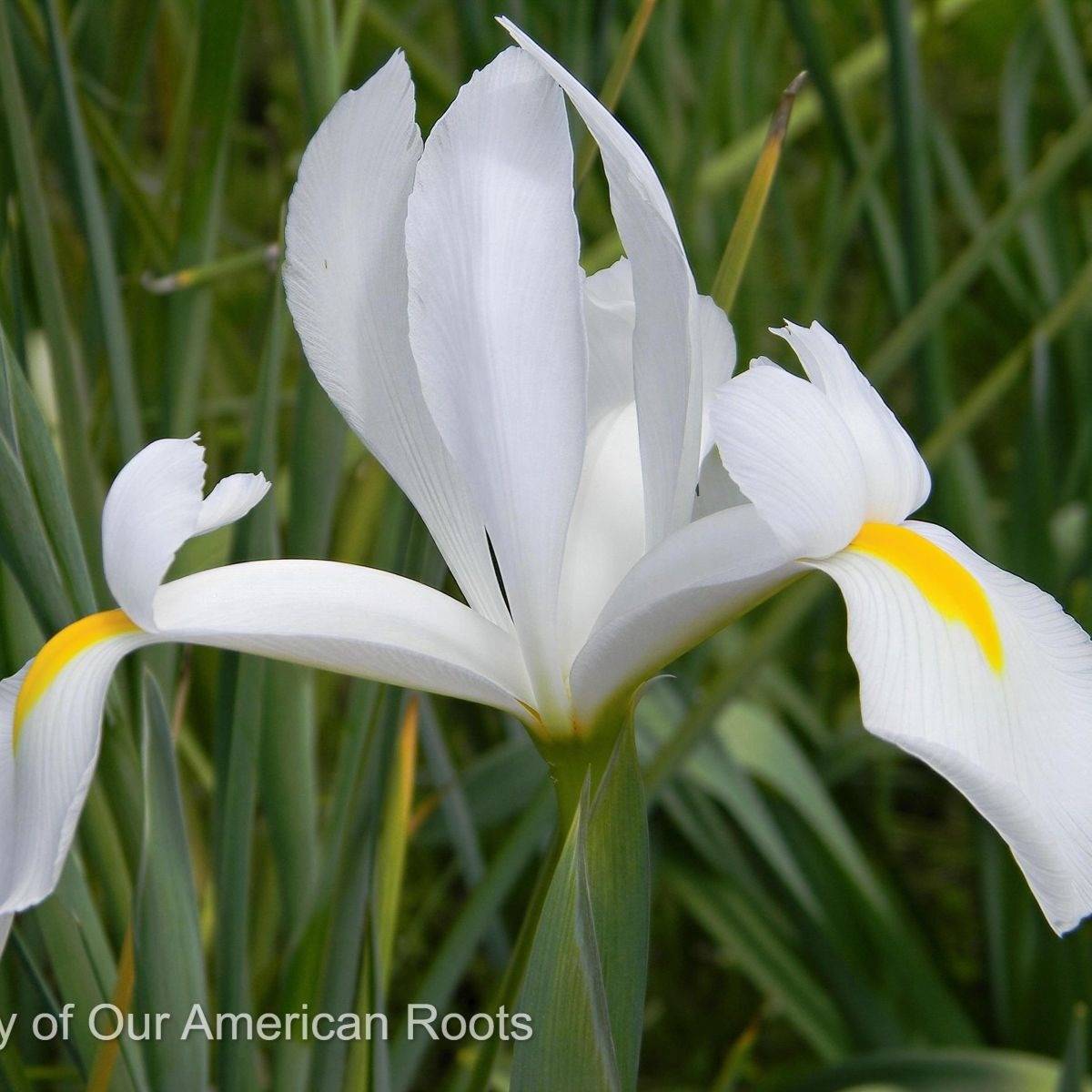 'Alaska' Dutch Iris*+
- Dutch Iris mix*+
- Blue and pale yellow Dutch Iris*+
Foxtail Lily/Desert Candle (Eremerus); Dramatic Spires for Sandy Soil
For sheer height and drama, few spring-flowering bulbs compare with Eremurus, commonly called foxtail lily or desert candle. Tall, architectural flower spikes rise dramatically above a low rosette of foliage, making it an outstanding focal point for a sunny wildlife-resistant garden.
Eremurus have a delicate root system (actually thickened starfish-shaped roots, not true bulbs) and can be sensitive to disturbance. Choose the planting site carefully and avoid unnecessary transplanting. Move only after the foliage has died back and the plant has entered dormancy, typically in late summer or early fall. Although not a true bulb, we include them here as they are often sold by bulb companies and garden centers as part of their fall bulb selection.
Animal Resistance
- Deer: High resistance
- Rabbits: High resistance
- Rodents: High resistance
Flowers
Eremurus produce spectacular tall spikes densely packed with hundreds of small, star-shaped flowers. Flower colors include white, yellow, orange, pink, and bronze.
The flower spikes can reach approximately 3 to 10 feet, depending on species and cultivar, creating one of the most dramatic vertical accents available for the spring and early-summer garden.
Foliage
The foliage forms a low basal rosette of narrow, strap-like green leaves. The leaves emerge in early spring and are somewhat frost-sensitive. They typically begin declining as the tall flower stalk develops.
Growing Conditions
- Full sun
- Very well-drained sandy, loamy, or gritty soil
- Moderate moisture during active growth
- Relatively dry conditions during dormancy
- Zones 5-9
Excellent drainage is essential. Avoid planting foxtail lily where water collects.
Best Garden Uses
- Cottage gardens
- Cutting gardens
- Pollinator gardens
- Naturalized plantings
- Architectural focal points
- Large-scale mass plantings
- Back-of-border planting
Use eremurus toward the back or middle of a border, where its tall flower spikes can rise above shorter perennials. Combine it with lower-growing bulbs such as daffodils and grape hyacinths, then surround the declining foliage with perennials that emerge later in spring.
Eremurus is especially effective when planted in small groups rather than as isolated specimens. Repeat groups throughout a large border to create rhythm and visual continuity.
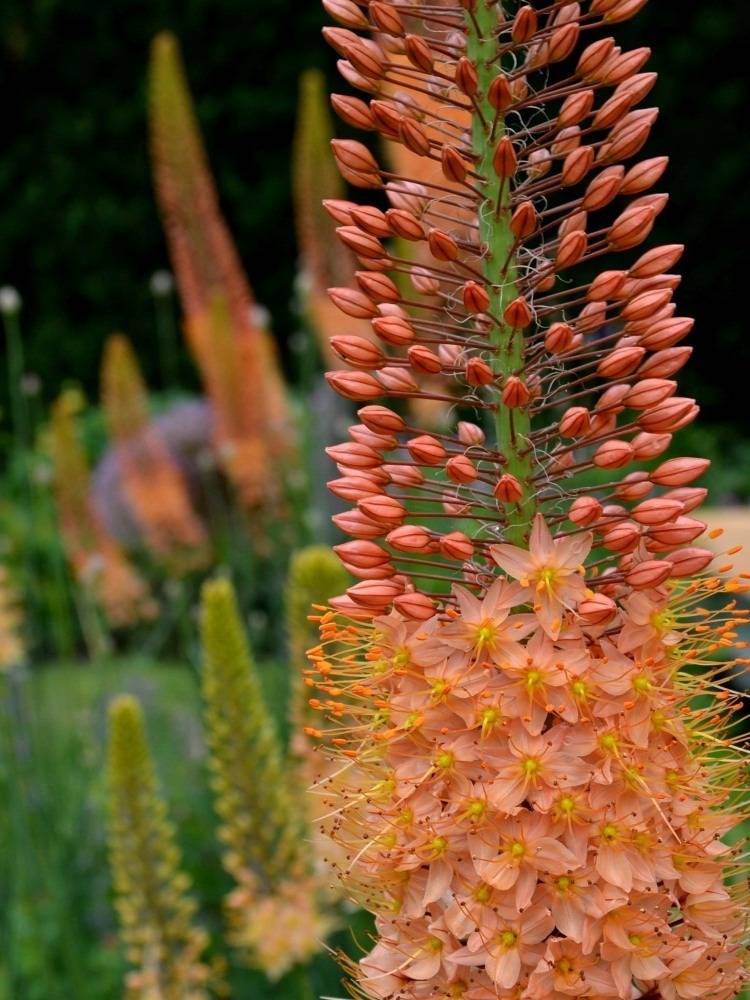 Eremurus 'Cleopatra'*+
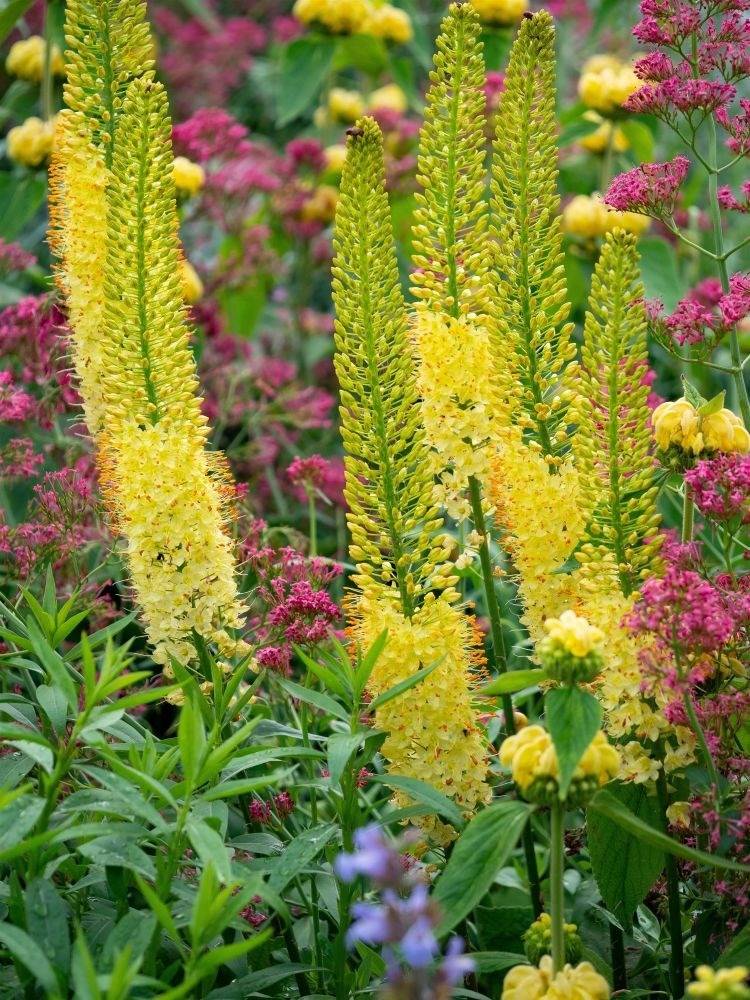 Eremurus bungii*+
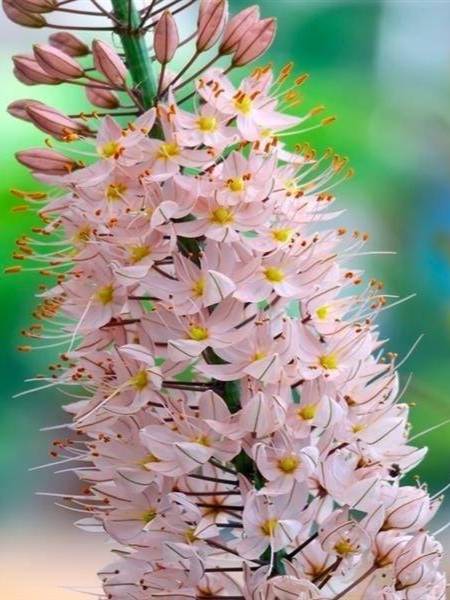 Eremurus 'Shelford'*+
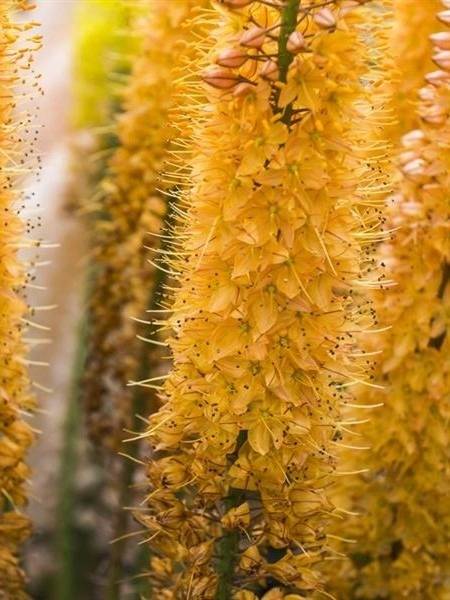 Eremurus 'Pinocchio'*+
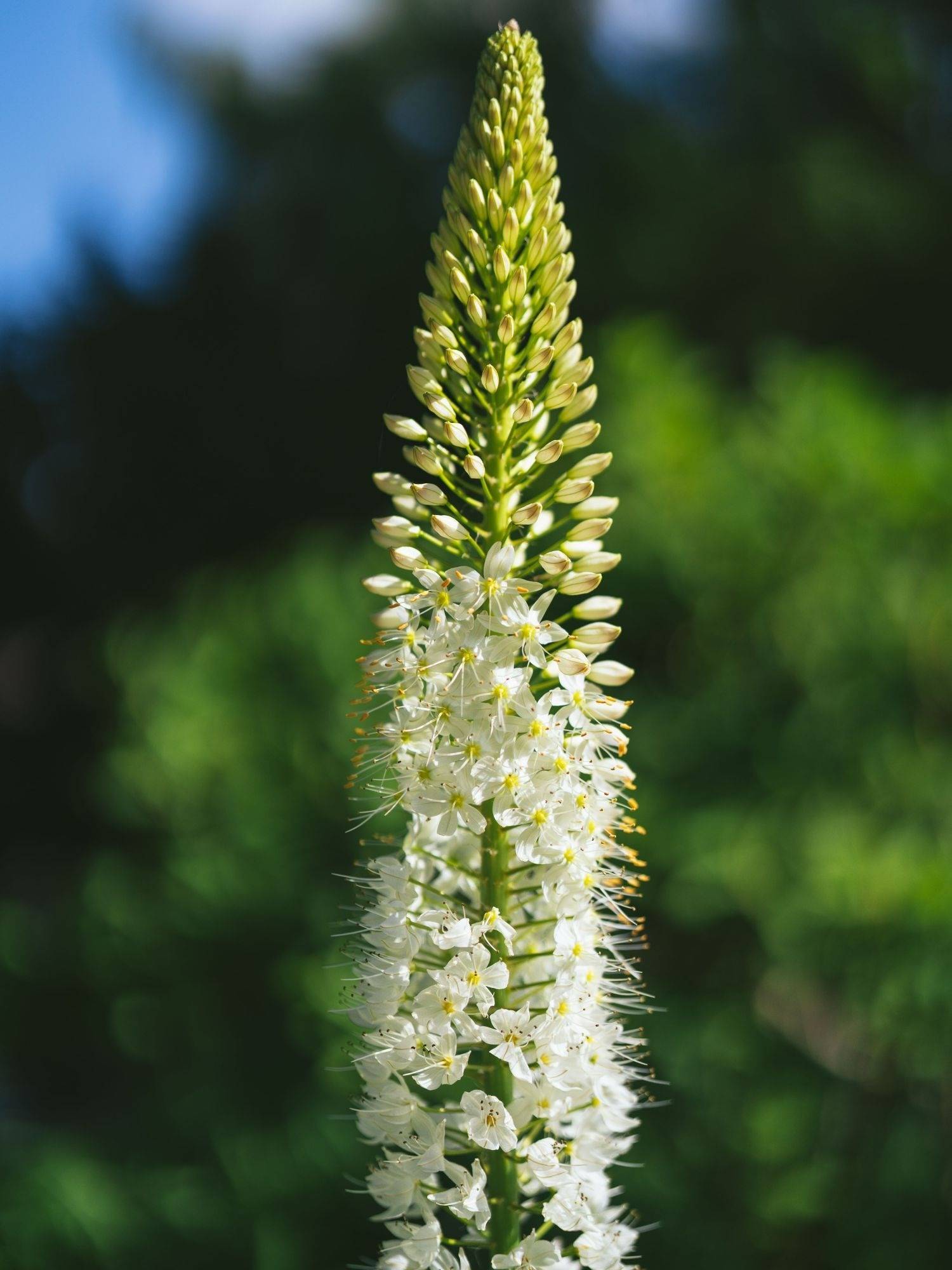 White Eremurus
Expert Tips for Growing Animal-Resistant Spring Bulbs
- Plant more daffodils than tulips
- If wildlife is your primary concern, make daffodils the backbone of your spring bulb garden. Tulips and crocuses can be highly attractive to deer, rabbits, squirrels, and rodents, whereas daffodils are much less palatable.
- Don’t cut bulb foliage too early. After flowering, resist the urge to cut the leaves immediately. The foliage captures sunlight and replenishes the bulb’s energy reserves for next year’s growth. Wait until leaves naturally yellow and die back before removing them.
- Deadhead spent flowers. Remove faded flowers when practical so the plant doesn’t spend unnecessary energy producing seed. Leave the foliage intact.
- Buy firm, healthy bulbs. Choose bulbs that are firm, plump, and free of mold, soft spots, or other major damage. Larger, healthy bulbs generally have greater stored energy for flowering.
- Don’t overfertilize, and only fertilize on top of the planted bulbs. Placing fertilizer or bone meal in the hole can damage the roots.
- Good soil preparation is more important than excessive fertilizer. If a soil test indicates a nutrient deficiency, amend accordingly.
- Plan for succession. Choose early-, mid-, and late-spring bloomers rather than planting everything that flowers at the same time. This can extend the period of color for several weeks.
Spring Bulb Design Tips for a Wildlife-Resistant Garden
- Create large drifts instead of single bulbs. A single flower can disappear visually in a landscape. Groups create much more impact. Plant large bulbs in groups of at least five, while small bulbs such as grape hyacinths and crocuses are especially effective in much larger drifts.
- Think clusters, ribbons, waves, and informal swaths rather than evenly spaced dots.
Layer bulbs for weeks of color. You can combine bulbs with different planting depths and bloom times in the same area. For example, plant daffodils as the deepest layer, then hyacinths or alliums in the middle layer, with a layer of grape hyacinths or snowdrops on the uppermost layer. Bulb foliage will find its way up amongst the other bulbs as long as they are not planted too thickly.
- Avoid bundling or braiding untidy, fading bulb foliage. Instead, hide with perennials like hostas, hardy geranius, heucheras, daylilies, ferns, ornamental grasses, or groundcovers. As the bulb foliage fades, the emerging perennial foliage takes over.
- Use height to build depth. Place tall alliums and daffodils toward the back, hyacinths and fritillaria in the middle, and snowdrops, squill, and grape hyacinths toward the front. This creates a layered composition rather than a flat band of flowers.
- Repeat colors throughout the garden. Instead of using one bulb variety in one isolated location, repeat the same color in several areas. For example, repeat blue grape hyacinths around yellow daffodils throughout the garden. Repetition makes the landscape feel intentional and cohesive.
- Plant for viewing from indoors. Spring weather can be unpredictable. Place large groups of early bulbs where they’re visible from windows, porches, patios, and frequently used pathways.
The Best Wildlife-Resistant Spring Bulbs at a Glance
- Best overall: Daffodils
- Best for dramatic flowers: Alliums
- Best for unusual flowers: Fritillaria
- Best for early spring: Snowdrops
- Best for blue drifts: Grape hyacinths
Together, these bulbs can provide a long succession of spring color while reducing the likelihood that deer, rabbits, and rodents will destroy the display. The key is not to expect any plant to be completely animal-proof. Instead, build your garden around less-palatable bulbs, good planting practices, physical barriers where needed, and smart companion planting. With the right combination, you can enjoy a spectacular spring garden without making it an all-you-can-eat buffet for local wildlife.
Frequently Asked Questions About Wildlife-Resistant Spring-Blooming Bulbs
- Are there spring-blooming bulbs that deer won't eat? Yes. Daffodils, alliums, fritillaria, snowdrops, grape hyacinths, and several other spring-blooming bulbs are generally less appealing to deer than tulips and other highly palatable bulbs. However, no plant is completely deer-proof, particularly when natural food supplies are limited.
- What spring-blooming bulbs are resistant to rabbits? Daffodils, alliums, fritillaria, snowdrops, grape hyacinths, and other less-palatable bulbs are generally good choices for rabbit-prone gardens. Combining resistant plants with physical barriers provides additional protection.
- Which spring-blooming bulbs are resistant to rodents? Daffodils and alliums are among the best choices for gardens with rodent pressure. Fritillaria, snowdrops, and grape hyacinths, can also be useful. For persistent digging by squirrels, mice, or voles, physical protection such as wire mesh can provide additional security.
- Is fritillaria deer resistant? Yes. Fritillaria is generally considered highly resistant to deer and rabbits and is also a good choice where rodents are a concern. Its unusual odor and compounds in the plant make it less attractive to many browsing animals.
- Are daffodils deer and rabbit resistant? Yes. Daffodils are among the best spring-blooming bulbs for gardens affected by deer and rabbits. Their natural compounds make them considerably less palatable than tulips.
- When should you plant spring-blooming bulbs? Most hardy spring-blooming bulbs should be planted in fall, after summer's heat has passed but before the ground freezes. This gives the bulbs time to establish roots before winter.
- How deep should spring bulbs be planted? As a general guideline, plant bulbs at a depth approximately two to three times their height. Always follow the planting instructions supplied for the particular species or cultivar because recommended depths vary.
- Can deer-resistant bulbs be planted in shade? Some can. Snowdrops, for example, perform well in partial to full shade, while many daffodils, grape hyacinths, and other early spring bulbs can grow beneath deciduous trees where they receive sunlight before the tree canopy develops.
Can spring-blooming bulbs be completely deer, rabbit, and rodent proof? No. No bulb can be guaranteed to be completely wildlife-proof. Deer, rabbits, squirrels, mice, voles, and other animals may eat plants they normally avoid when food is scarce. Choosing less-palatable bulbs such as daffodils, alliums, fritillaria, and other resistant varieties can reduce damage, while fencing and wire barriers provide additional protection.
- What are the best spring bulbs for a wildlife-resistant garden? Daffodils are an excellent foundation plant, while alliums, fritillaria, snowdrops, grape hyacinths, Camassia, glory-of-the-snow, spring snowflake, and hyacinths can provide additional color, height, fragrance, and texture.
You may also like