Alstroemeria, commonly known as Peruvian Lily or Lily of the Incas, is one of the most rewarding flowering perennials for home gardens. While many gardeners recognize alstroemeria as a long-lasting cut flower used by florists, modern garden cultivars have transformed this South American native into an exceptional landscape plant. With months of colorful blooms, attractive foliage, drought tolerance once established, and impressive longevity, alstroemeria deserves a place in more gardens.
Growing Alstroemeria in the Garden: A Guide to Perennial Peruvian Lilies
Whether planted in borders, cottage gardens, containers, or pollinator plantings, alstroemeria provides almost continuous color from late spring through fall with relatively little maintenance.
What Is Alstroemeria?
Alstroemeria is a genus of flowering perennial plants native primarily to Chile and Brazil. Modern garden varieties have been bred for compact growth, improved hardiness, stronger stems, and an extended bloom season.
Unlike true lilies, alstroemeria grows from fleshy underground tuberous roots that gradually spread and form expanding clumps. The plants produce multiple upright stems topped with clusters of exotic-looking flowers that resemble miniature lilies or orchids.
Why Grow Alstroemeria?
Gardeners appreciate alstroemeria because it offers:
- Long bloom season
- Excellent cut flowers
- Deer and rabbit resistance
- Pollinator attraction: bees, butterflies, and other beneficial insects
- Low maintenance
- Drought tolerance once established
- Reliable perennial performance
- Strong color impact
Is Alstroemeria a Perennial or Annual?
Is Alstroemeria a Perennial or Annual?
Alstroemeria is a perennial in regions where winter temperatures remain within its hardiness range.
Hardiness Zones:
- USDA Zones 6–10 for most modern garden varieties
- Some cultivars are reliably hardy in Zone 5 with winter protection
- In Zones colder than 5, plants are often grown as annuals or overwintered in protected containers
Plant Characteristics of Peruvian Lilies
Lifespan
Lifespan
When planted in suitable conditions, alstroemeria can live for 10–20 years or longer. Established clumps often become more floriferous each year and may remain productive for decades with occasional division.
Growth Habit
Growth Habit
Alstroemeria forms upright, bushy clumps with multiple flowering stems emerging from underground roots.
Mature Size
Mature Size
Size varies by cultivar:
- Dwarf varieties: 12–18 inches tall and wide
- Medium varieties: 18–30 inches tall
- Tall varieties: 30–48 inches tall
- Spread: medium and tall varieties 18–36 inches over time
- Foliage
- The foliage is lance-shaped, medium to dark green, and arranged in a unique twisting pattern called resupination, where leaves rotate as they develop, causing the underside to face upward
- Leaves are most often green, but cultivars can be found with gray-green, bronze, or white-edged variegation
- Foliage remains attractive throughout the growing season creaating a dense, leafy mound
- In hot summers, plant may become semi-dormant
- Flowers
The blooms are among the plant's most distinctive features:
- Funnel-shaped flowers
- Six petals per bloom
- 1½–3 inches across
- Produced in clusters at stem tips
- Often marked with streaks, spots, or contrasting throats
- Color may be white, cream, and shades of yellow, orange, red, pink, and purple including bi-colors and multi-colored blends
- Root Structure
Alstroemeria grows from fleshy, brittle tuberous roots attached to underground rhizomes. These storage roots hold water and nutrients, helping plants tolerate short periods of drought.
Because the roots are fragile, avoid frequent transplanting or aggressive cultivation around established plants.
Planting Peruvian Lilies
- Planting Time
- Bare root plants best planted in spring after danger of severe frost
- Ideally when soil temperatures will remain above 55 degrees and daytime temperatures are above 65 degrees
- Bare root plants can also be planted in early fall in mild climates (zones 8-10, for example)
- Container-grown plants can be installed throughout the growing season with adequate watering
- How to Plant
- Plant bare roots laid horizontally 2 inches deep
- Be sure any eyes are facing upwards
- Soaking roots for 15 minutes in lukewarm water prior to planting can be beneficial
- If rhizomes look particularly dried or shrunken you can soak for a couple of hours to rehydrate
- Plant container grown plants at the same level as they were in the pot and never pile mulch against the crown during the growing season
- Site Selection
Choose a location that offers:
- Excellent drainage
- Protection from strong winds, especially for taller varieties
- Good air circulation -- essential in areas with hot, humid summers
- Full sun to part sun
- Soil Requirements
Alstroemeria performs best in:
- Moderately fertile soil
- Well-drained conditions: avoid poorly drained sites, especially during winter, as standing water can rot roots
- Moderately moist soil
- Slightly acidic to neutral pH (5.5-6.5) as plant may struggle in alkaline soils
- Light Requirements
Alstroemeria flowers best with:
Full Sun: 6–8 hours of direct sunlight daily
- Produces maximum flowering in cooler climates
- Partial Shade is beneficial in hot southern climates as reduces heat stress and preserves flower color
- Too much shade produces weak stems and reduced flowering
- Spacing
Allow:
- 18–24 inches between compact varieties
- 24–36 inches between larger cultivars
- Adequate spacing improves air circulation and reduces foliar diseases like powdery mildew.

Below: Alstroemeria 'Golden Tiara,' photo courtesy Walters Gardens, Inc.

Below: Alstroemeria 'Summer Break,' photo courtesy Walters Gardens, Inc.

Below: Alstroemeria 'Indian Summer,' photo courtesy Walters Gardens, Inc.

Below: Alstroemeria Colorita 'Mulan,' photo courtesy Ball Horticulture, Inc.

Growing Tips and Maintenance of Alstroemeria
- Watering
During Establishment
- Water deeply 1–2 times per week
- Keep soil evenly moist but not saturated
Established Plants
- Water when the top few inches of soil become dry
- Approximately 1 inch of water per week during active growth
- Mulching helps maintain consistent soil moisture and suppress weeds, but never more than one inch to prevent rotting of rhizomes
Fertilizing
Alstroemeria is a moderate feeder and benefits from regular nutrition.
- Spring Feeding
Apply compost or a slow-release, low nitrogen (5-5-5) balanced fertilizer at planting and yearly in spring.
- During Blooming Season
Feed every 4–6 weeks with with a low-nitrogen (preferably 5 or lower), high potassium fertilizer in spring and summer. Sulfate of potash is an excellent choice (also called potassium sulfate; potassium chloride is different and contains salts that may harm plants). Avoid excessive nitrogen which encourages foliar growth at the expense flowers. Cease fertilizing by the end of August to allow the plant to prepare for winter dormancy.
Deadheading and Pruning
- Proper Deadheading
Unlike many perennials, alstroemeria performs best when spent flowering stems are removed by pulling rather than cutting. To remove, grasp stem near the base and pull gently but firmly from the crown, removing the entire stem. This stimulates dormant buds underground and encourages additional flowering stems. If newly planted and less secure in the ground, you may want to hold the rest of the plant in place to avoid dislodging the roots.
- Routine Pruning
Throughout the season, remove yellowing leaves and damaged stems. Crowded growth may be thinned to prevent foliar disease if necessary. Do NOT cut plants back if they slow down or stop blooming in the heat of summer - they need the top growth to photosynthesize for next year's growth.
Winter Care
- End-of-Season Cleanup
After first killing frost, cut stems to ground level and apply winter mulch where needed.
- Winter Care
- Winter wetness is often more damaging than cold temperatures
- Zones 7–10: Minimal protection is usually required. Apply 2-3 inches of mulch or compost around crowns once ground is frozen
- Zone 6: Provide extra insulation in the form of 4-6 iches of mulch, straw, shredded leaves, or pine needles
- Colder Than Zone 6: Lift and store roots, or grow in containers protected in garage or basement
Best Alstroemeria Cultivars for Garden Performance
'Indian Summer'
- Orange flowers with golden highlights
- Bronze-purple foliage
- 24–36 inches tall
- Long bloom season
'Summer Breeze'
- Bright orange blooms
- Dark toned foliage highlights the flowers
- 36 to 40 inches tall
- Cold hardy to zone 6
'Summer Break'
- Pink flowers with speckled white throats
- 36 to 40 inches tall
- Cold hardy to zone 6
'Inca Ice'
- Light peach flowers with cinnamon spotting
- Unique pastel coloring
- 30-40 inches tall
- Excellent cold and heat tolerance
'Princess Lilies® Series'
- Ideal for smaller gardens
- Compact habit 10-15 inches high
- Continuous flowering and good heat tolerance; may slow a bit in midsummer
- Excellent container performance
- Numerous color choices
- 'Princess Fabiana' bears creamy white speckled flowers and white-edged foliage
'Golden Tiara'
- Golden yellow flowers with orange flush on the outside
- Blooms late spring to fall
Large growing variety can reach up to 40 inches high and 5 feet wide with time
Excellent cold and heat tolerance
'Summer Heat'
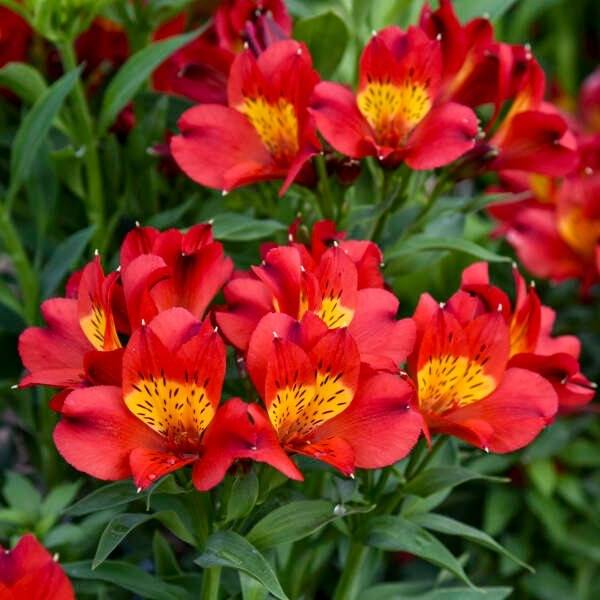
- Red flowers with speckled yellow throats
- Blooms spring and fall with occasional summer flowers
- 3.5 feet tall
- Good cold and heat tolerance
'Colorita® Series'
- Popular for borders and containers
- Dwarf habit, 12-16" tall
- Heavy flowering
- Extended bloom season
- Varieties with red, pink, white, orange, yellow, or purple flowers
Using Peruvian Lilies in the Garden
Cottage Gardens: contrasting flower shapes create a relaxed, colorful display. Combine Alstroemeria with:
- Salvia
- Catmint
- Coneflower
- Coreopsis
- Shasta daisy
Pollinator Gardens:
Attract a diverse range of pollinators by mixing Alstoemeria with:
- Beebalm
- Agastache
- Verbena
- Yarrow
- Russian sage
Mixed Perennial Borders can benefit from the extended color provided by Peruvian lilies, with the long blooming season bridging the gap between other flowering perennials.
Use alstroemeria among:
- Iris
- Peonies
- Daylilies
- Garden phlox
- Black-eyed Susan
- Veronica
- Ornamental grasses
- Asters
Cutting Gardens (of course!)
Millions of florists can't be wrong! Plant taller alstroemeria in dedicated cutting beds where stems can be harvested frequently without affecting landscape appearance.
Final Thoughts
By planting hardy garden cultivars in well-drained soil with plenty of sunlight and practicing proper stem removal rather than traditional deadheading, gardeners can enjoy abundant blooms year after year. With a lifespan measured in decades and a flowering season that often extends from late spring until frost, alstroemeria ranks among the most rewarding perennial plants for modern landscapes.
You may also like