Alliums: Ornamental and Edible Stars of the Garden
Few plants bridge the gap between ornamental beauty and culinary utility as gracefully as alliums — the vast and varied genus that includes both stunning flowering bulbs and kitchen staples like garlic and chives. From the sculptural spheres of Allium giganteum to the fragrant chive blossoms that brighten a summer salad, alliums deserve a place in nearly every garden.

What are Alliums?
Alliums belong to the Amaryllidaceae family and encompass over 900 species, ranging from hardy perennials to annuals and biennials. Native primarily to the Northern Hemisphere, these bulb-forming plants share the distinctive sulfurous aroma associated with onions and garlic — a trait that also makes them naturally resistant to browsing by deer and rodents.
Ornamental alliums include spring to early summer blooming bulbs, and bulbous/rhizomatous mid-summer to fall blooming perennials. The familiar chives and garlic chives are part of the latter group, and offer both decorative and culinary appeal. All will yield a mild onion fragrance, but usually only when the foliage is bruised.
While culinary species may have some flowering appeal, proper harvesting would prevent blooming, thus relegating onions, leeks, shallots, and garlic to the vegetable garden in most cases. Ramps (Allium tricoccum) are a culinary wild native species that is oft-foraged from shady woodlands by those who relish its extremely pungent garlic-onion taste.
Below is a guide covering ornamental and ornamental/culinary species, including cultivars, planting and care, design uses, pests, diseases, and the traits that make alliums such durable, rewarding garden plants.
Why Grow Alliums?
- Architectural impact: strong, upright stems with globe or starburst blooms that create focal points and rhythm.
- Pollinator appeal: bees, butterflies, and hoverflies flock to them.
- Deer and rabbit resistance: the onion scent deters most browsing mammals. Leaves and stems have an onion fragrance when bruised, but most flowers have little to no fragrance.
- Companion plantings: planting alliums may help protect nearby plants or bulbs from animal damage.
- Cut flowers: Allium have a long vase life and may hold for a week or more.
- Dried seed heads: attractive in the garden and can be used for arrangements or in crafts
- Low maintenance: many are drought tolerant once established.
- Culinary and ornamental value: edible and beautiful, sometimes both.

Siting, Planting, and Care of Alliums
Siting:
Light: most ornamental alliums prefer full sun (6+ hours). Some species tolerate part sun to light shade. Rhizomatous types will tolerate part sun but flower best in full sun.
- Soil: well-drained is essential. Bulbs rot in heavy, waterlogged soils. Dry summers are appreciated. Sandy loam or improved beds with organic matter work best.
- Hardiness / zones: ranges by species — many ornamental alliums are hardy to USDA zones 4–9; check the species/cultivar.
- Avoid windy areas: tall varieties may be damaged by strong winds so either plant away from such areas or provide adequate staking or other support.
- Drainage & microclimate: plant on slopes or raised beds in areas with heavy soils; avoid frost pockets where late freezes can damage stems.
- Companion timing / garden placement: plant large bulb alliums toward the back of spring displays; their basal foliage often withers before summer, so use later perennials or summer annuals to fill gaps and hide fading bulb foliage.
Planting:
- When to plant: typically fall (September–November) before the ground freezes so bulbs root; in mild climates you can plant late fall to early winter. Spring-planted bulbs are less reliable for alliums and would not bloom until the following year. Rhizomatous varieties are usually sold in containers and can be planted as available.
- Depth: roughly 2–3 times the height of the bulb. Practical ranges: small bulbs 2–3" deep, medium 3–4", large 4–6". Plant pointy side up. Plant rhizomatous types at the same depth as in the container.
- Spacing: depends on effect — 4–6" for dense sweeps of smaller bulbs; 8–12"+ for larger types (giant alliums 12–18" or more). Rhizomatous plants 1-2' apart based on plant width.
Care & Maintenance:
- Watering: after planting, water to settle the soil. During the growing/blooming season, irrigation depends on rainfall — most alliums are relatively drought tolerant once established but appreciate regular moisture in dry seasons. Avoid soggy conditions.
- Fertilizer: a modest spring feed of a balanced bulb fertilizer or a side dressing of compost is usually enough. Avoid high nitrogen in autumn (can encourage rot). A low-nitrogen, phosphorus-rich feed at planting can encourage roots and bloom.
- Deaheading: remove spent flowerheads to prevent untimely self-seeding if you don’t want seedlings. However, leaving some to set seed helps naturalize certain species, and provides food for wildlife. Also, the dried seedheads are attractive, and lend a natural appeal to the garden.
Pruning: none required. If you desire, remove spent foliage of bulb plants only after it yellows naturally (to store bulb energy for next season's bloom). Rhizomatous types can be cut back in late fall or winter if you're the tidy type. If harvesting chives, you can cut the entire plant back to 1 to 2 inches as needed.
- Dividing & naturalizing: many alliums multiply slowly by offsets — lift and divide every 3–5 years if clumps become congested or bloom diminishes. Some (e.g., A. moly, A. cernuum) naturalize readily.
- Container growing: choose deep pots for large bulbs, use fast-draining potting mix, and protect containers from severe freezes.
Pests and Diseases to watch for:
- Bulb rot / fungal diseases: poor drainage invites rot (e.g., white rot, basal rot). Use clean bulbs, avoid planting in infected ground if known, and ensure good drainage.
- Allium leaf miner: in some regions, leaf miner species can damage leaves and bulbs; removing infected foliage help. (Monitor local extension alerts — presence is region-specific.)
- Thrips and onion flies: these can cause cosmetic damage to leaves. Healthy cultural practices reduce severity.
Design Uses & Planting Ideas for Alliums
- Bold vertical accents: plant bulbs in groups (at least 5 for larger varieties) for a “pop” of form and color above lower growing perennials.
- Underplanting: try low drifts of A. moly under shrubs or at pathway edges.
- Combination planting: excellent with early/late tulips, perennials like lupines, catmint (Nepeta), salvia, heuchera, and ornamental grasses (contrast the round alliums with fine foliage).
- Drift planting: repeat the same cultivar in drifts rather than single specimens for modern, painterly effect.
- Color Rhythm: Mix yellow A. moly with purple Globemaster for vibrant contrast.
- Pollinator Patches: Group bulb alliums, chives, and later blooming rhizomatous varieties to support bees throughout spring, summer, and fall.
- Cut & dried arrangements: use starbursts (A. schubertii, A. christophii) for fresh or dried architectural arrangements.
- Edible edges: chives and garlic chives make decorative edible borders.
- Containers: compact types like A. karataviense and chives are perfect for pots, as are the rhizomatous varieties.
- Layer Color: combine allium bulbs with different blooming times and plant together for a continuous display. Don't arrange, just throw the bulbs in one hole randomly to create a natural look. Smaller bulbs can be planted in the same hole on top of larger bulbs - they will find their way up and around. They can also be layered as such in an adequately deep container.
- Companion plants: Bulb alliums pair especially well with roses, peonies, iris, poppies, catmint, yarrow, salvia, foxgloves, perennial geraniums, lady's mantle (alchemilla), heucheras, artemesias, and ornamental grasses. Summer and fall blooming rhizomatous alliums make an attractive accent with echinacea, solidago, Japanese anemones, agastache, veronicas, tall garden phlox, rudbeckia, gaillardia, thread-leaf coreopsis, artemesias, heucheras, and ornamental grasses.
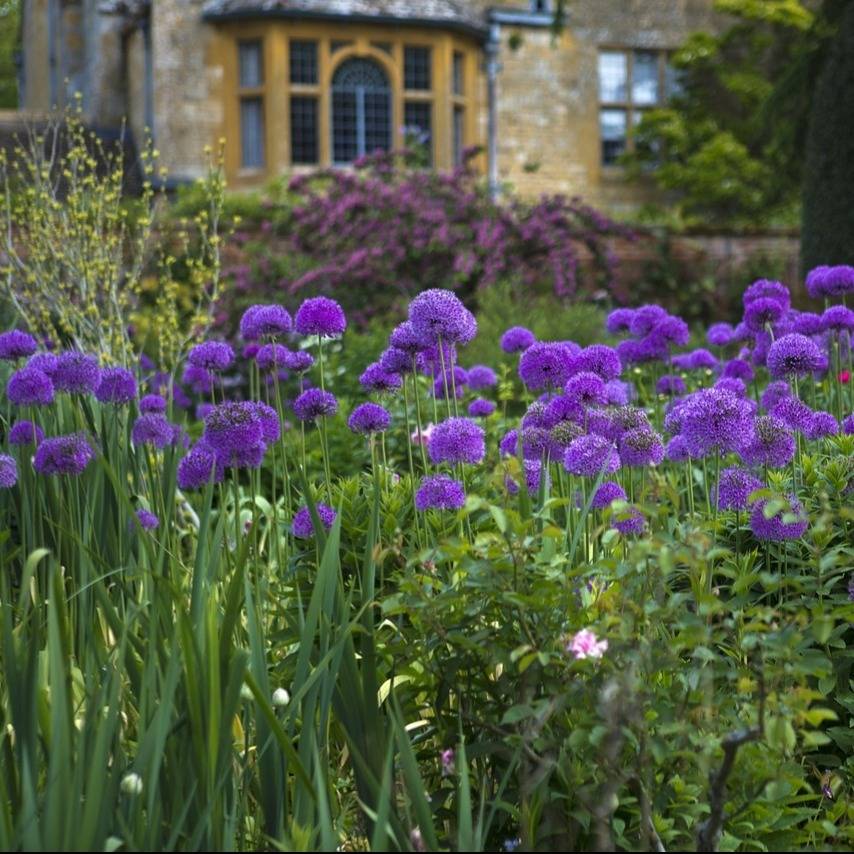
 Giant allium create a river of purple blooms in this lightly shaded garden. Photo courtesy chornegel on Pixabay.
 'Millenium' allium blends beautifully with native perennials and grasses. Photo courtesy US Perennials, www.usperennials.com
 Massing large-blooming bulb alliums is spectacular, but due to the high visibility of declining bulb foliage while plants are in bloom it may not be suitable in all gardens. Photo courtesy Patrick Nizan on Pexels.
 'Serendipity' allium as a border planting in front of panicle hydrangeas highlights the soft and billowy shapes and textures of both. Photo courtesy Proven Winners, Inc., www.provenwinners.com
 A fascinating interplanting of bulb alliums with silver sea holly (Eryngium). The spiky textures echo each other while the foliage color provides stark contrast. Photo courtesy RonPorter on PIxabay.
Ornamental Allium Bulb Varieties
Common Name(Botanical Name) Zones | Image | Flowers | Bloom TimeSize/Habit | Uses & Notes |
|---|---|---|---|---|
Giant Allium* (Allium giganteum)
|  |
|
|
|
'Globemaster' Allium* (Allium christophii hybrid)
|  |
|
|
|
Persian Star* (Allium christophii)
|  |
|
|
|
Tumbleweed Allium* (Allium schubertii)
|  |
|
|
|
Drumstick Allium* (Allium sphaerocephalon)
|  |
|
|
|
Turkestan Allium* (Allium karataviense)
|  |
|
|
|
Mediterranean Bells (Allium nectaroscordum)
|  |
| Late spring to early summer
|
|
Blue Globe Onion* (Allium caeruleum or A. azureum)
|  |
|
|
|
Golden Allium* (Allium moly)
|  |
|
|
|
'Ozawa' Japanese Onion (Allium thunbergii)
|  By James Steakley - Own work, CC BY-SA 3.0 |
|
|
|
Nodding Onion* (Allium cernuum)
|  |
|
|
|
Rhizomatous Allium Varieties - 'Millenium' and others
Most are hybrids, with 'Millenium' (misspelling is correct) being the standard against which newer cultivars have been judged. Released in 2000, it became popular for its 2" diameter purple flowers and excellent clumping habit, and was named Perennial Plant of the Year for 2018. Rhizomatous alliums will bloom best in full sun and moist, well-drained soil, but tolerate partial shade (may appreciate afternoon shade in hot summers) and some dryness. Wet soils will spell disaster. As with most alliums, deer, rabbits, and other mammals tend to avoid them while pollinators heartily enjoy them.
Advantages of Rhizomatous Alliums
- Foliage remains attractive from spring to fall, providing texture and interest all season and allowing for front of border placement if desired
- Flowers bloom in profusion, covering the plants for concentrated color impact.
- Late season nectar for pollinators
- Plant shines in late summer when other flowering perennials have faded.
- Low maintenance and tolerates partial shade and some drought once established.
Common Name(Botanical Name) Zones | Image | Flowers | Bloom TimeSize/Habit | Uses & Notes |
|---|---|---|---|---|
'Millenium'* (Allium hybrid)
|  |
|
|
|
'Serendipity'** (Allium hybrid)
|  |
|
|
|
'Summer Beauty'* (A. lusitanicum)
|  |
|
|
|
'Windy City'* (Allium hybrid)
|  |
|
|
|
'Lavender Bubbles'* (Allium hybrid)
|  |
|
|
|
'August Asteroids' (Allium hybrid) |  |
|
|
|
'Bobblehead'* (Allium hybrid)
|  |
|
|
|
'Medusa'* (Allium senenscens x tanguticum)
|  |
|
|
|
Culinary/Ornamental Allium Varieties
Common Name(Botanical Name) Zones | Image | Flowers | Bloom TimeSize/Habit | Uses & Notes |
|---|---|---|---|---|
Chives (Allium schoenoprasum)
|  Photo courtesy Baker Creek Heirloom Seed www.rareseeds.com |
|
|
|
'Chivette' (Allium schoenoprasum)
|  Photo courtesy US Perennials, www.usperennials.com |
|
|
|
Garlic Chives (Allium tuberosum)
|  Photo of garic chive seedhead courtesy Baker Creek Heirloom Seed www.rareseeds.com |
|
|
|
'Autumn Bee Attraction' Fat Leaf Allium* (Allium hybrid)
|  |
|
|
|
**Photos courtesy Proven Winners, Inc., www.provenwinners.com
Whether you’re after dramatic, globe-topped ornamentals or flavorful garden staples, alliums reward minimal care with maximum impact. Their long bloom season, graceful forms, and natural pest resistance make them indispensable for both aesthetic and edible gardens. Plant a mix of ornamental and culinary types, and you’ll enjoy a garden that’s as beautiful as it is delicious.
You may also like